Christians and Israel: A Comprehensive Guide to Faith, History, and Modern Relations
The relationship between Christians and Israel is a thread that runs through sacred texts, pilgrimage routes, theological debates, and contemporary diplomacy. It is not a single story but a tapestry of beliefs, historical moments, and evolving partnerships. This guide offers a thorough overview of how faith communities have understood the Holy Land, how biblical promises and interpretations have shaped attitudes toward the modern state of Israel, and how religious groups engage with one another in the present day. Readers will encounter a spectrum of perspectives—from ardent support rooted in Christian Zionism to committed ecumenical dialogue that emphasizes justice, peace, and shared humanity.
Historical Foundations and Sacred Geography
Ancient Roots and the Landscape of Faith
For millennia, the land of Israel has functioned as a geographic and spiritual center for diverse communities. In the biblical narrative, the land is presented as a chosen place where covenants with the God of Israel unfolded. For Christians, the terrain is not merely political territory but a sacral space where the life of Jesus of Nazareth occurred, where the Apostles preached, and where the earliest Christian communities formed. The city of Jerusalem stands as a focal point of remembrance and pilgrimage, while places such as Nazareth, Capernaum, and Bethlehem remain enduring symbols in Christian imagination.
From the earliest days, the church in the city of Peter and James carried an awareness of the Promised Land and the ongoing relationship between the Old Covenant and the New Covenant. The Apostle Paul, among others, wrote about the relationship between Israel and the Gentile churches, shaping debates about continuity, fulfillment, and identity. These early conversations would influence later debates about whether Christians should adopt, adapt, or reinterpret a connection to the Covenant with Abraham and its implications for the Church’s mission in the world.
Milestones in the Christian Journey Through the Holy Land
Early Christian pilgrimage to sacred sites in Jerusalem and surrounding towns helped cement a shared memory of Jesus’ life in the land.
Council decisions and patristic writings wrestled with how Gentile converts fit into a faith that originated among Jews in the land of Israel.
The Byzantine era fostered monasteries and churches across the region, reinforcing the idea of a Christian presence in the Holy Land.
Crusades, while controversial in modern historiography, profoundly affected relations between Christian communities and the local Jewish and Muslim populations, reshaping cultural memory for centuries.
Modern archaeology and scholarship have deepened understanding of ancient sites, illuminating the historical context in which the early church and later Christian communities lived.
Theological Foundations: Covenant, Israel, and the Church
Two Theological Currents: Continuity and Replacement
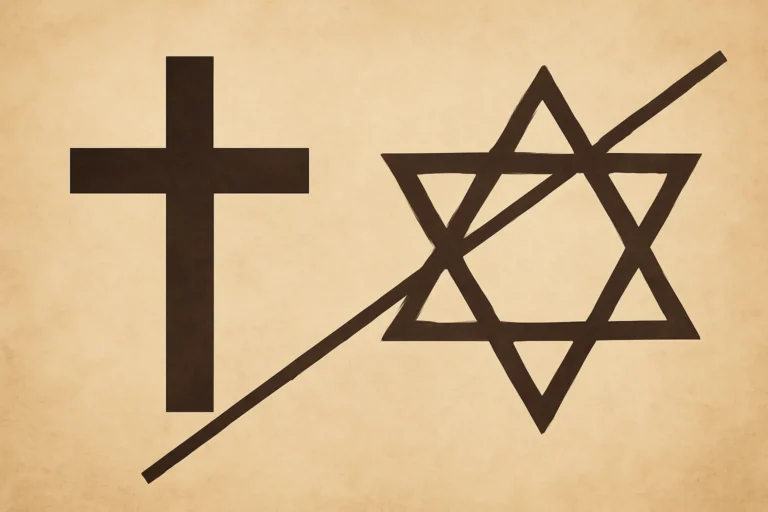
Historically, Christians have disagreed about how the covenant with Israel relates to the Church. The two major threads are often described as continuity and replacement theology (also called supersessionism). In continuity models, the biblical narrative is read as a trajectory where God’s promises to Israel remain in force, and the Church participates in those promises in a renewed or expanded form. In replacement models, the Church is understood as inheriting the promises in place of ethnic Israel, with the Old Covenant viewed as fulfilled and superseded.
In contemporary discourse, many scholars and theologians seek a middle ground that respects the ongoing integrity of God’s promises to the Jewish people while affirming the inclusion of Gentiles in the divine plan through Jesus. Key terms for readers to know include covenant, fulfillment, and continuity. Debates about these topics influence how Christians interpret biblical covenants, how they view the modern state of Israel, and how they engage in interfaith relations with Jewish communities.
Messianic Expectation, Fulfillment, and Christian Reading of the Scriptures
Within Christian theology, Jesus is portrayed as the fulfillment of messianic expectations rooted in the Hebrew Scriptures. This theological posture shapes how followers approach the Holy Land and its people. Some communities emphasize the sense that God’s redemptive plan unfolds in history through the life, death, and resurrection of Jesus, while also recognizing the enduring significance of Israel as a nation and a people. Others stress prophetic motifs about the return of the Jewish people to their homeland as part of eschatological narratives. In any case, the relationship between the Messiah and the land invites ongoing reflection on faith, justice, and peace in the present era.
The Emergence of Modern Relations: From 19th-Century Enlightenment to 21st-Century Diplomacy
From Missionary Work to Political Realignment
In the 19th and 20th centuries, Christians across many denominations engaged with Israel through a spectrum of lenses. Missionaries and scholars studied biblical geography, archaeology, and languages while often advocating for the welfare of Jewish communities in diaspora. As political realities evolved, Christian engagement broadened to include support for Jewish homeland aspirations, humanitarian work, and interfaith dialogue. The emergence of Christian Zionism in the 19th and 20th centuries—rooted in biblical interpretation and a particular eschatological outlook—became a notable current in the relationship between global Christianity and the modern Jewish state.
Key 20th-Century Milestones
Declared independence of the State of Israel in 1948, which prompted new forms of Christian engagement, both supportive and critical, depending on theological and political outlooks.
Growing ecumenical and interfaith engagement that emphasized the shared values of justice, human dignity, and the protection of sacred sites.
Advances in Christian tourism and pilgrimage to the Holy Land that fostered personal encounters with Israelis, Palestinian Christians, and diverse communities living in the region.
Shifts in political alignments in response to security concerns, the search for lasting peace, and debates about Jerusalem’s status and control of holy sites.
Denominational Perspectives: Catholic, Orthodox, Protestant, and Beyond
Roman Catholic and Eastern Orthodox Approaches
In the Catholic and Orthodox traditions, Jerusalem is not merely a political capital but a shared center of Christian spirituality with the status of a religiously diverse, holy space. Catholic and Orthodox churches emphasize sacramental life, pilgrimage, and humanitarian outreach within Israel/Palestine. They often advocate for the protection of holy sites, the rights of local clergy, and the safety of all worshippers, irrespective of faith tradition. These churches also participate in interfaith dialogue with Jewish and Muslim communities as part of a broader commitment to peace and justice in the region.
Many Protestant groups have encouraged strong support for the modern state of Israel, linking biblical prophecies with contemporary events. Dispensationalism and other eschatological frameworks influence some strands of evangelical thinking, contributing to a form of Christian Zionism that emphasizes political ties, immigration policy, and the protection of Jewish religious freedom. At the same time, a growing number of evangelical and Pentecostal voices advocate for justice, reconciliation, and coexistence, arguing that Christian witness is best expressed through humanitarian aid, dialogue, and peacemaking. Within these communities, debates about land rights, settlement activity, and the rights of Palestinian Christians are ongoing and dynamic.
The Holy Land Today: Demographics, Communities, and Everyday Life
Palestinian Christians and Israeli Christians
Today’s Christian communities in the region are diverse. Palestinian Christians—both Muslims and Christians consider themselves part of a living family of faith on the land—represent a minority that maintains deep roots in historic towns and villages. In Israel, Arab Christians participate in civic life, contribute to education and culture, and maintain churches across major cities and towns. They often face challenges related to demographics, emigration, and political pressures, but many remain deeply committed to the wellbeing of all communities in the area. Interactions with Jewish Israelis and other minorities reflect a broader goal of building mutual understanding, protecting religious freedom, and safeguarding sacred spaces for all faiths.
Religious Tourism, Pilgrimage, and Cultural Exchange
Religious travel to the Holy Land remains a powerful experience for many believers. Tours and pilgrimages encourage encounters with local clergy, lay leaders, and scholars, offering opportunities to learn about biblical sites as well as contemporary life in the region. These encounters can foster empathy and an appreciation for the complexities of daily life, as visitors hear stories from both Israeli and Palestinian Christians, as well as Jewish and Muslim residents. Responsible tourism emphasizes respectful engagement, fair employment practices, and a commitment to nonviolence and reconciliation.
Constructive dialogue among Christians, Jews, and Muslims in the Holy Land and in the broader diaspora has become a central feature of efforts to promote peace. Interfaith initiatives focus on shared values such as the sanctity of human life, hospitality to the stranger, and the protection of holy sites. Churches, mosques, and synagogues collaborate on social services, education programs, and youth exchanges that build trust across communities. These programs seek to address stereotypes, reduce tensions, and create a common framework for nonviolent coexistence.
Ethical Witness and Humanitarian Engagement
Many Christian organizations work on humanitarian relief, refugees’ rights, healthcare, and education for impoverished communities regardless of religious affiliation. By prioritizing justice and mercy, the faith community demonstrates a practical application of its teachings in a context where political and religious identities intersect with questions of rights and security. Such efforts are important not just for charity’s sake but for cultivating a climate in which dialogue can thrive and political solutions can be sought in good faith.
Education and Resources for In-Depth Understanding
For readers who want to study the topic further, a combination of biblical scholarship, historical studies, and contemporary journalism can provide a balanced perspective. Key areas include:
Biblical studies on how the Old Testament promises relate to the New Testament interpretation.
Historical surveys of Jerusalem and other sacred sites, including archaeology and cultural history.
Contemporary political analyses of the Israeli-Palestinian conflict and its impact on local Christian communities.
Ecumenical and interfaith resources that document dialogues, agreements, and areas of disagreement among traditions.
Several reputable organizations publish balanced information, host events, and provide study guides that explore the intersection of faith, history, and politics in this region. Readers are encouraged to consult multiple sources to obtain a rounded understanding of the issues involved.
Visiting the Holy Land: Ethical Travel and Respectful Witness
Travelers should approach the land with humility, curiosity, and ethical sensibility. Practical tips include:
Choose reputable pilgrimage itineraries that prioritize local communities and fair employment for guides and staff.
Respect religious sites and customs, dress codes, and prayer practices of different communities.
Learn basic phrases in local languages and seek guidance from leaders about sites that require particular sensitivity.
Support organizations that work for peace, humanitarian aid, and equal rights for all residents in the region.
Ways to Support Constructively
Support can take many forms, including:
Participation in interfaith programs that promote mutual understanding and joint service projects.
Donations to reputable NGOs focused on education, healthcare, and human rights for families affected by conflict.
Advocacy that encourages policies fostering security, rights for minorities, and protection of sacred sites for all faith communities.
Educational programs that teach about the region’s history, culture, and diverse voices.
The discourse around Christians and Israel often hinges on language. Recognizing the diversity within global Christianity helps readers understand different positions. Some recurring terms include Christian Zionism, replacement theology, dispensationalism, ecumenism, and interfaith dialogue. Each term carries particular implications for how people interpret scripture, how they view modern political developments, and how they frame their witness in a conflict-affected region. The goal of careful language is to describe realities accurately while avoiding caricature of diverse communities.
Holy Land: A term referring to the geographic region that is central to the life of Jesus and to Jewish and Christian history.
Israel: The modern nation-state established in 1948; a central reference point for political, religious, and cultural discussions.
Jerusalem: A city of profound significance to Judaism, Christianity, and Islam; site of many sacred institutions and events.
Palestinian Christians: Christians living in the Palestinian territories or with roots in historic Palestine, including families who have maintained Christian traditions for generations.
Christian Zionism: A movement or theological perspective that supports the political and territorial restoration of the Jewish state, often tied to particular eschatological expectations.
Supersessionism (Replacement Theology): The belief that the Church has replaced Israel in God’s plan and that biblical promises to Israel are fulfilled in the Church alone.
Dispensationalism: A theological framework often associated with certain Christian Zionist circles that interprets biblical history as distinct epochs or dispensations.
Interfaith dialogue: Cooperative communication and engagement among traditions—Christian, Jewish, and Muslim—to foster understanding, respect, and peace.
For Christians and Israelis, as well as for Christians who are part of diasporas around the world, the relationship with the land remains a living, evolving conversation. It encompasses gratitude for biblical heritage, commitment to justice for all residents, and a persistent longing for a durable peace that honors the sacredness of life and the dignity of every community. Across denominations and traditions, the central task is to witness with integrity: to celebrate faith, to defend the vulnerable, and to seek a future where diverse communities—Jews, Christians, Muslims, and others—live in security, mutual respect, and shared stewardship of the sacred sites that bind them to the land and to history.