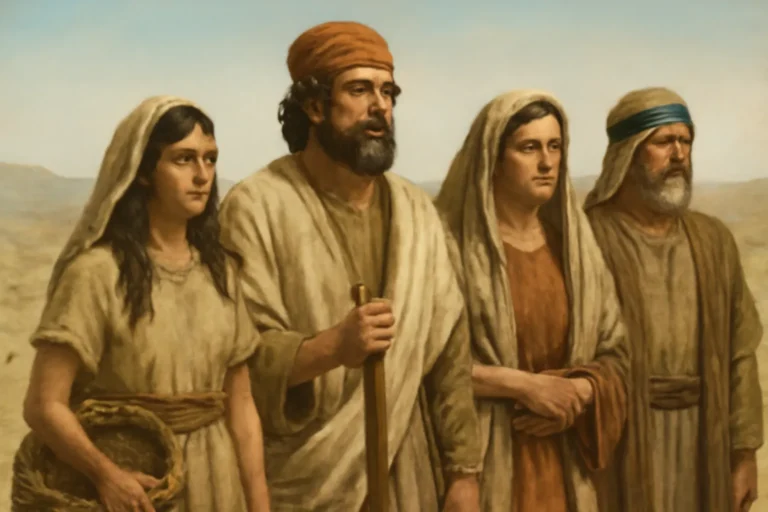
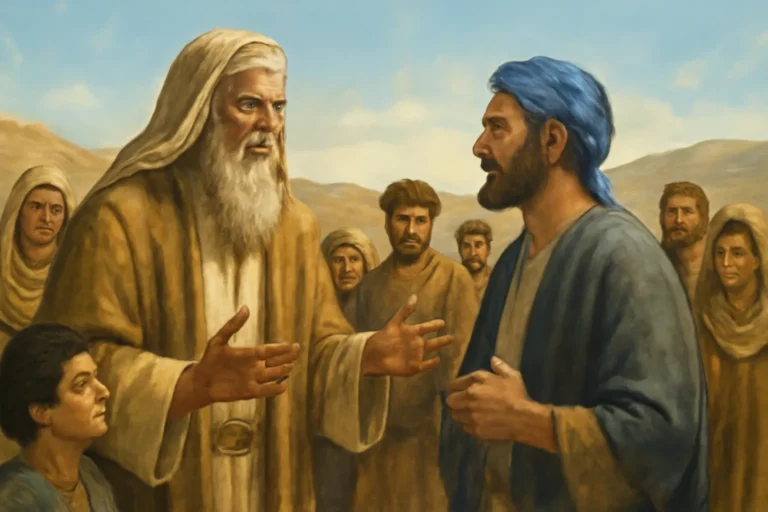
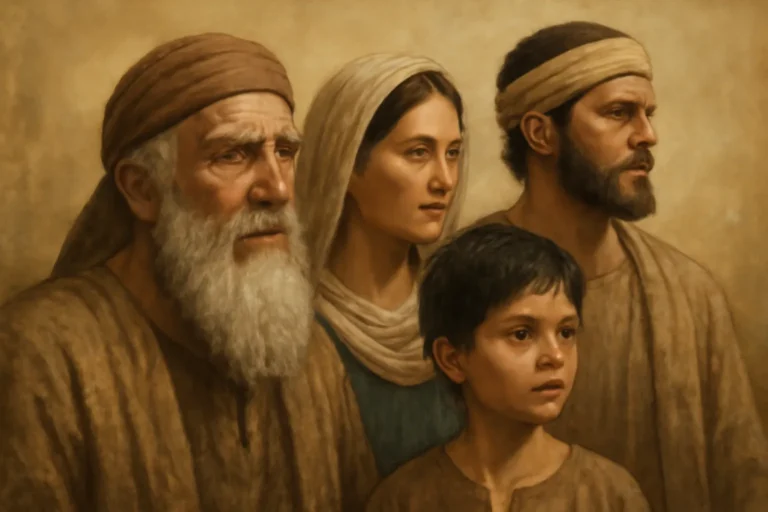
The story of the ancient Israelites unfolds across a landscape of shifting empires, migrating peoples, and enduring cultural practices. In scholarly terms, this group is often described as the Hebrews or the Children of Israel, a people who drew together under shared religious beliefs, legal codes, and a sense of covenant with a single, sovereign deity. Throughout the Bronze and Iron Ages, various tribes and clans emerged in the highland and coastal zones of the Levant, gradually forming a recognizable social and religious world. The term Israelites is used here to refer to descendants of the biblical patriarchal lineages as they crystallized into a community with common law, land connections, and ritual practices. Over time, this community would produce a rich corpus of oral tradition and, later, written texts that would shape not only regional history but also the religious imagination of later generations.
Early ancestors and the Patriarchs
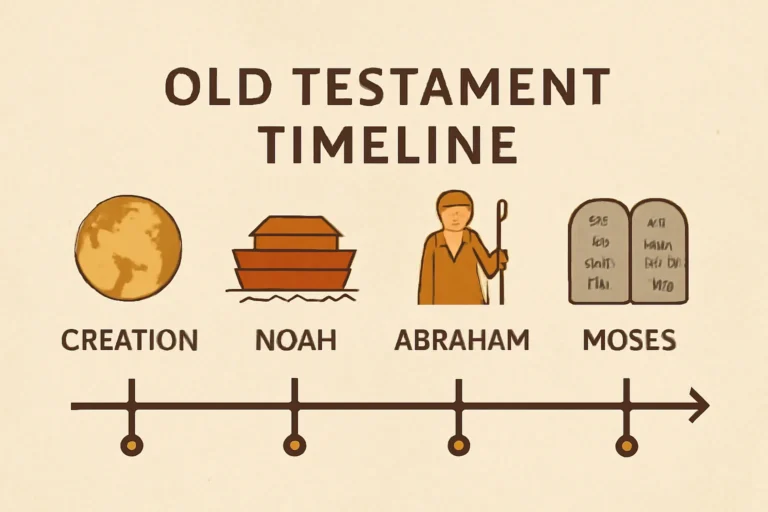
The traditional accounts center on a sequence of patriarchal figures—often called the Patriarchs—whose journeys and agreements with the deity set the theological tone for the people. Central figures such as Abraham, Isaac, and Jacob (also known as Israel) are described as convening covenants, pledges, and promises that would establish a people set apart. In the Hebrew Bible, this era emphasizes faith, obedience, and the shaping of a lineage that would later populate the land known as Canaan. For scholars, these narratives are complemented by material culture and inscriptions that illuminate the broader landscape of the ancient Near East, where competing powers and migrating groups contributed to the evolution of a distinct late Bronze to early Iron Age identity.
Formation as a distinct community
The emergence of a cohesive community among the Israelites is tied to patterns of settlement in the hill country and the forging of social structures that could sustain collective worship and defense. Clans and tribes began to recognize a common religious center and a shared set of laws, even as regional rivalries and external pressures shaped their political choices. Over centuries, the people developed a sense of Covenant theology—a belief that their prosperity and survival depended on fidelity to their deity and adherence to a code of conduct. This early phase was not monolithic; it included a mosaic of local customs, competing sanctuaries, and diverse dialects, all contributing to the eventual production of a more unified tradition.
Geography and Homeland
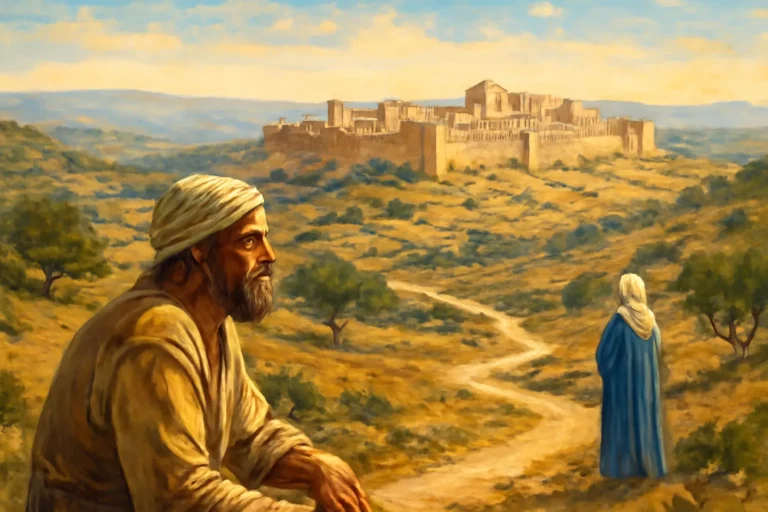
The homeland of the Hebrew-speaking communities lay in a region that sprawls from the plains along the Mediterranean to the inland highlands. The terrain itself—valleys, hills, and semi-arid zones—shaped economic life, religious practice, and political organization. The ancient Israelites inhabited the land often called Canaan, a broad zone that would later be imagined as the land of Israel in biblical memory. Geography mattered not only for agriculture and trade, but also for the distribution of sanctuaries and centers of knowledge.
Jerusalem would emerge as a central political and religious focal point for the United Monarchy in later centuries, though its status varied in early phases.
Jericho, Hazor, and Lachish are among the fortified cities frequently cited in archaeological and textual records as hubs of administration and military activity.
The Jordan Rift and the Sea of Galilee region provided important border zones for tribal settlements and interactions with neighboring peoples.
The social fabric of the ancient Israelites rested on kinship networks, agrarian livelihoods, and a legal culture that regulated daily conduct. Society was organized around extended families and clans, with elders and a council often serving as mediators of disputes and stewards of ritual life. The economy combined farming, herding, and specialized crafts; trade extended across the region through routes that connected the highlands to coastal towns and inland routes. Economic life was deeply intertwined with religious observance, as agricultural calendars and festival cycles (such as those marking harvests and holy days) reinforced communal solidarity.
Households were typically family-centered, with multigenerational living and a division of labor that assigned tasks by age, gender, and skill.
Agriculture depended on crops like barley, wheat, olives, and grapes, and livestock such as sheep and goats contributed both to sustenance and to trade.
Craftspeople such as potters, weavers, and metalworkers formed important segments of the local economy, often organized within clans or guild-like groups.
The Israelite social order also included a priestly or seminomadic strata charged with the maintenance of ritual spaces, offerings, and festivals. This ensemble contributed to a continuous cycle of worship, law-keeping, and narrative memory, ensuring that communities remained cohesive even in the face of external pressure from neighboring powers.
Religion, Law, and Ethics
Religion among the Hebrew people was central to identity and daily practice. A defining feature of this ancient religious system is the belief in monotheism in its most developed form, a distinctive stance within a polytheistic region. The covenantal relationship with the deity—often identified with Yahweh—asserted that loyalty to this deity would shape all aspects of political life, personal conduct, and community welfare. The resulting framework, which later generations would call the Mosaic Law or Torah (the first five books of the Hebrew Bible), covered ritual, civil, and moral guidelines aimed at preserving justice, compassion for the vulnerable, and fidelity to ritual purity.
Mosaic Law, Covenant, and Ritual Life
The moral and ceremonial code embedded in the Mosaic Law regulated issues from dietary restrictions to Sabbath observance, from animal sacrifices to charity for the poor. The idea of a Covenant between the people and their deity allowed for a shared sense of belonging and obligation. The instructions for building sacred spaces—the Tabernacle during the wilderness years and eventually a solemn Temple in Jerusalem—illustrate how ritual life was woven into national identity. The arts of worship, including music by temple choirs and liturgical readings, created a durable framework for spiritual life even as political fortunes changed.
Scripture, Prophecy, and Wisdom Literature
The religious literature of the Israelites grew in a variety of genres. The prophetic books offered critique, consolation, and guidance to leaders and common people; the Writings included poetry, wisdom traditions, and historical recollections that shaped ethical reflection. The core scriptures—often referenced by scholars as part of the Tanakh or Hebrew Bible—were curated over many generations and translated into multiple languages as(domestic and international) communities encountered new contexts. The Hebrew Bible not only preserved laws and narratives but also framed questions about justice, mercy, and the meaning of communal allegiance.
Language, Writing, and Intellectual Life
Language played a crucial role in shaping the cultural memory and administrative reach of the Israelite communities. The language of daily life was a form of archaic Hebrew, with later Aramaic influences reflecting contacts across the Near East. Skribble and inscription material—whether in the form of ostraca, seals, or inscriptions on clay and stone—provide insights into literacy, trade, and governance. The writing system evolved from earlier Canaanite scripts and developed into a recognizable script that would influence both Jewish and regional scripts for centuries.
Archaeological fieldwork has offered a complementary perspective to biblical text, helping researchers situate the Israelites within a broader network of Levantine cultures. Excavations have uncovered domestic remains, city fortifications, and religious objects that illuminate daily life, urban planning, and civic rituals. While the data can be fragmentary and interpretive, it supports a view of a people who navigated complex political terrains, from small-scale rural communities to growing urban centers. The dialogue between textual sources and material culture continues to refine our understanding of how the Hebrew-speaking communities organized themselves, kept records, and transmitted knowledge across generations.
The political history of the Israelites continues with the emergence of monarchic governance. A period of united kingship—often characterized by Saul, David, and Solomon—transformed tribal confederations into a centralized authority with a capital city and a defined national apparatus. This United Monarchy marked a high point in territorial reach and cultural production, including monumental building projects and an expanded temple complex that symbolized both religious devotion and political legitimacy.
After Solomon’s reign, the political landscape fractured into two kingdoms: the Northern Kingdom (often called Israel) and the Southern Kingdom (Judah). The divergent trajectories of these realms—each with its own cities, alliances, and religious landscapes—reflect the pervasive influence of neighboring powers such as the Assyrians, Babylonians, and later the Achaemenid Persians. The destruction of the First Temple and the exile of elites to distant lands highlight a turning point in the story of the Hebrew people. Yet, even in exile and under foreign rule, the memory of a homeland remained a powerful force shaping later Jewish identity and hope for return.
The 6th century BCE is a watershed moment when the Babylonian Empire defeated Jerusalem and carried away many leaders to Babylon. This diaspora, often described as the exilic experience, challenged the community to reimagine itself under foreign sovereignty. After a new regime emerged in the Persian period, some exiles were permitted to return and rebuild the Temple in Jerusalem under leaders funded by royal authorization. This return under the auspices of a Persian edict signaled the emergence of a renewed Judaean identity and the foundations for a Second Temple era that would shape religious life for centuries.
Legacy and Diaspora
The narrative of the Hebrew people extends far beyond the borders of the ancient city-states and the early kingdoms. The legacy of these communities—marked by a devotion to covenant ethics, a unique monotheistic frame, and a legal-religious corpus—has reverberated through time. The memory of Israelite heritage influenced later religious traditions in Judaism, as well as Christian and Islamic interpretive worlds that engaged with biblical narratives. The idea of the children of Israel as a people chosen for a task, entrusted with a divine law, and bound by a historical destiny became a potent symbol in world history.
The Torah and associated writings guided civil life, ritual instruction, and communal memory for generations, affecting law codes in future traditions.
The concept of a Promised Land persisted in memory and influenced religious rhetoric, ritual practice, and the longing for return among communities in later periods.
Conversations about ethics, social justice, and responsibility toward the vulnerable echo through later Jewish literature and even into Christian and Islamic thought, where parallels and contrasts helped frame moral discussions.
Recollections, Identity, and the Hebrew People Today
In modern scholarship, the question of who counts as an ancient Israelite or Hebrew person remains nuanced. By studying inscriptions, artifacts, and textual traditions, historians and archaeologists aim to reconstruct a living culture rather than a static stereotype. The several centuries of history—from early tribal confederations through the period of the two kingdoms, the exile, and the post-exilic era—reveal a dynamic and adaptable people. The Biblical narrative emphasizes a continuous thread—an identity forged in the crucible of faith, law, and shared memory—that would inform not only later Jewish communities but also the broader religious landscape of the Mediterranean world.
Although the political entity of an ancient Israel would disappear from the political map, the cultural and religious DNA remained influential. The scriptures, liturgical practices, and ethical emphases developed during these periods would be interpreted, reinterpreted, and reimagined by successive generations. The concept of a people bound by a sacred law, a shared narrative of land and exile, and a responsibility toward the vulnerable continued to shape moral and theological discussions across centuries. Today, scholars describe the people of Israel as having a layered heritage—one that includes ancient Levantine neighbors, religious reformers, scribes, merchants, and artisans—each contributing to the enduring story of the Hebrew people.
Glossary of Key Terms
Israelites — the broad term for the people who trace their ancestry to the biblical tribes and who participated in an emerging covenantal life in the Levant.
Hebrews — a literary and historical designation used in ancient sources to describe the language group and cultural community before and during the formation of the Israelite identity.
Judah / Judahites — the southern kingdom after the split of the monarchy, centered around Jerusalem and the Temple.
Israel — the northern kingdom after the split, often referred to in sources as Israel or the Kingdom of Israel.
Torah — the first five books of the Hebrew Bible, also known as the Law; foundational for many religious and social rules in Israelite life.
Mosaic Law — another term for the laws given to the Israelites at Sinai, guiding civil, ceremonial, and ethical conduct.
Covenant — a formal agreement between the people and their deity, shaping identity and obligations.
Temple / Tabernacle — sacred spaces central to Israelite worship; the Tabernacle is the portable sanctuary described in the wilderness, while the Temple denotes the centralized sanctuary built in Jerusalem.
Monotheism — belief in a single, supreme deity, a hallmark of Israelite religious development.
Babylonian Exile / Exilic period — the forced relocation of elite groups from Judah to Babylon, a crucial pivot in the Israeli narrative.
The history of the ancient Israelites is a testament to a people who navigated identity, faith, and survival under changing skies. From the earliest clan formations to the grandeur and later dispersion of the exilic and post-exilic communities, their story is a chronicle of resilience, reform, and the enduring power of a shared memory. This narrative continues to inform contemporary discussions about history, religion, and the ways in which ancient societies understood governance, law, and the relationship between people and land.