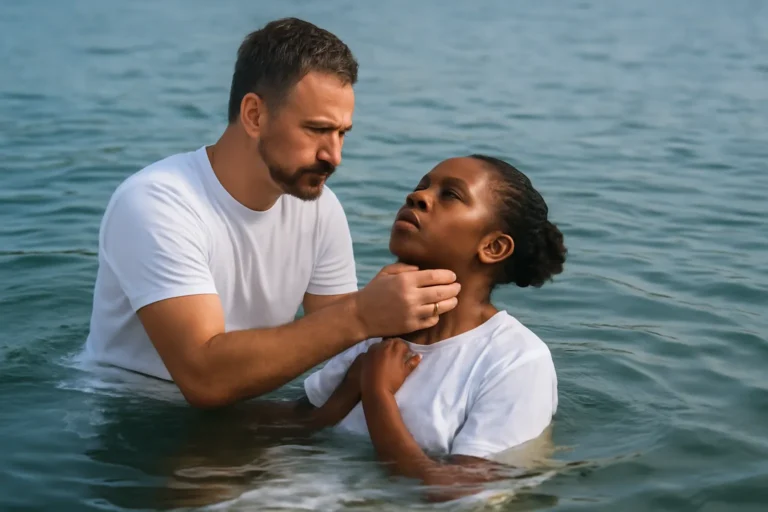
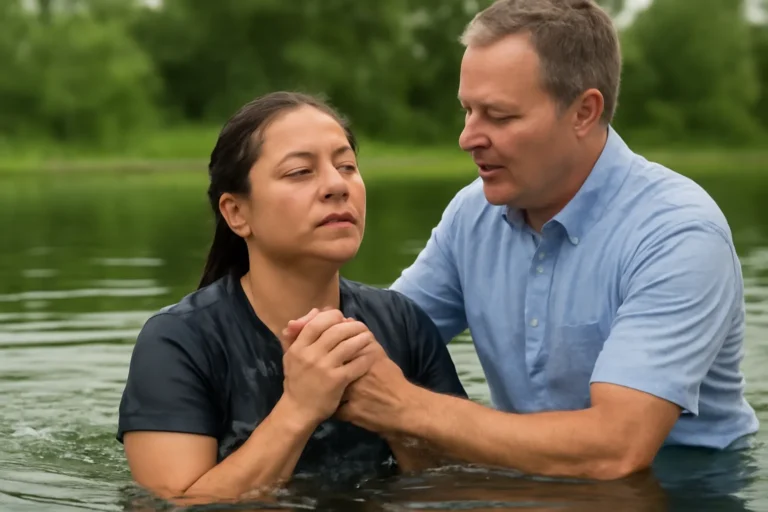
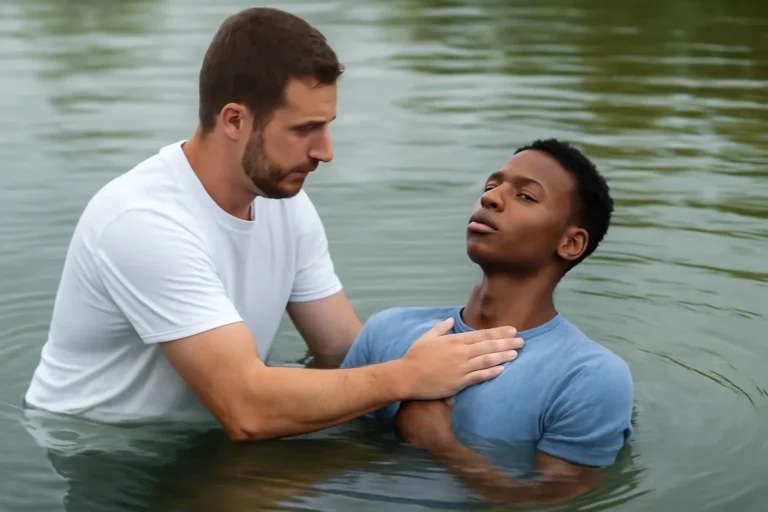
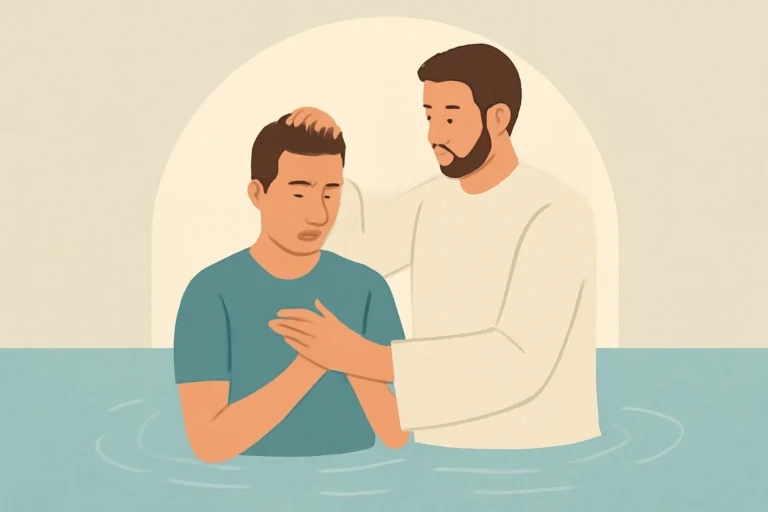
Baptism by submersion—also called immersion baptism, full-immersion, or dunking—is a rite in which a person is fully or largely submerged in water as a symbolic act of initiation into the Christian community. In its most common form, the candidate is lowered beneath the surface and then raised up again, a physical action that carries a rich symbolic payload. The theological core of baptism by submersion is the belief that the act represents death to the old life of sin, burial with Christ, and resurrection to new life in Him. This sequence—death, burial, and resurrection—mirrors the narrative image found in Romans 6:4, Colossians 2:12, and other New Testament passages, where Christians are said to be united with Christ in His death and raised to walk in newness of life.
Across many Christian traditions, baptism by submersion is not merely about water or ritual cleanliness; it is a public confession of faith. The person being baptized publicly declares a trust in Jesus Christ and a commitment to live under His lordship. For many communities, the act is liturgically centered—often occurring within a worship service or special ceremony—and carries a sense of entrance into a Christian fellowship, membership in a local church, and participation in a shared life of discipleship.
The language surrounding baptism often highlights its intentionality and its symbolic depth. When someone speaks of “baptism by submersion” as distinct from pouring or sprinkling, they are emphasizing the dramatic, tangible nature of immersion and the associated imagery. But it is also common to encounter other terms that describe related practices—such as immersion baptism, believer’s baptism, and credobaptism—each carrying its own accent on who should be baptized (believers who profess personal faith) and how the rite is performed.
Important concepts to keep in view include:
Public profession of faith as a companion to the rite
Symbolic identification with the crucified and risen Christ
Accessibility and inclusivity concerns in different traditions (age, maturity, understanding)
Ecclesial identity — baptism as entry into a particular church or fellowship
Historical Foundations and Scriptural Foundations
The practice of baptism by submersion is rooted in early Christian interpretation of Scripture and the baptismal practices of the early church. The Greek word for baptizein—“to dip, to immerse, to plunge”—points toward immersion as a primary method in the New Testament world. The earliest Christian writers and witnesses describe baptism in water that involved full immersion in rivers, pools, and other natural or constructed basins. Debates about mode, however, have varied across time and geography, and the practice did not crystallize into a single universal method from the start.
Early Christian Practice and Patristic Writings
In the first centuries after Christ, many converts were baptized after a period of instruction and confession of faith. For adult converts, baptism by submersion was commonly linked to a public transformation narrative: leaving behind an old life and entering a community of believers. Writings from the Patristic era—the period of the church fathers—often describe baptism as immersion in living water or in a font, depending on the local material culture and available resources. The symbolism of death, burial, and resurrection appears in allegorical and liturgical expressions, reinforcing immersion as a potent physical sign of spiritual realities.
Medieval Shifts and the Reformation
As Christianity moved into late antiquity and the medieval era, patterns of baptism broadened. In many regions, infant baptism became standard in both the Eastern and Western churches, and the mode diversified. While immersion remained common in some places, pouring (affusion) and sprinkling gained prominence in others due to practical concerns—such as the absence of suitable baptismal pools, climate, or the pastoral need to baptize infants quickly. The Reformation era brought a renewed focus on believer’s baptism in some Protestant streams, along with a continued debate about the most faithful mode. For groups that emphasized personal faith and confession, immersion continued to be valued as a strong public demonstration of conversion.
In modern times, the practice associated with baptism by submersion varies widely by tradition, culture, and geography. Some churches maintain a strong preference for full-immersion, often in a baptistery or natural body of water, while others routinely practice pouring or sprinkling for infants or when immersion is impractical. Global Christianity has produced a spectrum: from communities that insist on immersion as normative for all believers, to those that consider immersion one of several valid modes, to those whose theological emphasis is less about method than about the spiritual meaning of baptism.
Modes and Variations: Submersion, Immersion, and Other Approaches
When discussing baptism by submersion, it helps to clarify terminology and practice. In many traditions, “immersion baptism” and “full immersion” are used interchangeably with baptism by submersion. Other modes—while not the central focus of this article—play an important role in the overall baptismal landscape and are often discussed in the same breath as immersion.
Full immersion (complete submersion): the person is fully under water and then lifted out, typically in a baptismal font or pool.
Partial immersion (semi-immersion): the person is lowered into water to some extent, with part of the body remaining above the surface.
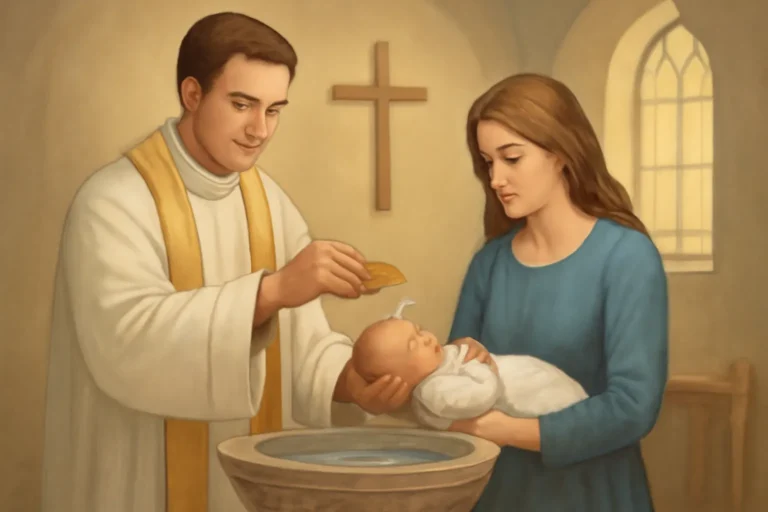
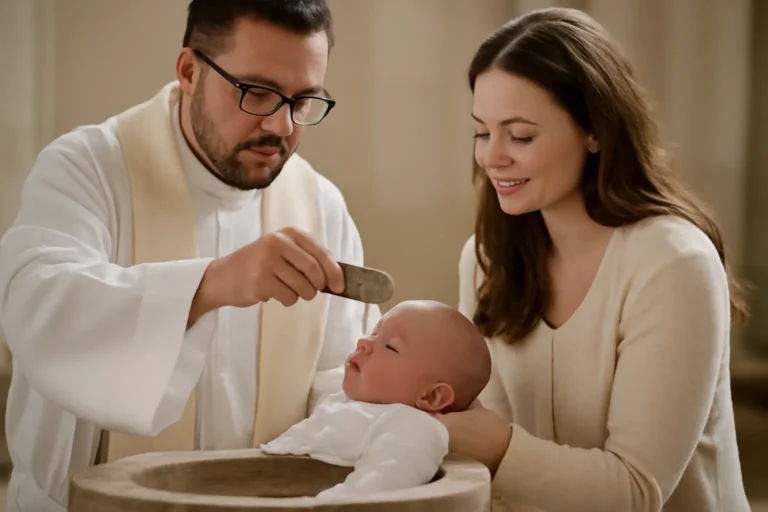
Pouring (affusion) or sprinkling (aspersion): water is poured or sprinkled on the candidate’s head or body, often used for infant baptism or when immersion is not feasible.
Mixed practice in some communities, where the preferred mode may depend on context, geography, or pastoral considerations.
The choice among these approaches is frequently tied to theological emphases, liturgical tradition, and practical concerns. For example, in some churches that teach a credobaptist or believer’s baptism framework, immersion is viewed as the normative sign of personal faith and public confession. In others, the theological emphasis on grace and baptism as a sacramental act may accommodate multiple modes while upholding the core meaning as identification with Christ.
Denominational Perspectives: Who Practices What?
The question of who practices baptism by submersion—and under what circumstances—varies across Christian families. The following broad patterns capture common tendencies without exhausting every local variation.
Catholic and Orthodox Traditions
In Roman Catholic and Eastern Orthodox contexts, infant baptism is the norm, and the customary ritual often involves pouring water over the head rather than full immersion. In theory, immersion is possible and has historical precedent, but it is typically reserved for certain circumstances or adult baptisms. In the Orthodox tradition, baptism is frequently combined with chrismation (anointing with oil) and sometimes uses baptismal fonts with immersion, but practical realities of parish life often yield pouring as the more common method for infants.
Protestant Traditions
Among Protestants, there is a broad spectrum. Some churches, especially those with a historic emphasis on revivalist or revival-influenced practice, center believer’s baptism by full immersion as the normative act for those who profess faith. Baptist and Anabaptist streams are prominent examples where immersion is seen as the definitive mode for credible baptism. Yet many mainline Protestant bodies allow for multiple modes, particularly when infant baptism is practiced or when immersion is impractical.
Baptist, Anabaptist, and Evangelical Traditions
In Baptist circles and among many Anabaptist groups, baptism by submersion of a professing believer is considered essential for church membership and the public declaration of faith. The immersion act is often performed in a river, lake, or purpose-built baptismal pool, with a strong emphasis on personal testimony and conscious acceptance of Christ.
Pentecostal and Charismatic Communities
In Pentecostal communities, immersion is commonly used for adult believers who have made a personal decision to follow Christ, though there are cases in which infant baptism is preferred in line with broader ecclesial tradition. The emphasis in these circles may be less on the ritual form (immersion vs pouring) than on the experience of the water baptism as a conduit of grace and a doorway to subsequent prayer experiences and spiritual gifts.
Other Contexts and Global Perspectives
In many parts of the world, local customs and cultural understandings shape baptismal practice. Some churches in Asia, Africa, and Latin America may blend traditional forms with local expressions, sometimes combining immersion with elements such as foot-washing rituals or other symbolic acts. Across this diversity, the shared core remains the identification with Christ, public faith, and entry into a faith community.
Practical Today: How a Baptism by Submersion Is Carried Out
A contemporary baptism by submersion follows a sequence designed to combine doctrinal meaning with communal worship and accountability. While exact steps can differ, the pattern commonly includes preparation, profession of faith, the immersion act itself, and a post-ritual blessing or sending.
Preparation: Preparation may include catechesis, a class on baptism, or a personal interview to assess understanding and commitment. Families and sponsors (godparents) may participate in the preparatory process in the case of infant or child baptisms, or a candidate may prepare through a period of reflection and proclamation of personal faith in adult baptism.
Public profession of faith: In most modern settings, the candidate publicly states belief in Jesus Christ, repentance from sin, and intent to follow Him. This confession can be spoken aloud, included in a testimony, or incorporated into the liturgy.
Presentation and setting: The baptism usually occurs within a worship service. The space may be a baptismal font, a baptismal pool, or a natural body of water such as a river or lake. Safety considerations—such as the presence of trained personnel, proper footing, and water quality—are addressed in advance.
Immersion act: The officiant or pastor lowers the candidate fully under the water and raises them back up, or performs a partial immersion depending on the tradition. In some settings, the person being baptized is submerged in a basin and then turned to face the congregation in a symbolic reversal of life before and after faith.
Formulas and invocation: The baptism often includes the invocation of the Trinity—“in the name of the Father, and of the Son, and of the Holy Spirit”—though precise wording may vary by tradition. The ceremony underscores the doctrinal belief that the believer’s life is now oriented toward the Triune God.
Blessing and sending: Following the immersion, the church may offer prayers of blessing, welcome the baptized person into membership, and extend the invitation to a life of discipleship, baptismal discipline, and ongoing spiritual formation.
Some practical considerations are commonly addressed in advance in order to ensure the experience is respectful and safe. These include the candidate’s health status, the water temperature, the likelihood of opportunistic slipping, and contingency plans for adverse weather if the baptism occurs outdoors. In many congregations, the moment of immersion is documented in church records and celebrated as a milestone in the life of the believer.
Symbolic Depth: Theological Significance Across Traditions
The theological significance of baptism by submersion goes beyond its physical form. Across traditions, it is fundamentally about identity with Christ, participation in the church, and a visible sign of inward change. In many streams, baptism is linked to a conversion narrative—an intentional turning toward God and away from sin—while in others it is understood as a sacramental grace that seals or initiates members into a life of faith. The water image is a powerful, multisensory symbol: cleansing from sin, renewal, and a fresh start that is not only personal but communal.
The diverse interpretations of what happens in baptism reflect broader theological questions about grace, faith, and works, as well as about the nature of the church. For some theologians, immersion is the most faithful sign because it foregrounds the bodily participation in the believer’s death and resurrection with Christ. For others, the essential reality is the inward faith that God sees, even if the outward sign is performed by pouring water over the head rather than fully submerging the whole body.
Ritual Contexts: Baptism by Submersion in Liturgy and Community Life
In communities that practice baptism by submersion, the rite frequently sits at the intersection of formation, evangelism, and ecclesial welcome. It is often scheduled as a milestone in a year of teaching, mentoring, or evangelism where new members are integrated into the life of the church. Beyond the individual, baptism also communicates to the wider community—a declaration that the church is a place where people hear the gospel, repent, and begin a journey of discipleship.
Community inclusion: baptism signals that the baptized person is now a full participant in congregational life, including worship, sacraments, and governance (depending on tradition).
Public witness: the visible act of immersion becomes a shared confession that God’s grace has transformed a life.
Educational track: often, new believers or new members are invited into ongoing catechesis or small-group discipleship to deepen understanding of the faith they professed publicly.
It is important to recognize that even within a single tradition, there can be a range of practices. Some congregations emphasize baptism as the moment of entering salvation history, while others emphasize baptism as the entry point into ongoing formation and stewardship within the church. The ritual’s meaning is shaped by the surrounding catechesis, the liturgical calendar, and the lived experience of the faith community.
Historical Debate and Contemporary Ecumenical Considerations
Debates about the proper mode and appropriate recipients of baptism continue in contemporary ecumenical discussions. Some points of contention include whether infant baptism should be compatible with a practice of full immersion, how to handle re-baptism in cases of differing denominational backgrounds, and whether immersion should be considered essential or merely advantageous. As communities engage in ecumenical conversations, many are seeking common ground that respects tradition while prioritizing a shared commitment to Christ and to the church’s mission in the world.
An important practical outcome of these discussions is that many churches have adopted inclusive policies that honor diverse baptismal practices while underscoring the theological commitments that bring communities together. In some cases, churches that practice believer’s baptism by immersion still recognize the validity of baptism performed by other modes in other contexts, while maintaining a sense of doctrinal integrity about the meaning of baptism in their own tradition.
Frequently Asked Questions about Baptism by Submersion
The following Q&A format provides concise clarifications about common concerns and curiosities surrounding baptism by submersion.
What is the essential meaning of baptism by submersion?
It symbolizes death to the old life, burial with Christ, and resurrection to new life, and it publicly identifies the believer with the church and with Christ.
Who can be baptized by submersion?
In traditions that emphasize believer’s baptism, the candidate is typically someone who has professed personal faith in Christ. In other contexts, infants may be baptized by immersion where the tradition practices credobaptism or paedobaptism in a form that permits immersion.
Is immersion the only valid mode of baptism?
Many churches consider immersion a preferred or normative mode, but others accept pouring or sprinkling as valid, especially for infants or where immersion is impractical. The key is the theological meaning rather than the method alone.
Does baptism by submersion depend on geography or culture?
Yes. Local customs, climate, and available space (baptismal fonts, rivers, lakes) influence how baptism is carried out. Global Christianity shows a spectrum of practices, all seeking to honor the significance of the rite.
What about re-baptism if a person changes church traditions?
Practices vary. Some traditions require a new baptism if the mode or theology differs substantially, while others recognize the validity of a baptism performed by a faithful act of faith in a different context. The approach is often guided by ecclesiology and pastoral judgment.
In reflecting on baptism by submersion, readers are invited to consider not only the physical method but the broader theological narrative: God’s grace acting in a human life, the community’s welcome, and the ongoing call to discipleship. Whether through full immersion in a river, a baptismal pool, or a font, the rite remains a powerful, communal act that marks a turning point in the journey of faith.
Baptism by submersion: immersion of the entire body under water as a rite of initiation.
Immersion baptism: another term for baptism by submersion; emphasizes the physical act of immersion.
Full-immersion: complete submersion of the candidate in water.
Affusion: pouring water on the candidate’s head as an alternative to immersion.
Aspersion: sprinkling water on the candidate as a form of baptism.
Credobaptism: baptism of believing adults who profess personal faith (as opposed to pedobaptism, the baptism of infants).
Pedobaptism: infant baptism or baptism of children, often associated with arguments about the participants’ age and understanding.
Believer’s baptism: baptism administered to individuals who personally profess faith, often tied to immersion in many Protestant traditions.
In sum, baptism by submersion remains a central and persisting symbol in Christian practice. Its meanings are layered—biblical, historical, liturgical, and communal—and its execution is shaped by the worshipping community’s doctrinal convictions and practical realities. For readers exploring this topic, the voyage through its origins and its present-day practices reveals how a single ritual can carry a spectrum of interpretations while preserving a shared core: the public identification with Christ and the invitation into a life of discipleship within the family of faith.