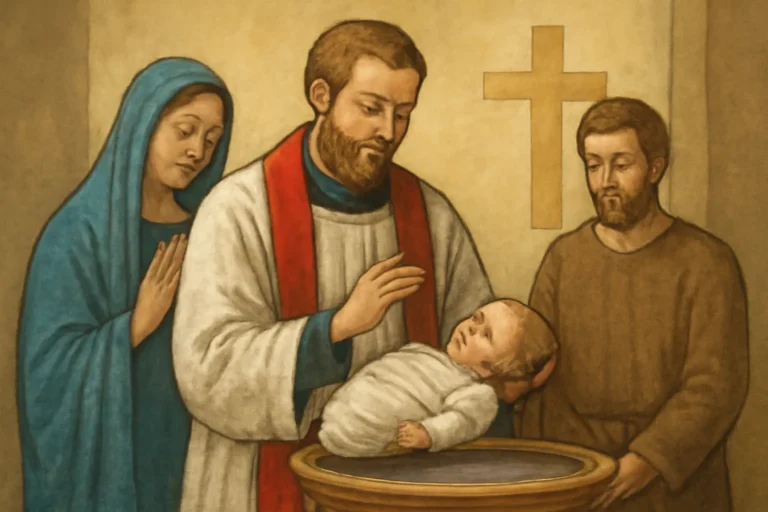
Lutheran View of Baptism: Understanding Beliefs, Significance, and Practice
The Lutheran view of baptism treats this rite as a divinely instituted discovery of grace, a means of grace through which God communicates forgiveness, regeneration, and life in Christ. Grounded in Scripture, shaped by the Lutheran Confessions, and lived out in faithful congregations, this understanding emphasizes both the objective reality of God’s Word and the subjective gift of faith in the recipient. In this article, we explore what Lutherans believe about baptism, why it matters for individuals and the Church, and how baptism is practiced across varied communities within the Lutheran tradition.
The baptismal doctrine of the Lutheran tradition is anchored in Scripture and confessed in the Lutheran Confessions. Central biblical passages include the Lord Jesus’ own commission: “Go therefore and make disciples of all nations, baptizing them in the name of the Father and of the Son and of the Holy Spirit” (Matthew 28:19). Lutherans also appeal to Mark 16:16, which links belief and baptism with salvation, and to passages such as Titus 3:5 and 1 Peter 3:21, which highlight cleansing, rebirth, and the gracious action of God in baptism. The combination of Word and Water is repeatedly emphasized as the ordinary means by which God’s promise accompanies the rite.
In the Augsburg Confession and its Apology, Lutherans affirm that baptism is a sacrament—that is, a holy rite instituted by Christ through which God bestows grace and regenerates the believer. The Confessions insist that baptism should be administered with the proper element (water) and the trinitarian form—“in the name of the Father, and of the Son, and of the Holy Spirit.” These elements are not mere signs; they are the visible signs of the grace God promises to bestow. The confession also makes clear that baptism is to be administered to infants as well as adults, recognizing the continuity of God’s covenant body with each generation.
A nuanced feature of the Lutheran presentation is the insistence that the efficacy of baptism is grounded in Christ and God’s promises, not in human merit. While the baptismal rite is outwardly performed by a pastor or a duly authorized minister, the grace given in baptism flows from God’s promise and is received by faith. This means that the rite bears fruit in the life of the recipient through the instrument of faith, which may be explicit or implicit in the case of infants. In practical terms, this creates an interplay between the external act and the inner reception of grace that characterizes Lutheran baptismal theology.
Baptism as a Means of Grace
One of the most distinctive claims of Lutheran baptism is that it is a means of grace. In this sense, baptism is not merely a symbol of what God has already done in a person’s life; rather, God uses the water and the Word to grant and strengthen faith, forgive sins, and unite the believer with Christ. The catechetical tradition emphasizes that the Word of God accompanies the water, so that baptism is both a sign and a seal of God’s gracious action.
The regenerative work associated with baptism is stated in the Small Catechism and other Lutheran writings as being the divine act by which God creates faith, renews the heart, and incorporates the baptized person into the body of Christ. This does not mean that faith is optional in baptism; rather, it means that God’s promise is effective whether or not the recipient’s conscious faith is fully developed at the moment of baptism. In the case of infants, the faith of the parents and sponsors, confessing the faith on behalf of the child, is deemed a legitimate ground for reception into the covenant community, with the grace of God operating through the rite.
The distinction between the means of grace and the human reception of that grace is a recurring theme. Lutherans affirm that the sacrament does not replace the need to hear and believe the Gospel, to repent, and to trust in Christ for salvation. Rather, baptism is a concrete, visible sign that accompanies the promise of the Gospel. Faith, then, is the instrument through which the benefits of baptism are received, and the Church encourages ongoing catechesis to nurture that faith over a lifetime.
Infant Baptism and Believer’s Baptism: Variation within the Lutheran World
A hallmark of Lutheran practice is the routine baptism of infants. The historic Lutheran position is that infant baptism is legitimate and desirable, grounded in the continuity of God’s covenant and the New Testament’s teaching on grace and regeneration. In Lutheranism, the baptism of children does not depend on the child’s personal decision at that moment; instead, it rests on the promise that God is faithful to the ordinary means of grace and that parents and sponsors pledge to teach the child the Christian faith.
That said, Lutherans also recognize situations where a person comes to faith as an adult and requests baptism as a conscious response to the Gospel. This gives space to what is often called adult baptism or believer’s baptism within Lutheran circles, though it remains less common in many congregations. In practice, when adults are baptized, the rite typically includes a clear confession of faith, catechetical preparation, and a public profession before the congregation.
Infant baptism emphasizes God’s initiative and the gift of grace given before personal faith is mature.
Believer’s baptism emphasizes a conscious faith response, often following a period of catechesis and instruction.
Both forms maintain the essential elements: water and the name of the Triune God with the Gospel promise.
In many Lutheran traditions, the decision between infant and believer’s baptism is not a choice about the vitality of grace, but a reflection of pastoral and catechetical realities. The overarching conviction is that God’s promise attaches to baptism and that the Church remains responsible to nurture and instruct the baptized in the ways of faith, whether as an infant or an adult.
The Role of Faith and the Baptismal Promise
The relationship between faith and baptism is a central topic in Lutheran theology. On the one hand, baptism is the instrument by which God’s grace is made present; on the other, the believer’s ongoing faith is the vessel through which the benefits of baptism are appropriated. Lutherans articulate this relationship with the phrase that baptism is efficacious because of God’s promise and the Word that accompanies the water, but faith remains the means by which one receives the assigned benefits.
This leads to the important distinction between the external sign (the water, the act, the rite) and the internal ______or spiritual reality________ (the gift of forgiveness, adoption into God’s family, and new life). The reformational language often uses the distinction between the external rite and the internal trust: what God has promised in baptism is objective and reliable, while the subjective experience of that grace may be realized at different times for different individuals.
The doctrine of justification by faith intersects with baptism in a nuanced way. Baptism does not “earn” justification; rather, it communicates the forgiveness of sins that God provides through Christ. In other words, justification is by grace through faith, and baptism serves as a divine ordinance through which God grants the benefits of Christ’s life, death, and resurrection. Faith is the means by which one receives the forgiveness and new life proclaimed in the baptismal rite. For infants, faith is present by the promises of the covenant community, and as the child grows, that faith is nourished and strengthened through catechesis and participation in the life of the Church.
Liturgical Practice: How Lutherans Baptize
The Lutheran baptismal rite is intentionally structured to foreground God’s Word, the promise of grace, and the communal aspect of entering the Christian life. While local customs vary, the core elements remain consistent across the Lutheran world.
Preparation: The congregation or the family receives instruction or catechesis about the Gospel, the significance of baptism, and the responsibilities of parents and sponsors. The pastor or catechist explains what baptism means and invites the household to participate in the service with reverence and faith.
Invocation and Sign of the Cross: The rite often begins with a sign of the cross on the candidate, a reminder of identification with Christ in his suffering and exaltation.
Confession of Faith and Promises: For infants, parents and sponsors confess the Christian faith on behalf of the child and promise to instruct and raise the child in the Christian faith. For adults, the person making a personal confession of faith publicly affirms belief in the Triune God and in the Gospel.
Water and Word: The essential act—water is poured or submerged, and the minister speaks the baptismal formula, typically “in the name of the Father, and of the Son, and of the Holy Spirit.” The accompanying Word proclaims the Gospel and God’s promises to the baptized.
Welcome into the Church: The person is welcomed as a member of Christ’s body, the Church, and is thereby united with the community in mission, worship, and service. The rite often includes prayers, a blessing, and the laying on of hands in some traditions.
Post-baptismal Instruction: After the rite, the family and congregation are encouraged to continue catechesis, frequent participation in the Lord’s Supper, and ongoing spiritual formation to nurture faith.
In practice, Lutheran churches also emphasize the means of grace through the Scriptures in the baptismal rite, with Scripture readings, a sermon, and sometimes a brief instruction or catechesis accompanying the service. Although the water is a visible sign, the benefits are understood to be given by God’s grace through the Word, not by human merit or ritual performance alone.
Theological Significance in the Life of a Christian
Baptism is a watershed event in the life of a believer, marking entry into the Christian covenant and participation in the Church’s life. The regeneration spoken of in Lutheran teaching refers to being born anew by the Spirit through the Word and the sign of water. Baptism signifies the believer’s identification with Christ’s death and resurrection; through baptism, the old self is put to death, and the new self is raised to live in Christ. This means the baptized person is declared righteous in God’s sight because of Christ’s righteousness imputed through faith and made active by the Spirit who awakens faith in the heart.”
A related concept is adoption as God’s beloved child. In baptism, the believer is incorporated into the body of Christ and receives the Holy Spirit, who sanctifies, strengthens, and sustains faith. In practice, this means that the baptized person is invited into a life of discipleship—regular worship, participation in the sacraments, prayer, service, and mission. The aural proclamation of the Gospel in the baptismal rite and the ongoing proclamation of the Gospel in preaching and catechesis help to sustain and deepen faith over time.
The covenantal framework is often highlighted in Lutheran discourse. Baptism is understood as the sign of entry into God’s covenant community, echoing the old covenant’s circumcision in a New Testament sense. This is not a claim that baptism replaces personal faith or responsibility; rather, it emphasizes that God’s promise is for the child, the family, and the church, and that nurture and catechesis are essential to bringing the promised grace to its full realization.
Baptism in the Life of the Church Year
Baptism holds a distinctive place within the liturgical life of Lutheran communities. Some traditions celebrate the Baptism of the Lord Sunday, which emphasizes Christ’s baptism and the revelation of the Father’s voice affirming Jesus. The event is often marked with readings from the Gospels, hymns about washing and renewal, and a renewed emphasis on baptismal promises for the entire congregation.
The catechetical season around baptism often features special classes for parents and sponsors and a reaffirmation of baptismal vows during the season of Epiphany or Easter. Every year, many congregations observe baptismal remembrance Sundays, where hymns and sermons reaffirm what baptism means for daily living: forgiveness of sins, new life in Christ, and the call to witness.
Common Misconceptions and Clarifications
Several questions commonly arise in discussions about the Lutheran view of baptism. Here are some clarifications that reflect Lutheran teaching:
Is baptism a guarantee of salvation? Lutheran theology teaches that baptism is the means by which God promises grace and creates faith; it is not a magical guarantee apart from God’s promise or personal faith. The benefits of baptism are received by faith, and the ongoing life of faith is essential.
Can one be unbaptized and still be saved? Lutherans affirm that Christ’s grace can operate apart from the sacraments, but in ordinary practice and in the biblical witness, baptism is the ordinary means by which God delivers the promises of the Gospel. The Church’s mission includes bringing people to baptism and fostering ongoing faith.
What about infant baptism and personal faith? The Lutheran position holds that God’s promise is given to the child and that parents, sponsors, and the faith of the community participate in the infant’s baptism. As the child grows, personal faith is nurtured through catechesis and liturgical life.
Is baptism a ritual rather than a real change? For Lutherans, baptism is a real, God-initiated work that joins the believer to Christ and his Church. The real change is rooted in God’s grace communicated through the sacrament, even as believers respond with faith.
Ecclesial and Ecumenical Context
Within the broader Christian landscape, the Lutheran understanding of baptism distinguishes itself in several ways. Compared to the Catholic view, Lutherans affirm a sacramental understanding of baptism that is grounded in Scripture and the Lutheran Confessions, but they typically reject transubstantiation and some of the later medieval theological refinements about the exact mechanisms by which grace is imparted. They emphasize that baptism is the work of God through water and the Word, and they stress the continuity of the covenant with the apostolic witness.
In contrast to Reformed or Presbyterian baptism theology, Lutherans maintain a more sacramental understanding of baptism as a means of grace and a sign of regeneration, though with the understanding that faith is the instrument by which grace is received. The Lutheran tradition also differs from many Baptist communities, which typically practice believer’s baptism only and may view baptism as a public profession rather than a means of grace. Lutherans insist on the validity of infant baptism within the context of the Church’s life and covenantal language, while acknowledging the spiritual value of adult catechesis and baptism for those who come to faith later.
The doctrinal core remains: baptism is a divine action blessed with a promised grace, administered with the Word, and received by faith, within the life of the Church. This creates a robust ecology where sacraments, Word, and community work together to form mature Christians who live out their baptismal identity in daily life and service.
Frequently Asked Questions about the Lutheran Baptism
To provide quick access to common curiosities, here is a brief FAQ style guide that reflects typical Lutheran articulation:
Q: What makes Lutheran baptism different from other traditions?
A: Lutherans affirm baptism as a means of grace ordained by Christ, to be administered with water in the name of the Triune God. The emphasis is on God’s promises declared in the Word and received by faith, with infant baptism widely practiced as a gift to families and the Church.
Q: Is baptism necessary for salvation?
A: Lutheran teaching holds that salvation comes by grace through faith in Christ. Baptism is the ordinary means by which that grace is communicated, but the core of salvation remains God’s gracious gift in Christ. In exceptional circumstances, God’s mercy can operate outside the sacrament, but baptism remains the normative path for publicly confessing faith and receiving God’s promises.
Q: Can an adult who was not baptized be saved?
A: The Gospel proclaims salvation in Christ; baptism is the sign and seal of that promise. The Church understands evangelistic ministry as inviting people to trust in Christ and receive baptism; however, God’s engagement with the world is not limited to the sacraments alone.
Q: What is the role of sponsors and parents in infant baptism?
A: Parents and sponsors vow to raise the child in the Christian faith and to participate in the child’s catechesis and spiritual growth. The Church supports this vocation by providing teaching, worship, and community life that nurture faith.
Q: Does the Lutheran church require baptism for membership?
A: Baptism is the entry into the visible Church, but Church membership also involves catechesis, lifelong faith formation, and participation in the life of the congregation. Baptism is foundational, but membership is shaped by ongoing discipleship.
Variations in Practice Across Lutheran Traditions
Because Lutheran churches span diverse cultures and contexts, you will find variations in the liturgical forms, language, and catechetical emphases. The core doctrinal commitments remain stable: baptism as a sacrament, Word and water, and the promise of grace. Some congregations emphasize a brief, simple rite suitable for smaller communities, while others incorporate more elaborate liturgies with choirs, organ music, and extended catechetical components.
In some contexts, the practice of infant baptism is accompanied by explicit catechesis aimed at parents and guardians, with a plan for ongoing instruction. In others, believers’ baptism is integrated with confirmation—an intentional moment where a young person or adult confirms their faith and their commitment to live as a disciple of Christ in the Church. Regardless of the form, the aim remains: to declare publicly and to receive personally the grace God offers in baptism.
Key Terms to Know
The following terms frequently appear in discussions of the Lutheran baptismal understanding. Bolded terms indicate central ideas in this article:
Means of grace – the divine instrument through which God gives faith, forgiveness, and life in Christ.
Word and Water – the combination of the Gospel proclamation with the sacramental sign.
Triune name – baptism performed in the name of the Father, the Son, and the Holy Spirit.
Regeneration – the spiritual rebirth effected by God in baptism.
Justification – the doctrine that believers are declared righteous by God through faith in Christ, with baptism participating in the wider process of salvation.
Infant baptism – baptism of children, consistent with the covenantal understanding of God’s promises to the family and Church.
Believer’s baptism – baptism of those who have made a personal profession of faith; less common in some Lutheran contexts but fully compatible with Lutheran sacramental theology.
Ex opere operato – a Latin term sometimes discussed in sacramental theology; Lutherans emphasize that the efficacy of baptism arises from God’s promise and Word, not merely from the ritual act as a mechanical work.
Closing Reflection: Living Baptism in the Everyday Faith
The Lutheran approach to baptism invites believers to see their life in Christ as precisely what baptism signifies: a daily baptismal vocation rooted in grace. The liturgical life, the preaching of the Gospel, the regular celebration of the Lord’s Supper, and the ongoing catechesis together nurture a faith that remains grounded in the promises given in baptism. For families, this means a continual commitment to raise children in the faith, to model trust in Christ, and to participate in the life of the church as a community that witnesses to the good news of Jesus Christ.
For congregations, baptism serves as a reminder that God is always at work gathering people into his covenant community. It calls the church to be a place of welcome, instruction, and service, where the Word remains central, where the sacraments are rightly administered, and where the baptized are equipped for a life of mission in the world. In this sense, baptism is not merely a once-off event but a lifelong immersion in the grace and call of Christ.