Colonial Churches: History, Architecture, and Heritage
Colonial churches are more than places of worship; they are historical records carved in stone, timber, plaster, and light. Built during the era of European expansion and global trade, these sacred spaces served as instruments of faith, education, community organization, and political presence. Across continents, the phrase encompasses a wide spectrum—from modest mission chapels tucked beside frontier trails to grand cathedrals that anchored colonial capitals. Their stories echo the complex relationships between colonizers and local communities, and their surviving forms tell us how architecture, craft, and ritual adapted to diverse climates and cultures. In this article we survey history, architecture, and heritage of the colonial church tradition, with attention to regional variations, construction practices, and ongoing efforts to preserve these venerable structures for future generations.
The history of ecclesiastical buildings in colonial contexts is inseparable from the spread of Christianity, from state formation, and from the search for cultural legitimacy in distant lands. The earliest churches in many colonies were built by missionaries who traveled with explorers, traders, and soldiers. Over time, chapels and parish churches gave way to cathedrals and collegiate churches that symbolized the crown, the papacy, or local religious authorities. The arc from primitive mission outposts to monumental urban churches traces how faith, power, and everyday life intertwined in colonial settings.
Two broad currents often shaped the emergence of these sacred spaces: missionary enterprise and territorial administration. In missionary-driven contexts, religious orders and congregations established places of worship as a means to evangelize, study local languages, and create literacy and schools. In administrative or royal contexts, churches were designed to display authority, consolidate colonial governance, and provide a social framework for settlers and indigenous communities. These two streams could reinforce each other or compete, depending on the political climate, the patronage available, and the technical expertise at hand.
Origins in the Americas
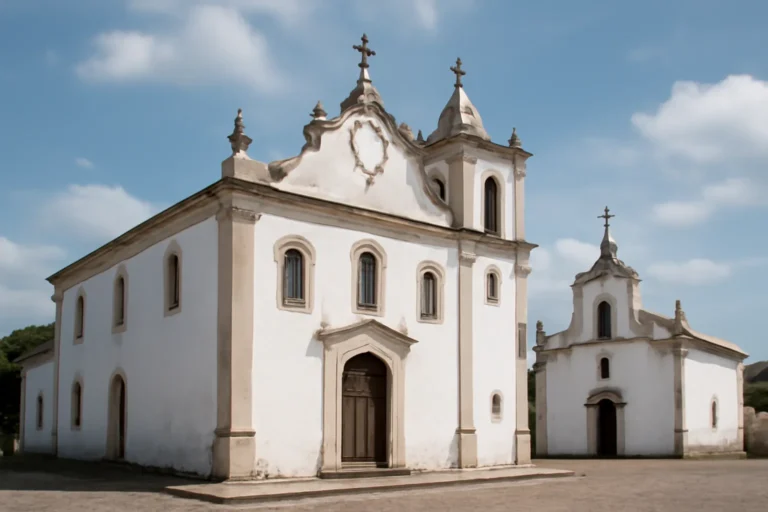
In the Americas, the colonial church often blossomed alongside colonial towns and missions. In Spanish and Portuguese colonies, mission churches frequently started as simple chapels near missions or presidios and grew into expansive cathedral complexes. Features such as atriums, cloisters, and retablos reflect a fusion of European baroque exuberance with local materials and building techniques. In many Caribbean and Latin American cities, churches anchored plazas and served as de facto urban centers, hosting markets, processions, and civic ceremonies in addition to worship.
Spanish and Portuguese missions tended to emphasize ornate altars, sculpted retablos, and plastered facades that could be painted in bright colors.
In frontier regions, church buildings often used available materials—adobe, stone, timber, or palm-thatched roofs—resulting in structures that were practical yet expressive of local climate and craft.
Cathedral complexes were frequently part of larger religious and civil precincts, linking church life to schooling, almsgiving, and local governance.
Across English-speaking colonies, Anglican parish churches and meetinghouses emerged as focal points for congregations, sometimes paralleling the growth of parishes with the expansion of towns. These structures could be comparatively austere or comparatively sumptuous, but they consistently served as gathering places for worship, education, and communal decision-making. In the Caribbean and parts of the Atlantic world, the interplay between European tastes and Afro-Atlantic or Indigenous influences produced unique blends of form and decoration in colonial worship spaces.
Global networks and regional scripts
The history of the colonial church is also a history of networks—between metropolitan centers and distant settlements, between religious orders and lay patrons, and between different architectural vocabularies that traveled with trade routes. Mission chronologies reveal how a single architectural idea could be adapted to the climate of a high plateau, a tropical coast, or a dry savanna. As church leaders gathered for councils, synods, or cathedral chapters, they often issued specifications for church orientation, sanctuaries, and liturgical furnishings. Yet each region added its own local color, turning a generic ecclesiastical model into something distinct and enduring.
Architectural Traditions in Colonial Churches
Architectural traditions in the colonial church world reflect a dialogue between European stylistic families and the realities of distant landscapes. From the outset, builders had to balance symbolism with structural viability, acoustics with heat and humidity, and the spiritual goals of worship with the practical needs of communities. The architectural vocabulary you encounter in colonial churches ranges from restrained Neoclassicism to exuberant Baroque, from soot-darkened stone to sunlit adobe and timber. Understanding these buildings means looking at planning, elevation, interior decoration, and the ways in which light, material, and space shape devotional experience.
Common architectural features
Plan forms: cruciform layouts, central domes, or longitudinal naves that organize processions and liturgical activity.
Towers and spires: vertical landmarks that directed the eye upward and served as bells for community life.
Facade treatments: plastered surfaces, stone ashlar, or brickwork often enhanced with pilasters and cornices to convey authority and grace.
Interior elevations: barrel vaults, domes, groin vaults, or timber ceilings that shape acoustics and sacred ambiance.
Altars and retablos: richly carved and painted space behind the main altar, reflecting regional artistic sensibilities.
Ornamental programs: sculpture, fresco, and painted ceilings that narrate biblical themes or local histories.
Elements of climate adaptation: wide eaves, verandas, or shaded porches, as well as thick walls and reflective surfaces to cope with heat.
Regional variations
Indo-Portuguese and Latin American missions: a distinctive blend of European baroque aesthetics with local craft traditions and tropical materials, often featuring carved retablos and elaborate plaster ornamentation.
Anglo-Norman and Georgian influences in settler towns: more restrained symmetry, slender columnar orders, and front-facing entrances that emphasized civic identity.
Eclectic timber and stone churches in frontier regions: timber framing, log construction, and stone bases designed to resist damp and pests while keeping costs manageable.
Coastal and island churches: coral stone, lime plaster, and tiled roofs suited to humid climates and salt spray, with distinctive color palettes.
Gothic revival and neoclassical revivals in late colonial period: aspirational designs that linked colonial communities to European architectural prestige.
Regional snapshots
In the Americas, many central churches express a synthesis of Baroque ornament and local adobe or quarry stone, creating luminous interiors that catch and reflect daylight in dramatic ways. In Africa, mission churches often combine stone or fired brick with timber elements and wide, airy interiors to accommodate large congregations and processions. In Asia, colonial chapels and cathedrals frequently adapt to tropical humidity and monsoon rain, using verandas, arcades, and elevated foundations to protect sacred spaces. In Oceania, church precincts reflect the practical needs of remote communities, where timber frames and corrugated metal might replace more fragile materials, while still preserving the ritual geometry that organizes liturgy and community life.
Materials, Craftsmanship, and Techniques
The material choices and building technologies in colonial churches reveal a lot about local resources, trade networks, and the transfer of skilled labor. From the earliest chapels to grand cathedrals, builders drew upon a repertoire of common materials and adapted them to climate, seismic risk, and availability. The craft traditions surrounding carpentry, masonry, plasterwork, and decorative painting contributed to a durable yet expressive ecclesiastical built environment.
Construction materials and methods
Stone and brick: durable, fire-resistant, and capable of supporting heavy vaults; frequently quarried or transported from regional sources.
Adobe and rammed earth: economical options in arid or frontier landscapes; often plastered and whitewashed for reflection of heat.
Timber framing: common in regions with abundant forests; used for columns, roof structures, and sometimes entire walls in vernacular church forms.
Coral and limestone: coastal builders used local calcareous rocks to fashion walls with substantial texture and warmth in color.
Plaster and stucco: finishing coats that carried painted frescoes or decorative reliefs, especially in Baroque interiors.
Tile and metal: roof coverings, decorative tiling, and wrought-iron accents for railings, doors, and screens.
Craft traditions and liturgical furnishings
Altars and retablos: commissioned from regional workshops; often narrative and highly colored, with saints and biblical scenes.
Woodcarving and sculpture: used to frame niches, the pulpit, and the reredos; local iconography sometimes mingled with European models.
Stained glass and painted surfaces: employed in later periods to illuminate interiors with color and storytelling.
Organ and acoustics: pipe organs or harmoniums contributed to the musical life of worship and ceremony.
Religious, Social, and Cultural Roles
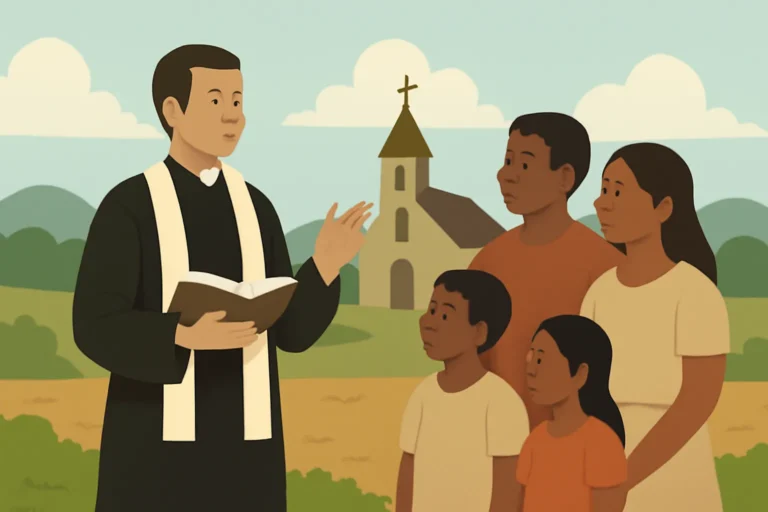
Colonial churches served as more than places of prayer. They functioned as education centers, charitable organizations, and public forums. In many colonies, church life was inseparable from social life, and the parish or mission church became a hub for schooling, welfare, and civic responsibility. This is especially visible in mission church networks that cultivated literacy, catechism, and basic schooling for both children and adults, often in tandem with colonial authorities’ oversight of social order. The churchyard, schoolhouse, alms houses, and healthcare initiatives often formed a campus-like ensemble that anchored settlement life.
Education, literacy, and social welfare
Many colonial congregations established schools attached to their church compounds, teaching reading, writing, catechism, and local languages.
Orphanages and hospices sometimes grew alongside parish houses, providing care for vulnerable populations and linking spiritual life with social services.
Religious instruction facilitated the spread of European languages and literacy, which in turn supported administration and commerce.]
Beyond schooling, these churches framed public rituals, including processions, national holidays, and commemorations that reinforced a sense of identity—whether as colonial subjects, settlers, or members of a missionary fraternity. In some regions, the church became a bridge between cultures, hosting interfaith dialogues, weddings, and community meetings that brought together diverse groups under shared sacred space. Yet the social dynamics surrounding colonial churches were complex, and the fate of indigenous religious practices and local traditions varied widely across regions and periods.
Framing authority and community life
Church buildings were strategic statements of jurisdiction and prestige. The presence of a cathedral or a prominent parish church often signaled the legitimacy of a colonial regime, the endurance of a particular mission, or the centralization of governance. At the same time, local congregations forged strong attachments to their houses of worship, which became sites for memory, rites of passage (baptisms, confirmations, weddings, funerals), and congregational governance. The interplay between religious authority and lay leadership shaped both the architecture and the everyday life of the community.
Preservation, Restoration, and Heritage Management
Today, colonial churches face the dual task of preserving architectural integrity while remaining relevant to living communities. Preservation strategies must respect authenticity, stability, and cultural sensitivity, while adaptation may be necessary to address changing user needs, safety concerns, and climate pressures. Conservationists, historians, and communities collaborate to document original materials, restore damaged art and furnishings, and sometimes repurpose buildings while maintaining their sacred character.
Challenges in preservation
Structural aging: foundations, vaults, and roofs can weaken over decades or centuries, risking collapse or water intrusion.
Weather and climate impact: humidity, salt exposure in coastal regions, earthquakes, and tropical storms can damage plaster, stone, and timber.
Pollution and decay of decorative arts: soot, acid rain, and chemicals can degrade statues, frescoes, and woodwork.
Invasive vegetation and pests: ivy growth, termites, and fungi threaten hidden timbers and wall surfaces.
Resource constraints: funding for skilled restoration, appropriate materials, and ongoing maintenance is often limited in former colonies.
Conservation approaches
Careful historical documentation, including architectural surveys and photographic records, to guide authentic restoration.
Use of traditional materials and techniques where feasible, with modern counterparts only where necessary to ensure safety.
Seismic reinforcement and drainage improvements to protect from environmental hazards while preserving appearance.
Restoration of interior artworks, including retablos, frescoes, and organ cases, with collaboration from art conservators.
Community engagement and education programs that emphasize the building’s multiple significances—architectural, spiritual, and cultural.
Heritage designation and public memory
Many colonial churches carry national heritage designations, UNESCO listings, or regional preservation statuses that recognize their cultural value. These designations help mobilize funding, legal protection, and tourism management while encouraging responsible visitation. Yet heritage work also raises questions about memory, representation, and inclusivity. Some communities advocate for interpretive programs that acknowledge Indigenous histories, slave and indentured labor legacies, and the multifaceted roles these buildings have played beyond their original religious purposes. The most resilient preservation efforts tend to be those that honor diverse perspectives and aim to keep sacred spaces accessible to contemporary communities while safeguarding their historical integrity.
Notable Examples and Legacy
Colonial churches around the world provide a cross-section of architectural outcomes and social histories. A few representative landmarks illustrate how the colonial church, in its many forms, has left an enduring imprint on landscapes, towns, and cultural memory. While this is not a comprehensive catalog, it points to the breadth and depth of the built heritage in this category.
Cathedral complexes in Latin America: grand interiors with gilded altars, Baroque retablos, and intricate iconography that narrate religious and royal patronage.
Anglican parish churches in North America: timber-framed or stone-faced structures with clear orientation to civic centers, often updated over centuries to accommodate growing congregations.
Coastal mission churches in Africa and the Indian Ocean: blends of local stone, timber, and plaster, with open courtyards designed for communal worship and teaching.
Asian Catholic cathedrals and Portuguese-era chapels: a synthesis of European forms with vernacular ornament, tropical materials, and multilingual liturgies.
Oceanic churches: small mission chapels and larger churches in settler towns that reflect early colonial life and later urbanization.
In the modern era, colonial churches have become important heritage tourism assets and educational resources. Guided tours, interpretive signs, and scholarly exhibitions help visitors understand the historical contexts—colonial administration, missionary zeal, and the everyday lives of parishioners. Yet contemporary conversations increasingly address how these sacred spaces can be inclusive, respectful of Indigenous cultural patrimony, and mindful of the painful dimensions of colonial history. Museums, archives, and community-led programs often work together to tell more nuanced stories that recognize multiple voices and perspectives tied to the same buildings.
Variations on a Theme: How the Colonial Church Became a Global Phenomenon
Although the term “colonial church” points to a shared historical moment, the actual buildings vary widely. The concept covers a family of architectural and social forms that emerged in different imperial settings, each adapting to climate, local materials, and religious orders. In some regions the church became a theatre for Baroque drama and a center for civic life; in others it became a quiet chapel within a hillside village, a place for quiet prayer and community memory. Across the globe, this architectural category demonstrates three enduring patterns:
Institutional centrality: churches as anchors of urban or rural life, paired with schools and charitable institutions.
Cultural hybridity: fusion of European styles with local construction techniques and indigenous aesthetics.
Adaptive resilience: continuous use and modification to meet changing liturgies, demographics, and safety standards.
As a result, the colonial church heritage is not a single style but a tapestry of forms—ranging from austere Protestant meetinghouses on frontier settlements to richly decorated Catholic cathedrals in colonial capitals. Each building narrates a specific story about the people who worshipped there, the patrons who funded it, and the builders who toiled to raise it stone by stone, beam by beam, and note by note in the spaces between the exterior world and the sanctuary within.
Practical Guide for Readers and Researchers
If you are exploring colonial churches as a researcher, student, or curious visitor, consider these practical avenues for further exploration:
Site surveys: examine the foundational materials, wall thickness, and roof construction to understand how the building has endured climate and seismic events.
Art historical studies: analyze retablos, sculpture, and painted ceilings to learn about patronage, workshops, and cross-cultural influences.
Liturgical archaeology: study seating arrangements, altar orientations, and liturgical furnishings to glean insights into worship practices across periods.
Oral histories: gather memories from parishioners, clergy, and local guides to capture the living connections to these spaces beyond their stones.
Conservation science: engage with material analyses, environmental monitoring, and sustainable restoration practices to balance preservation with accessibility.
Whether you encounter a mission church in a tropical valley, a Gothic-inspired cathedral in a colonial capital, or a humble chapel on a frontier trail, you are witnessing a place where faith, architecture, and community life intersected in powerful ways. The study of colonial churches not only enriches our understanding of architectural history but also invites reflection on how sacred spaces mediate memory, identity, and social change across generations.
In sum, the colonial church tradition is a global archive—a record of European influence shaped by local hands and landscapes. Its legacy challenges us to preserve the physical fabric and the stories embedded in every nave, aisle, and bell tower, while also fostering an inclusive narrative that honors both the architectural grandeur and the human histories intertwined with these remarkable buildings.