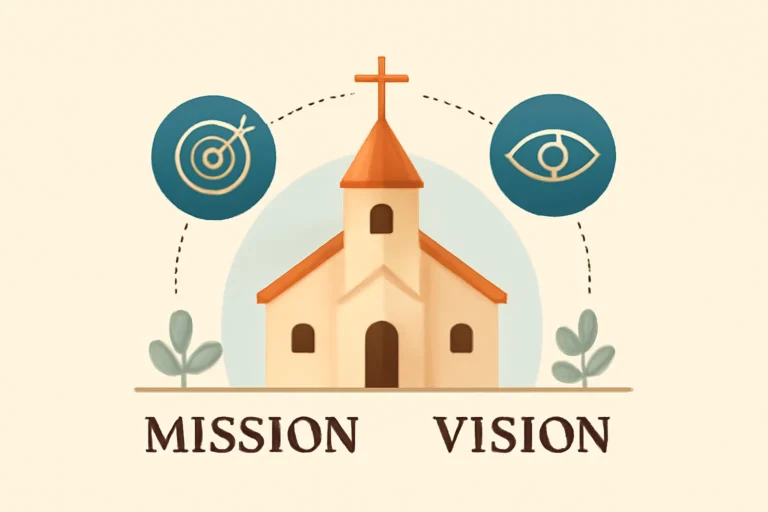
Mission and Vision of a Church: Crafting a Purpose-Driven Ministry
The mission and vision of a church are more than slogans or ceremonial statements. They are the living heartbeat of a faith community, guiding decisions, shaping ministries, and inviting every member to participate in God’s broader story. A well-crafted mission articulates the church’s core purpose in a way that is concrete and actionable, while a compelling vision paints a future reality that inspires courage, hope, and sustained effort. When these two components are clearly defined and deeply owned, a church can pursue a purpose-driven ministry that is coherent, adaptable, and resilient in the face of changing contexts. This article explores the different facets of mission and vision in a church, how they relate to theology and practice, and practical steps for crafting statements that mobilize people toward pastoral, missional, and communal flourishing.
In organizing a church around mission and vision, it helps to distinguish terms that are often used interchangeably but carry distinct purposes. A mission is the present-day vocation—the reason the church exists and the daily work it undertakes to fulfill God’s calling. A vision is the aspirational picture of what God intends to accomplish through the church in the future. A strong church consciously links both: the mission grounds today’s ministries in purpose, while the vision provides direction for tomorrow’s growth.
To translate these ideas into practice, consider the following distinctions:
Mission as action: what the church does to live out the Gospel in rectifying brokenness, forming disciples, and serving neighbors.
Vision as aspiration: the kind of church God calls the community to become, and the outcomes the congregation seeks to realize in its neighborhood and beyond.
Identity and calling: mission speaks to identity—who the church is called to be; vision speaks to calling—what the church is summoned to accomplish together.
Scope and partnership: mission can describe internal aims (discipleship, worship, care) and external aims (evangelism, mercy, social transformation); vision often invites broad cooperation with other churches, nonprofits, and civic institutions.
When churches articulate their mission and vision, they should also be attentive to theology, context, and culture. The theological layer answers questions about why the church exists and what it proclaims about God, Jesus, and the Holy Spirit. The contextual layer addresses the specific community’s needs, opportunities, and constraints. The cultural layer encompasses the church’s values, language, symbols, and practices that either invite or deter participation. A healthy balance among these layers produces a mission and vision that are both faithful and fruitful.
The Theology Behind a Church’s Mission and Vision
At the heart of any church’s mission and vision lies biblical anthropology, Christology, and pneumatology refracted through centuries of church history and transformed by contemporary contexts. A robust theological foundation does not produce a rigid program; rather, it fuels a flexible yet faithful ministry posture—an orientation toward the triune God that sustains mission through seasons of growth and hardship.
Key theological commitments that commonly shape mission and vision include:
The Great Commission as a mandate for declaring the Gospel to all nations, making disciples, and baptizing in the name of the Father, Son, and Holy Spirit.
The Great Commandment to love God and neighbor, which grounds ministry in relational formation, justice, and mercy.
Holistic salvation that encompasses spiritual renewal, ethical formation, and social transformation, rather than a narrow focus on personal salvation alone.
Kingdom language that places the church within God’s ongoing work to redeem, renew, and restore creation.
Incarnational ministry—the conviction that God works through tangible presence, local contexts, and embodied acts of service and worship.
A well-formed theology also invites humility about what the church cannot accomplish alone and fosters a posture of dependence on the Holy Spirit for timing, discernment, and fruitfulness. Mission statements that are theologically anchored tend to endure shifts in leadership, culture, or programs because they refer to a larger narrative that God is writing through the church, not merely to the church’s own preferences.
Crafting a Mission Statement that Guides Everyday Ministry
A mission statement serves as the compass for daily decisions, program design, and everyday interactions. It should be concise enough to be remembered, yet robust enough to guide diverse ministries such as worship, children’s ministry, small groups, care ministries, and outreach. A practical mission statement typically answers questions like: Who are we? What do we do? For whom do we do it? Why does it matter?
Elements of a Strong Mission Statement
Audience: Who benefits from the church’s work (neighbors, families, the poor, students, etc.).
Action: The core activity or function (glorifying God, making disciples, serving the poor, proclaiming the Gospel).
Impact: The intended transformation (spiritual growth, community renewal, reconciliation).
Identity: A clear sense of who the church is called to be (a welcoming, gospel-centered community, a people of prayer, a house of mercy).
Here are some examples of mission statements phrased in varied ways yet united by core purposes:
Gospel-centered mission: “To declare the Good News of Jesus Christ, to disciple believers toward maturity, and to multiply communities that embody His love.”
Community-service mission: “To be a healing presence in our city by meeting real needs through compassionate service, collaborative ministry, and sustainable justice.”
Worship and formation mission: “To cultivate worship that encounters the living God, forms disciples in the ways of Jesus, and equips the saints for mission in every sphere of life.”
Youth and family mission: “To raise generations of followers who know Jesus, grow in faith, and extend His grace to families, schools, and neighborhoods.”
When writing a mission statement, churches often measure its clarity, breath (the range of activities it covers), and achievability. A practical exercise is to draft a mission sentence and then test it by asking: If this church stopped doing one specific activity, would it still be fulfilling its mission? If the answer is no, the activity may be essential; if yes, it may require revision or re-prioritization. The best mission statements are actionable without being narrow, and they invite participation rather than passive consumption.
Formulating a Vision Statement that Inspires and Focuses
A vision statement looks forward with imagination and faith. It is not a simple goal list but a picture of what God might accomplish through the church if faith, courage, and teamwork converge. A credible vision invites risk, clarifies priority, and prompts strategic alignment across ministries. It answers questions like: What future is God calling us toward? What kind of church do we want to become in five, ten, or twenty years? What stands as the visible fruit of the church’s faithfulness?
Elements of a Compelling Vision
Clarity: A vivid, memorable image of the future.
Inspiration: A sense of hope, purpose, and zest that mobilizes volunteers and leaders.
Achievability: Realistic milestones and a timeline, balanced with boldness.
Congruence: Alignment with the mission, theology, and local context.
Some examples of vision statements, expressed in diverse styles, might include:
A spiritual-formation vision: “To see every person in our community growing as a disciple of Jesus, empowered to live out the Gospel in daily life and to mentor others in faith.”
A community-impact vision: “To be a city on a hill where neighbors are served, the vulnerable are protected, and the healing of communities is visible in tangible acts of mercy.”
A church-planting vision: “To multiply churches that preserve the gospel and plant communities that reach the unreached with grace and truth.”
A global-mission vision: “To partner with international churches to translate the Gospel into transformed cultures, with sustainable leadership development and holistic care.”
As with mission statements, the power of a vision lies in its application. A vision should help leaders decide where to invest time and resources, which programs to launch or retire, and how to measure forward progress. It should also be revisited regularly to reflect new opportunities, new insights from Scripture, and shifting community needs. A vision that remains static in a dynamic world loses resonance and can become a source of friction rather than inspiration.
Aligning Mission and Vision with Strategy, Programs, and Culture
Alignment ensures that the church’s daily operations and long-range plans are coherent with its core purpose and desired future. The alignment process involves translating the abstract statements into concrete priorities, budgets, staffing, and partnerships. It also requires cultivating a culture that embodies the mission and pursues the vision in word and deed.
Strategic Alignment Framework
Worship as the center of formation: Worship experiences should ground people in the gospel, cultivate prayer, and prepare hearts for mission.
Discipleship and spiritual formation: Small groups, teaching tracks, and mentorship that move people toward deeper faith and practical service.
Evangelism and outreach: Channels for sharing the Gospel with neighbors, colleagues, students, and marginalized communities.
Mercy and social impact: Programs addressing poverty, injustice, and human flourishing in ways that reflect Christ’s compassion.
Stewardship and administration: Resource management, governance, and accountability that sustain the mission and vision.
Partnerships: Strategic collaboration with other churches, nonprofits, and civic groups to amplify impact.
In practice, alignment can be pursued by adopting a balanced scorecard approach: track metrics across spiritual growth, service, evangelism, and organizational health. When leaders review metrics, they should ask whether each program is advancing the mission today and whether it moves the church toward the envisioned future. Programs that fail to serve either the mission or the vision should be revised or retired. This iterative process helps eliminate mission drift—the drift away from core purposes due to external pressures, fads, or internal politics.
Implementing and Living the Mission
A mission that lives in the life of the church is visible in habits, rituals, and everyday decisions. Implementation requires both governance and a culture that supports courageous faith, generous giving, and consistent participation. It also requires clarity about roles, responsibilities, and expectations for staff, volunteers, and leaders at every level.
Clear roles: Define responsibilities for pastors, staff, elders or deacons, volunteers, and ministry leads.
Decision rights: Establish who can approve new ministries, budgets, events, and partnerships, and how conflicts are resolved.
Annual planning cycles: Align annual goals with the mission and vision, and include evaluation periods.
Transparency: Share metrics and progress with the congregation to build trust and invite participation.
Leadership should model the mission and embody the vision, not merely supervise activities. When leaders demonstrate a shared commitment, it becomes easier for laypeople to adopt the same posture—seeing ministry as participation in God’s work rather than as an obligation. This culture of shared ownership helps sustain momentum through turnover, crises, and cultural shifts.
Communication and Branding
Effective communication translates abstract purposes into accessible language. It includes preaching, sermons, Sunday bulletins, digital media, social media, and face-to-face conversations. The branding of the church—logos, color schemes, taglines, and even architectural choices—should reflect the mission and vision and serve as a constant reminder of purpose. Bold, consistent messages about who the church is and what it aims to accomplish help create a sense of belonging and a common vocabulary for volunteers and newcomers alike.
Important communication practices include:
Simple, repeatable messages that people can recall and share.
Stories of transformation that illustrate impact and invite participation.
Regular updates about progress toward vision milestones and how members can contribute.
Two-way engagement that invites feedback, questions, and ideas from diverse voices within the congregation.
In addition to internal communication, churches should consider how their mission and vision resonate with outsiders. Clear articulation helps visitors understand why the church exists, what the church hopes to accomplish, and how they could be part of the story. A welcoming and honest invitation can convert interest into involvement.
Measuring Impact and Continuously Renewing Mission and Vision
The health of a church’s mission and vision is not determined by a single snapshot but by ongoing cycles of assessment, learning, and adjustment. Regular review prevents stagnation and encourages adaptation without compromise of essential identity. Metrics may include spiritual indicators (discipleship depth, baptism numbers, participation in growth opportunities), service metrics (number of monthly acts of mercy, partnerships established, volunteers mobilized), and community indicators (measurable improvements in local needs, increases in neighborhood engagement).
Metrics and Feedback Loops
Quantitative metrics: attendance in groups, baptisms, volunteers deployed, funds allocated to mission partners, number of outreach events.
Qualitative metrics: stories of transformation, testimonies, feedback from ministry partners, perceived alignment between programs and mission.
Feedback loops: quarterly reviews, listening sessions, annual vision retreats, and surveys to gauge alignment and morale.
Adjustment mechanisms: processes to refine mission statements or update vision milestones in response to new data or shifting contexts.
Beyond measurement, churches must remain open to renewal. A mission can become stale if it is treated as a slogan rather than a lived practice. A vision can stagnate if it becomes a distant utopia with no practical steps for today. Renewal involves spiritual disciplines, leadership development, and opportunities for every member to contribute to the ongoing cultivation of the church’s character and influence.
Case Scenarios: Varied Contexts for Church Mission and Vision
There is no one-size-fits-all set of statements. Different church contexts require nuanced expressions that honor local histories, cultures, and needs. Below are a few illustrative scenarios showing how mission and vision might be tailored while preserving core theological commitments:
Urban church with diverse demographics: Mission focuses on proclaiming the Gospel and building cross-cultural communities; Vision imagines multiple ministries rooted in justice, hospitality, and urban renewal that reflect the city’s diversity.
Rural church with aging membership: Mission emphasizes intergenerational discipleship, care, and sustainable stewardship of land and resources; Vision envisions a network of smaller congregations sustaining vibrant worship, family discipleship, and mission partnerships with nearby towns.
Church-planting movement: Mission centers on reproduction—multiplying churches that plant new communities; Vision highlights a scalable model of leadership development and church planting networks that reach unreached neighborhoods.
Church engaged in global missions: Mission prioritizes sending, partnering, and learning across cultures; Vision seeks resilient partnerships that cultivate local leadership and widespread Gospel access.
In each scenario, the core is consistent: a credible mission anchored in Scripture, and a vision that invites the church to imagine God’s future and to participate concretely in it. The exact wording and emphasis will differ, but the process of alignment, implementation, and renewal remains common across contexts.
Common Challenges and How to Overcome Them
Even well-intentioned churches encounter obstacles when shaping and living out mission and vision. Recognizing common pitfalls can help a congregation stay faithful and effective. Here are several frequent challenges and practical approaches to address them:
Mission drift: When programs outpace the core purpose. Address by regular strategic reviews and a re-grounding exercise that asks, “Does this activity move us toward our mission today?”
Overcomplication: Statements that are too long, technical, or abstract. Remedy with concise, memorable statements and a single-sentence mission plus a few clarifying bullet points.
Culture clash: Tension between traditions and new approaches. Cultivate a culture that honors history while inviting fresh expressions of faith, ensuring the mission remains central.
Resource constraints: Budgets and volunteers are stretched. Prioritize initiatives with the greatest alignment to mission and vision and pursue partnerships to extend capacity.
Leadership turnover: Shifts in vision. Preserve continuity by maintaining an updated, shared document of the mission and vision and by mentoring new leaders in the church’s core convictions.
Communication gaps: People misunderstand the direction. Invest in transparent, regular, multichannel communication and invite questions and dialogue.
Engaging a church leadership team in practical, collaborative exercises can help refine mission and vision while building ownership across the congregation. Here are some proven activities and tools:
Vision drafting workshops: Small groups brainstorm future scenarios, then share a consolidated, aspirational vision that captures the church’s heartbeat.
Mission slicing: Break the mission into actionable domains (worship, discipleship, outreach, care, stewardship) and assign ownership to teams or individuals.
Ecclesial storytelling: Collect stories of transformation from members and use them to illustrate how the mission is lived out today.
Context scans: Analyze local needs, trends, and opportunities to ensure that the mission and vision remain relevant and actionable.
Stakeholder listening: Host listening sessions with newcomers, long-time members, partners, and community leaders to gather input and sense of alignment.
Metric dashboards: Create simple dashboards that display key indicators for spiritual growth, outreach impact, and organizational health.
Annual renewal retreats: A dedicated time for reflection, prayer, and strategic planning to refresh mission and vision in light of the year’s experiences.
These activities encourage participation, foster unity, and help translate abstract ideals into concrete plans that churches can implement with confidence and joy.
Best Practices for Sustained Mission and Vision
To keep mission and vision alive across generations, churches can adopt a few best practices that have proven effective in many communities:
Embed mission into all processes: Tie planning, budgeting, and evaluation to the mission and vision statements so every decision reflects purpose.
Center on hospitality: Make room for new people to encounter the Gospel and join the mission without compromising the church’s identity.
Invest in leadership development: Train lay leaders and cultivate a pipeline of shepherds, teachers, and mission strategists who can sustain momentum.
Celebrate milestones: Recognize and celebrate progress toward vision milestones to maintain energy and faithfulness.
Remain flexible: Be willing to adjust programs and strategies while preserving core commitments and values.
Encourage shared ownership: Create opportunities for every member to contribute to mission through volunteering, giving, and spiritual gifts.
When churches implement these practices with humility, courage, and discernment, mission and vision become not just statements but living disciplines—habits that shape character, practice, and impact in community and beyond.
Reflecting on Identity, Purpose, and Destiny
Ultimately, the mission and vision of a church point to who God is, who the church is, and what God intends to accomplish through the body of Christ. They invite believers to participate in a grand narrative that transcends individual ambitions and organizational structures. In this sense, a mission is about daily obedience—loving God, loving neighbor, and making Christ known in everyday life. A vision is about hopeful anticipation—seeing the church become a transformative presence in the world by standing firm in truth, growing in grace, and extending mercy to a broken world.
As churches pursue mission clarity and vision clarity, they contribute to a more just, compassionate, and worshipful neighborhood and society. The process invites discernment through prayer, study of Scripture, and reliance on the Holy Spirit to illuminate paths forward. It also invites humility, recognizing that true fruit comes not from human effort alone but from God’s empowering presence at work in communities that open themselves to renewal.
Closing thoughts: Living a Purpose-Driven Ministry
A church’s mission and vision are not decorative elements to be displayed once a year but dynamic commitments that govern every aspect of life together. When a congregation embraces a purpose-driven ministry, it aligns worship, teaching, service, and leadership with a shared sense of calling. This alignment invites members into meaningful participation—into personal formation, purposeful service, and collaborative kingdom work that bears witness to the Gospel.
For those seeking to begin or renew such a journey, start with patient listening, Scripture-shaped reflection, and honest conversation about where God is leading the church. Gather the necessary voices—pastors, elders, deacons, lay leaders, ministry volunteers, and representatives from diverse demographics. Let wisdom emerge from the bench of experience and the fountain of faith. Draft concise statements that crystallize the church’s purpose today and a credible vision that points toward the future. Then, commit to visible, measurable steps that translate these sacred convictions into everyday life. Over time, as communities live out their mission and pursue their vision, the church becomes a witness to the transforming power of the Gospel and a home for people seeking to know and follow Jesus in compelling ways.
In every season, a church’s mission and vision should be nourished by shared prayer, thoughtful leadership, and sustained humility before God. When these elements come together, a church can remain faithful to its calling while being wonderfully adaptive to the joys and challenges of the people it serves. The result is a resilient, grace-filled, missionally vibrant community that makes a meaningful impact for generations to come.