Church Membership: A Practical Guide to Joining and Belonging
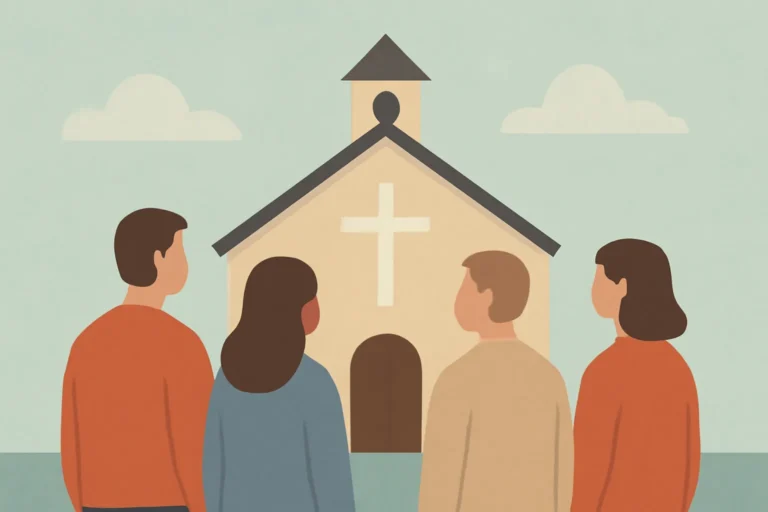
Joining a local church is more than signing a form or ticking a box. It is about entering a community of shared belief, common practice, and mutual accountability. For many people, membership marks a transition from casual attendance to intentional belonging. It signals a commitment to a particular faith family, to participate in worship, to support the life and witness of the church, and to grow together in discipleship. This guide offers practical guidance for understanding what church membership means, the different paths people take to become part of a congregation, and the ongoing practices that sustain healthy belonging within a local church.
At its core, membership designates a formal, recognized link between an individual and a particular faith community. It is a two-way covenant: the church commits to shepherding and discipling its members, and the member commits to participating in the life of the congregation. In many traditions, this relationship includes participation in worship, reception of the sacraments, involvement in ministry, and accountability in matters of faith and conduct. The exact expectations can vary by church tradition, but several themes tend to recur across settings:
Belonging as a social and spiritual reality: becoming part of a congregational family where you are known, welcomed, and supported.
Participation in corporate worship, teaching, prayer, and service; membership is often a commitment to regular involvement.
Accountability within a community that cares for one another, encourages holiness, and helps people grow in their faith.
Stewardship of time, talents, and resources in service of the church’s mission and the needs of the world.
In many churches, the process of becoming a member is not an end in itself but the beginning of a discipleship journey. Membership is a way of saying, I am in this together with you, under God’s guidance, for the sake of God’s work in the world.
Different Pathways to Membership
Across Christian traditions, there are several common pathways by which a person can become a recognized member of a local church. While the specifics may differ—especially between traditions such as Baptist, Methodist, Anglican, Reformed, and Catholic lines—the underlying logic remains similar: belief in the gospel, baptism, the profession of faith, and a readiness to join a covenant community. Here are some typical routes you may encounter:
Infant Baptism and Confirmation
Many churches that practice infant baptism view membership as closely tied to the baptismal rite and the associated promises made on behalf of the child by the community and family. As children grow, some traditions require a later step—often called confirmation or confirmation of faith—where a young person or adult reaffirms the baptismal vows and is formally admitted as a full member. In these contexts, membership may be extended after the confirmation sacrament and the individual’s active engagement with the church’s life.
Believer’s Baptism and Profession of Faith
Other traditions emphasize believer’s baptism—baptism upon a conscious profession of faith. In these churches, membership is often granted after a person publicly confesses faith in Jesus Christ, is baptized, and completes a period of instruction or discipleship. The result is a formal welcome into the fellowship of the congregation and a commitment to follow Christ within that local body.
Transfer of Membership
People who move from one church to another may seek a transfer of membership, often called a letter of transfer or registration of membership. In practice, this means the new church acknowledges the prior membership, ensuring continuity in discipleship and accountability. Some churches also require a brief interview or enrollment in a new member class to align expectations and clarify doctrinal boundaries.
Affirmation of Faith or Covenant Signing
In congregations with a formal membership covenant, individuals may join after a period of instruction and conversation, followed by an affirmation of faith or a formal covenant signing. This document often outlines rights and responsibilities—such as participation in governance, commitment to spiritual disciplines, and efforts to support the church’s mission—and may serve as a practical guide for how members live out their faith within the church.
Some churches emphasize a broader affiliation with a denomination or network as part of the membership process. In these cases, membership in the local church may be linked to a commitment to the polity, doctrine, and mission of the broader body, while still recognizing the local congregation as the primary locus of community and practice.
Steps in the Membership Process
While every church has its own specific steps, there is a common sequence that helps people move from inquiry to belonging. Understanding these steps can reduce confusion and help you participate with intention:
Explore or visit: Attend worship, programs, and events to observe the church’s life and culture. Ask questions about theology, worship style, ministries, and expectations.
Learn through a membership class or new member orientation: Most churches offer a structured course that outlines the church’s doctrine, values, governance, and the expectations of membership.
Meet with church leadership or a pastor: A personal conversation helps both sides discern fit, clarify doctrinal positions, and discuss the path to membership (baptism, profession of faith, etc.).
Decide on the appropriate path: Infant baptism and confirmation, believer’s baptism, or reaffirmation of faith may be required, depending on your background and the church’s practice.
Participate in the required rite or ceremony: This could be baptism, confirmation, or a formal act of faith, followed by participation in the church’s covenant community.
Commit to the covenant of the church: After the rite, you are officially welcomed as a member with responsibilities and privileges within the body.
Beyond the formal rites, the ongoing part of the journey is participation in the life of the church—worship, teaching, service, and fellowship. Many churches pair membership with a “new members” or “discipleship” track that helps new members integrate quickly and meaningfully into the congregation.
The Covenant of the Local Church
A church covenant is a formal agreement that outlines the expectations, commitments, and mutual responsibilities of members and leadership. While the exact text varies, typical elements include:
Worship and devotion: Regular participation in corporate worship and spiritual disciplines.
Teaching and doctrine: Alignment with the church’s core beliefs and willingness to grow in understanding of Scripture.
Missional living: Active involvement in outreach, evangelism, mercy, and service to the community and world.
Stewardship: Faithful giving of time, talents, and finances to support the church’s mission.
Accountability and care: Loving accountability, conflict resolution, and pastoral care within the community.
Participation in governance: In some traditions, eligibility to vote on church matters, serve on committees, or hold leadership roles.
Entering into a covenant is not merely ceremonial. It is a practical commitment that shapes daily life. It clarifies how members are to relate to one another, how decisions are made, and how disputes are handled. For many people, the covenant provides a stable framework that fosters trust, safety, and growth as they navigate questions of faith and practice.
Participating in the Life of the Church
Membership invites a rich array of opportunities to grow as a disciple and to contribute to the church’s mission. The integration of worship, learning, and service helps believers move from assent to allegiance and from attendance to belonging. Typical avenues of participation include:
Worship and liturgy: Regular attendance at weekly services, participation in sacramental life where appropriate, and engagement with liturgical rhythms such as seasons of the year.
Discipleship and growth: Small groups, Sunday school, Bible studies, or mentorship relationships designed to deepen faith and understanding of Scripture.
Ministry and service: Volunteering in children’s ministries, hospitality, music, media, outreach, or mercy ministries.
Fellowship and community: Welcoming newcomers, building friendships, and sharing life within the broader congregation.
Stewardship and generosity: Financial giving, stewardship education, and participation in mission projects and relief efforts.
Many churches offer a discipleship pathway or a prioritized sequence of steps that guide members from basic involvement to leadership roles. This might include stages such as discovery, belonging, serving, and leading. The journey emphasizes that spiritual growth is a community endeavor, not an isolated pursuit.
Membership and Belonging Across Traditions
Church membership is experienced differently depending on the tradition and polity. Here are some representative contrasts you may encounter:
Congregational polity (common in many Baptist and nondenominational churches): Members have a direct role in church decisions, often through congregational voting and committees. The emphasis is on the autonomy of the local church and the accountability of members to each other.
Presbyterian and Reformed models: Emphasize elder-led governance, with membership playing a crucial role in selecting elders and approving major church decisions. The relationship is communal and structured by a formal understanding of church order.
Episcopal and Anglican systems: Membership is often tied to baptism, confirmation, and ongoing participation in the sacraments, with governance shared among clergy and lay leaders within a defined liturgical framework.
Catholic tradition: Local church membership is deeply linked to baptism and ongoing participation in the Church’s sacramental life, with discernment and pastoral guidance through priests and deacons, and a broad sense of communion with a universal Church.
Regardless of tradition, most churches share a common emphasis on belonging that is more robust than mere attendance. The question for a seeker is not only, “Do I believe the right things?” but also, “Do I have a place to belong where my gifts can be used, my questions can be explored, and my life can be shaped by a gospel-centered community?”
Approaching a potential church family with thoughtful questions can help you determine fit and avoid misunderstandings later. Consider asking about:
Affirmed beliefs: “What are the church’s core beliefs, and how are they taught?”
Message and worship style: “Does the preaching and worship align with my spiritual needs and convictions?”
Doxology and sacraments: “Which sacraments are observed, how often, and who may participate?”
Membership expectations: “What commitments accompany membership, including governance, volunteering, and financial giving?”
Discipleship opportunities: “What pathways exist to grow in faith and to lead or serve the church?”
Community life: “What kinds of small groups, ministries, or service opportunities are available?”
Pastoral care: “How does the church care for members during sickness, grief, or suffering?”
Conflict resolution: “What is the church’s approach to resolving disagreements and restoring relationships?”
As you ask these questions, you will be assessing not only doctrinal alignment but also the culture of belonging—whether the church is a place where questions are welcomed, doubts are treated with grace, and members are cared for in practical ways.
Maintaining Healthy Membership
Becoming a member is just the beginning. The ongoing health of your church membership depends on continual engagement, honest relationships, and a shared mission. Practical practices that sustain healthy belonging include:
Regular worship attendance and participation in the church’s rituals and sacraments.
Consistent spiritual disciplines, such as prayer, Bible study, and reflection.
Active service, using your gifts to bless the church and the community.
Open communication with pastors and fellow members, including conflict resolution according to the church’s guidelines.
Financial stewardship, contributing to the church’s work through tithes and offerings or designated giving.
Mutual accountability, engaging in relationships that encourage holiness, mission, and integrity.
In and through these practices, membership evolves from a formal designation into a vibrant lived reality—a daily pattern of worship, service, and community that forms character and affirming identity as a follower of Christ within a particular local body.
Several misconceptions can hinder a healthy view of what it means to be part of a church. Here are common myths and the realities behind them:
Myth: “Membership guarantees salvation.” Reality: Membership is a commitment to a church community, not a means of earning grace. Salvation is understood as a gift received through faith in Christ, not through mere affiliation.
Myth: “Membership is exclusive or club-like.” Reality: The purpose of membership is to participate in a mission that transcends social club dynamics—loving and serving others in, with, and for Christ.
Myth: “If I attend regularly, I’m a member.” Reality: Regular attendance is valuable but distinct from formal membership, which typically involves explicit commitment and accountability.
Myth: “Membership means agreeing on every detail of doctrine.” Reality: While core beliefs are essential, healthy churches welcome ongoing learning, humility, and dialogue as members grow together.
Myth: “Membership is primarily a social status.” Reality: The aim is spiritual formation and shared mission, not social prestige.
Ultimately, church membership is best understood as a lifelong journey of belonging, growth, and service within a Christ-centered community. It is a rhythm of gathering and scattering—ceasing to be mere observers and becoming active participants who encourage one another toward love and good deeds. This journey includes:
Continual growth in knowledge and virtue, aided by teaching, communal disciplines, and mentorship.
Expanded service as members discover and deploy their spiritual gifts for ministry in the church and beyond.
Deeper relationships built on trust, honesty, and shared life, with opportunities for accountability and pastoral care.
Mission alignment around the church’s stated purpose, whether that is evangelism, mercy, discipleship, or social transformation.
Hopeful perseverance through trials, as the community bears one another’s burdens and embodies grace in action.
As you consider joining, remember that the church is a family of imperfect people seeking to follow a perfect Savior. The journey may involve struggle, learning, and adjustment, but it also offers profound moments of joy, courage, and transformed lives. To borrow a phrase often used in parish life, membership is less about boundaries and more about belonging—a place where you are welcomed, known, and commissioned to live out the gospel in your neighborhood and beyond.
Practical tips for a smooth transition into membership
Attend a new member class or orientation if your church offers one, even if you’ve been part of the faith family elsewhere.
Meet with a pastor or elder to discuss doctrinal questions and expectations around discipleship and governance.
Ask about volunteer opportunities that align with your gifts and passions.
Start building relationships by joining a small group, Bible study, or ministry team.
Keep an open mind about the timing of rites like baptism or confirmation, recognizing that each pathway reflects unique theological and historical contexts.
By engaging in these steps, you’ll be better prepared to participate meaningfully in the life of the church and to grow in your identity as a member who loves God and cares for others.
Closing reflections: envisioning a hopeful future together
The question to carry forward is not only whether you agree with a set of beliefs, but whether you can imagine a future with this particular faith community. Church membership is a means of opening a door to a shared life, not a solitary decision. It invites you into a story larger than yourself—one that involves worshiping God, learning to love neighbor, and bearing witness to the good news in everyday moments. If you are considering joining a local church, approach the process with honesty, curiosity, and humility. Seek to understand, to be understood, and to contribute in ways that reflect the grace you have received. In doing so, you will discover that being “in the church” is less about a label and more about a way of life—one marked by belonging, service, and faithful presence in the body of Christ.