End Times Study: A Comprehensive Guide to Prophecy, Timelines, and End-Time Interpretation
End Times Study, or eschatology, is the field that explores what biblical prophecy says about the future, the sequence of events at the end of the age, and the ultimate destiny of humanity and creation. This comprehensive guide aims to present a balanced overview of prophecy studies, the major timelines proposed by different schools of thought, and the key methods used to interpret apocalyptic literature. By examining the main books, historical developments, and interpretive frameworks, readers can gain a clearer sense of how scholars and lay readers alike approach the question of what lies ahead while guarding against misinterpretation and sensationalism.
At its core, end-times study seeks to answer questions such as: What does the Bible predict about the future? In what order might events unfold? How should readers understand symbolic language, numbers, and visions? The field uses a mix of tools, including exegetical analysis, historical context, theological interpretation, and literary criticism, to build a coherent view of eschatological expectations. It is not a single, monolithic discipline but a family of approaches that share a common interest in prophecy and its implications for faith, ethics, and how believers live today.
For clarity and breadth, this article uses several synonymous terms to describe the discipline and its aims: end-times study, eschatology, apocalyptic study, prophecy study, and prophetic interpretation. Each term highlights slightly different emphases—eschatology tends to emphasize the ultimate destiny and events, while prophecy study underlines the exegetical work of deciphering biblical texts. Together, they form a robust landscape for understanding what Christians, Jews, and scholars alike have said about the final chapters of history.
Historical Development of Eschatology
Understanding how eschatology developed helps readers recognize why there are multiple approaches today. Ancient Jewish apocalyptic literature, early Christian writings, medieval exegesis, and modern systematic theology all contributed layers to how people imagine the end times. Some of the guiding milestones include:
Early Jewish apocalyptic thought that framed history as a drama between divine sovereignty and human rebellion, with visions of judgment and renewal.
New Testament revelations about Christ’s return, the resurrection, and the final judgment shaped later Christian expectations and doctrinal formulations.
Church Fathers and medieval interpreters synthesized biblical prophecy with creedal statements and political realities of their time.
Reformation and post-Reformation reflections on how to interpret prophetic books within the canon and against competing theological frameworks.
Modern scholarship introduced methods like historical-critical analysis, literary criticism, and systematic theologies, which broadened the range of acceptable interpretations and sparked renewed debate about the meaning of prophecies for contemporary readers.
As a result, contemporary end-times studies span a spectrum from premillennial futurism to preterist and historicist readings, with many scholars acknowledging value in insights from multiple perspectives while remaining cautious about overconfident predictions. This history is essential for evaluating current claims about dates, events, or geopolitical signposts within the vast terrain of prophecy.
Major Frameworks of End-Time Interpretation
There are several dominant frameworks that guide how readers interpret biblical prophecy. Each framework offers a distinct lens for reading prophetic texts, especially the books of Daniel and Revelation. Here are the principal families of thought, described briefly and with attention to their distinctive features.
Futurist Perspectives
In futurist models, most or all of the major prophecies are understood to unfold in the future after the time of the original authors. This approach has several notable substreams:
Dispensational Premillennialism — This system emphasizes a future rapture, a seven-year Tribulation, a literal thousand-year reign of Christ, and a distinctive chronological sequence tied to covenants or dispensations. Advocates often appeal to a literal interpretation of Daniel’s 70 weeks and Revelation’s sequences.
Progressive Dispensationalism — A more flexible variant that still looks toward a future fulfillment but allows for greater continuity between covenants and a more nuanced view of timing and symbol interpretation.
Strict Futurism — Some scholars place the principal fulfillment of most prophecies after Christ’s first coming, with symbolic or typological elements embedded, but with a primary focus on future events.
Pros of futurist readings include the intuitive appeal of a clear, future sequence and the ability to connect prophecy to current events in a way that is straightforward for many readers. Critics, however, may argue that overly literal readings can neglect the symbolic and literary dimensions of apocalyptic books and risk sensationalism or speculative dating.
In preterist models, most prophecies, especially in Revelation and parts of Daniel, are understood as being fulfilled in the past, often within the first century or the early centuries of the church. This reading emphasizes:
Historical fulfillment through events such as the Roman occupation, persecutions, or other contemporaneous happenings.
Attention to political and social context as key to decoding symbolic imagery.
Interpretive caution about applying ancient imagery to modern geopolitics.
Proponents argue that this approach honors the original historical surrounding of the texts and avoids speculative leaps about future dates. Critics contend that a strictly past fulfillment can downplay the broader theological arcs of judgment, victory, and cosmic renewal that many readers expect from biblical prophecy.
Historicism
Historicism treats prophetic prophecies as unfolding throughout the course of church history up to the present. It seeks to trace lines from biblical visions to historical events across different eras, often correlating symbols with major milestones in history. Features include:
A focus on the unfolding of historic events like the rise and fall of empires or key moments in church history.
An emphasis on continuity between covenants and the ongoing work of God in history.
Flexible timelines that can accommodate ongoing interpretation rather than fixed dates.
Historicism offers a dynamic picture of biblical prophecy as something that continues to interact with the world. Critics may point out that late medieval and early modern attempts at a fixed “map of history” can be overly deterministic or Eurocentric, leading to overinterpretation of current events in light of old symbols.
Idealism (Symbolic/Spiritual Interpretation)
Idealist or symbolic interpretations view prophetic texts as timeless representations of spiritual realities rather than literal, chronological predictions. This approach emphasizes:
Spiritual themes such as cosmic conflict, divine victory, and the triumph of good over evil.
Typology and allegory to extract enduring lessons about faith, perseverance, and ethical living.
Less concern with pinpoint dating and more focus on theological messages and moral implications.
Advocates appreciate the ethical and devotional dimensions of prophecy, but critics sometimes argue that this framework can downplay concrete expectations about future events and social movements described in the text.
Key Biblical Texts and How to Read Them
A robust end-times study relies on careful, context-aware reading of two central biblical books: Daniel and Revelation. These have been read through many lenses, and understanding their genres, imagery, and historical contexts helps readers avoid simplistic conclusions.
Daniel
Daniel features a blend of historical narrative and apocalyptic vision. The central figures include Daniel’s experiences in exile, visions of beasts, and a remarkable focus on time calculations, notably the Seventy Weeks prophecy in Daniel 9. Key interpretive questions include:
What is the literary genre of Daniel’s visions — historical narrative, apocalyptic prophecy, or a hybrid?
How should symbols like beasts, horns, and visions of heavenly court be understood?
What is the significance of the Seventy Weeks within the broader arc of redemptive history?
Daniel 9:24-27’s culmination around the “anointed one” and the subsequent events has produced diverse timelines. Some readers view this as a chronological scaffold pointing toward a future fulfillment, while others interpret it as a multiple-fulfillment passage that spans historical eras. There is broad consensus that Daniel emphasizes God’s sovereignty, justice, and faithfulness to His people, even in times of upheaval.
Revelation
Revelation, the last book of the New Testament, is renowned for its vivid symbolism, symbolic numbers (such as three and a half years, 42 months, and 1000 years), and dramatic imagery of beasts, seals, trumpets, bowls, and the heavenly throne room. Readers ask:
What is the nature of the beasts and the dragon, and what do they symbolize about earthly powers?
How should one understand chapters 6–19 (the seals, trumpets, and bowls) as depicting judgment and cosmic conflict?
What is the meaning of the Millennium (whether literal, symbolic, or a combination) within Revelation 20?
Scholars caution that Revelation uses symbolic language meant to convey theological truths about the ultimate victory of God rather than to present a straightforward, chronological news report. Nonetheless, the metaphors have inspired a wide array of interpretive charts and eschatological expectations across centuries.
Prophetic Timelines and Their Components
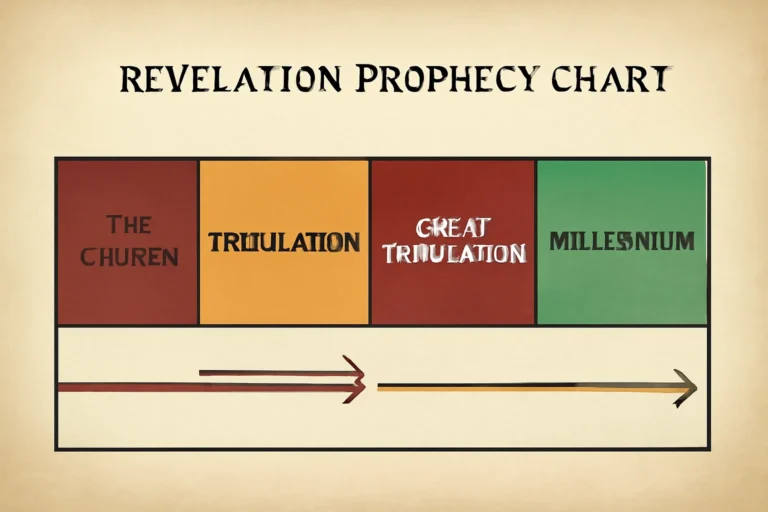
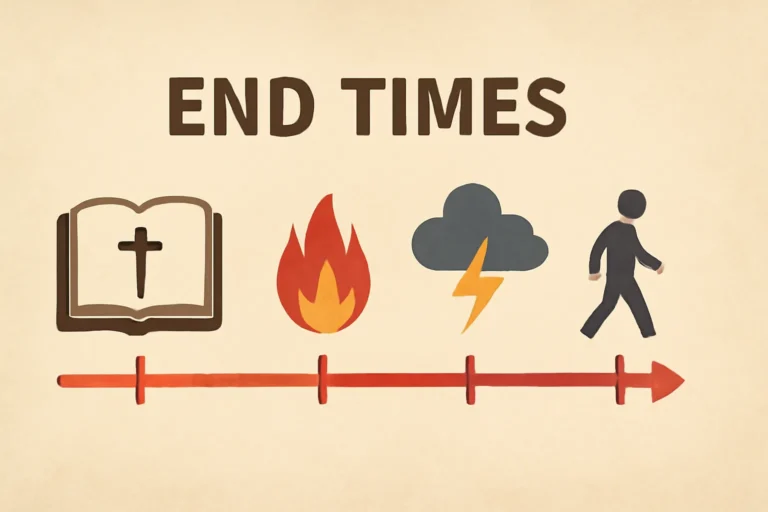
A major aim of end-times study is to compare different timelines and understand their components, while recognizing the interpretive assumptions behind them. Here are some of the core elements commonly discussed in prophecy studies:
Rapture or gathering of believers—a moment some frameworks place before, during, or after a tribulation period.
Tribulation—a period of intense suffering and upheaval, with some traditions viewing it as a literal seven years and others as a symbolic era of distress.
Antichrist/Beast imagery—figures or systems representing ultimate opposition to God and human flourishing, interpreted variously as political, religious, or spiritual powers.
Second Coming—the return of Christ in glory, followed by final judgment and the establishment of the new creation.
Millennium—the thousand-year reign of Christ, understood differently by premillennial, postmillennial, and amillennial interpreters.
Final Judgment and the creation’s renewal—culminating in a restored order and the new heavens and new earth.
When examining prophetic timelines, it is vital to distinguish between symbolic language intended to convey spiritual truth and literal sequences intended to forecast specific events. Even within a given framework, scholars recognize that timelines are probabilistic models rather than absolute predictions. The purpose of such models is often pastoral and theological—helping believers understand the nature of God, the durability of faith, and the call to faithful living regardless of when events unfold.
Hermeneutical Methods and Their Implications
How one reads prophetic texts profoundly shapes the conclusions drawn about future events. Different hermeneutical methods emphasize various aspects of language, history, and theology. Here are several common approaches:
Literal-historical hermeneutics — Interpreters attempt to understand the text in light of its plain meaning, grammatical structure, and historical context, while still acknowledging symbolic sections.
Grammatical-historical — Focus on the original languages, syntax, and historical situation to reconstruct what the authors intended to communicate.
Symbolic or typological hermeneutics — Accepts symbolic imagery as conveying deeper truths about God, salvation, and cosmic conflict, often drawing connections across biblical books.
Historical-grammatical approach — Seeks to balance linguistic details with the historical backdrop, including Jewish and Greco-Roman context, to interpret prophecies accurately.
Contextual and redemptive-historical methods — Reads prophecy within the broader storyline of redemptive history, asking how events reveal God’s purposes for humanity and creation.
These methods yield different emphases. A literalist approach may stress a chronological forecast with concrete events, while a symbolic or idealistische reading may highlight timeless spiritual lessons about perseverance, faithfulness, and ultimate justice. Readers benefit from understanding the strengths and limitations of each method and from engaging with multiple perspectives in a respectful, evidence-based manner.
Common Pitfalls, Debates, and How to Navigate Them
End-times studies attract passionate engagement, but they also invite pitfalls. Here are some recurring debates and practical guidelines for navigating them thoughtfully.
Chronology obsession — Focusing on exact dates or precise sequences can distract from the text’s broader theological messages and ethical implications.
Proof-texting — Forcing modern events to fit ancient symbols without robust hermeneutical justification risks misreading the text.
Reductionism — Reducing complex symbolic literature to a single interpretation can oversimplify and misrepresent the author’s intent.
Geopolitical sensationalism — Linking every current geopolitical development to biblical prophecies can create fear or endorse sensational claims.
Ecumenical caution — Recognizing that Christians differ in their end-times views and maintaining respectful dialogue promotes constructive learning.
To navigate these debates responsibly, consider these practical steps:
Study core texts in their historical and literary contexts, not only as standalone prophecies.
Compare multiple interpretive frameworks side by side to understand how each reads the same passages differently.
Distinguish between doctrinal essentials (e.g., the return of Christ, the resurrection) and contingent interpretive details (e.g., precise timing of events).
Engage with reputable scholarship, including commentaries, scholarly articles, and theological anthologies from various traditions.
Favor pastoral clarity—how does a particular interpretation inform faith, worship, and ethical living today?
Practical Implications: Living in Light of Prophecy
Even when predictions remain debated, the study of end times has meaningful implications for personal faith, corporate worship, and ethical action. Here are some practical dimensions of engaging with eschatology:
Hope and perseverance — A robust eschatology can sustain believers during suffering and injustice by pointing toward God’s eventual justice and renewal.
Ethical living — Prophetic narratives often call for repentance, mercy, justice, and faithfulness in the present age.
Worship and liturgy — Many traditions shape prayers, hymns, and sacraments around themes of resurrection, judgment, and the coming kingdom.
Pastoral care — When believers face fear about the future, thoughtful teaching, pastoral counseling, and community support help maintain faith and resilience.
Interfaith and intertextual dialogue — Eschatological ideas share common ground with Jewish and Islamic discussions of the end times, offering opportunities for constructive dialogue and shared ethical commitments.
Ultimately, the aim of end-times study is not merely to predict events but to cultivate a faithful orientation to God’s purposes, to interpret scripture wisely, and to motivate compassionate action in a complex world.
Comparative Paths: Choosing a Scholarly or Faithful Approach
Readers often ask how to approach eschatology in a way that is both intellectually responsible and pastorally meaningful. Here are some considerations to guide your journey:
Assess your sources — Rely on textbooks, scholarly commentaries, and primary texts in their original language when possible. Be cautious of sensational blogs or sensationalized YouTube channels that claim to “solve” prophecy.
Clarify your presuppositions — Are you approaching the texts with a dispensational, covenantal, preterist, or idealist framework in mind? How might your starting assumptions shape your conclusions?
Keep the big picture in view — The biblical narrative emphasizes creation, fall, redemption, and restoration. Let this overarching arc inform interpretations of specific prophecies.
Balance conviction with charity — In a field with strong opinions, foster humility and a willingness to learn from others who rightly revere the biblical text.
Prophecy Studies in Practice: Case Studies and Applications
To illustrate how end-times analysis works in practice, consider two brief case studies that highlight interpretive decisions and their consequences for understanding the texts.
Case Study A: Interpreting Daniel 9’s Seventy Weeks
Daniel 9:24-27 has been a focal point for many timelines. A literalist futurist reading might interpret the final week as a literal seven-year period culminating in specific geopolitical events. A historicist or historic past fulfillment approach could see the prolonged sequence spanning multiple centuries, representing successive fulfillments in the history of Israel and the church. A symbolic interpretation might stress the conceptual rhythm of fulfillment—periods of God’s patience, judgment, and restoration—without tying it to a single date. The value of this case study lies in recognizing how different hermeneutical angles determine whether the same verses are linked to a single future event or to a broader pattern of redemptive history.
Case Study B: Reading Revelation 13–19 in Context
Revelation 13–19 presents images of beasts, Babylon, and final judgments. A futurist reading may identify such figures with a future political power and a tribulational sequence. A preterist reading could view the imagery as depicting oppressive powers faced by early Christians or the Roman empire’s imperialism. A symbolic reader might emphasize universal spiritual conflict—the struggle between light and darkness—and the call for steadfast faith under persecution. In practice, readers often combine insights from multiple angles to appreciate the text’s theological themes while avoiding reductive identifications with contemporary politics.
For readers who wish to deepen their end-times study, here are well-regarded avenues for ongoing learning and discernment. The list includes a mix of commentaries, scholarly journals, classical and contemporary books, and reputable online resources.
Scholarly commentaries on Daniel and Revelation from diverse traditions, including academic presses and seminary presses, to expose readers to different interpretive angles.
Systematic theologies and biblical theology guides that situate eschatology within the broader arc of salvation history.
Historical surveys of how eschatology has developed in Christianity, Judaism, and related traditions.
Introductory textbooks that present core concepts in accessible language, with careful attention to methodology and hermeneutics.
Journals and articles addressing current debates, hermeneutical methods, and interdisciplinary connections (e.g., archaeology, literary studies, and philosophy).
Audio-visual resources — lectures, seminars, and moderated discussions that explore the complexity of end-times interpretations in a respectful, evidence-based way.
As you explore, consider constructing your own reading plan that combines:
Textual study of Daniel and Revelation with a focus on literary genre and historical context.
Engagement with at least two different interpretive frameworks to compare their strengths and limitations.
Practical reflection on how eschatological themes influence contemporary faith and ethics.
Final Reflections: An Open-Ended Quest
End times study remains a dynamic field of inquiry, marked by ongoing discussion, fresh scholarly insights, and renewed theological reflection. It invites readers to consider not only what may lie ahead but how a mature understanding of prophecy shapes daily life, worship, and mission. By approaching eschatology with intellectual honesty, humility, and pastoral sensitivity, you can participate in a tradition that seeks to honor the biblical witness while serving the spiritual needs of communities today.
What motivates many readers is not the thrill of prediction but the conviction that ultimate justice, mercy, and renewal are in God’s hands. Whether one adheres to a futurist timeline, a preterist reading, a historicist framework, or an idealist interpretation, the end-times conversation remains a call to faithfulness, hope, and responsible living as the world moves toward its promised culmination. Through careful study, open dialogue, and careful discernment, the end-times discourse can become less about sensational headlines and more about a thoughtful engagement with sacred texts and their enduring message for the human family.