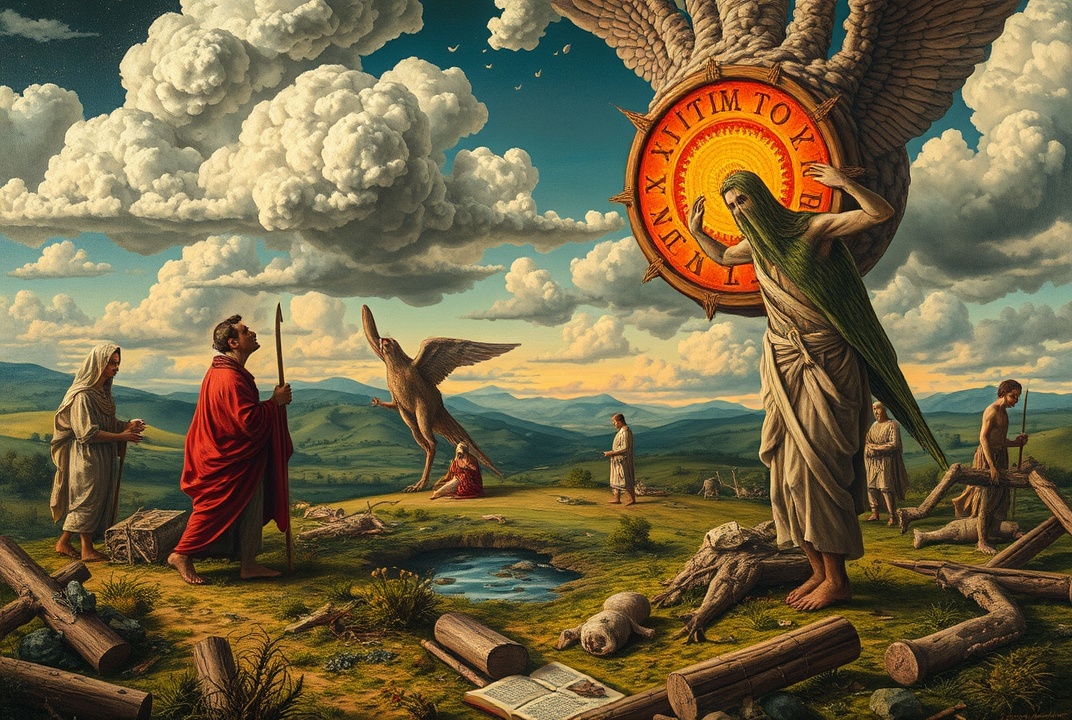
Beyond the Familiar: Exploring the “Weird” Bible Verses and What They Mean for Us Today
The Bible, a cornerstone of faith for billions, is filled with stories and teachings that resonate deeply with us. We know the comforting parables, the powerful commandments, and the inspiring narratives of heroes and prophets. Yet, nestled within its pages are verses that can, at first glance, leave us scratching our heads, prompting the question: what on earth does that mean? These are the “weird Bible verses,” the passages that defy easy explanation, spark debate, and sometimes even cause a ripple of unease. But far from being mere curiosities, these enigmatic texts offer profound insights into the complexities of faith, the human condition, and the very nature of divinity. They challenge our assumptions, push us to think critically, and ultimately, can deepen our understanding and personal connection to the sacred texts.
In a world that often craves simple answers and clear-cut morality, encountering passages that seem contradictory, bizarre, or even disturbing can be unsettling. We might find ourselves wondering if we’re misinterpreting, if the translation is off, or if there’s a hidden meaning we’re missing. This exploration isn’t about finding fault or deconstructing faith, but rather about embracing the richness and multifaceted nature of scripture. By engaging with these “weird Bible verses,” we embark on a journey of discovery, uncovering layers of meaning that can be surprisingly relatable and incredibly informative, offering a fresh perspective on timeless spiritual truths.
The Unsettling Narratives: When the Sacred Gets Strange
The Bible, like any ancient text that grapples with the human experience, doesn’t shy away from depicting events and ideas that can feel jarring to a modern sensibility. Sometimes, the strangeness lies in the sheer unfamiliarity of the cultural context or in narratives that seem to clash with our modern ethical frameworks. Take, for instance, the accounts of divine commands for seemingly harsh actions. While we often focus on love and compassion, there are passages where God’s directives appear to be anything but. For example, in Deuteronomy 20:16-17, the Israelites are instructed to “utterly destroy all the inhabitants of that city,” leaving “no survivors.” This is undeniably difficult to reconcile with our contemporary understanding of justice and mercy, prompting significant theological discussion about historical context, covenant, and the nature of divine judgment.
Another category of “weird” passages involves unusual or graphic descriptions of physical phenomena or interactions. Think about the descriptions of Ezekiel’s visions, filled with otherworldly creatures and complex symbolism that can leave even the most devout reader bewildered. Or consider the account in Genesis 6:1-4, which speaks of “sons of God” taking human women as wives, leading to the birth of giants. These narratives, while not necessarily commanding specific actions, can feel alien and raise questions about the literal interpretation of every word. Instead of dismissing them, understanding these passages requires a willingness to engage with symbolism, allegory, and the diverse literary styles present within the biblical canon.
Challenging Our Perceptions of Morality and Justice
The verses that most frequently fall into the “weird” category are often those that seem to present a stark contrast to our ingrained notions of fairness and kindness. These are the passages that make us pause and ask, “Is this really what the Bible teaches?” For many, the stories involving sacrificial practices or instances of extreme punishment can be particularly challenging. The concept of atonement through sacrifice, while central to certain theological interpretations, can be difficult to grasp when described in graphic detail, such as in the Old Testament sacrificial system. Similarly, passages detailing divine wrath or judgment can feel severe, like the description of God regretting creating humanity and sending a flood in Genesis 6:6-7, or the pronouncements of dire consequences for disobedience. These verses force us to confront the idea that God’s justice might operate on a scale and with a logic that transcends our human understanding.
Furthermore, some “weird” verses touch upon social practices or cultural norms from ancient times that seem deeply problematic today. For instance, the Old Testament contains laws that appear to sanction slavery or prescribe harsh penalties for certain offenses that we would consider minor. While these passages reflect the historical and cultural milieu in which they were written, they often serve as important starting points for ethical reflection rather than direct prescriptions for modern life. The challenge here is to discern the underlying principles or moral intentions from the specific, time-bound expressions of those principles. This process requires careful study, historical awareness, and a commitment to interpreting scripture in a way that aligns with the overarching message of love, compassion, and justice that is also so prominent throughout the Bible.
The Mystical and the Metaphorical: Unlocking Deeper Meanings
Beyond the narratives that challenge our ethics, the Bible also contains passages that are simply, well, strange due to their intensely symbolic or mystical nature. These verses often speak in metaphors, visions, and allegories that bypass our rational minds and speak directly to our spirits. When we encounter something like the description of Jesus weeping over Jerusalem in Luke 19:41, it’s not just a simple statement of sadness; it’s a profound articulation of divine grief and concern. Or consider the poetic and often enigmatic language of the Song of Solomon, which uses rich imagery of love and longing, sometimes interpreted as an allegory for God’s relationship with his people or Christ’s relationship with the Church.
These passages often require a different kind of reading – one that is open to symbolism, metaphor, and the power of imagery. They invite us to move beyond a literalistic interpretation and to engage with the emotional, spiritual, and even artistic dimensions of scripture. The “weirdness” here isn’t about something being wrong or nonsensical, but rather about its departure from everyday language and its reliance on a deeper, more intuitive understanding. For example, when the Book of Revelation describes “a great red dragon” and “a woman clothed with the sun,” it’s not meant to be a zoological or historical report. Instead, these are powerful symbolic representations of cosmic forces, spiritual battles, and ultimate hope, calling us to look beyond the surface and grasp the profound spiritual realities being conveyed.
When Literalism Falls Short: The Power of Interpretation
The temptation to read every biblical verse as a literal, factual statement can sometimes lead us astray when encountering passages that are clearly intended to be symbolic or metaphorical. Take, for instance, the descriptions of heaven and the afterlife. While some passages offer concrete imagery like streets of gold and pearly gates (Revelation 21:21), others speak of experiences that are beyond human comprehension, like “seeing what no eye has seen, and hearing what no ear has heard, and entering what no human heart has imagined” (1 Corinthians 2:9). Trying to map the literal onto the metaphorical can lead to rigid and limiting interpretations of what awaits us beyond this life.
Similarly, Jesus’ parables are a prime example of how non-literal language can convey profound truths. When Jesus talks about the “kingdom of heaven” being like a mustard seed (Matthew 13:31-32) or leaven (Matthew 13:33), he isn’t providing a scientific explanation of plant growth or baking. He’s using relatable, everyday occurrences to illustrate abstract spiritual principles about the nature and growth of God’s reign. The “weirdness” for some might come from the unexpected comparisons, but the power lies in their ability to make complex theological ideas accessible and memorable. Embracing the metaphorical nature of these verses allows for a richer, more dynamic understanding of biblical teachings, reminding us that scripture often speaks in layers, inviting contemplation and personal revelation.
Finding Relevance in the Unconventional: “Weird” Verses as Tools for Growth
It’s easy to dismiss the “weird” Bible verses as relics of another time or as theological oddities. However, by engaging with them thoughtfully, we can discover that these unconventional passages are actually powerful tools for spiritual and personal growth. They push us beyond our comfort zones, forcing us to wrestle with difficult questions and to develop a more nuanced understanding of faith. When we encounter a verse like 1 Corinthians 11:10, which speaks of a woman having “a symbol of authority on her head because of the angels,” it can spark discussions about gender roles, cultural interpretations, and the evolving understanding of biblical authority. These are not easy conversations, but they are vital for a faith that is alive and relevant.
Moreover, these verses often highlight the limitations of human understanding when it comes to the divine. Passages that describe God’s incomprehensible nature, or moments where human logic seems to falter in the face of divine action, serve as a humble reminder that faith often involves embracing mystery. Think about Job’s dialogue with God, where God’s responses are less about answering Job’s specific questions and more about revealing the vastness and inscrutability of God’s creation and power. This can be deeply reassuring, as it frees us from the burden of needing to understand everything perfectly and encourages us to trust in a reality that extends far beyond our grasp. The “weirdness” in these instances becomes an invitation to deeper faith, to a reliance on something greater than ourselves.
The Journey of Faith: Embracing Mystery and Complexity
Ultimately, the “weird Bible verses” are not stumbling blocks to be avoided, but rather signposts on the ongoing journey of faith. They remind us that scripture is a living text, capable of sparking new insights and challenging us to grow throughout our lives. The passages that might have seemed strange or even disturbing years ago can, with time, study, and prayer, reveal profound wisdom and relevance. For example, a verse that once seemed to advocate for harshness might, upon deeper contextual understanding, illuminate the complexities of covenantal relationships or the dire consequences of persistent rebellion. It’s a process of ongoing revelation and interpretation, where our understanding deepens as we mature in our faith.
By approaching these verses with curiosity rather than apprehension, we open ourselves to a richer, more profound engagement with the Bible. They encourage us to become active participants in understanding scripture, rather than passive recipients of information. The “weirdness” becomes an invitation to ask deeper questions, to seek out different perspectives, and to trust that God’s message, even in its most enigmatic forms, is ultimately for our good. This embrace of mystery and complexity is not a sign of weakness, but rather a testament to the vastness of the divine and the enduring power of faith to guide us through the unknown, reminding us that the most profound truths are often found in the most unexpected places.
Frequently Asked Questions: Weird Bible Verses and Religion
Why are some Bible verses considered “weird”?
The Bible was written over a long period by many different authors in vastly different cultural and historical contexts. What might seem strange or unusual to a modern reader can often be understood when considering the original language, cultural norms, historical events, and theological purposes behind the text. These “weird” verses can sometimes be due to literary devices, specific laws pertaining to ancient Israelite society, or passages that have been interpreted in various ways throughout history.
How should I approach seemingly contradictory or disturbing Bible verses?
It’s important to approach such verses with a spirit of inquiry and humility. Consider the surrounding verses, the chapter, and the book as a whole. Researching different translations and scholarly commentaries can provide valuable context. Many theological traditions emphasize that the Bible is meant to be read as a unified whole, and that individual passages should be understood in light of the overarching message of God’s love and redemption found throughout scripture. If a verse is particularly disturbing, seeking guidance from religious leaders or trusted scholars can be beneficial.
Are there any common themes in “weird” Bible verses?
Common themes that can lead to verses being perceived as “weird” include:
Ancient Laws and Customs: Many laws in the Old Testament are specific to the ancient Near Eastern context and are no longer practiced or relevant today (e.g., dietary laws, purity rituals).
Figurative Language and Symbolism: The Bible uses a great deal of poetry, metaphor, allegory, and apocalyptic imagery (especially in books like Revelation), which can be challenging to interpret literally.
Narratives of Human Flaw: The Bible honestly portrays the lives and actions of its characters, including their mistakes, sins, and struggles, which can sometimes be difficult to read.
Divine Judgment and Wrath: Passages describing divine judgment or wrath can be unsettling to modern sensibilities, though theologians often interpret these within the broader narrative of God’s justice and mercy.
How does understanding the historical and cultural context help with “weird” verses?
Context is crucial. For example, understanding the social hierarchy and legal system of ancient Israel helps explain certain laws. Knowing the literary conventions of prophetic or apocalyptic writing clarifies symbolic language. Without this context, verses can easily be misunderstood, leading to confusion or misapplication.
What is the role of interpretation in understanding the Bible, especially concerning difficult passages?
Interpretation is central to understanding any religious text. Different denominations and theological traditions have developed various hermeneutical (interpretive) principles. These can range from literal readings to more allegorical or contextual approaches. Recognizing that multiple valid interpretations can exist for certain passages, and that the Holy Spirit is believed by many to guide understanding, is a key aspect of engaging with the Bible.
Can “weird” Bible verses still have relevance today?
Absolutely. Even verses that describe practices or events from ancient times can offer profound spiritual, ethical, or theological insights. They might reveal something about God’s character, the human condition, or the long history of God’s relationship with humanity. The challenge is to discern the timeless principles or truths that can be applied to contemporary life, rather than attempting a direct, literal application of every ancient law or custom.