John Wyclif: The Morning Star of the Reformation and His Enduring Impact on Religion
The tapestry of religious history is woven with threads of tradition, reformation, and the unwavering pursuit of truth. Among the luminaries who dared to challenge the established order, John Wyclif stands as a pivotal figure, a scholar and theologian whose profound ideas laid the groundwork for seismic shifts in the Christian world. Often hailed as the “Morning Star of the Reformation,” Wyclif’s intellectual and spiritual journey, deeply intertwined with the complexities of religion in 14th-century England, continues to resonate centuries later, offering valuable insights into faith, authority, and the accessibility of scripture.
Wyclif’s life unfolded during a period of significant upheaval and questioning within the Catholic Church. The Avignon Papacy had eroded papal prestige, and widespread corruption and perceived spiritual laxity among the clergy fueled public discontent. It was within this fertile ground of spiritual yearning and critical examination that John Wyclif emerged, not as a radical revolutionary in the modern sense, but as a deeply faithful scholar driven by a desire to reform the Church from within, aligning it more closely with what he believed to be the authentic teachings of Christ and the early apostles.
Born around 1320 in Yorkshire, England, John Wyclif’s early life is shrouded in some mystery, but his academic prowess is undeniable. He was educated at Oxford University, a bustling center of intellectual ferment at the time, where he excelled in theology and canon law. His academic career was marked by a rigorous intellect and a growing dissatisfaction with certain prevailing doctrines and practices of the medieval Church. He became a respected Master at Oxford, attracting a following of students who were captivated by his sharp mind and compelling arguments.
England itself was experiencing a period of nascent national identity, and Wyclif’s criticisms often resonated with a growing sentiment of English independence from foreign ecclesiastical authority, particularly from Rome. The immense wealth and political influence of the Church were subjects of considerable debate, and Wyclif’s pronouncements on issues like the ownership of Church property and the role of the clergy struck a chord with both the common people and powerful nobles who sought to curb the Church’s temporal power.
At the heart of John Wyclif‘s challenge to the status quo lay his radical re-evaluation of religious doctrine and practice. He was a staunch advocate for the supremacy of Holy Scripture as the ultimate authority in matters of faith, a principle that would become a cornerstone of the Protestant Reformation. He argued that the Bible, not papal decrees or Church tradition, should be the primary guide for believers. This emphasis on sola scriptura (scripture alone) was a direct challenge to the Church’s hierarchical structure and its role as the sole interpreter of divine will.
Wyclif’s criticisms extended to several key areas of medieval religion. He questioned the doctrine of transubstantiation, the belief that the bread and wine in the Eucharist literally become the body and blood of Christ. Instead, he proposed a more symbolic understanding, suggesting Christ’s presence was spiritual rather than physical. Furthermore, he denounced the sale of indulgences, the practice of selling pardons for sins, viewing it as a corrupt exploitation of people’s faith. He also advocated for priests to live in apostolic poverty, mirroring the lifestyle of Jesus and his disciples, and criticized the ostentatious wealth and power accumulated by many high-ranking clergy.
The Vernacular Bible and the Power of the Word
Perhaps John Wyclif‘s most enduring and impactful contribution to the history of religion was his vision for a vernacular Bible. At the time, the Bible was primarily available in Latin, a language understood only by the educated clergy and a select few. Wyclif recognized that this linguistic barrier effectively kept the scriptures out of the hands of the vast majority of ordinary people, hindering their ability to engage directly with God’s word and critically assess the teachings of the Church.
Driven by this conviction, Wyclif, with the help of his associates like Nicholas Hereford and John Purvey, undertook the monumental task of translating the Bible from Latin into Middle English. This “Wycliffite Bible” was a revolutionary act, democratizing access to scripture. Imagine a world where the most profound stories and teachings were locked behind a language barrier; Wyclif sought to break down that barrier, believing that “the Word of God should be available to all.” This initiative empowered individuals to form their own interpretations and develop a more personal relationship with their faith, laying the foundation for literacy and independent thought.
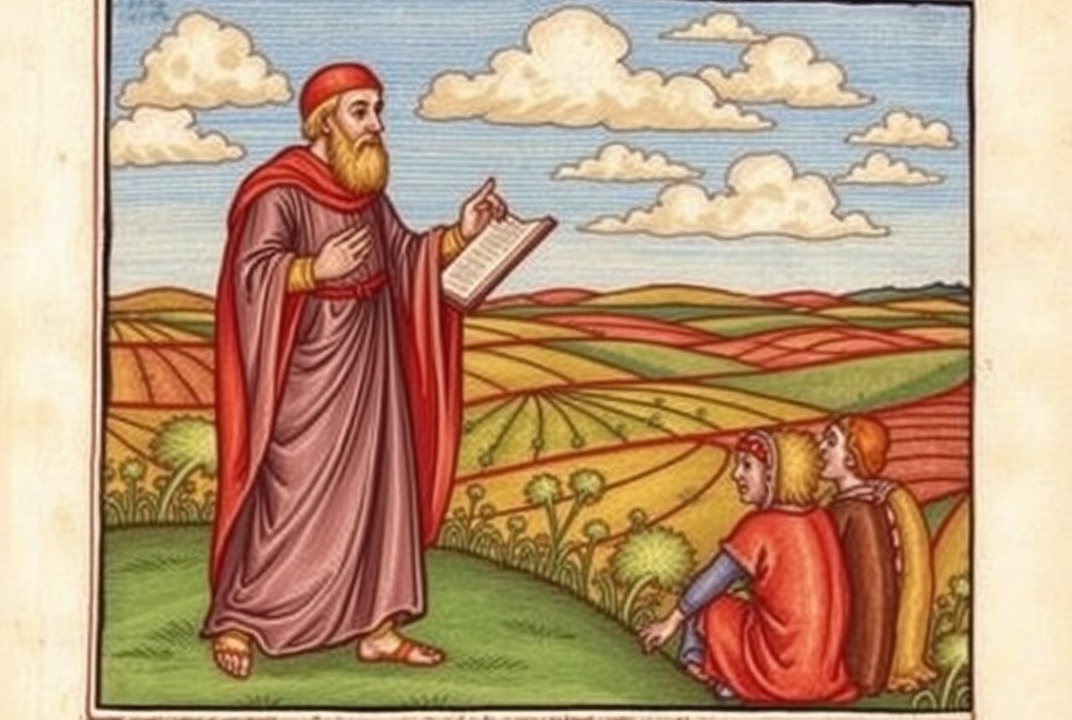
The ideas of John Wyclif did not remain confined to academic circles. They found fertile ground among a movement known as the Lollards. The Lollards were essentially followers of Wyclif’s teachings, lay preachers who took his message of scriptural authority and Church reform to the common people. They often preached in public spaces, using their own copies of the vernacular Bible to illustrate their points and challenging the established doctrines and practices of the Church.
The Lollard movement, though eventually suppressed by the Church and the state, demonstrated the powerful impact of Wyclif’s thought. The authorities viewed the Lollards as a threat to both religious and political stability, and many faced persecution, imprisonment, and even execution. However, the seeds of reform had been sown. The Lollard movement, despite its eventual decline, served as a crucial precursor, demonstrating the growing desire for a more accessible and personal form of religion and the potential for lay participation in spiritual matters.
Wyclif’s Enduring Influence on Religious Thought
While John Wyclif himself died in 1384, his influence continued to ripple through history. His criticisms of Church corruption, his emphasis on biblical authority, and his advocacy for a vernacular Bible profoundly shaped the intellectual and spiritual landscape of Europe. His ideas, though officially condemned by the Church during his lifetime, were rediscovered and amplified by later reformers.
Martin Luther, the German theologian who is widely credited with initiating the Protestant Reformation, acknowledged his debt to Wyclif. Luther’s Ninety-five Theses, posted in 1517, echoed many of Wyclif’s earlier critiques of Church practices. The Reformation itself, which saw a dramatic schism within Western Christianity, can be seen as a grand culmination of the reformist impulses that Wyclif so boldly articulated. His legacy is not just that of a theologian, but of a visionary who championed the power of individual faith and the importance of accessible scripture in shaping religious belief and practice for generations to come.
Frequently Asked Questions about John Wycliffe and Religion
Who was John Wycliffe?
John Wycliffe was an English theologian, philosopher, and reformer who is often called the “Morning Star of the Reformation.” He lived in the 14th century and is known for his critiques of the Catholic Church and his advocacy for translating the Bible into English.
What were Wycliffe’s main religious beliefs?
Wycliffe believed in the supreme authority of the Bible over church tradition and papal decrees. He advocated for the priesthood of all believers, meaning that individuals could have a direct relationship with God without the need for priestly intermediaries. He also challenged the doctrine of transubstantiation, proposing a more symbolic understanding of the Eucharist.
What was Wycliffe’s stance on the Catholic Church?
Wycliffe was highly critical of the wealth, corruption, and perceived abuses within the Catholic Church of his time. He condemned the sale of indulgences, the accumulation of Church wealth, and the luxurious lifestyles of many clergy. He believed the Church had strayed from its original teachings.
What was Wycliffe’s most significant contribution to religion?
His most significant contribution was his role in initiating the translation of the Bible into English. This effort, completed by his followers, made the scriptures accessible to ordinary people for the first time, empowering them to interpret religious texts for themselves.
What were the consequences of Wycliffe’s beliefs and actions?
Wycliffe’s teachings were condemned as heresy by the Catholic Church. He was eventually dismissed from his teaching position at Oxford and faced excommunication. Although he was never executed, his followers, known as Lollards, were persecuted after his death.
Did Wycliffe’s ideas influence the later Reformation?
Yes, Wycliffe’s ideas are considered to be a significant precursor to the Protestant Reformation that began in the 16th century with figures like Martin Luther. His emphasis on biblical authority and his critiques of papal power laid important groundwork for the reformers who followed.