Foundations: Understanding the Degree to Become a Pastor
A pastor’s work blends preaching, teaching, pastoral care, leadership, and community stewardship. While ordination and local church placement are influenced by denominational rules, the educational path typically centers on a combination of theological study, biblical exegesis, and practical ministry training. For many aspiring pastors, selecting the right degree to become a pastor is a decision that shapes their readiness for ministry, their ability to serve diverse congregations, and their lifelong capacity to shepherd others. This article surveys the best degrees and paths to ministry, helps you understand how different programs prepare you for leadership, and highlights practical considerations such as accreditation, cost, and time commitment.
The Best Degrees to Become a Pastor
There isn’t a single universal cookie-cutter credential for every pastoral role. Instead, there are several common educational tracks that equip future church leaders with the knowledge and skills they need. Below are the major categories and what they typically provide. Throughout, you’ll see how a degree to become a pastor translates into real ministry competencies—from preaching and sermon preparation to counseling, crisis response, and organizational leadership.
Bachelor-level Foundations
For many early-career ministry leaders, undergraduate study lays essential groundwork. These programs can lead directly to entry-level ministry positions or serve as a launching pad for graduate study in seminary. Typical undergraduate degrees include the following:
Bachelor of Arts in Theology — Focused on systematic and historical theology, with courses in worldview, apologetics, and doctrinal study. This degree helps students articulate core beliefs and engage in thoughtful discussion with diverse audiences.
Bachelor of Arts in Biblical Studies — Emphasizes substantial exposure to biblical languages, exegesis, and the historical context of Scripture. It’s a strong precursor to more advanced graduate study in ministry.
Bachelor of Arts in Religious Studies — Broader in scope, combining theology with world religions, ethics, and culture. This track is beneficial for leaders serving in multicultural or multidenominational settings.
Bachelor of Science in Christian Leadership or Bachelor of Science in Ministry — More practically oriented, with coursework in organizational leadership, church administration, and youth or outreach ministry.
Relevant undergraduate concentrations and programs to consider
Curriculum that integrates practical ministry skills, such as pastoral care, preaching labs, and ministry practicum.
Opportunities for leadership development within student churches or campus ministries.
Preparation for graduate study in theology or pastoral counseling.
Graduate-level credentials that shape a pastor’s toolkit
Most churches expect or strongly prefer candidates with graduate study in theology, biblical studies, or ministry. The two most prominent paths are Master of Divinity (M.Div.) and specialized master’s degrees in related fields. Here is a snapshot of graduate options commonly pursued by those preparing for pastoral leadership:
Master of Divinity (M.Div.) — The standard professional degree for pastors in many traditions. It blends biblical languages, theology, preaching, and practical ministry courses with supervised ministry experiences.
Master of Arts in Religion/Theology (MA) — Often a shorter or more academically focused degree than the M.Div., suitable for leaders who want deeper theological study, academic teaching roles, or a platform for further doctoral study.
Master of Arts in Biblical Studies — Emphasizes advanced engagement with Scripture, exegesis, historical context, and hermeneutics, useful for sermon preparation and teaching roles.
Master of Theology (Th.M.) or Master of Sacred Theology (STM) — Post-master’s credentials for those pursuing deeper specialization or academic tracks within denomination-affiliated seminaries.
Some candidates explore certificate programs, diplomas, or online degrees in theology or ministry. While not always sufficient alone for ordination, these options can supplement a degree-to-become-a-pastor, especially for church planters, bivocational pastors, or leaders serving in non-traditional ministry contexts.
Graduate Degrees and Seminary Education: Deepening Your Ministry
Graduate study is the centerpiece of many pastoral formation tracks. Seminaries and Bible colleges offer rigorous programs designed to develop preaching prowess, pastoral counseling skills, and leadership capacity for church and mission settings. The following sections outline what to expect from the principal graduate pathways and how they align with various ministry roles.
Master of Divinity (M.Div.)
The M.Div. is, for many denominations, the definitive professional degree for pastors. It typically spans about three to four years of full-time study (more if pursued part-time). Core components often include:
Biblical languages (often Greek and Hebrew)
Biblical interpretation and exegesis
Systematic and historical theology
Preaching and homiletics (sermon preparation and delivery)
Pastoral care and counseling and chaplaincy skills
Beyond the M.Div., several options serve distinct purposes or denominational preferences:
M.A. in Religion / M.A. in Theological Studies — Focuses on research, critical thinking, and doctrinal depth, useful for churches that emphasize education and intellectual engagement, as well as for those considering higher scholarly study.
Master of Arts in Biblical Studies — Prepares pastors for strong Bible teaching roles, with emphasis on exegesis and interpretation of Scripture in various genres.
Master of Theology (Th.M.) — A more advanced degree traditionally pursued after the M.Div. for greater specialization, often in a particular theological field or historical era.
Why some pastors choose non-M.Div. tracks
Not every ministry context requires an M.Div. Some church leaders pursue:
Pastoral counseling degrees or certificates for marriage and family ministry.
Church leadership or ministry leadership master’s programs focused on administration, urban ministry, or youth and family ministry.
Graduate certificates in homiletics (preaching) or ecclesiology for targeted skills without a full M.Div. curriculum.
Undergraduate and Undergraduate-to-Graduate Pathways
While many pastors begin with a bachelor’s degree, the choice and focus of that degree can shape readiness for seminary or further training. Below are practical pathways and what they prepare you to do in your early ministry career.
Undergraduate programs that commonly lead to ministry roles
BA in Theology or BA in Biblical Studies — Builds a strong theological foundation and scriptural literacy for future preaching and teaching.
BA in Religious Studies — Expands worldview awareness, useful for cross-cultural ministry and outreach in pluralistic communities.
Bachelor’s in Christian Leadership or Baccalaureate in Ministry — Integrates leadership theory with ministry practice, often including internships.
How undergraduate studies prepare you for seminary or direct ministry
Developing critical thinking about theology, ethics, and worldviews.
Gaining exposure to pastoral care scenarios through campus ministry or local church internships.
Learning communication skills essential for preaching, teaching, and counseling.
Alternative and Specialized Pathways to the Pastorate
Not all candidates take the same route to pastoral leadership. Denominational norms, local church expectations, and personal life circumstances can influence your journey. The following pathways highlight practical and flexible options for those pursuing ministry roles in diverse settings.
Bible college programs focused on practical ministry skills, with strong preaching and outreach components.
Online master’s programs in theology or ministry that provide flexibility for bivocational pastors or remote congregations.
Doctoral studies in theology or biblical studies for those aiming at academic teaching, church history, or denominational leadership.
Certificate programs in counseling, youth ministry, worship ministry, or mission outreach to complement a broader degree.
Denominational Variations, Accreditation, and Licensure
Educational requirements for pastors can differ dramatically by denomination, region, and church size. It’s essential to understand how accreditation, ordination standards, and licensure processes interact with degree choices.
Accreditation and quality assurance
When evaluating a theology school or seminary, verify that it holds regional or national accreditation and is recognized by the denominations you are considering. Accreditation ensures that the curriculum, faculty qualifications, and student services meet recognized standards for higher education. For many students, choosing an accredited M.Div. or equivalent program helps facilitate transfer of credits and future opportunities in ministry, education, or counseling.
Denominational requirements to become a pastor
Some churches require ordination from a specific denomination, which may have:
Explicit ordaining criteria linked to a particular seminary or credentialing body.
Mandatory supervised ministry experience and a record of faithful service.
Assessment in areas such as theology, ethics, and pastoral leadership.
Other contexts favor more flexible routes, especially in non-denominational, inter-denominational, or church-planting environments. In these cases, the combination of a solid graduate degree, practical ministry experience, and demonstrated leadership ability can be just as valuable as specific denominational credentials.
Practical Considerations: Time, Cost, and Outcomes
Choosing the right degree path also involves pragmatic considerations. Here are some key factors to weigh as you plan your journey toward ministry leadership.
Time commitment — A typical M.Div. takes about three to four years of full-time study, whereas MA programs can be shorter, and some online or part-time tracks extend over five years or more.
Cost and financing — Seminary tuition varies widely. Look for scholarships, church sponsorships, or denominational funding options. Also consider the long-term return on investment in terms of job prospects and ministry opportunities.
Career outcomes — Typical paths include pastoral leadership in churches of various sizes, associate pastor roles, youth or family ministry, worship leadership, and, in some contexts, teaching or chaplaincy.
Location and culture — Some denominations cluster around certain seminaries; location can affect internship opportunities and denominational networks.
Residency and practicum opportunities — Programs with robust hands-on ministry components tend to better prepare you for real-world challenges.
With many degree options and pathways, selecting the best program requires a thoughtful plan. Here are practical steps to help you align your education with your ministry goals.
Clarify your calling and the denominational or non-denominational context you intend to serve.
Identify required credentials for ordination within your intended tradition, including any specific seminary partnerships or faculties.
Compare curricula — Look for programs with strong preaching, pastoral care, biblical languages, and practical ministry components.
Assess faculty and mentorship — Favor schools with experienced pastors and scholars who can mentor you.
Check internship and field education opportunities — Real-world ministry placements help you apply theory to practice.
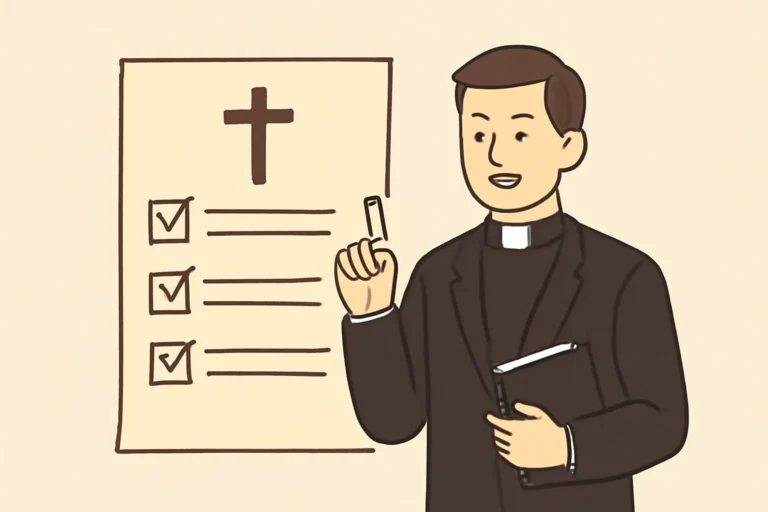
Checklist for evaluating degree programs
Accreditation status and recognition by denominations
Availability of field education and supervised ministry experiences
Flexibility for working students or bivocational ministry
Cost, scholarships, and total cost of attendance
Outcomes data — graduate placement, ordination rates, and career trajectories
Next Steps for Prospective Pastors
If you are considering a degree to become a pastor, a clear plan can help you progress smoothly from interest to ordination or credentialing. Below are actionable steps to begin or advance your journey.
Talk with a mentor or pastor about your calling and how education intersects with your ministry goals.
Visit potential schools and sit in on classes to gauge teaching style, campus culture, and ministerial emphasis.
Meet with a financial aid advisor to map out the best way to fund your education and minimize debt.
Ask about field education opportunities (internships, internships, church-based practicums) and how you can begin gaining ministry experience now.
Plan for ordination readiness by tracking denominational requirements and aligning your degree plan with those expectations.
As you pursue your education, remember that the central aim of any pastoral degree is to equip you to serve your congregation with theological clarity, compassionate care, and principled leadership. A well-chosen program not only imparts knowledge but also hones your character and your capacity to shepherd people through joy and hardship alike.
Whether you ultimately pursue an M.Div. or an alternative graduate degree, the best path to ministry blends rigorous study with ongoing, hands-on ministry practice. By understanding the landscape of degrees to become a pastor, you can make an informed decision that aligns with your gifts, your denomination’s expectations, and your long-term calling.