Understanding the Month of Nisan: Meaning, Placement, and Significance
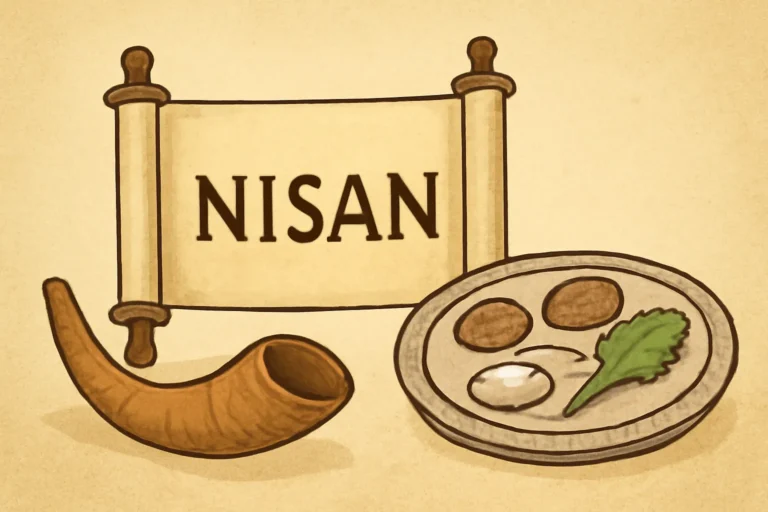
The month of Nisan sits at a central crossroads of Jewish timekeeping and Jewish memory. Known in many sources as the first month of the religious year, Nisan marks the beginning of a cycle that culminates in the festival of Passover and the culmination of the counting of the Omer. In the Hebrew calendar, Nisan is a lunisolar month consisting typically of 30 days, and its arrival signals a transition from late winter to early spring in the land of Israel. For communities around the world, the name is heard as Nisan, sometimes transliterated as Nissan, Nisan (with slight pronunciation variations), or simply chap-book references to the month of Nisan. Regardless of spelling, this period is charged with religious meaning, agricultural symbolism, and historical memory.
The place of Nisan in the Jewish calendar
The Hebrew calendar is a carefully constructed lunisolar system in which months are tied to the lunar cycle and years are adjusted with leap months to align with the solar year. Within this structure, Nisan occupies a special chronological position: it is the first month of the ecclesiastical (religious) year, not the civil one. Civil years begin in Tishrei, during the autumn festival cycle, with Rosh Hashanah. The religious year, however, begins in Nisan, aligning the memories of Israel’s exodus with the rhythm of seasonal renewal. This duality—two kinds of new year within the same calendar—shapes how Jews understand history, prophecy, and ritual.
The symbolic and practical weight of Nisan is reinforced by its connection to renewal, deliverance, and covenantal moments. In the narrative arc of the Jewish year, Nisan provides a bridge from the late winter months toward the Passover story, the telling of Israel’s liberation, and the renewal of national identity that follows. For students of Jewish liturgy and law, this month serves as a focal point for practices that include the Seder, the Seder’s ritual elements, and the public readings that inaugurate a long season of sacred time.
Names, spellings, and linguistic context
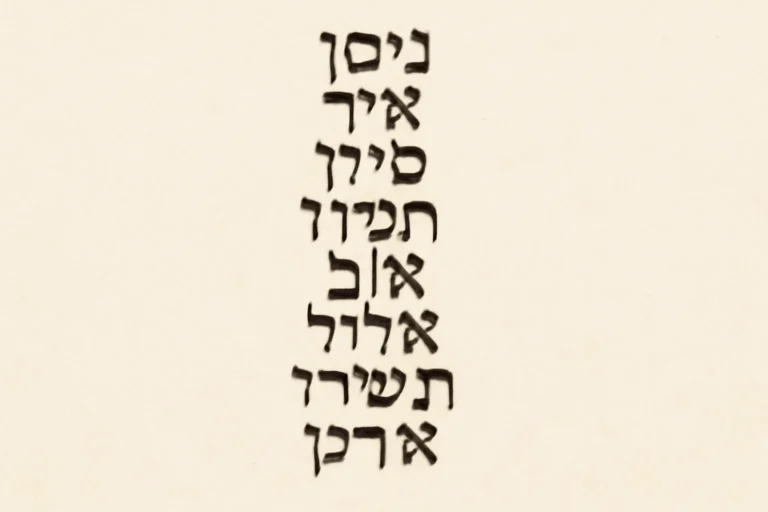
Across translations and traditions, the month is commonly called Nisan. Some English-language texts also use the form Nissan as a variant, reflecting different transliteration conventions from Hebrew. In biblical and modern Hebrew usage, it is the same month, though biblical sources sometimes refer to the month by the name Aviv when describing the season rather than the numbered month itself. In modern contexts, “Nisan” or “the month of Nisan” is the standard term used by scholars, rabbis, and calendar-makers.
Structure and timing: how long Nisan lasts and what it includes
Length of the month
In the Hebrew calendar, Nisan has 30 days. Like other months, its timing is anchored to lunar days beginning at sunset. Because the calendar is lunisolar, the length can be influenced by arithmetic adjustments (constrained by the leap year rules that insert an additional month, Adar II, in leap years). The exact dates shift in relation to the secular Gregorian calendar each year, but the religious events associated with Nisan—centered on Passover and the Omer count—remain fixed in their sequence.
Rosh Chodesh Nisan
The beginning of the month brings with it Rosh Chodesh Nisan, the New Moon of Nisan. This day is observed with special prayers in many communities, and it is often marked by a sense of fresh beginnings. In Jewish law and tradition, the date of Rosh Chodesh can span across one or two days depending on how the lunar conjunction aligns with the weekday. In the Diaspora, there are cases where two days of Rosh Chodesh are observed for the same month due to historical calendrical practices; in Israel, the observance is typically single-day. The changing shape of the month’s beginnings is a reminder of the delicate interplay between lunar cycles and communal ritual.
The month of Nisan is defined by a handful of central observances that shape personal, family, and communal life. These rituals carry forward the memory of the Exodus, emphasize hospitality and social justice, and reinforce the ethical imperatives that guide Jewish law (halacha) and Jewish cultural memory.
Rosh Chodesh and Shabbatot around Nisan
Rosh Chodesh observances set a monthly tempo and invite special prayers and, in some communities, festive meals or minimal additional liturgy.
Shabbat HaGadol—the great Sabbath before Passover—is a recurring feature that situates the month’s end in a moment of spiritual preparation and communal exhortation. While the precise calendar placement can vary, many communities observe a pre-Passover Shabbat that emphasizes haggadah-centered reflection and the delineation of the commandments associated with Passover.
Shabbat, festival rhythm, and agricultural imagery
The month of Nisan is deeply connected to agricultural cycles in the Land of Israel. The soil, spring rains, and the first fruits imagery enter liturgy and the prophetic writings. The Exodus narrative is not only a historical memory but also a living template for moral and political ethics—emphasizing freedom, responsibility, and communal solidarity. For diaspora communities, the agricultural symbolism takes on a pedagogical function: it invites families to reflect on the journey from oppression to liberation, even as they enact it through the Passover Seder and related customs.
Pesach: Passover in the month of Nisan
The central festival of Nisan is Passover, known in Hebrew as Pesach or Chag Ha-Pesach, the festival of unleavened bread. This multi-day celebration commemorates the Israelites’ exodus from Egypt and their crossing of the Red Sea. It is the parellel event that anchors the entire month and provides the most widely observed liturgical practice in this period: the Seder.
Dates and duration
In the Land of Israel: Passover begins on the evening of 14 Nisan and runs through 21 Nisan, a seven-day festival with the first and last days observed as special holy days. This gives a seven-day window of festive observance inside a 30-day month.
In the Diaspora: Passover is observed for eight days, beginning on the evening of 14 Nisan and ending on 21 or 22 Nisan depending on local custom and year. The additional day adds a layer of communal discipline for the Seder and associated rituals.
The Seder and core rituals
Kadesh—sanctification of the meal with wine or grape juice: the first cup is poured and the meal is blessed.
Karpas—a vegetable dipped in saltwater symbolizes the spring and the tears of slavery.
Yachatz—the breaking of the middle matzah; the larger piece becomes the afikoman.
Maggid—the retelling of the Exodus narrative, often with a guided reading and questions that invite participation from all generations.
Rachtzah—the ritual washing of hands before eating the matzah.
Motzi Matzah—the blessing and eating of matzah.
Maror—the bitter herbs represent the bitterness of slavery.
Charoset—a sweet mixture symbolic of the mortar used by the Hebrew slaves in Egypt.
Shulchan Orech—the festive meal, often including symbolic dishes and traditional flavors that vary by community.
Tzafun—the hidden afikoman is eaten at the end of the meal, sealing the Seder with a sense of fulfillment and hope.
Bareich—the concluding grace after meals; the Seder ends with a final blessing and the song Dayenu or other liturgical poems, depending on tradition.
The Seder is not merely a dinner; it is a pedagogical ritual that transforms memory into active participation. Families often include children in the questions they ask, the songs they sing, and the way they describe the exodus as a living narrative with continuing ethical relevance. The symbols used during the Seder—matzah, bitter herbs, haroset, and the afikoman—are carefully chosen to evoke freedom, memory, and responsibility.
Matzo: unleavened bread and its symbolism
Matzo is a central emblem of Passover in the month of Nisan. Made from flour and water with no leavening, it symbolizes the haste with which the Israelites fled Egypt and the spiritual imperative to avoid chometz (leaven) during the festival. The prohibition on leavening during Nisan is more than culinary; it becomes a metaphor for spiritual humility, renewal, and the readiness to leave behind arrogance and excess.
Counting the Omer: moving from liberation to revelation
Beginning in the night after the first Passover day, the Jewish year enters the period known as Sefirat HaOmer, the counting of the Omer. This 49-day countdown stretches from 16 Nisan to the holiday of Shavuot in the new month of Sivan. The Omer count is a bridge between redemption and revelation, linking the exodus narrative celebrated at Passover with the giving of the Torah at Mount Sinai on Shavuot.
The structure of the Omer and its daily observance
Each day of the Omer is accompanied by a blessing and a specific focus for reflection, often associated with moral and spiritual traits that individuals and communities seek to refine. The traditional practice invites people to contemplate the qualities of humility, patience, generosity, and gratitude—qualities that illuminate personal growth during a period of intense ritual activity. In some communities, scholars and teachers offer additional customs, songs, and works of poetry to enrich the season.
Practical considerations for Omer counting
The counting begins on the evening after 16 Nisan, which is the second night of Passover in most communities.
In the diaspora, the date alignment may differ slightly due to local calendar conventions; however, the sequence remains the same, and the practice is widely observed as a core part of the festival season.
Some people mark the Omer with a traditional candle, a prayer book, or a small note describing personal goals for the day, enabling a physical reminder of the day’s focus.
Beyond Passover and the counting of the Omer, Nisan contains additional observances and moments of communal attention that vary by tradition, geography, and community. These include specific Shabbatot, torah readings, and liturgical additions that accompany the month’s narrative arc.
Shabbat HaChodesh and Shabbat before Passover
The Shabbat that occurs before Passover often carries a special designation: Shabbat HaChodesh or the Shabbat prior to the new month and the festival. In some years this is linked to parashot that emphasize redemption and the sanctification of the new month. The close proximity of Shabbat to the festival adds a layer of liturgical preparation, haggadic reflection, and communal cohesion.
The interplay of spring and memory
In the land of Israel, the month’s symbolism is deeply tied to the agricultural cycle and the agricultural calendar. The imagery of spring, renewal, and harvest memory infuses liturgical poems and prayers. Even in the diaspora, where agricultural cycles are less immediate, the season evokes a shared sense of renewal and ethical obligation to repair the world (tikkun olam) through study, hospitality, and acts of loving-kindness.
Nisan in daily life: rituals, laws, and practical guidance
For those trying to observe or understand the month’s calendar in practical terms, several key themes recur across communities: the prohibition of chametz, the Seder’s ritual economy of symbolic foods, and the performance of the Omer counting. These elements are not merely symbolic; they shape daily routines, shopping choices, house-cleaning practices, and family schedules.
Matters of ritual purity and household practice
Chametz avoidance: In Nisan, the prohibition on leavened products is intensified during Pesach. Homes are cleaned, chametz is disposed of or sold to a non-Jewish party, and special Passover foods are prepared that are certified as compliant with Pesach dietary laws.
Burning or removing chametz: As a practical matter, many households perform a formal search for chametz, often followed by a ceremonial nullification of remaining chametz. The ritual procedure reinforces the emphasis on simplicity and spiritual clarity during the festival.
Haggadah-centered meals: The Seder remains the anchor of Pesach in Nisan, though the specific customs can vary by tradition—Ashkenazi, Sephardi, Mizrahi, and others all bring unique flavors and interpretations to the same core framework.
Historical and theological dimensions of Nisan
The month’s historical memory centers on the Exodus narrative—an event of national liberation that became foundational for Jewish identity. Theologically, Nisan invites reflection on themes of freedom, covenant, and the divine promise to redeem and sustain the people. In some sources, Nisan is described as a time when divine favor and human responsibility are especially salient: the moment when history moves from slavery toward covenantal possibility.
Cultural and liturgical variations across communities
Across Jewish communities, the month of Nisan is celebrated with a diversity of practices that reflect long-standing traditions as well as local adaptations. In some communities, songs and poems associated with Passover and the Omer are passed down as family heirlooms; in others, new piyyutim (liturgical poems) or modern interpretations are integrated into the Seder and the Omer period. The universal core—storytelling, memory, and ethical reflection—remains constant, while the expressions of those themes differ.
Variations in the Seder across communities
Different families may use distinct Haggadot (Haggadah texts) with unique commentaries and readings that highlight their heritage.
Some communities place additional songs or readings around the afikoman, inviting children to participate in a playful yet meaningful exchange about the search for the hidden piece of matzah.
Language and liturgical glosses vary; some Seder tables include readings in multiple languages to accommodate new immigrants or mixed-family households.
Practical considerations for travelers and learners during Nisan
For travelers and students, Nisan presents both opportunities and responsibilities. The Seder can be observed in diverse settings—from synagogue community seders to family gatherings in homes abroad. The Omer’s counting can be integrated into daily routines even when travel disrupts regular practice. For learners, this month provides a natural entry point to study biblical history, rabbinic interpretation, and modern Jewish thought, since Passover is among the most widely discussed topics in Jewish study circles.
The broader arc: how Nisan leads to Shavuot
The arc from Passover to Shavuot is one of the most transformative sequences in the Jewish calendar. The counting of the Omer creates a disciplined period of spiritual refinement that culminates in Shavuot, the festival of weeks when the Torah was proclaimed at Sinai. The linkage between the exodus and revelation anchors much of Jewish law and ethics: freedom must be tempered by responsibility, and liberation by covenant.
Nisan is the first month of the religious year, signaling renewal and redemption in the spring.
It includes the central festival of Passover (Pesach) with its Seder and the seven (or eight) days of festive observance that follow.
The Omer counting connects Passover to Shavuot, guiding a period of spiritual reflection and growth.
Rosh Chodesh Nisan marks the new moon, a date that carries liturgical and communal significance in many traditions.
Regional variations—between Israel and the Diaspora—shape the exact days of observance for the festival and the Omer’s counting, though the core sequence remains consistent.
To help readers navigate the language often encountered in discussions of Nisan, here is a quick glossary:
Nisan — the month discussed here; also spelled Nissan in some contexts.
Pesach — Passover; the festival of unleavened bread commemorating liberation from Egypt.
Chag HaMatzot — the festival of unleavened bread; another name for Passover observances during the seven or eight days.
Omer — the biblical measure of barley brought to the Temple, used as a counting interval from Passover to Shavuot.
Seder — the ceremonial meal and ritual retelling that occurs on the first nights of Passover.
Rosh Chodesh — the New Moon day; the head of the month, observed with special prayers in many communities.
Chometz — leavened products forbidden during Pesach; their removal is a central practice of the festival.
Matzah — unleavened bread eaten during Passover; a symbol of haste and redemption.
Afikoman — the hidden matzah eaten at the Seder’s conclusion; its discovery is a common children’s activity.
Shabbat HaGadol — the great Sabbath before Passover, emphasizing preparation and purification for the festival.
In sum, the month of Nisan is not merely a time marker; it is a seasonal, liturgical, and ethical stage in which memory and action intertwine. From the narrative of liberation that begins during Pesach to the spiritual maturation encouraged by the Omer, this period invites individuals and communities to examine their past, their present responsibilities, and their hopes for a redeemed future. Whether one is studying ancient sources, observing rituals at home, or participating in a shared Seder, the month of Nisan offers a unique lens through which to view the ongoing story of the Jewish people.