The term post-tribulation (often written as post-trib or post-tribulational) refers to a family of eschatological beliefs about the timing of Christ’s return relative to a period of intense hardship called the Great Tribulation. In the post-tribulation view, believers endure the tribulation era and are still present at the moment of the Second Coming, when Christ returns in glory to judge the nations and establish His kingdom. This perspective stands in contrast to other positions such as pre-tribulation (which anticipates a rapture prior to the tribulation) and mid-tribulation (which places the rapture somewhere in the middle of the tribulation). When people speak of “post-tribulation,” they are usually describing a framework in which the church remains through the storms of history and is not prematurely removed from the world before the climactic events unfold.
Key Variants and How They Differ
The vocabulary around end-times expectations includes several closely related phrases. Understanding these variations helps clarify the distinctive stance of post-tribulational thought:
Post-tribulation or post-trib: the core label for the view that Christ returns after the tribulation and that the church endures through it.
Post-tribulational eschatology: an adjective form used to describe events or interpretations that belong to the post-tribulation framework.
Post-trib premillennialism: a common synthesis in which believers expect a millennium that begins after the Second Coming, with Jesus reigning on earth after the final judgment of the nations.
After-the-tribulation perspective: a less technical way to refer to the same sequence, emphasizing that the notable climactic events occur after the tribulation period.
Terminology such as post-tribulation rapture is sometimes used, but in most post-trib frameworks the rapture as a distinct event is combined with the return at the end of the tribulation, rather than preceding it.
Theological and Biblical Foundations
Proponents of the post-tribulation model typically point to scriptural passages that describe persecution, cosmic disturbances, and a visible return of Christ at the end of history. They argue that the language of Matthew 24–25, Mark 13, and Luke 21 often portrays the faithful enduring trouble, witnessing to the nations, and then the Son of Man appearing in the clouds. The apostolic witness to suffering and fidelity is seen as consistent with a timeline in which the church does not escape the trials, but is protected through them in some sense and ultimately brought to the culmination of history by the return of Jesus.
The foundational verses commonly cited include references to a period of “great distress” that will precede the consummation of the age, as well as the command to remain watchful and faithful until the appearance of the Lord. In this view, the Great Tribulation is a distinct, intensified phase within the broader era of test and witness, rather than a pre-tribulation event that removes the church from duty and duty-bound hardship.
Signs and Indicators Within the Post-Tribulation Framework
Like other eschatological models, the post-tribulation position identifies signals that point toward the end of the age. The emphasis, however, is on signs that unfold within the tribulation itself and culminate in the Second Coming and the establishment of Christ’s kingdom.
Persecution of believers and a widening cloak of hostility against the faithful, especially from powerful political or religious systems.
Global upheaval in nature and society, including wars, famines, earthquakes, and unusual celestial phenomena, interpreted as the intensification of the birth-pains described in prophetic sources.
Gospel proclamation to all nations and a clear witness in hard-to-reach places, signaling a global awareness of the gospel before the Lord’s return.
Abomination of desolation and related acts of sacrilege that intensify oppression, testing, and the resolve of the faithful.
Judgment and vindication in which God judges the nations and purifies the world, culminating in the pure worship of God in the renewed creation.
Religious and Social Indicators
Decline of authentic faith and the rise of counterfeit religious systems, prompting discernment among believers.
Unity and coercion in global religious life, followed by decisive judgments that separate the true church from superficial associations.
Global evangelistic momentum that leads to a comprehensive witness—often described as the gospel being preached to every nation, tribe, language, and people.
Cosmic Signs and the Nature of Judgment
Cosmic disturbances reflect the severity of the judgment and the seriousness of the moment rather than a purely celebratory moment.
Judgment is seen as both corrective and salvific—intended to bring about repentance, humility, and the ultimate recognition of Christ’s sovereignty.
A Timeline Perspective: Sequence of Events in Post-Tribulation Thought
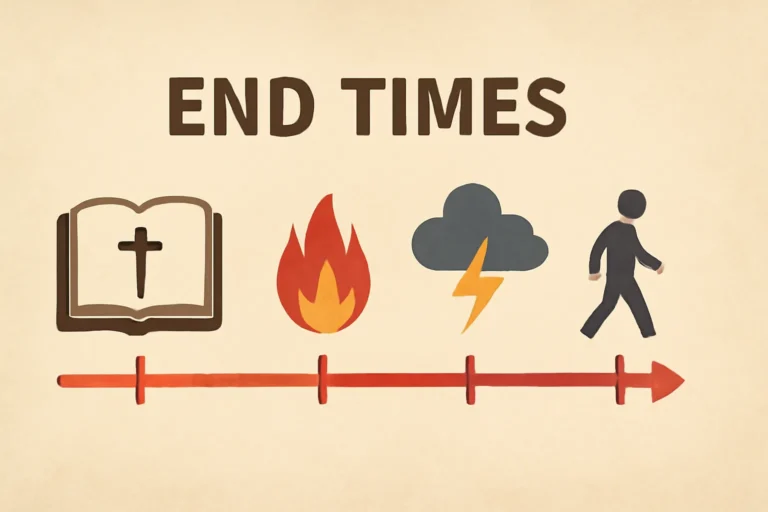
The post-tribulation framework presents a sequence that rests on the idea that the faithful endure the trials of the tribulation and then participate in the visible return of Christ. The details may vary among theologians, but a common sequence includes:
Beginning of the Tribulation: A period of intensified testing and conflict that affects nations and believers alike.
Persecution and Witness: Believers are called to endure with faith, remaining steadfast in proclamation and conduct despite pressure to compromise.
Cosmic and Social Disturbances: Signs in the heavens and upheavals on earth signal the approaching climactic moment.
Abomination of Desolation or analogous acts of desecration intensify conflict and pressure for idolatry or apostasy.
Global Gospel Proclamation: The gospel continues to spread, taking a prominent place in world affairs and in personal decision-making.
Second Coming: Christ returns in glory to judge the nations, defeat evil, and establish His kingdom; the church is not removed before this event in the post-tribulation view.
Resurrection and Final Judgment: A resurrection of the righteous and the wicked, followed by final judgment and the inauguration of the new creation or millennium, depending on the particular sub-tradition.
Common Variations Within the Timeline
Post-tribulation premillennialism: The most prevalent sub-variant among post-trib scholars, asserting that the Millennium begins after the Second Coming.
Post-tribulational amillennialism: A less common position that identifies the millennium in a symbolic sense rather than a literal thousand-year reign after the return.
Harmonization with other eschatological motifs: Some scholars try to weave post-trib narratives with themes of church history, renewal, and the consummation of all things in a way that is coherent with their broader interpretation of Scripture.
Historical Context and Theological Debates
The idea that Christians will go through the tribulation is not unique to a single tradition. Early church thinkers wrestled with questions about persecution, endurance, and the timing of Christ’s return. Over the centuries, the question has produced a spectrum of positions. In the modern era, the post-tribulation stance has gained traction among many Pentecostal, charismatic, and some evangelical communities, who emphasize prophetic continuity, the real possibility of persecution, and a robust sense of vigilance.
Critics of the post-tribulation approach often argue that the biblical data can be read as indicating a rapture-like removal before the most intense period of trouble. They challenge the interpretation of key passages and emphasize the perspective that a pre-tribulation rapture better preserves the church from tribulation. Proponents retort that the biblical material supports a faithful communal endurance and a visible, triumphant return of Christ rather than a speculative, separate event for the church before the upheaval.
Practical Implications for Believers
Beyond cosmological questions, the post-tribulation framework offers practical guidance for how to live now. The emphasis on perseverance, fidelity, and active witness shapes pastoral care, spiritual disciplines, and communal life.
Perseverance under pressure: The church is encouraged to remain steadfast, to endure hardship without compromising the core commitments of the gospel, and to trust that God’s redemptive plan will prevail.
Active evangelism: In anticipation of the culminating moment, believers are urged to carry forward the mission of proclamation so that every nation has access to the gospel before the return of Christ.
Worship and holiness: A focus on worship, sanctification, and corporate worship is highlighted as essential to sustaining hope in the face of trials.
Pastoral care: Communities are urged to provide care for those who experience persecution, distress, or social marginalization during times of upheaval.
Scriptural Exegesis and Hermeneutical Approaches
Interpreting prophecy requires careful hermeneutics. Post-tribulation readers often approach prophetic passages with an emphasis on continuity and historical realism—seeing the Tribulation as a real historical period within which the church must navigate. They typically favor a more literal or semi-literal reading of apocalyptic imagery in places such as Daniel and Revelation, while maintaining that these texts point to both immediate historical events and long-range eschatological outcomes.
Methodological Considerations
Historical-grammatical method: Interpreting biblical prophecy in light of its historical context and typical grammatical meaning.
Contextual interpretation: Examining how New Testament writers reflect and reinterpret Old Testament prophetic motifs.
Canonical coherence: Checking that eschatological claims fit coherently with the broader gospel narrative and church practice.
Post-Tribulation in Contemporary Teaching and Culture
In contemporary churches and scholarly discussions, the post-tribulation view persists in a number of influential voices. Authors, pastors, and theologians frequently engage with questions about resilience, the fairness of divine judgment, and the responsibility of the church in times of crisis. Some authors emphasize the hopeful dimension of perseverance—arguing that the church’s endurance under trial reveals the authenticity of faith. Others highlight ethical questions about how to live when global circumstances appear chaotic, encouraging practical wisdom, solidarity with the vulnerable, and fidelity to a witness that is both credible and compassionate.
Common Misunderstandings and Clarifications
It is easy to conflate post-tribulation with determinism or pessimism about the future. A careful reading, however, reveals a different posture: one that trusts God’s sovereignty, values faithful witness, and embraces the hope of a climactic, visible return of Christ. Some common misunderstandings include:
Misreading the timing: The claim is not that believers are guaranteed an escape from suffering, but that Christ’s return occurs after the tribulation in a manner that reveals God’s justice and mercy.
Equating tribulation with divine abandonment: Rather than abandonment, the tribulation is understood as a period of testing that refines faith and demonstrates divine purpose.
Assuming a single monolithic chronology: Eschatological models vary in their details; post-tribulation commitments emphasize a consistent narrative of endurance, proclamation, and final victory.
For readers exploring the topic of post-tribulation and its related concepts, several key takeaways emerge:
Endurance matters: The central exhortation is faithfulness under pressure and faithful witness to the gospel.
God’s sovereignty remains a steady anchor through tumultuous times.
Hopeful realism: The eventual return of Christ is a confident conclusion to history, not a retreat from reality.
Pastoral relevance: This view invites practical care for believers who experience persecution, fear, or social dislocation.
How to Compare Post-Tribulation with Other Views
For learners who want a balanced understanding, it is helpful to compare the post-tribulation approach to its main alternatives:
Pre-tribulation: The church is removed before the tribulation begins, alleviating believers from the most severe period of distress.
Mid-tribulation: The rapture or an equivalent event occurs mid-way through the tribulation, after some portion of testing.
Amillennial or postmillennial variants: These differ primarily on the nature and timing of the Millennium, but can be compatible with certain post-trib interpretations depending on the broader hermeneutic.
Limitations and Ongoing Dialogue
The study of eschatology is, by its nature, interpretive and contested. Debates about end-time timing often reveal deeper theological commitments—how one understands the nature of revelation, the relationship between law and gospel, and the character of God’s judgment and mercy. The post-tribulation view, like other schools of thought, invites ongoing reflection and respectful dialogue, recognizing the diversity of Christian experience and the shared aim of faithful witness to Christ.
Historical Contributors and Thematic Legacies
Across the centuries, Christian thinkers have engaged with the themes of trial, endurance, and the culmination of history. While not every elder or theologian accepted the post-tribulation framework, many contributed ideas that inform contemporary discussion. The legacy of such discussions includes:
A strong emphasis on perseverance and the role of the church under pressure.
Recognition that prophecy often engages with both immediate historical contexts and a longer eschatological horizon.
An ongoing conversation about how to interpret apocalyptic imagery in light of the gospel’s message of peace, justice, and restoration.
Practical Suggestions for Study and Reflection
Readers who want to engage deeply with post-tribulation themes could consider the following practical steps:
Study key passages—Matthew 24–25, Mark 13, Luke 21, and selected portions of Revelation—within their immediate literary and historical contexts.
Compare commentaries from different eschatological perspectives to see how each interprets the same texts.
Reflect on pastoral implications—how churches today can encourage resilience, shared sacrifice, and a credible witness in times of testing.
Engage with historical voices to understand how early Christians wrestled with persecution and the hope of Christ’s return.
Final Considerations
The discourse around post-tribulation is part of a larger conversation about the meaning of hope, the responsibility of believers, and the way history proceeds under divine sovereignty. While the specifics of timing and sequence may differ among theologians, common ground often lies in the call to faithfulness—an enduring witness that remains steadfast through hardship and culminates in the glorious return of Christ. In this sense, the journey through the tribulation, for adherents of the post-tribulation framework, is not merely a test but a preparation for the vindication of justice, the triumph of love, and the dawning of a new creation.
By exploring these themes—what post-tribulation means, the signs associated with it, and the timeline that observers propose—readers gain a more nuanced understanding of how Christians have imagined the closing chapters of history. The conversation remains alive in churches, academies, and homes around the world, inviting thoughtful discernment, compassionate response to suffering, and a hopeful anticipation of the final revelation of God’s kingdom.