Archaeology Proof of the Bible: Key Evidence and Discoveries
Archaeology and the study of ancient texts intersect in a field often labeled biblical archaeology, or more broadly archaeology proof of the Bible when discussing how material remains relate to biblical narratives. This large and nuanced enterprise does not claim to settle every question about faith, miracles, or divine revelation, but it does provide a substantial corpus of historical and cultural context that helps researchers evaluate historical claims, confirm the existence of places and people mentioned in the Bible, and illuminate how ancient communities lived, governed, and interacted with empire. The goal of this article is to survey the major strands of archaeology proving or supporting biblical events, highlighting the best-known artifacts, inscriptions, and manuscript traditions, while also noting the limitations and ongoing debates in the field.
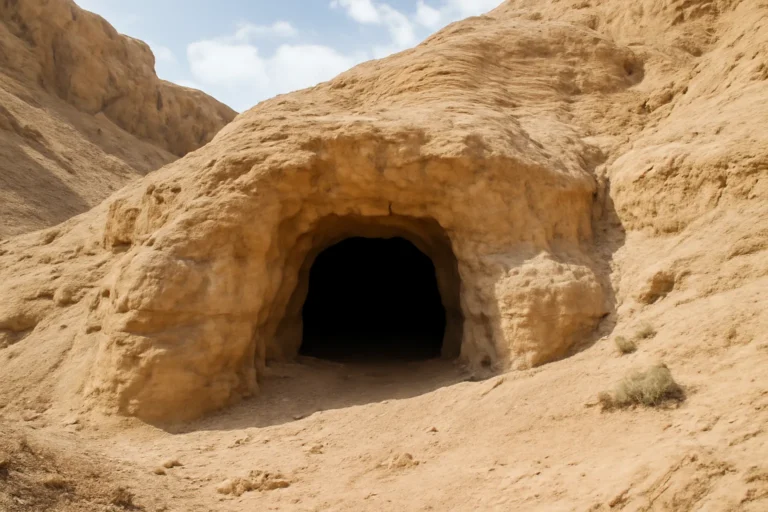
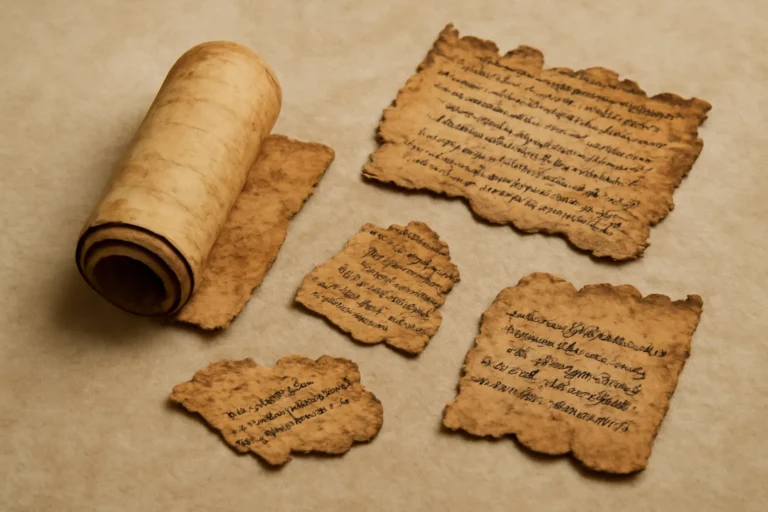
One important strand of archaeology proof of the Bible rests not only in stones and inscriptions but in the manuscripts and textual traditions that preserve biblical books across centuries. The discovery of the Dead Sea Scrolls (discovered in caves at Qumran starting in 1947) yielded Hebrew and Aramaic Biblical texts dating from the 3rd century BCE to the 1st century CE. These manuscripts include portions of every book of the Hebrew Bible except Esther and show a remarkable degree of textual continuity with the later Masoretic Text that became standard in medieval Judaism. In some cases, the Scrolls preserve earlier variants of verses, which scholars compare with the later authoritative texts to understand how transmission evolved.
The Isaiah Scroll (1QIsa) demonstrates the coherence of major prophetic texts over a long period, bolstering confidence in the authenticity of many passages.
Comparisons among the Dead Sea Scrolls, the Septuagint (the ancient Greek translation), and the Masoretic Text reveal both literary compatibility and meaningful differences, reminding readers that the Bible has a dynamic textual history and a robust scholarly record.
Beyond the Scrolls, linguistic and paleographic studies of outright manuscripts—papyri and ostraca from the Hellenistic and Roman periods—provide context for how the biblical books circulated in antiquity, how they were copied, and how communities engaged with sacred texts. The archaeological record thus complements philological work by situating textual faith within concrete social and cultural milieus.
Inscriptions and monumental evidence: the chronicles of places and rulers
A central pillar in the archaeology proof of the Bible is the discovery of inscriptions and monumental markers that name places, rulers, and events referenced in biblical narratives. The field has given us several widely accepted pieces of epigraphic evidence that bridge biblical content with the material world.
Tel Dan Stele (c. 9th century BCE): An inscription by the king of Aram mentioning a “House of David,” widely interpreted as the first extra-biblical reference to the Davidic dynasty. This stele is often cited as evidence for a historical Davidic kingdom, even as it must be read within its geopolitical and linguistic context.
Mesha Stele (Moabite Stone, c. 9th century BCE): This inscription from Mesha, king of Moab, provides a Moabite perspective on events surrounding Israel and Moab, offering corroboration for the biblical account of interactions between these kingdoms.
Siloam Inscription (Hezekiah’s Tunnel, 7th century BCE): A Hebrew inscription carved in the rock describing the construction of a tunnel in Jerusalem to secure water during siege. This artifact ties into biblical depictions of Hezekiah’s preparations for war and aligns with the broader narrative of Jerusalem’s water system during the Assyrian period.
Pilate Stone (Caesarea, 1st century CE): An inscription naming Pontius Pilatus, the Roman prefect who, according to the New Testament, presided over Jesus’ trial. This is a key example of how New Testament-era governance figures are attested in the archaeological record.
Caiaphas Ossuary (Jerusalem, 1st century CE): A bone box bearing the name of the high priest Caiaphas, linking a New Testament era office holder with a tangible artifact from the period described in the Gospels.
These and similar finds do not prove theological claims, but they provide a tangible anchor for historical narratives, showing that the settings, offices, and events described in biblical texts existed in their purported periods and places.
Return from exile and imperial decrees: Cyrus, Persia, and the reconstruction era
A cornerstone in the archaeology proving or corroborating biblical history is the documentation of imperial decrees and the repatriation of exiles during the Persian period. The Cyrus Cylinder and related inscriptions attest a policy by which the Persian king Cyrus the Great allowed exiled populations to return to their homelands and rebuild their temples. This aligns with the biblical books of Ezra and Nehemiah, which describe the return of the Jews to Jerusalem and the rebuilding of the Temple under imperial sponsorship. While the Cylinder itself is not a direct quotation of biblical texts, it provides an independent extrabiblical confirmation of a political climate that made the events in Ezra possible.
In Ezra and Nehemiah, Cyrus’s decree is portrayed as a turning point that enabled the return from exile and the restoration of Jerusalem’s temple and city walls. The archaeological and epigraphic record supports this broader historical frame, giving scholars a plausible context for those biblical accounts.
Additionally, other Persian-era inscriptions and administrative documents illustrate the enduring presence of a Jewish community in the Persian provinces, reinforcing the plausibility of the biblical portrayal of post-exilic Judah and the maintenance of religious practice.
Israel among the nations: Merneptah, Assyria, and the political geography of the biblical world
The Merneptah Stele (ca. 1208 BCE) is the earliest known extrabiblical reference to “Israel” as a people in Canaan, a development that has important implications for the historicity of the biblical narrative, especially regarding how and when the ancient Israelites emerged as a identifiable group in the land. While the stele is concise and not a history book, it provides a critical anchor for the long-standing claim that Israel existed as a distinct entity in the late Bronze Age, a period often associated with the so-called patriarchal or early Israelite stages in biblical history.
In the Assyrian and Neo-Assyrian periods, numerous inscriptions and reliefs describe campaigns in the Levant, the subjugation of cities, and the administrative organization of the region. For biblical archaeology, these records help scholars correlate biblical accounts of campaigns, sieges, and political power with external perspectives that illuminate the broader world in which biblical events occurred.
New Testament foundations: manuscripts, fragments, and the earliest Christian sites
The realm of archaeology confirming New Testament events includes both textual witnesses and physical locations connected to early Christianity. Early papyri and uncial manuscripts date to the 2nd through 4th centuries CE and preserve portions of the Gospels, Acts, and the Epistles. Notable examples include the P52 fragment (John 18:31–33), among other papyrus codices that demonstrate the rapid transmission of the Christian texts in antiquity. While these textual artifacts do not demonstrate miracles, they do confirm the antiquity and dispersion of the New Testament texts.
Bodmer Papyrus (P66, P75, etc.) and Chester Beatty Papyri provide early copies of Luke, John, and Paul’s letters, illustrating how rapidly Christian communities circulated sacred writings.
The James Ossuary and other ossuary inscriptions from the 1st century CE offer glimpses into burial practices and the social world of early Jesus followers. The James Ossuary, in particular, has sparked debate over authenticity and provenance, illustrating how archaeology intersects with modern scholarship and provenance questions.
Archaeology of cities and places in the biblical world
The geographic and architectural footprint of biblical narratives is richly illuminated by excavations and surveys across the Levant. Cities such as Jerusalem, Bethel, Megiddo, Hazor, and Dan appear in both biblical catalogs and archaeological programs, enabling researchers to compare the biblical record with material culture.
In Jerusalem, discoveries related to the late Second Temple period, vaults, city walls, and water systems (like Hezekiah’s Tunnel) offer physical corroboration of city life and political realities described in biblical texts.
Excavations at sites such as Megiddo and Hazor have yielded layers dating to the Iron Age, including fortifications and urban planning features that help anchor the stories of conquest, administration, and ceremonial life in an identifiable historical setting.
The archaeological narrative relevant to the Bible spans multiple eras, each contributing distinct kinds of evidence. This chronological approach helps readers understand how material culture and textual traditions intersect across time.
Bronze to Iron Age Transition: Cities, fortifications, and material culture in early Israel and neighboring kingdoms, with debates about the nature of early Israel in Canaan and the tempo of settlement.
Late Bronze to Iron Age: Emergence of Israel as a polity, the development of city-states, and the historical atmosphere of the United Monarchy as described in biblical accounts of David and Solomon.
Persian Period: Decrees, temple rebuilding, and the political reorganization of Yehud in the wake of exile, aligning with Ezra–Nehemiah narratives and the broader imperial framework of Cyrus and Darius.
Hellenistic and Early Roman Periods: Life in Judaea under Greek and Roman influence; the emergence of early Christian communities and the tangible markers of their presence in the landscape and inscriptions from the period.
Interpreting archaeology: what evidence does and does not do
The limits of proof: why archaeology neither proves nor disproves faith claims
A clear takeaway from the study of biblical archaeology is that evidence can support plausibility and context without proving religious beliefs in a metaphysical sense. In other words, artifacts, inscriptions, and manuscripts can corroborate that certain people existed, that certain places were real, and that certain events occurred within a historical timeframe. They do not, however, demonstrate miraculous acts, divine intervention, or theological claims as matters of empirical proof. The balance of evidence often consists of convergence—multiple independent lines of inquiry that reinforce one another—rather than a single smoking gun.
Where debates linger: contested sites and disputed readings
Even in well-established cases, scholarly debate persists. For example, the precise dating and interpretation of Jericho’s destruction layers have been debated for decades, with some excavations suggesting a destruction in the Bronze Age and others indicating later periods of settlement. Similarly, the identification of certain biblical sites with modern locations is sometimes tentative, relying on a combination of topography, inscriptions, and stratigraphy rather than a single, definitive marker. In some cases, inscriptions such as the James Ossuary are alleged to bear authentic names but face questions about authenticity, provenance, and the risk of later alteration. This demonstrates a broader truth about archaeology: conclusions are provisional and continually revised in light of new discoveries and methods.
Methodology and best practices in the field
Readers and students of archaeology for the Bible should be aware of the standard methods that guide robust research. The discipline integrates several strands:
Epigraphy (the study of inscriptions) to read ancient texts carved in stone or clay and to understand their linguistic and cultural contexts.
Archaeology of sites (excavation and survey) to uncover architectural remains, everyday objects, and urban layouts that illuminate social and political life.
Material analysis (pottery typology, stratigraphy, radiocarbon dating) to date layers and artifacts with increasing precision.
Textual criticism to compare biblical manuscripts and translations, tracking how reading traditions evolved over time.
Historiography and cross-cultural comparison to place biblical narratives within the broader ancient Near Eastern world, including Mesopotamian, Egyptian, and Mediterranean contexts.
A healthy approach to the topic emphasizes an integration of these methods. The resulting picture is not a simple line of proof but a network of corroborating details—geography, material culture, inscriptions, and diverse textual witnesses—that together strengthen the historical plausibility of certain biblical episodes.
What to take away: practical implications for readers
For students, educators, and curious readers, the body of evidence surrounding archaeology proof of the Bible yields several practical takeaways:
Corroboration exists but is nuanced: In many cases, archaeology supports the existence of places and rulers named in the Bible and provides plausible historical settings for events, yet it rarely offers a one-to-one, unequivocal confirmation of every narrative detail.
Varied kinds of evidence: Inscriptions, temple records, city plans, and manuscript discoveries each contribute different angles on the same historical landscape. Taken together, they offer a multi-layered understanding of how the biblical world operated.
Interpretive humility: Archaeology is as much about asking good questions as it is about answering them. The field invites humility about what ancient peoples believed, how they lived, and how later communities remembered them.
Impact on faith and scholarship: For believers, archaeology can illuminate how biblical authors framed their messages within specific political and cultural realities. For scholars, it provides a testing ground for historical hypotheses about the Bible’s formation, transmission, and reception.
Critical perspectives and the broader scholarly landscape
The conversation about archaeology and the Bible is diverse and dynamic. Some scholars emphasize the historical core of many biblical narratives, arguing that the Bible preserves reliable memory extended across generations. Others caution that biblical texts are literary productions shaped by theological aims, political contexts, and community identity, meaning that archaeology should be read as part of a broader historiographical ecosystem rather than as a straightforward encyclopedia of ancient events. Both positions share an understanding that material culture and textual traditions illuminate each other, and both recognize the value—and the limits—of physical evidence in reconstructing the past.
Notable artifacts and discoveries recap
To keep the thread clear, here is a compact recap of some widely cited artifacts and texts that feature prominently in discussions about biblical archaeology and the archaeology proof of the Bible:
Dead Sea Scrolls and related textual fragments that illuminate Hebrew Bible transmission and textual variants.
Tel Dan Stele and the concept of a Davidic dynasty outside the biblical text.
Mesha Stele as a Moabite perspective on neighboring Israel and Judah.
Siloam Inscription tying Hezekiah’s tunnel to the biblical narrative of Jerusalem’s defenses.
Pilate Stone confirming the historical figure of Pontius Pilatus in Judea under Roman rule.
Caiaphas Ossuary and other 1st-century tomb artifacts that place New Testament-era offices and families in archaeological context.
Cyrus Cylinder and the broader imperial environment that enabled the return from exile described in Ezra and Nehemiah.
Merneptah Stele showing Israel as a people in the late Bronze Age record, linking biblical naming with extrabiblical evidence.
Papyri and early Christian manuscripts like P52 and Bodmer Papyri that illuminate the antiquity and circulation of New Testament texts.
Why the discussion matters: intersection of faith, history, and culture
The exploration of archaeology proving or supporting the Bible is not purely academic; it intersects with how communities understand their own past, how faith traditions relate to historical memory, and how educators present ancient history to students. For many readers, archaeology offers a tangible bridge between sacred stories and the physical world, helping to situate religious tradition within a broader historical narrative. For scholars, it provides a disciplined way to test hypotheses, refine chronology, and reassess assumptions with new data.
A final word on healthy engagement with the evidence
When engaging with archaeology and the Bible, readers should adopt a balanced approach that appreciates the strengths of the evidence while acknowledging its limitations. The field advances through careful dating, contextual interpretation, and ongoing dialogue among archaeologists, historians, theologians, linguists, and textual scholars. The result is not a single verdict about faith or history, but a robust, evolving understanding of how ancient peoples lived, how their leaders governed, how sacred texts emerged and traveled, and how future discoveries may reshape our current pictures of the biblical world.
In sum, the corpus of findings labeled as archaeology proof of the Bible or archaeological evidence for the Bible presents a compelling mosaic. It demonstrates that the biblical world had real cities, rulers, inscriptions, and textual traditions that a wide variety of artifacts and documents help us reconstruct. It also reminds us that the relationship between archaeology and sacred literature is intricate and dynamic—rich with insight, yet always open to revision in light of new discoveries and refined methodologies.