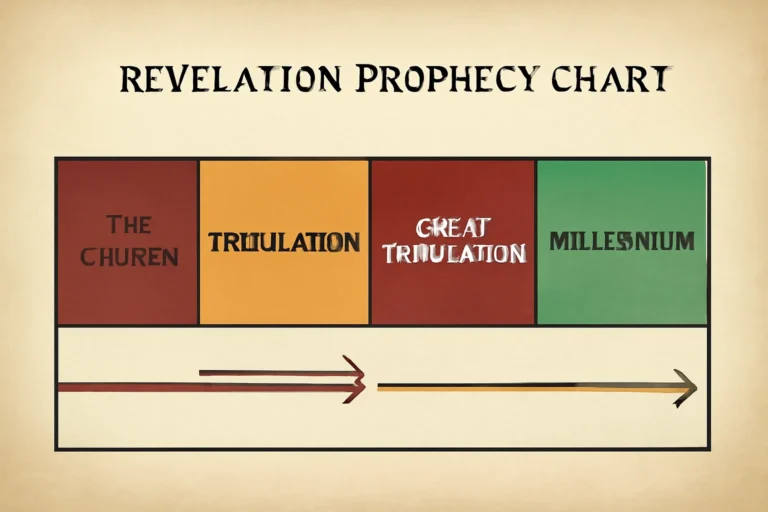
Revelation Timeline of Events: A Clear Chronology of Key Milestones
The revelation timeline of events presents a structured map of the visions described in the biblical Book of Revelation, arranged in a sequence that readers can follow from the opening prologue to the final restoration. This article offers a detailed, educational walkthrough of that chronology, while also acknowledging that scholars and readers differ in how they interpret the timeline’s symbolic imagery. What follows is a careful, informative layout designed to explain the major milestones, tie them to the relevant chapters, and highlight how they contribute to a broader understanding of the apocalyptic narrative. By surveying the key phases—early visions, prophetic judgments, climactic combat, the return of Christ, and the creation of a new order—readers gain a clearer sense of how the revelation unfolds across time and space.
Foundations: The Prologue, the Vision, and the Structure of the Narrative
Before tracing the timeline of revelations, it helps to outline the foundational framework that governs how the narrative is organized. The book opens with a prologue that identifies the Source of the vision and the recipient of the message. Read together with the letters to the seven churches, the prologue establishes three crucial elements that recur throughout the sequence:
Divine authorship and the authority of the Christ who speaks from the heavenly realm.
Communication to a specific audience (the seven churches in Asia Minor), but with implications for readers across eras.
Symbolic imagery that conveys cosmic truth through visions, sounds, numbers, and visions of heavenly beings.
From the outset, the timeline of events shifts between earthly and heavenly realms. The throne room of heaven, the scroll in the right hand of the One seated on the throne, and a chorus of living beings provide the backdrop for the unfolding sequence. The structure is designed to move readers from a local address to universal judgment, from cosmic signs to concrete actions in history. In this sense, the chronology is less a flat list of times and more a dynamic arc that meters out divine judgments and promises in deliberative stages.
Key terms to track as you study the sequence
Throne room imagery (heavenly scene in Revelation chapters 4–5).
Scroll with seven seals (Rev 5), a pivotal symbol that initiates the sequence of judgments.
Seals, trumpets, and bowl judgments as successive waves of divine action.
The Opening Act: The Vision, Letters, and the Scroll
The early portion of the revelation timeline introduces the recipients and sets the stage for what comes next. The vision of Christ among the seven lampstands, the commission to write to the churches, and the appearance of the heavenly scroll create a foundation for the prophetic sequence that follows.
The Throne Room and the Scroll (Rev 4–5)
Heavenly throne room and a central figure who holds ultimate authority over history.
The lamb who is worthy to open the scroll, signaling a transition from proclamation to action within the timeline.
The introduction of the seven-sealed scroll, whose opening triggers the unfolding of events described in subsequent chapters.
The Letters to the Churches (Rev 2–3)
Across the sequence, the revelation timeline of events temporarily pauses to address seven communities. Each message both commends and warns, urging the churches toward faithfulness in the face of pressure. Though these messages are addressed to specific congregations, they function as a microcosm of the faithfulness required in every generation that encounters end-time prophecy.
How the initial sections feed the later chronology
By situating a message to living churches alongside the heavenly throne, the narrative emphasizes a continuity between earthly life and cosmic destiny. The removal of the scroll’s seals soon follows, signaling a shift from messages to the unfolding judgments that propel the timeline toward its climactic events.
The Seals: The First Wave of Judgment and Suffering
The opening of the seven seals marks a dramatic transition from revelation to action within the timeline of events. The sequence under the seals presents a progression of catastrophe and testimony, each seal revealing a particular dimension of judgment and endurance.
First through Fourth Seals: Conquest, War, Famine, and Death
White horse rider bringing conquest or conquest-like influence—symbolizing uncontrolled expansion or pressure that tests faithfulness.
Red horse rider bringing war and bloodshed, a reminder that conflict shapes human history and spiritual testing alike.
Black horse rider with scales, signaling famine and economic disruption as a sign of scarcity in a destabilized world.
Pale horse rider representing death and Hades, illustrating the human costs of violent conflict and judgment.
The Fifth and Sixth Seals: Martyrs and Cosmic Disturbances
The fifth seal reveals the souls of martyrs under the altar who cry out for justice, highlighting the persecuted faithful who persevere in faithfulness amid suffering.
The sixth seal triggers cosmic upheaval: a great earthquake, celestial phenomena, and fear among the inhabitants of the earth. These signs push the timeline toward the next wave of judgment and reveal the fragility of human institutions in the face of divine action.
The opening of the seventh seal creates a stillness in heaven and introduces the next phase: the seven trumpets. This transition marks a shift from seal-based judgments to trumpet-based judgments, expanding the scope of the revelation timeline as it moves toward broader, more public demonstrations of divine power.
The Trumpets: A Series of Public Judgments
The trumpet judgments intensify and broaden their scope, becoming more disruptive to the natural and social order. The revelation timeline of events in this section emphasizes a public display of divine justice that culminates in a call to repentance, even as it assures divine sovereignty over history.
Overview of the Trumpet Sequence
The first trumpet affects land and vegetation, illustrating the vulnerability of natural resources and the consequences of human choices on ecosystems.
The second trumpet involves the sea, symbolizing upheavals in commerce, travel, and national power as ships and economies are disrupted.
The third trumpet targets freshwater sources, highlighting the fragility of life-sustaining water and the human dependence on natural systems.
The fourth trumpet dims celestial lights, representing spiritual and moral darkness accompanying great upheaval.
The fifth and sixth trumpets unleash localized and broader spiritual warfare, inviting readers to discern between divine correction and human rebellion.
As with the seals, the trumpets serve as a staged progression within the timeline of end-time events, aligning cosmic signs with earthly consequences. They also function as a call to watchfulness and faithfulness, encouraging believers to remain steadfast when faced with escalating trials.
Interludes and Zooming Perspectives
Within the trumpet sequence, there are interludes and visions that remind readers of the larger cosmic drama at play. These interludes demonstrate that the revelation timeline is not merely a linear chronology but a composite tapestry in which heavenly realities intersect with earthly history.
The Bowls of Wrath: The Final, Consummate Judgments
The next major phase of the revelation timeline centers on the bowl judgments, or the vials of divine wrath. These judgments are typically described as more intense and comprehensive than the prior cycles, aimed at bringing about repentance and the removal of systemic evil.
Key Characteristics of the Bowl Judgments
Global impact that tests the endurance of the faithful and the stubbornness of the unrepentant.
Confrontations with political and religious powers, exposing the fragility of systems that oppose divine purposes.
An escalating arc that leads toward final upheaval and the climactic confrontation with evil.
How the Bowls Connect to the Earlier Sequences
The bowl judgments do not exist in isolation; they function as the culmination of the symbolic patterns established by the seals and trumpets. They intensify the call to repentance, demonstrate the sovereignty of God over history, and prepare the stage for the ultimate victory described later in the timeline.
Beasts, Dragons, and Armageddon: The Crisis Phase
In the revelation timeline of events, the climactic crisis centers on the figures commonly described as the Beast and the Dragon, the manifestation of ultimate opposition to divine sovereignty. This section outlines the major milestones in this crisis without getting lost in interpretive controversies, while still acknowledging the diversity of viewpoints among scholars and readers.
The Dragon and the Beast
The Dragon is depicted as the ancient serpent, emblematic of primordial evil and spiritual warfare. The Beast, often understood in traditional readings as a symbol of temporal power, political authority, or an antagonistic system, exerts influence over the earth and deceives many. The two-beast framework (Beast from the Earth and Beast from the Sea) becomes a focal point of prophetic symbolism that shapes how readers understand political-religious authority in the end times.
The False Prophet and Persecution
A subsidiary character, the false prophet, enforces the Beast’s authority and promotes idolatry. The narrative presents a period of persecution that tests loyalty, discernment, and courage among the faithful. The timeline emphasizes both outward pressure and inward transformation—calling believers to resist coercive powers while remaining true to a higher allegiance.
Armageddon and Divine Intervention
The climactic battle is often associated with the term Armageddon, a symbolic scene in which earthly powers converge for a final confrontation. The narrative concludes with the decisive victory of the Lamb and the overthrow of the Beast, followed by a sequence of heavenly signs that herald the next major phase of the revelation timeline.
The Return of Christ and the Millennium: Reign, Renewal, and Rest
Following the defeat of the primary forces of evil, the timeline of end-time events continues with Christ’s return, the binding of Satan, and the establishment (in varying interpretations) of a thousand-year reign known in diverse traditions as the Millennium. This section outlines the major components of this period, while acknowledging the interpretive variety that characterizes discussions of the millennium.
Christ’s Return and the Binding of Satan
In the sequence, the return of Christ marks the culmination of the climactic conflict. The binding of Satan, often described as a short, decisive action, reorders the spiritual landscape and enables the peaceful reign of the righteous on earth or in a symbolic sense. The nature and duration of this reign are the subject of ongoing theological debate, with three prominent positions typically discussed in scholarly and popular discourse:
Premillennial futurist perspective: Christ returns before a literal thousand-year reign on the earth; the earth experiences a period of unprecedented peace and the revelation continues toward a final judgment.
Amillennial perspective: the Millennium is a symbolic period representing the present church age and the spiritual reign of Christ in the heart, not a literal one thousand years of physical rule.
Postmillennial perspective: the world gradually improves through the gospel, culminating in Christ’s return after a long era of spiritual triumph.
In this portion of the timeline, the cosmic order is redefined. The narrative anticipates the judgment of evil in its final form, culminating in an era where justice, righteousness, and peace characterize the revealed order. The Millennium, whichever interpretive lens one adopts, functions as a bridge between the present age and the ultimate renewal described in the next major section of the revelation storyline.
The Great White Throne, Final Judgment, and the New Creation
The closing arc of the revelation timeline of events concerns accountability, restoration, and the creation of a renewed order. The Great White Throne judgment, followed by the emergence of a new heaven and a new earth, culminates in the appearance of the New Jerusalem—a city described in symbolic splendor and promised to be the eternal dwelling place of God with humanity.
Great White Throne Judgment
This judgment scene centers on divine justice administered to the dead, both great and small, according to their deeds. The outcome affirms God’s holiness and sovereignty, and it marks the definitive close of the old order of things. The language emphasizes accountability, making this phase a crucial milestone in the overall trajectory of the revelation timeline.
New Heaven, New Earth, and the New Jerusalem
Following the judgment, the cosmos undergoes a radical renewal. The new creation removes every source of pain and sorrow, replacing them with enduring peace and joy. The imagery of the New Jerusalem—described with precious materials, perfect dimensions, and intimate proximity to God—serves as a symbolic promise of eternal communion and restored relationship between heaven and earth.
What readers take away from this phase
Beyond the imagery, the final chapters communicate enduring themes: assurance in the face of trial, the certainty of divine victory, and the invitation to faithful living in light of the coming fulfillment. The revelation timeline thus circles back to its beginning in a sense—a call to faithfulness that remains relevant for readers in every generation who study these end-time movements.
Because Revelation contains highly symbolic language, scholars have proposed several frameworks for interpreting the timeline of events. Each framework offers a different lens on how the sequence unfolds, what it means for contemporary readers, and how literal or symbolic various elements should be understood. Here are four major approaches, summarized briefly:
Historical (Idealist) Perspective
In this view, the events in Revelation reflect ongoing spiritual realities that recur across history. The timeline is read as a pattern of spiritual conflicts—principles of deceit, judgment, repentance, and renewal—that apply in every era. The emphasis is less on predicting a fixed chronology and more on recognizing the universal drama of good vs. evil, faithfulness, and divine deliverance.
The futurist approach tends to read much of the prophecy as future, literal events that will occur in a near- or far-off end-time scenario. The timeline of events is often mapped to a sequence of future occurrences—antichrist, tribulation, a visible return of Christ, the millennium, and the final judgment—though within this framework there are variations about timing and duration.
Preterist Perspective
In contrast, the preterist view interprets much of Revelation as referring to events already fulfilled in the first centuries, particularly in relation to first-century churches and Rome. The revelation timeline thus emphasizes historical fulfillment rather than future anticipation, with the symbolic language recounting concrete historical events of the ancient world.
Prod up Combination: The Ideal-Environmental View
Some scholars blend insights from multiple perspectives to emphasize how Revelation addresses enduring human concerns—moral integrity, faithfulness under pressure, the struggle for truth, and the ultimate sovereignty of God—while acknowledging that some signs may have both historical and future layers of meaning.
Regardless of the chosen framework, readers often find value in a combined approach: using the chronology to understand how the narrative unfolds, while recognizing the spiritual and ethical lessons embedded in the imagery. The goal remains to grasp how revelation narratives invite continued reflection, discernment, and faithful living in light of ultimate divine purposes.
Engaging with the revelation timeline of events can be a meaningful but challenging endeavor. The following practical guidelines are designed to help readers, students, or teachers approach the material with clarity and discernment:
Begin by outlining the major milestones: the prologue, the opened scroll, the seals, the trumpets, the bowls, the climactic crisis, the return of Christ, the Millennium, the Great White Throne, and the New Creation. Understanding how each phase leads to the next helps prevent getting lost in detail.
2. Track Repetition and Contrast
Pay attention to motifs that recur across sections—salvation and judgment, worship and witness, deception and truth. These patterns help illuminate the timeline of events as a cohesive whole rather than a disjointed series of pictures.
3. Recognize Symbolic Language
Be alert to symbolism that communicates meaning beyond literal events. Numbers like seven, twelve, and a thousand, and images such as beasts, dragons, and cities, are loaded with significance. Reading symbols with attention to their biblical literary context helps reveal deeper implications rather than just surface details.
4. Distinguish Narrative Layers
Consider how visions, prophecies, letters, and prayers contribute to the timeline. Understanding where one section ends and another begins—while noting cross-references to earlier material—improves comprehension and retention.
5. Respect Theological Diversity
Acknowledge that credible, thoughtful interpreters differ on the precise chronology and its applications. A responsible approach invites humility, ongoing study, and a readiness to revise understandings in light of new insights or evidence.
6. Apply the Message Today
Beyond chronology, identify practical lessons such as perseverance in faith, discernment in the face of pressure, and hope grounded in divine sovereignty. The enduring value of the revelation timeline lies in equipping readers to live faithfully now, while anticipating future fulfillment with sober hope.
Prologue and vision establish divine authorship and audience.
The scroll with seven seals opens, unleashing the sequence of judgments.
Seals 1–4: Conquest, War, Famine, Death.
Seal 5: Martyrs under the altar cry out for justice.
Seal 6: Cosmic disturbances foreshadow the coming judgments.
Seal 7: Prelude to the trumpet judgments.
Trumpets 1–4: Public judgments on land, sea, waters, and celestial order.
Trumpets 5–6: Spiritual warfare and greater upheaval; calls to repentance.
Trumpet 7: Transition to the bowls of wrath.
Bowl judgments: Intensified global disruption and divine correction.
Crisis phase: The Dragon, Beast, and False Prophet confront the faithful; Armageddon signals decisive confrontation.
Christ’s return and the binding of Satan; the Millennium debate among interpreters.
Final judgment at the Great White Throne, followed by a new creation: the New Heaven, the New Earth, and the New Jerusalem.
These milestones provide a compact map of the broader narrative, allowing readers to navigate the main movements while recognizing the complexity of interpretation that accompanies the revelation timeline of events.
Is the timeline strictly chronological, or are some events symbolic?
The revelation timeline blends chronological progression with symbolic symbolism. For some readers, the seals, trumpets, and bowls refer to real historical periods; for others, they symbolize ongoing spiritual dynamics that recur across eras. A careful study respects both approaches, focusing on the underlying messages—faithfulness, divine justice, and hope in ultimate renewal.
How should one approach the idea of a literal millennium?
The millennium is one of the most debated elements in the timeline. Depending on the interpretive lens, readers may understand the thousand years as a literal period on earth or as a symbolic representation of spiritual reign. Regardless of the stance, the central encouragement remains steadfast: the victory of Christ over evil is assured, and believers are called to live in light of that victory.
The New Jerusalem functions as a theological symbol of intimate, uninterrupted communion between God and humanity. Its imagery conveys the idea that God’s presence will be fully realized among his people, and it functions as the culmination of the entire revelation timeline—the ultimate fulfillment of God’s promises to redeem and restore.
How can readers apply the revelations to modern life?
Reading the Revelation timeline is not solely about predicting the future; it is about cultivating discernment, resilience, and hope. The milestones remind readers to live with integrity, resist coercive ideologies that oppose truth, and trust in the sovereignty and faithfulness of God. The trajectory from suffering to victory invites practical action: compassionate witness, ethical conduct, and steadfast worship in the face of uncertainty.
Although the details of interpretation vary, the Revelation Timeline of Events offers a coherent structure for understanding the end-time vision. By tracing the progression from the prologue to the final renewal, readers gain a sense of continuity and purpose. The sequence emphasizes enduring themes—worship, justice, perseverance, and hope—while inviting ongoing study and thoughtful discussion. The goal is not to produce a definitive timetable, but to illuminate the spiritual drama of history from its divine perspective and to encourage faithful living as the cosmos moves toward its ultimate fulfillment.