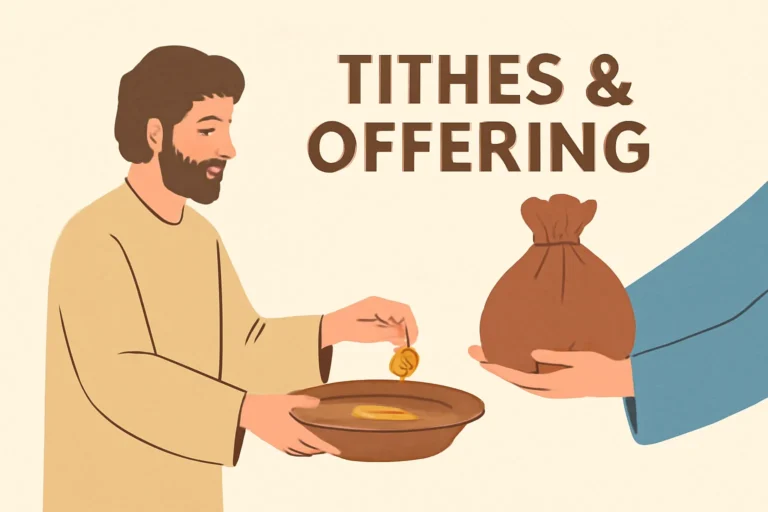
The tithe symbolizes devoted stewardship, covenant fidelity, and acknowledgment of God's sovereignty. It represents both a tangible act of worship and a spiritual principle of trusting God's provision.
📖 Key Biblical Occurrences
Reference
Context
Symbolic Meaning
Genesis 14:20
Abram gives a tenth of the spoils to Melchizedek
Recognition of God’s sovereignty and acknowledgment of divine blessing
Malachi 3:10
God calls Israel to bring the whole tithe into the storehouse
Faithful covenantal obedience and divine sustenance
📜 Old Testament Usage
In the Old Testament, the tithe is a recurring practice that signifies devotion and acknowledgment of God's sovereignty. It was instituted as an act of worship and a means to support the Levitical priesthood and the needy. Abraham's tithe to Melchizedek (Genesis 14) exemplifies recognition of divine authority, while the formal instruction in Malachi emphasizes faithfulness in keeping covenant obligations. Tithing also functions as a test of trust in God's provision, promoting social justice and communal support. Over time, the tithe became embedded in Israel’s religious life, symbolizing fidelity, gratitude, and divine blessing, with a broader spiritual meaning of dedicating all possessions to God.
✝️ New Testament Usage
In the New Testament, the concept of tithing evolves from a mandated practice to a symbol of generous stewardship and sacrificial giving. Jesus references tithing in Matthew 23:23, affirming its place but emphasizing justice, mercy, and faithfulness as greater principles. Paul highlights Christian giving as voluntary and motivated by love (2 Corinthians 9:7). The tithe, while not mandated for believers, remains a typological symbol of honoring God with one's resources, pointing to Gospel themes of grace, generosity, and covenant in Christ. The practice shifts from obligation to a matter of the heart, encouraging believers to give beyond mere percentage, reflecting divine abundance.
Initially, the tithe in Genesis and the Law represented covenant loyalty and acknowledgment of God's sovereignty. Over time, it became a ritual obligation illustrating obedience and social support. In the New Testament, its symbolism deepens into a broader principle of generous stewardship rooted in grace, foreshadowing Christ’s ultimate sacrifice. Revelation hints at the faithful offering of resources in eternal worship, where all creation belongs to God. Thus, the tithe’s symbolic meaning transitions from a tangible token of fidelity to a spiritual archetype of sacrificial devotion and divine trust, culminating in its eschatological fulfillment in heavenly worship.
🏛️ Ancient Near East Context
In surrounding cultures such as Egypt, Babylon, Greece, and Rome, offerings and sacrifices often signified loyalty to gods, appeasement, or royal duty. The idea of dedicating a portion of resources as a sacred act was common, with some societies viewing it as a means of ensuring divine favor or cosmic order. The tithe in Israel shares these features but is uniquely tied to covenant loyalty and social justice, emphasizing God's sovereignty over all resources rather than mere appeasement.
✡️ Jewish Interpretation
Jewish tradition sees the tithe as a divine command that embodies gratitude and social responsibility. Rabbinic interpretations emphasize tithing as an act of sanctifying one’s possessions and fostering community cohesion. Mystically, tithes symbolize acknowledgment of God's sovereignty and serve as a spiritual discipline to elevate material acts into divine service. The ethical dimension underscores justice and charity, reflecting the ongoing covenantal relationship between God and Israel.
✝️ Christian Interpretation
Early Church Fathers viewed tithing as an illustrative principle of generous giving aligned with Christian liberty. The practice is considered a shadow of the greater grace of giving motivated by love, not obligation. Christian tradition interprets the tithe as a symbol of divine provision and stewardship, emphasizing that all resources ultimately belong to God. It underscores the importance of sacrificial giving that reflects Christ’s giving of Himself, encouraging believers to support ministry and the needy as an act of worship.
The tithe prefigures Christ as the ultimate High Priest and the divine Provider. It symbolizes the believer’s allegiance and dedication, foreshadowing the offering of oneself in complete devotion. In the Church, the tithe connects to the principle of sacrificial living, pointing to the fruitful harvest of spiritual blessings that result from faithful stewardship and participation in Christ’s offering.
⛪ In Worship & Liturgy
Tithing is incorporated into Christian worship through offerings, pledges, and stewardship campaigns. Churches often dedicate dedicated spaces or altars where offerings are presented, symbolizing trust in divine provision. Liturgies may include prayers of thanksgiving for God's gifts and encouragement to practice generous living, reinforcing the spiritual significance of giving as an act of worship aligned with biblical teachings.
🌍 Modern Cultural Impact
The concept of tithing has influenced charitable giving, philanthropy, and even secular notions of stewardship and social responsibility. Art and literature often depict tithing themes—sacrifice, gratitude, divine blessing—highlighting its moral and spiritual virtues. In popular culture, the tithe symbolizes principle-based giving, sometimes critiqued or defended in debates about religious obligation and personal generosity.
⚠️ Common Misconceptions
Misconception 1: Tithing is a legal requirement for salvation. Correction: Tithing is a principle of worship and stewardship, not a salvation requirement, which is based on grace through faith.
Misconception 2: Tithing is only an Old Testament practice. Correction: While its formal laws are Old Testament, its underlying principles of generosity and covenant loyalty are echoed throughout the New Testament.
❓ Frequently Asked Questions
Is tithing mandatory for Christians today?
Tithing is not mandated as a legal obligation in the New Testament; however, it serves as a biblical principle encouraging generous stewardship and worship.
Does the tithe only refer to money?
While often associated with money, the tithe can also include other resources such as time, talents, and possessions dedicated to God’s service.
What is the spiritual significance of the tithe?
The tithe symbolizes devotion, trust in God’s provision, and covenant fidelity. It prefigures the ultimate sacrifice of Christ and the Christian calling to generous living.
How does tithing connect to Christ and the Church?
Tithing prefigures Christ’s sacrificial giving and the Church’s call to sacrificial love, emphasizing that all resources are ultimately God’s and should be used for His glory.
✨ Did You Know?
Archaeological discoveries of ancient Israelite inscriptions and artifacts have revealed references to tithing texts and rituals, affirming its centrality in Israelite religious life. Interestingly, the earliest known records of tithing practices date back over 3,000 years, illustrating its longstanding significance across cultures and religions.