Jewish Dietary Law: A Comprehensive Guide to Kosher Rules and Practices
Kashrut, often rendered in English as Kosher dietary law, is a complex system of rules and principles that shape what observant Jews eat and how food is prepared. This comprehensive guide explores the core ideas, practical disciplines, and modern discussions surrounding the Jewish approach to food. It uses a range of terms and expressions—such as halacha, kashrut, kosher, and Jewish dietary law—to reflect the diversity of language found in rabbinic literature, community practice, and contemporary discourse. Read on to understand why and how these rules matter in daily life, ritual settings, and the broader cultural history of Jewish communities.
At its core, Kashrut is a system designed to distinguish between what is permissible and impermissible for consumption, and to elevate the act of eating into a practice that aligns with Jewish values. The traditional framing emphasizes three broad aims: moral discipline, ritual sanctity, and communal identity. In practice, Jewish dietary law touches a wide range of choices—from selecting animals to handling utensils, from the management of meat and dairy in the kitchen to the supervision of food products sold in markets.
Foundational principles and key vocabulary
To navigate Kosher rules, it helps to be familiar with several foundational terms and categories that recur across rabbinic sources, legal codes, and everyday life:
Kashrut (the body of Jewish dietary laws) and Kosher (permitted according to those laws).
Halacha (the collective Jewish legal tradition that includes Kashrut as a major area).
Basar bechalav (meat and dairy; the prohibition against cooking, eating, or benefiting from mixtures of meat and dairy).
Pareve or Parve (neutral foods that contain neither meat nor dairy and may be eaten with either).
Shchita (the ritual slaughter performed by a trained professional called a shochet).
Treifa (an animal or bird deemed non-kosher or forbidden for consumption).
Meat and dairy separation (the practice of keeping meat and dairy traditionally separate in all aspects of food preparation).
Glatt Kosher (a term used in some communities to indicate strict adherence to particular standards of animal health and processing).
Kosher supervision (hashgacha) and certification by rabbis or rabbinic agencies to verify that products meet Kosher criteria.
Categories of animals, birds, and fish
One of the most visible aspects of Jewish dietary law concerns which animals can be eaten. The criteria for land animals, birds, and aquatic life are explicit in traditional sources and have practical implications for grocery shopping and holiday meals.
Land animals
For an animal to be considered kosher for consumption, two conditions must be met at the same time:
It must have split hooves (cleft hooves) that chew the cud (are ruminant).
The animal must be of a species traditionally regarded as permissible; most common examples include cattle, sheep, and goats.
Animals that fail to meet either criterion—such as pigs with their cloven hooves but not proper cud-chewing, or camels that chew cud but do not have fully split hooves—are considered treif (non-kosher) and may not be eaten.
Aquatic life and birds
The rules for fish are more straightforward in many ways: fish must have fins and scales to be deemed kosher. This excludes shellfish, eels, and many other seafoods, while allowing salmon, tuna, and herring, among others, to be eaten when properly prepared.
For birds, the Torah lists certain species as forbidden, though later rabbinic authorities identify many birds that are permissible based on traditional usage and classificatory criteria. In modern practice, the vast majority of common farmed and wild birds are considered kosher, provided they are slaughtered and prepared according to proper rules.
Slaughter, safety, and humane considerations (Shchita and blood)
The process of preparing meat under Kashrut is anchored by Shchita, the ritual slaughter performed by a trained and certified practitioner. Beyond the symbolic aspects, the halachic framework tightly regulates the method to minimize suffering and ensure the meat is fit for consumption under Jewish law.
Shchita: method and blessings
During shchita, the animal is slaughtered with a swift, uninterrupted strike that severs the airway and blood vessels with a specialized knife. The aim is to be humane and thorough, reducing pain and producing a product that can be deemed kosher. A blessing is recited by the slaughterer prior to the act in many communities, though practice varies by tradition and locale.
Blood removal and salting
A central reason meat is not kosher in many cases is the prohibition against consuming blood. After slaughter, the carcass is checked for blemishes and partially examined for signs that would render it non-kosher. The meat is then subjected to processes that drain and remove blood, such as soaking, salting, and rinsing. In some communities, specialized techniques are used to ensure that the meat is suitable for consumption according to halacha.
Meat, dairy, and the central rule of separation
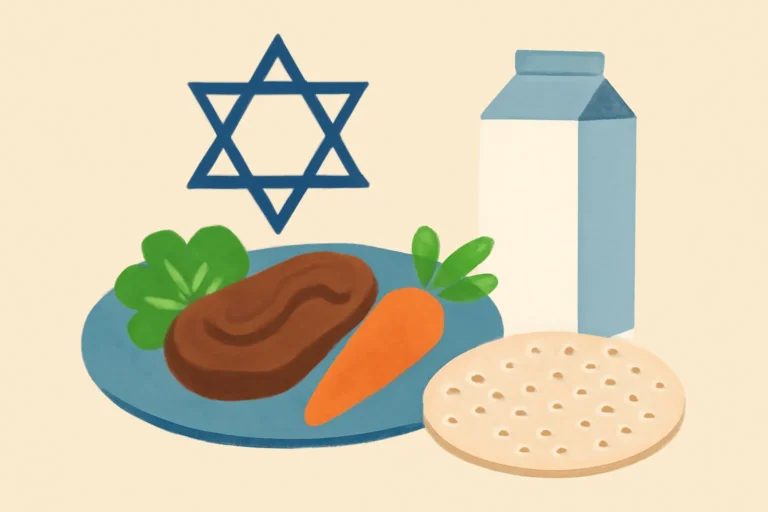
The rift between meat and dairy is among the most widely recognized features of Jewish dietary law. The separation of meat and dairy extends beyond the kitchen into ritual dining, utensils, and even time-based rules about consumption after meals.
Basar bechalav: the core prohibition
The prohibition on combining meat of a kosher animal with dairy products rests on a fundamental distinction in Jewish law: the prohibition against cooking, eating, or deriving benefit from these mixtures. Even though one distinguishes meat from dairy in ingredient lists, preparation methods, and serving practices, the prohibition is widely applied across traditional Jewish communities.
Ela and practical kitchen guidelines
In everyday life, households that observe kashrut implement practical guidelines to maintain separation. Some common measures include:
Having separate utensils for meat and dairy—such as knives, cutting boards, pots, pans, and dishware.
Using separate kitchen sinks or dedicated dish racks for meat and dairy items.
Allocating specific storage containers or shelves to minimize cross-contact between meat and dairy products.
Employing cleansing routines that thoroughly wash and, if necessary, kasher (make kosher again) utensils between uses with meat and dairy.
Parve foods and the balance of a kosher kitchen
Pareve foods are the neutral category: foods that contain neither meat nor dairy. These items can be consumed with either meat or dairy in a given meal. Common pareve foods include fruits, vegetables, grains, eggs, and fish (depending on how they are prepared). In practice, many households treat pareve items with particular care to preserve their neutral status, especially when using shared equipment.
Certification, supervision, and consumer choices
In modern markets, kosher certification (hashgacha) provides a way for consumers to identify products that meet Kashrut standards. Rabbinic authorities or rabbinic agencies issue certifications and define the scope of supervision. Certifications may cover a range of products, including:
Processed foods and ready-to-eat meals labeled as Kosher.
Grocery items such as dairy-free substitutes, meat alternatives, and beverage products.
Wine and grape products, which historically required special handling to ensure they are not produced in ways that would violate Kashrut.
Bakery goods, confectionery, and restaurant menus under supervision to meet accepted standards.
There are various levels of certification, from strict “Glatt Kosher” designations to broader, less stringent marks. The hashgacha system serves communities differently across geographic regions, and many families rely on their local rabbi or trusted certification agencies for guidance on what to buy, prepare, and serve.
Kosher for Passover: seasonal restrictions and special considerations
During the holiday of Passover (Pesach), additional restrictions apply to ensure the avoidance of chametz—any leavened grain product. The Passover regime adds a layer of complexity to standard kashrut practices and often requires separate cookware, utensils, and cleaning protocols to prevent hidden chametz from contaminating food. Some households choose to use specialized Passover dishes, matzah-based recipes, and dedicated kitchen space for the holiday period.
Chametz and kitniyot
Two common debates during Passover concern chametz and, for some traditions, kitniyot (legumes, and in some communities corn, rice, and other items). The prohibition on chametz is universal in Ashkenazi practice, while Sephardi traditions may view kitniyot differently. In practice, many households prepare Passover menus that avoid chametz entirely, and some follow stricter or more lenient interpretations of kitniyot restrictions depending on communal custom and rabbinic guidance.
Preparation and kitchen discipline: turning theory into practice
Translating the principles of Kashrut into daily life requires careful planning and ongoing discipline. The following practices help turn theory into reliable routine for families, schools, and communities:
Separated spaces, utensils, and equipment
Maintaining distinct spaces for meat and dairy is fundamental for many observant households. This includes dedicated countertops, cutting boards, knives, pots, pans, and servingware. Some kitchens also feature color-coding schemes to reinforce separation and reduce the risk of cross-contact.
Dishwashing and sanitation protocols
After cooking or eating, dishwashing routines must ensure that residues do not mix across categories. In some cases, a full kashering process is required when using equipment that has previously contained non-kosher substances or when transferring between meat and dairy use.
Procurement and storage considerations
Families and institutions often plan shopping lists around kosher certification, ensuring that ingredients and processed foods align with their standards. Fruit and vegetables typically require thorough washing to remove residues or non-kosher processing aids. Careful ingredient scrutiny helps prevent inadvertent violations of the dietary laws during meal planning and event catering.
Practical guidance for communities and institutions
When translating Jewish dietary law into community life—whether in synagogues, schools, or dining halls—several organizational practices support reliable observance and inclusive participation:
Appoint a rabbinic supervisor (or a supervising agency) to oversee certified products and kitchen practices.
Develop clear policies for food service that distinguish meat, dairy, and pareve lines and designate appropriate storage and serving ware.
Offer educational resources and workshops to help volunteers and staff understand kashrut terminology and handling procedures.
Consider labeling systems for menu items that indicate whether dishes are meat, dairy, or pareve, and communicate any special Passover restrictions when relevant.
Common questions and debates in modern practice
As with many areas of halachic life, contemporary questions arise about how to apply ancient rules to new circumstances. Some of the recurring topics include:
Processed foods and synthetic ingredients
How should modern kosher-certified products evaluate additives, flavorings, and processing aids that were not part of classical concerns? Rabbinic authorities issue guidance on whether a given additive is permissible under Kashrut, and many agencies maintain updated lists of approved ingredients.
Meat substitutes and plant-based proteins
As alternative proteins become more common, questions arise about their status in kosher diets. Many plant-based products are designed to be pareve or dairy-free, but certification ensures that production lines do not cross-contaminate with meat or dairy, and that processing aids align with halachic standards.
Wine, grape products, and ritual status
Wine and grape-derived products have a long-standing emphasis in Kashrut due to concerns about contamination and non-Jewish handling. Hence, wine and products used in religious rituals often carry stringent hashgacha and may require specific production and handling protocols to ensure continued suitability.
The rules of Kashrut did not emerge in a single moment but evolved over centuries in response to agricultural changes, trade networks, and community life. Different Jewish communities developed distinct customs, sometimes summarized as Ashkenazi and Sephardi practice, though there is considerable overlap and regional variation. In contemporary times, many people navigate a spectrum of standards—from strict, high-visibility certification to more general adherence guided by family traditions and local rabbinic authority.
Ethical and educational dimensions
Beyond the technical rules, the framework of Kashrut often carries ethical and educational aims. It can encourage mindfulness about what we eat, how food is sourced, and how we treat animals. For some families, the act of observing basar bechalav separation, engaging in kashering practices, or choosing products with reliable hashgacha becomes a form of moral pedagogy for children and a tangible expression of spiritual values.
Variations in terminology and practice across communities
Because Jewish legal language travels through generations and across cultures, you will encounter a range of terminology and interpretive nuance. Some common variations include:
Use of the term kashrus or Kashrut to describe the overall system, and kosher to denote permissible foods and practices.
Describing meat products as glatt kosher or simply kosher meat, depending on the level of scrutiny given to animal health and processing.
Different traditions regarding the waiting period between meat and dairy, if any, as noted in specific communal customs.
Practical checklist for a home aiming to observe Kashrut
For households seeking a practical path through Jewish dietary law, a concise checklist can help maintain consistency and reduce confusion:
Choose a reliable hashgacha for products and a local rabbi or authority for guidance.
Maintain separate utensils and cookware for meat and dairy, or use reliable kashering methods when necessary.
Label and organize kitchen space to minimize cross-contamination risk between meat, dairy, and pareve items.
Inspect animals and products for standard kosher markings and avoid any item that bears nonkosher certification or a questionable status.
Be mindful of Passover-specific practices and prepare accordingly during the holiday season.
Educate all household members about the basic rules and rationales behind meat-dairy separation and animal requirements.
Glossary of important terms
To help readers navigate this article and future texts about Jewish dietary law, here is a compact glossary of essential terms:
Kashrut — the body of Jewish dietary laws governing food production, preparation, and consumption.
Kosher — permitted according to these laws; the term also serves as an everyday label for food that meets the standards.
Shchita — the humane method of ritual slaughter used for meat intended to be kosher.
Basar bechalav — the prohibition against cooking or consuming meat and dairy together.
Pareve — foods that are neutral with respect to meat and dairy and may be eaten with either category.
Hashgacha — the rabbinic supervision or certification process ensuring conformity to Kashrut.
Glatt Kosher — a designation indicating a higher standard of compliance with specific health-related criteria in meat processing, used by some communities.
Treifa — non-kosher or forbidden animals or products.
Conclusion: perspectives on Jewish dietary practice
While this guide has described the main lines of Kashrut and its practical implementation, it is important to recognize that Jewish dietary law is not a static system. It has evolved with communities, languages, and technologies, and it continues to shape how people cook, share meals, and observe holidays. The central idea remains: the act of eating can be an opportunity to reflect on values, to care for animals with ethical concerns, and to participate in a long-standing tradition that connects individuals to a broader communal story. No single guide can capture every nuance—thus, consulting reliable sources, studying with knowledgeable teachers, and engaging with local authorities are essential parts of living the practice of Kashrut today.
Further reading and resources
Introductory overviews of Kashrut and its history in Jewish thought.
Rabbinic guides and halachic codes that detail the laws of meat and dairy separation.
Certification agencies and their lists of approved products for consumers seeking reliable hashgacha.
Academic studies on the cultural and ethical dimensions of Jewish dietary law in modern urban life.