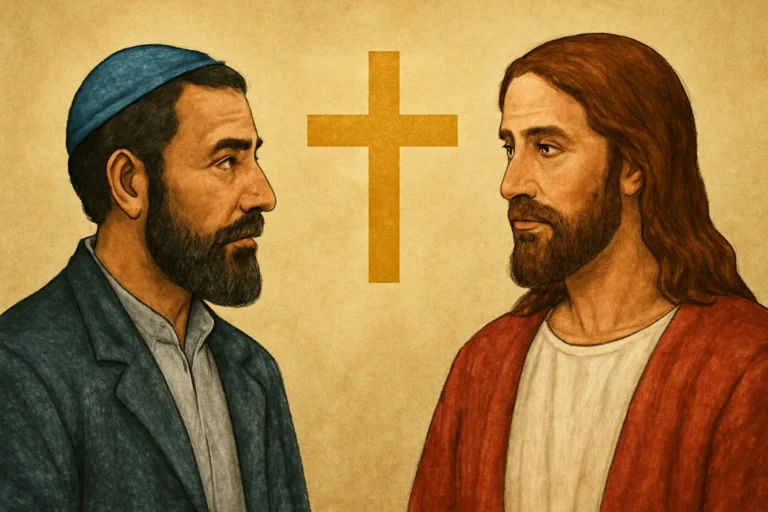
Do Jews Accept Jesus? An Overview of Jewish Perspectives
The question do Jews accept Jesus is a commonly asked one outside Jewish communities, but it deserves careful framing. In Judaism, the figure of Jesus is not regarded as the Messiah or as a divine being. Yet, the story of Jesus—his life as a Jewish preacher of the first century, his place within the broader narrative of Second Temple Judaism, and the way his followers founded Christianity—has a deep and complex impact on Jewish history, theology, and interfaith dialogue. This article explains the varied Jewish perspectives on Jesus, traces the historical development of the topic, and clarifies common points of confusion. We will explore why many Jews do not accept Jesus in the sense used by Christians, how Jewish thought views Jesus as a historical figure within his own Jewish milieu, and how modern Jewish communities engage with his legacy today.
We will use a broad, historically grounded approach to the question do Jewish people accept Jesus, including how different streams of Judaism understand the Messiah concept, the role of prophecy, and the boundaries of religious authority. We also consider how the relationship between Judaism and Christianity has evolved—from polemics and separation to dialogue and mutual understanding. By examining Jewish perspectives on Jesus across time, readers can appreciate both the continuity of Jewish tradition and the ways in which modern Jews engage with a figure who has shaped world religious history.
A Historical Context for the Question
To answer do Jews accept Jesus, it helps to situate the inquiry in its historical context. In the first century CE, Judaism was not a single, monolithic movement but a spectrum of communities with shared scriptures and ethical commitments. Within this milieu, a variety of figures preached about the coming of God’s kingdom and the restoration of Israel. The question of who would serve as the Messiah—if Messiah is to come—was central to Jewish expectation. Christians emerged from within this milieu, identifying Jesus as the awaited Messiah and, for Christians, as divine. From a traditional Jewish perspective, however, Jesus did not fulfill the messianic criteria emphasized in rabbinic and biblical texts, and thus he did not become the Messiah in the sense expected by Judaism.
In the centuries after Jesus’s life, the divergent paths of Judaism and Christianity became more pronounced. Rabbinic Judaism, which developed its halakhic (legal) and interpretive frameworks in the early centuries CE, did not accept Jesus as Messiah or as divine. Meanwhile, Christianity gradually defined itself as a separate religion with its own canon, creeds, and liturgy. The result is a long historical arc in which the question do Jews accept Jesus is answered differently depending on whether we are asking about identification as Messiah, recognition of historical Jesus as a Jewish figure, or acceptance of Christian claims about Jesus’s divinity.
Jesus in Jewish Texts and Tradition
One of the most important clarifications regarding the question do Jews accept Jesus concerns the sources that discuss Jesus. In rabbinic literature—the body of texts that forms the core of Jewish law, ethics, and narrative from the late Second Temple period through the medieval era—there is no canonical mention of Jesus in the way that Christian scriptures portray him. The Gospels and the New Testament belong to Christian tradition and are not considered authoritative in Judaism.
Nevertheless, many scholars point to a handful of later rabbinic and medieval sources that reference a figure named Yeshu (a name commonly rendered as Jesus in some traditions). These references are controversial and contested because they are few, sometimes hostile in tone, and embedded in polemical exchanges between Jewish and Christian communities. Some modern scholars caution against treating these passages as straightforward, literal biographies of Jesus; others argue that these texts offer glimpses into how Jewish communities perceived Christian claims in certain historical moments. It is important to approach this material with nuance and to distinguish between historical discussion and theological endorsement or rejection.
In everyday Jewish thought, the central question remains whether Jesus is regarded as the Messiah or divine. The vast majority of traditional Jewish interpretation does not accept that Jesus fulfilled the long-awaited messianic program described in the Hebrew Bible and evolved in rabbinic writing. In light of this, the canonical Jewish answer to do Jews accept Jesus as Messiah is clearly negative. Yet, many Jews today acknowledge Jesus as a significant historical and cultural figure who lived within a Jewish context and influenced world history, without attributing to him messianic or divine status.
Rabbinic Judaism in Late Antiquity and the Medieval Era
In the period when the Talmud and later rabbinic writings were taking shape, the dominant view within Orthodox Judaism was that the Messiah would come in the future, restore the Temple, and bring universal peace and knowledge of God. Since Jesus did not inaugurate these events, he is not recognized as the Messiah in this tradition. Additionally, the Jewish understanding of Messiah is not anchored in ideas of divinity; the Messiah is a human leader anointed by God. The essential criteria—rebuilding the Temple and gathering all Jews to the land of Israel, along with universal peace—had not occurred, and thus Jesus did not fulfill the messianic program as defined by rabbinic authorities.
Medieval Jewish-Christian polemics often framed the debate in the language of philosophical and doctrinal conflict. Christian writers argued for Jesus’s divine status and messianic role, while Jewish authors argued for the strict monotheism of Judaism and the exclusivity of God’s Messiah. In this era, the question do Jews accept Jesus was largely framed by power relations and ecclesiastical politics as much as by theological reflection. Yet even in polemical writings, Jews consistently emphasized that acceptance of Jesus as Messiah ran counter to the core messianic expectations of Judaism.
Modern Reform, Conservative, and Orthodox Perspectives
In the modern era, Jewish thought has increasingly engaged with questions about Jesus from a more historical and interfaith-informed stance. Across movements—Orthodox, Conservative, and Reform—there is broad consensus on two points: first, Judaism does not accept Jesus as the Messiah or as God; second, Jesus is commonly acknowledged as a Jew who lived in a Jewish milieu and influenced the religious landscape of his time.
Orthodox Judaism generally maintains that the Messiah has not yet come and that Jesus cannot be the Messiah by traditional criteria. The theological stance remains clear: Jewish belief does not center on or credit Jesus with divine status.
Conservative Judaism and Reform Judaism also reject Jesus as the Messiah or as divine, but they may differ in their nuanced understandings of Christian origins, Jewish-Christian relations, and the place of Jesus in historical memory. Both movements tend to emphasize ethical monotheism, social justice, and interfaith dialogue without compromising the central claim that Messiah has not yet arrived in the way Judaism expects.
In contemporary discourse, many Jews emphasize a distinction between respecting Jesus as a historical figure or teacher within a Jewish context and accepting him as Messiah or God. The canonical Jewish stance is grounded in the traditional expectation of a future redeemer who will accomplish specific redemptive tasks, a program that do Jews accept Jesus does not fulfill.
Interfaith Dialogue and the Reframing of the Question
Today, many Jewish thinkers participate in interfaith dialogue that reframes the question from theological acceptance to mutual understanding. In this context, the phrasing do Jews accept Jesus is often expanded to consider questions such as: Do people in Judaism acknowledge Jesus as a historical figure who lived within a Jewish milieu? What is the status of Jesus within secondary literature about Second Temple Judaism and early Christian-Jewish relations? And how do Jewish communities interpret the legacy of Jesus in light of modern ethics, shared values, and common concerns about justice and peace? The modern answer typically centers on honoring the historical and humanitarian aspects of Jesus’s life while maintaining the distinct theological boundaries of Judaism.
What Do Jews Say About Jesus as the Messiah?
A central element of the question do Jews accept Jesus concerns the Messiah concept. In Judaism, the Messiah is a human leader, not a divine figure, who will accomplish questions of national restoration and universal peace. The standard Jewish expectation includes:
The rebuilding of the Temple in Jerusalem
Mobilization of the exiles from the nations to the land of Israel
Worldwide knowledge of the God of Israel and the end of war and hatred
From the Jewish perspective, Jesus did not inaugurate these events, and therefore he is not recognized as the Messiah in Judaism. Some Jews may study Jesus’s life as a historical figure or note the way his teachings influenced later religious movements, but the messianic program remains unfulfilled according to traditional Jewish criteria. When Muslims, Christians, or secular historians discuss Jesus as Messiah, they are discussing a Christian and Islamic framework, not a Jewish one. Thus the question do Jews accept Jesus is usually answered in the negative with respect to messianic status, even as Jews recognize his historical presence in the broader tapestry of history.
It is worth noting that some Jewish scholars discuss the idea of a collective messianic era rather than a single figure. In some strands of Messianic thought (not mainstream Judaism), there is more openness to diverse messianic expectations, but this does not imply acceptance of Jesus as Messiah within traditional Jewish authorities.
Jesus as a Historical Figure in Jewish Memory
Beyond the question of messiahship, do Jews accept Jesus as a historical figure is less controversial in many circles. Acknowledging that Jesus was a Jewish preacher who lived in first-century Palestine is widely accepted in Jewish learning and literature. From this perspective, Jesus is viewed as one among many Jewish teachers who contributed to a vibrant religious landscape at the time. This historical approach emphasizes context—first-century Judaism and the diversity of beliefs within it—and avoids theological claims about his divine nature or messianic fulfillment.
In contemporary Jewish thought, there is often interest in how Jesus’s Jewish identity shaped his message and how Christian interpretations of Jesus diverged from Jewish understandings. This interest can serve as a bridge for mutual understanding, highlight shared values (such as charity, compassion, and justice), and illuminate how historical narratives have evolved. When people ask do Jews accept Jesus in a historical sense, the answer is generally that he was a Jew who lived within a Jewish framework, but his claims became the foundational narrative for a separate faith tradition rather than the current framework of Judaism.
Contemporary Jewish Thought and Interfaith Dialogue
In the last century, Jewish communities have engaged in extensive dialogue with Christian groups. This engagement has shaped how the question do Jews accept Jesus is treated in modern times. Key trends include:
Recognition of Jesus as a fellow Jewish figure within history—not as a religious authority in Judaism.
Appreciation of Jesus’s influence on Western civilization and common moral values, while maintaining theological boundaries about the Messiah and divinity.
Efforts toward mutual understanding, respect for pluralism, and the rejection of antisemitism in all its forms, including antisemitic expressions that may have arisen in the context of Christian-Jewish polemics.
Engagement with Christian biblical scholarship to better understand how Jewish readers interpret ancient texts and how Christian readers understand Jesus’s life within a different canon.
These dialogues do not amount to a shift in the core Jewish answer to do Jews accept Jesus as Messiah, but they expand the scope of discussion to include historians, theologians, and religious leaders who seek common ground and robust scholarly exchange. In this sense, the question transforms into a conversation about memory, history, and shared human values rather than a binary declaration about theological acceptance.
Jesusteaching and Jewish Boundaries
Another way to phrase the curiosity is: Do Jewish people accept Jesus as a teacher or as a Jew who influenced history? The answer is nuanced. Many Jews recognize Jesus as a Jewish teacher or preacher who lived in a period of intense religious ferment. They may study or discuss his life to understand the milieu of Second Temple Judaism, but this recognition does not imply religious acceptance of Christian claims about Jesus. The Jewish tradition preserves a clear boundary between accepting a teacher’s historical influence and endorsing theological doctrines that conflict with Jewish monotheism and messianic expectations.
For individuals exploring Jewish-Christian relations, it is important to distinguish between the person of Jesus as an historical figure and the theological claims associated with Christianity. In everyday terms: do Jews accept Jesus as divine? The answer, within mainstream Judaism, is no. Divinity belongs to God alone in Jewish theology, and the belief that Jesus is divine is incompatible with core Jewish creed. However, the historical existence of Jesus, his Jewish identity, and his impact on world history are topics of sustained interest and respect in academic and interfaith settings.
Common Misunderstandings and Clarifications
Several common misunderstandings surround the question do Jews accept Jesus. Clarifying these points helps prevent overly broad assumptions:
Myth: All Jews reject Jesus completely. Reality: Most Jewish communities do not accept Jesus as Messiah or divine, but many acknowledge him as a historical figure who lived a Jewish life and contributed to early religious debates.
Myth: Jesus is a central figure in Jewish worship. Reality: Jewish liturgy centers on God and the covenant with Israel; Jesus is not a participant in Jewish worship or ritual practice.
Myth: Jewish rejection of Jesus is uniform. Reality: There is diversity in emphasis and interpretation—from strict traditionalists to scholars who study Jesus in historical context and in the service of interfaith learning.
Myth: Do Jews accept Jesus even as a man?. Reality: Most Jewish people would acknowledge Jesus as a historical person who lived in a Jewish environment, without endorsing Christian doctrinal claims about his nature or mission.
Judaism: The religion, philosophy, and way of life of the Jewish people, rooted in the covenant between God and Israel.
Messiah: In Judaism, a human leader anointed by God who will fulfill certain prophecies, rebuild the Temple, and bring universal peace—not a divine figure.
Jesus: A historical Jewish figure from the first century CE whose life gave rise to Christianity; in Judaism, he is usually viewed as a Jewish preacher rather than a divine being.
Rabbinic Judaism: The mainstream form of Judaism that developed after the Second Temple period, emphasizing rabbinic authority, halakhah, and interpretation of scripture.
Second Temple Judaism: The Judaism that existed roughly from the rebuilding of the Temple (516 BCE) to its destruction in 70 CE, in which diverse sects and movements coexisted.
Christianity: A religion that originated in the Christian tradition, centered on the life, death, and resurrection of Jesus as the Messiah and, for many denominations, as divine.
Interfaith dialogue: Cooperative and respectful conversation between different religious traditions, aimed at mutual understanding and shared values.
Putting the Question in Daily Life
For people who ask, do Jews accept Jesus in personal terms, the practical answer often goes like this: do Jewish individuals acknowledge Jesus as a historical figure and as a Jewish teacher? Yes. Do they accept him as the Messiah or as God? No. This distinction helps maintain the integrity of Jewish belief while allowing for thoughtful, respectful discussion about a figure who has left a lasting imprint on world history. In communities around the world, Jews engage with the legacy of Jesus through academic study, historical research, and dialogue with Christian neighbors and scholars. The goal is not to erase differences but to understand how different traditions interpret common historical chapters and how those chapters inform modern ethics and coexistence.
Practical Implications for Interfaith Encounters
When a Jewish person hears the question do Jews accept Jesus, the response may also reflect the ethical and theological commitments that guide interfaith interactions. Some practical implications include:
Respecting the integrity of each tradition’s beliefs while acknowledging shared values such as moral responsibility, charity, and social justice.
Distinguishing between historical inquiry and theological belief. It is common to discuss Jesus as a historical teacher without endorsing Christian doctrinal claims.
Acknowledging the harms that have occurred in the past due to religious intolerance and working to prevent antisemitism and theological bigotry.
Promoting education about Judaism and Christianity that helps communities understand differences without stereotyping or caricature.
Interpreting Jesus for a Modern Audience
In today’s multicultural societies, the question do Jews accept Jesus can also be reframed to address how modern Jewish readers interpret Jesus’s life and teachings within a pluralistic world. Some nuanced positions include:
Seeing Jesus as part of the historical conversation of First-Century Judaism and recognizing the shared cultural and religious landscape of the period.
Appreciating the ways in which Christian communities have preserved ethical teachings that resonate with Jewish values, such as compassion, justice, and the care for the vulnerable.
Maintaining that Jewish theological commitments—monotheism, the covenant, and the messianic expectation—remain distinct from Christian claims about Jesus’s nature and role.
In sum, the best way to answer do Jews accept Jesus is to distinguish between different senses of acceptance. In the most central sense—acceptance as the Messiah or as divine—Judaism does not accept Jesus. In a historical sense—and in terms of his status as a Jewish teacher who lived in a Jewish setting—many Jewish people acknowledge his existence and his impact on history and on religious thought. The broader Jewish tradition continues to affirm core beliefs about God, the Messiah, and the ultimate redemption, while recognizing the importance of learning from the past and engaging with other faiths in a spirit of respectful dialogue.
For readers who wonder, do Jews accept Jesus in any capacity today, the answer is nuanced: they may acknowledge him as a historical Jewish figure and a figure who influenced the emergence of Christianity, but they do not accept him as the Messiah or divine in the sense Christianity teaches. This distinction remains a defining feature of Judaism and a constructive foundation for ongoing interfaith conversation and mutual respect.