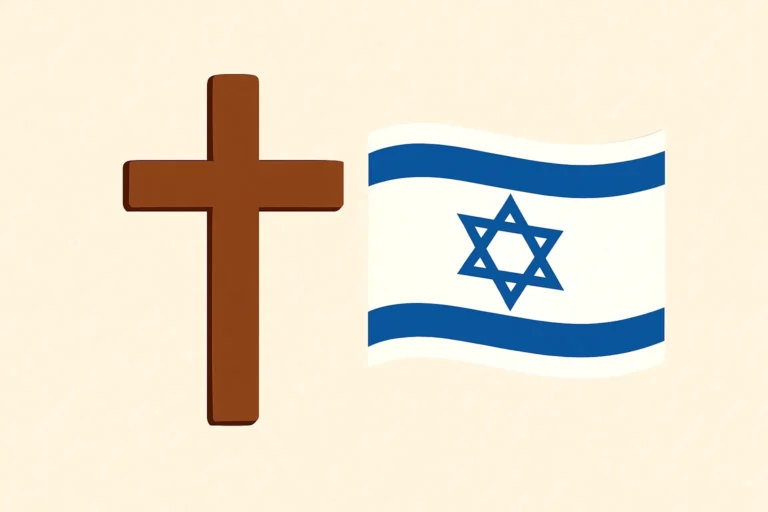
Is Replacement Theology Biblical? Exploring Supersessionism and Biblical Evidence
Is replacement theology biblical? This question sits at the intersection of biblical interpretation, church history, and ethics. Also known as supersessionism, replacement theology is the view that the Church has effectively inherited the promises, and the covenant relationship, that God once granted to Israel. In recent decades, scholars, pastors, and lay readers have debated this idea from multiple angles: some uphold variants of supersessionism with qualifications, while others reject replacement theology as a misreading of Scripture and argue for a robust continuity between Israel and the Church. This article surveys the topic, explains the biblical arguments on both sides, and offers a careful, historically informed assessment of whether the Bible itself supports replacement theology as a wholesale claim about covenant promises.
What do we mean by replacement theology, supersessionism, and related terms?
The conversation often hinges on terminology. Here are several key definitions you will encounter:
Replacement theology (also called supersessionism): the view that the Church has succeeded or replaced Israel in all divine promises, blessings, and prophetic roles in Scripture. In this view, God’s old covenant with Israel is fulfilled in the Church and ultimately set aside for Gentile inclusion.
Full supersessionism (a stronger form): the belief that Israel’s covenant status, ethnic identity, and distinct role in salvation history are fully ended and disjoined from the present people of God.
Partial or moderate supersessionism (a nuanced form): the Church inherits certain blessings and promises, but some aspects of Israel’s future covenant relationship remain for national Israel, or for faithful Jews within the framework of the new covenant.
Covenant theology (a broader family of positions): a framework that emphasizes the unity of God’s covenants across redemptive history, often with a strong sense of continuity between the people of God in the Old and New Covenants, while varying in how precisely Gentiles are incorporated.
Dispensationalism (often contrasted with supersessionism): a system that emphasizes distinct periods or “dispensations” in which God relates differently to Israel and the Church, commonly preserving a future national restoration of Israel and viewing the Church as a separate entity during the present age.
Across these terms, the central question remains: when the Bible speaks of God’s promises to “Israel” and to “the nations,” does the New Testament reinterpret or replace Israel, or does it preserve a form of continuity that includes both Jew and Gentile within one people of God?
Key biblical passages often cited in support of supersessionism
Critics of replacement theology frequently point to passages in Paul and in Hebrews that appear to recast Israel’s role and to elevate the Church in ways that seem to supplant Israel. Supporters of supersessionism, for their part, argue that these passages should be read in their first-century, Christ-centered theological horizon and that they describe a shift in how God relates to humanity without negating God’s faithfulness to Israel. The following subsections offer a map of the major texts and how interpreters have read them.
Romans 9–11: Israel, the remnant, and the olive tree
This section is often the focal point of the debate. Some readers take Romans 9–11 as acknowledging that Israel’s national status has been partially set aside while a faithful remnant remains, and that Gentiles are grafted into the same olive tree by faith. The key verses frequently discussed include:
Paul’s statement about God’s sovereign choosing in 9:6–11 and 9:27–29, which some interpret as God narrowing the number of true Israelites to a remnant.
The image of the olive tree in 11:17–24, where Gentiles are grafted in, and there is a warning not to boast, since branches can be broken off and new branches grafted in.
11:25–27, which speaks of a partial hardening “in part” until the fullness of the Gentiles comes in, with a prophetic expectation of Israel’s future salvation.
Read in a certain way, these passages can be cited to argue that the Church has become the primary recipients of the promises. Read in another way, they can be taken to describe a continuing plan for Israel alongside Gentile inclusion, with Israel not being permanently discarded but temporarily set aside for a time.
Galatians 3–4: The law, the promises, and the unity of faith
Galatians emphasizes that all who are in Christ are children of Abraham by faith and that the promises to Abraham are realized in Christ. Critics of replacement theology often highlight Galatians 3:28–29 (“There is neither Jew nor Greek, there is neither slave nor free… and if you are Christ’s, then you are Abraham’s offspring”) as evidence that Gentiles are already incorporated into the divine purpose without erasing Israel’s place. Yet some readers see continuity rather than replacement, noting that the promises to Abraham are fulfilled in the people of God as a unity that includes both Jew and Gentile.
The author of Hebrews portrays Jesus as the mediator of a superior covenant and quotes Jeremiah 31:31–34 about a “new covenant.” Some interpret this as implying the old covenant with Israel has been superseded. Others argue that the new covenant, while fulfilled in Christ, is located within the same overarching divine plan that included Israel, now extended to all nations and instituted through the church.
Jeremiah 31:31–34 and Hebrews 8:6–13: The new covenant promises
These passages are central to debates about continuity. Jeremiah speaks of a new covenant with the house of Israel and the house of Judah, promising internal reform and knowledge of God. The quotation is echoed in Hebrews, which some read as indicating a substitution of an internalized covenant for the external old covenant. Critics argue that this does not negate God’s ongoing relationship with national Israel but rather expands the scope of the covenant people to include Gentiles.
Other New Testament lines often debated
Romans 4:11–12 and the calling of Abraham’s faith as the model for both Jews and Gentiles.
2 Corinthians 3 and the fading glory of the old covenant in light of the surpassing glory of the new covenant.
Revelation and prophetic expectations about Israel’s future restoration in the eschatological timeline.
In sum, these passages are frequently cited as evidence for replacement theology or as evidence against it. The interpretive outcomes depend on how one reads the language, the surrounding theological framework, and the way one weighs the role of national Israel in salvation history.
Critiques and alternative readings: Is replacement theology biblical or a misreading?
Critics of wholesale supersessionism argue that the New Testament never explicitly abolishes the ethnic and national identity of Israel as God’s people, and that several passages point toward a continued, even enhanced, purpose for Israel. They also note that Paul’s language often aims at including Gentiles within the single people of God without denying God’s ongoing relationship with Israel.
Key critiques against total replacement
Romans 11:29 states that “the gifts and the calling of God are irrevocable,” suggesting that God’s promises to Israel remain valid even as Gentiles are brought in.
Romans 11:25–27 references a future fulfillment when “all Israel will be saved,” which many interpret as a national, eschatological restoration rather than a complete disappearance of Israel as a people.
Multiple passages indicate that Gentiles share in the blessings not by erasing Israel but through inclusion in the people of God by faith (e.g., Ephesians 2:11–22; Galatians 3:28–29).
The New Testament frequently uses imagery that preserves a distinct people of God with both continuity and expansion—often described as grafted branches rather than a total replacement of the olive tree.
Mid- to late-century readings and the historical context
Some scholars argue that early Christians interpreted prophetic passages through the lens of their post-Pentecost experience, which naturally emphasized the inclusion of Gentiles and the formation of a single, new people of God in Christ.
In today’s interfaith landscape, many theologians reject replacement theology as a framework that fosters anti-Semitism or undermines the Jewish roots of Christian faith. They advocate preserving a robust sense of continuity with Israel while acknowledging the Church’s expansion to include Gentiles.
Careful nuance: is there biblical support for exclusivity or inclusion?
The Bible presents a tension between the permanence of God’s covenants and the dramatic shifts in how people relate to God through faith in Christ. A careful approach does not necessarily require choosing one extreme—either total replacement or total equivalence—but rather seeks to understand how the gospel both affirms the people of God’s faithfulness in Israel and extends that faithfulness to the nations through Jesus.
Historical development and variants of the position
The history of interpretation matters because how the early church, medieval theologians, and modern scholars understand Israel’s role shapes contemporary preaching and practice. Below is a concise tour of major stages and how they relate to the question, is replacement theology biblical?.
Early church and patristic era
In the earliest Christian writings, the church increasingly saw itself as the new people of God, often using language that expanded Abraham’s offspring to include Gentiles by faith. Some patristic writers implicitly carried supersessionist assumptions, while others retained more continuity with Israel as God’s chosen people.
Medieval theologians frequently framed the church as the true Israel in spiritual terms, though some voices highlighted the ongoing place of Israel in God’s plan. The Reformation revived debates about justification by faith and the relation of the old and new covenants, with various reformers emphasizing the primacy of faith and grace rather than ethnic lineage.
Modern era: the rise of two dominant streams
Dispen-sational and evangelical streams often protect a distinct future for Israel and the Church, sometimes contrasting roles and eschatological timelines.
Ecumenical and covenantal streams typically argue for a more robust continuity between Israel and the Church, maintaining that Gentiles participate in the people of God without negating Israel’s place.
Post-Holocaust ethical recalibration
The 20th century, especially after the Holocaust, led many theologians to revisit the biblical relationship between Christians and Jews. The ethical stakes of anti-Judaism and supersessionist rhetoric prompted calls for careful, respectful exegesis, and for acknowledging the ongoing dignity and covenantal significance of the Jewish people.
The New Covenant, Israel, and the Church: a theological crossroads
A central question in the discussion is how to understand the New Covenant in relation to the old covenant and to Israel as a people. Does the New Covenant render the old obsolete, or does it fulfill the same promises in a way that broadens their reach to include Gentiles without dissolving Israel’s identity?
Disambiguating the old and the new covenants
The old covenant with Israel was mediated through Moses and centered on the Law, the sacrificial system, and land-centered promises.
The new covenant in Christ emphasizes internal transformation, the indwelling of the Spirit, and a faith-based relationship with God that transcends racial or national boundaries.
In Romans 11 and Hebrews 8, the texts present the new covenant as the instrument through which God accomplishes salvation, but interpreters disagree on whether this implies a formal replacement of Israel or a reconfiguration of God’s people that includes both Jews and Gentiles in the one people of God. Many theologians argue that the church’s inclusion of Gentiles is an expansion of the people of God rather than a erasure of Israel’s identity.
Continuity, not mere replacement
A common thread among scholars who resist wholesale supersessionism is the insistence on continuity: the same God who chose Abraham remains faithful to his promises; the people of God in the New Testament comprise both Jews and Gentiles who are joined together in Christ. In this view, the church does not stand apart from Israel in a way that nullifies God’s faithfulness to the Jewish people, but rather expands the scope of the covenant family.
Implications for the mission and the church’s identity
How a reader understands replacement theology deeply affects mission strategies and interpersonal relationships with Jewish neighbors. If the church replaces Israel, some existential questions arise about the church’s relationship to prophecy, to Jewish identity, and to the sense of continuity in salvation history. If instead one emphasizes continuity and shared covenantal design, the church’s mission to the nations can be seen as the natural outgrowth of God’s plan to bless all nations through Abraham’s offspring.
Hermeneutical approaches: how to study this topic responsibly
The question is replacement theology biblical invites careful hermeneutics. Here are practical principles that scholars and thoughtful readers use when evaluating the biblical evidence.
Context matters: Read passages about Israel in their immediate historical setting and in light of the broader biblical storyline.
Christocentric reading: Many interpretive frameworks center Jesus as the fulfillment of promises and the source of the Church’s identity, while balancing this with God’s ongoing fidelity to Israel.
Literary genre: Distinguish prophecy from epistolary argument, from typology, and from apocalyptic writing—each has different interpretive aims.
Syntax of promise: Different kinds of promises (land, seed, kingship, universal blessing) may have different fulfillment patterns that require careful distinctions rather than a blanket replacement claim.
Historical-grammatical method: Consider how early Christians used Scripture, how Jewish readers would have understood it, and how the apostolic teams framed their letters and sermons.
A robust approach invites dialogue between Jewish and Gentile interpreters, between traditional and contemporary readings, and between evangelical, catholic, and reforming voices. It also respects the integrity of Scripture while acknowledging the interpretive diversity that characterizes Christian scholarship.
Practical and pastoral implications: how people think about Israel, the Church, and mission
The way a community answers Is replacement theology biblical has real-world effects. It shapes preaching, ecumenical relations, and interfaith dialogue. It also influences how Christians approach:
Doctrine of the church: Is the Church a fulfillment of Israel, or a distinct, inclusive people of God with a shared root in Abraham?
Jewish-Christian relations: How Christians engage with Jewish communities, Jewish scholars, and Jewish religious leaders, especially around topics like biblical prophecy and land promises.
Ethics and witness: How to speak about Israel and the Jewish people in sermons and public discourse in ways that do not perpetuate anti-Semitic stereotypes or the impression that God’s promises have been withdrawn from Israel.
Interpreting prophetic literature: How to read prophetic books that speak of Israel’s future restoration in light of the gospel’s universal scope.
In many contemporary communities, a verdict leans toward a form of continuity with corrective nuance: Gentiles are grafted into the people of God through faith in Christ, while Israel remains a distinct people in God’s plan, with a future role in the eschaton. This stance seeks to honor both the biblical witness and the historical realities of the Jewish people.
Putting it together: is the idea that replacement theology is biblical straightforward?
The short answer is nuanced: there is no single, universally agreed-upon reading of replacement theology in the Bible. The tapestry of New Testament teaching includes both transformations in how people access the blessings of the covenant and persistent affirmations of God’s faithfulness to Israel. The biblical evidence often cited by proponents of supersessionism rests on texts that emphasize the expansion of God’s people beyond ethnic Israel, along with passages that describe the old order as being eclipsed or fulfilled in Christ. Critics, however, point to verses that preserve or imply Israel’s ongoing status in God’s plan and argue that God’s gifts and calling are irrevocable.
If one asks, is replacement theology biblical in any absolute, formal sense, many scholars would reply: the Bible presents a complex picture, in which the church is constituted as the people of God through faith in Jesus, Gentiles are welcomed into that single people of God, and Israel’s future in redemptive history remains a live thread in Scripture. Whether this amounts to wholesale replacement or a more integrated, covenantal continuity depends on how one reads particular texts, how one weighs the weight of prophetic language, and how one balances the church’s mission with a respectful appreciation for Israel’s ongoing significance.
For readers seeking to clarify their own stance, a practical approach can help:
Identify the passages that discuss Israel’s national future and the church’s inclusion and compare how different traditions read them.
Track how Paul’s imagery of grafted branches, a remnant, and the inclusion of the Gentiles functions within argumentation about justification and faith.
Evaluate the role of the “new covenant” language and whether it signals replacement of Israel or a transformation of God’s people that expands beyond ethnic boundaries.
Consider historical context: what were the authors addressing, and what were their pastoral and eschatological concerns?
In the end, the question is replacement theology biblical invites ongoing study, humility, and a willingness to hold intention. A thoughtful conclusion recognizes that while Gentile inclusion is a core biblical development, the biblical record also maintains the distinct identity and future promises of Israel within God’s plan.
If you are exploring this topic for study, preaching, or personal growth, you may find it useful to engage a few guiding questions:
What is the specific claim about Israel that a given interpretation of replacement theology makes? Is the claim primarily about covenant, promises, or prophetic fulfillment?
How does the interpretation account for Romans 11’s imagery of grafting and the language about “all Israel will be saved”?
Does the reading preserve the unity of God’s people without denying Israel’s unique place in the biblical story?
How do historical developments in Jewish-Christian relations inform contemporary interpretation and pastoral practice?
In closing, the question is replacement theology biblical cannot be answered with a single formula. The Bible presents a dynamic narrative in which God’s faithfulness to Israel coexists with the expansion of God’s people to include the Gentiles in Jesus Christ. A robust, responsible reading acknowledges both the continuity and the expansion—recognizing that the church inherits the blessings of Abraham by faith, while Israel remains a crucial part of the story in God’s promised future. This balanced approach avoids the extremes of blanket replacement on one hand and an uncritical equivalence on the other, offering a biblically informed path for faith communities today.