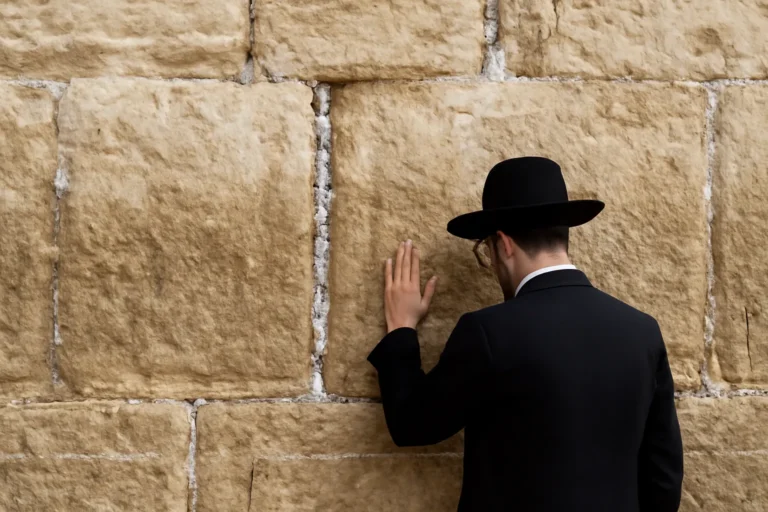
In biblical imagery, the wall often symbolizes divine protection, separation, and boundary-setting. It represents God's sovereignty over nations and His role as protector of His people, marking divisions between the sacred and the profane.
📖 Key Biblical Occurrences
Reference
Context
Symbolic Meaning
Nehemiah 2:8
Nehemiah requests safe passage to rebuild Jerusalem’s walls
Protection and restoration of God’s divine covenant with Jerusalem.
Revelation 21:12
Description of the New Jerusalem having a great, high wall with twelve gates
Divine protection, sanctification, and the boundary of the Holy City.
Ezekiel 40:15
Description of the measuring of the temple walls
Divine boundary of God’s dwelling and holiness.
📜 Old Testament Usage
Walls in the Old Testament often symbolize protection, defense, and divine boundary-setting. Cities like Jericho and Jerusalem relied on walls for physical security, which also became metaphors for divine safeguarding. Walls served as boundaries separating Israel from enemies, illustrating God's sovereignty and the division between holy and unholy. The destruction or rebuilding of walls signified shifts in divine favor or judgment, notably seen in books like Nehemiah and Zechariah. Additionally, walls represented spiritual protection, guarding the covenant community against external threats and spiritual idolatry. The use of walls underscores themes of divine sovereignty, community preservation, and divine judgment. In prophetic writings, walls sometimes symbolize spiritual barriers or the restoration of God's glory through divine intervention.
✝️ New Testament Usage
In the New Testament, walls primarily symbolize divine protection, the boundary of God's kingdom, and spiritual separation. The walls of Jerusalem in Revelation denote the perfect order and divine sovereignty over the eternal city, emphasizing security and divine presence. Christ's ministry often contrasted worldly defenses with spiritual realities, illustrating that true protection comes from faith in God. The concept of walls extends to the idea of Christ as the great barrier against sin, uniting disparate peoples into one spiritual community. The imagery in Revelation of the New Jerusalem's walls underscores the fulfillment of God's promise of eternal security and divine presence for believers. The motif evolves from physical barriers to spiritual truths about divine boundaries and divine protection for His people.
From Genesis to Revelation, the symbolism of the wall develops from concrete physical boundaries to spiritual and eschatological realities. Initially symbolizing protection, division, and divine sovereignty, walls also represent spiritual barriers created by sin or separation from God. Prophets underscore the importance of walls as markers of divine blessing and judgment. In eschatology, walls symbolize the final establishment of God's eternal kingdom, where divine protection is perfect, and all divisions are healed through Christ. The evolution reflects the transition from physical to spiritual, indicating that ultimate security is found in divine grace and the mediating work of Christ, replacing mere human defenses with divine realities.
🏛️ Ancient Near East Context
In ancient Near Eastern cultures like Egypt, Babylon, Greece, and Rome, walls symbolized strength, security, and divine favor. Egyptian architecture featured massive walls as symbols of divine power and protection, while Babylon celebrated their walls as symbols of imperial might. Greek city-states used walls to demarcate boundaries and showcase civic pride. Roman walls, such as Hadrian's Wall, symbolized imperial control and defense against invasions. These cultures often associated walls with divine protection, military strength, and societal order, influencing biblical perceptions of walls as divine symbols of safety and sovereignty.
✡️ Jewish Interpretation
Jewish rabbinic tradition views walls as symbols of divine protection and the boundaries of holiness. The walls of Jerusalem represent God's divine providence and the sanctity of His people. Mystically, walls can also symbolize spiritual divisions between purity and impurity, as well as barriers to divine access that can be broken through prayer and repentance. The rebuilding of walls, as in Nehemiah, signifies spiritual renewal and reunion with God's promises. Walls thus embody divine boundaries meant to preserve spiritual integrity and protect against spiritual harm, emphasizing the importance of righteousness and divine safeguarding.
Christian tradition interprets walls as symbols of God's sovereignty, spiritual protection, and the church’s spiritual boundaries. The great walls of New Jerusalem represent the divine order and eternal security for believers, emphasizing God's protection and the sanctity of His kingdom. Church fathers often saw walls as safeguarding the faithful from spiritual enemies and false teachings. The breaking down of walls through Christ's sacrifice symbolizes the reconciliation of mankind and the removal of spiritual barriers. Walls also prefigure Christ as the ultimate protector, and the spiritual boundaries of faith and salvation are reinforced through church teachings and sacraments.
🔗 Typology: Connections to Christ
The wall prefigures Christ, the spiritual boundary that protects believers from sin and separation from God. The walls of Jerusalem symbolize the church as the holy city, with Christ serving as the cornerstone that upholds and completes the divine structure. The New Jerusalem's walls prefigure the salvation secured through Christ’s sacrifice, emphasizing that Jesus is the divine protector and guarantor of eternal security. Additionally, the walls symbolize the divine boundary that separates the redeemed from the unrighteous, prefiguring the final separation of believers and non-believers in eschatological judgment.
⛪ In Worship & Liturgy
Walls are used in church architecture to symbolize protection, sanctuary, and divine sovereignty. Many historic churches and cathedrals feature strong perimeter walls or enclosing structures that signify the sacred space set apart from the secular world. In liturgy, the idea of divine protection associated with walls can be reflected in prayers for safety and spiritual safeguarding. The concept also appears in processions and processional barriers, emphasizing divine boundary and protection during worship. The imagery of walls supports sermons on divine protection and the spiritual boundaries of God’s kingdom, reinforcing the sacredness of the worship space.
Biblical imagery of walls has influenced art, literature, and popular culture by symbolizing strength, protection, and divisions. From medieval city walls depicted in classical paintings to modern metaphors of 'walls' in discussions of social and political boundaries, the biblical symbol underscores themes of security and separation. In literature, walls often represent barriers to understanding or reconciliation, inspired by biblical and spiritual symbolism. Films and novels frequently explore themes of sanctuary, division, or the breaking down of barriers, reflecting the deep cultural resonance of this biblical motif.
⚠️ Common Misconceptions
Misconception: Walls purely represent physical barriers. Correction: Biblically, walls often symbolize divine protection, boundaries, and spiritual separation, not just physical barriers.
Misconception: Walls are always negative or restrictive. Correction: Walls can also symbolize divine preservation and safety, illustrating God’s safeguarding presence.
❓ Frequently Asked Questions
What does the wall symbolize in the Bible?
In the Bible, walls symbolize divine protection, boundaries of holiness, and the sovereignty of God over His people and city.
Are walls seen as positive or negative symbols?
Walls can be both; they represent divine protection and separation in a positive sense, but can also symbolize barriers that restrict or exclude in a spiritual context.
How do the walls of Jerusalem in Revelation relate to Christian faith?
They represent the divine protection and perfect order of God’s eternal kingdom, emphasizing security and divine sovereignty for believers.
Did ancient cultures view walls differently from the Bible?
Yes, ancient Near Eastern cultures often saw walls as symbols of military strength and divine favor, which aligns with but also extends beyond biblical symbolism.
✨ Did You Know?
The walls of Jerusalem as described in Revelation are made of jasper and precious stones, symbolizing divine beauty and purity. Archaeological findings of ancient city walls reinforce the biblical emphasis on walls as vital symbols of protection and divine order.