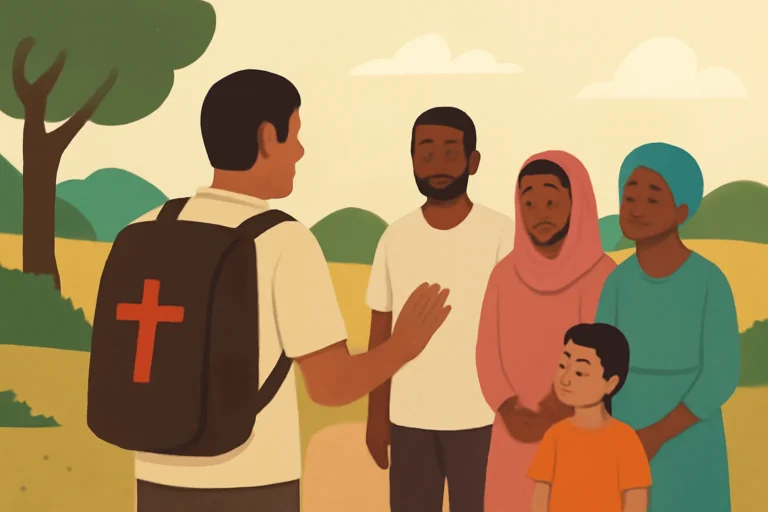
Global Outreach: Lutheran Mission Networks Across Borders
The story of Lutheran missions is a tapestry woven from faith, partnership, and service that spans continents and generations. Across global outreach, Lutheran churches and their partners seek to proclaim the gospel, translate sacred texts, train leaders, and serve vulnerable communities with practical care. This broad initiative is not a single program but a family of initiatives that share a common conviction: that the gospel speaks to people where they are and that faith God’s grace calls believers to action in daily life. From urban neighborhoods in Europe and North America to remote villages in Africa, Asia, and the Americas, the mission mobilizes laypeople and ordained ministers alike to bear witness, teach, and heal in Christ’s name.
What distinguishes this approach is its emphasis on sustainability, mutual accountability, and culturally rooted partnerships. Rather than imposing a single model, Lutheran mission networks nurture partnerships with local churches, theologians, schools, medical clinics, and community organizations. In practice, this means listening first, then learning together, and finally collaborating to address healing, education, hunger, and injustice. The result is a form of outreach that respects local leadership while offering shared resources, theological training, and global solidarity.
Below are some core features of the Lutheran approach to global outreach, along with concrete expressions of mission in education, health, relief, and development. The aim is not only to reach more people with the gospel but to cultivate enduring communities where the love of Christ is shown in tangible acts of mercy, justice, and welcome.
Ways Lutheran missions are sustained globally
Congregational partnerships that pair a local church with a sister congregation abroad for mutual learning, exchange, and support.
Theological education that trains pastors, lay leaders, and educators so that churches can sustain healthy worship, catechesis, and service.
Volunteer and short-term programs that offer practical service while fostering cross-cultural understanding and long-term commitments.
Contextual evangelism that speaks the gospel in ways that are meaningful within diverse cultures, languages, and social realities.
Disaster response and humanitarian aid that provide relief in crisis and help communities recover with dignity.
In many contexts, Lutheran mission workers operate with a two-way model: they bring theological resources and mission-minded energy, and they learn from local partners about culture, history, and needs. This reciprocal dynamic helps ensure that outreach remains relevant, respectful, and effective. It also fosters a sense of ecumenical solidarity with other Christian communities and a shared commitment to the dignity of every person.
The Faith That Sparks Service
For many Christians within the Lutheran tradition, faith is the animating force behind every act of service. The narrative of salvation, the gifts of grace, and the call to share the good news converge to produce a life oriented toward neighbor-love, justice, and mercy. In Lutheran missions, evangelism and service are not separate tracks but intertwined strands of a single Gospel witness. Believers are invited to live out their faith in ways that demonstrate the relevance of Jesus Christ to everyday needs—education for children, health care for the sick, and care for the vulnerable.
The Great Commission—to go, to teach, to baptize, and to make disciples—shapes the planning and practice of mission across cultures. Yet the interpretation of that commission must be contextual, respectful, and anchored in the belief that God acts first and invites human beings to participate in his mission. This means mission teams listen to partners, learn local languages, and adapt worship, teaching, and outreach to fit local customs while preserving essential Christian identity.
Doctrinal foundations and practical application
The doctrinal core emphasizes grace and new life in Christ, which are lived out in acts of service. In many church missions, lay catechesis, youth programs, and adult education are used to nurture mature faith that translates into concrete action. Mission leaders emphasize that worship, sacraments, and Bible study should empower congregations to serve their neighbors with wisdom and compassion. This integration helps participants understand that faith is not merely a sentiment but a dynamic force that shapes decisions, relationships, and institutions.
The impulse of Lutheran missions rises from a historical arc that begins with the Reformation and expands through centuries of church life. Early reformers emphasized the freedom of the gospel and the imperative to be light in a world shaped by sin and brokenness. Over time, reform-minded communities began to organize missionary efforts not as colonial ventures but as partnerships rooted in Christian discernment, mutual accountability, and shared responsibilities. In modern times, the Lutheran World Federation and regional synods have fostered cooperative networks that connect churches in the Global North and Global South. These networks promote theological education, scripture translation, and joint relief work, demonstrating that authentic mission is bilateral and interdependent.
Theological education has been central to mission, because trained pastors and teachers are essential for sustaining worship, catechesis, and community leadership. Bible translation and literacy projects enable indigenous communities to access Scripture in their mother tongues, deepening faith and encouraging lifelong learning. Moreover, the history of Lutheran missions includes critical reflection on power and privilege, with a growing emphasis on reconciliation, justice, and local leadership. Contemporary missional thinking seeks to honor local identities and to empower communities to carry forward their own initiatives with external support rather than dependence.
Across centuries, the fundamental posture has been one of humble service that seeks to manifest the gospel through education, health, and social welfare. By combining proclamation with practical acts of mercy, Lutheran missions aim to present a coherent witness: that God’s love in Christ transforms individuals and structures alike.
Historical milestones and enduring patterns
Founding of mission societies that organized resources for evangelism and relief.
Traditions of companion synod relationships that pair churches across continents for mutual growth.
Growth of global theological education networks that train pastors, catechists, and lay leaders in diverse settings.
Development of health systems, schools, and community centers as platforms for holistic ministry.
Engagement with social issues such as poverty alleviation, refugees, and reconciliation processes.
Varieties of Lutheran Mission Work
The spectrum of Lutheran mission work is broad and adaptable. It includes formal church-initiated programs, but it also thrives through local congregations that discern how to serve in their communities. Some key modes include domestic urban outreach, international partnerships, dialogue with other faiths, and diaspora ministry among migrants and refugees. Each mode is shaped by cultural realities, available resources, and theological priorities, yet all share a common commitment to witnessing to Christ and serving the neighbor.
Congregational and synodical outreach
At the local level, congregations engage in neighborly presence through food ministries, after-school tutoring, shelter programs, and neighborhood ministries. Regional and national churches coordinate training, supply resources, and facilitate cross-border exchanges that enable smaller congregations to participate in global mission without losing their distinctive character. This congregational mission model emphasizes relational depth, accountability, and sustainability.
Education and leadership development
Theological education remains a cornerstone of sustainable mission. Seminaries, Bible schools, and lay leadership programs prepare pastors, teachers, and administrators to lead worship, teach the faith, and manage community projects. In many contexts, online courses, distance learning, and short-term itinerant teaching teams expand access to education, enabling capable leaders to emerge even where resources are scarce. Strong emphasis on leadership development ensures that local churches can guide ministries over generations.
Health care, schooling, and social welfare
Service-oriented mission often centers on health care clinics, vaccination campaigns, nutrition programs, and maternal-child health initiatives. Education-focused ministries include literacy campaigns, school sponsorships, and vocational training. Social welfare projects address housing, clean water, food security, and economic development. These activities often serve as bridges to gospel conversations, creating spaces where people experience the care of Christ through tangible acts of mercy.
Relief, recovery, and disaster response
In crises—from natural disasters to conflict—Lutheran mission agencies mobilize relief supplies, shelter, trauma counseling, and reconstruction assistance. Recovery programs frequently incorporate community resilience training, livelihood restoration, and long-term development plans. The aim is not only to meet immediate needs but to empower communities to rebuild in ways that reflect dignity, autonomy, and hope rooted in faith.
Diaspora and urban ministry
Urban centers and immigrant communities offer dynamic opportunities for mission in global cities. Diaspora missions reach out through language-specific worship, cultural celebrations, and social services that honor migrants’ origins while inviting them into new communal life. This form of ministry highlights the church’s role in hospitality, intercultural dialogue, and social integration, demonstrating that the gospel speaks to both tradition and transition.
Across the African continent, Lutheran missions emphasize holistic development, rural education, and health ministries. In many communities, small schools, teachers’ colleges, and community clinics operate in collaboration with local authorities. Bible translation and literacy work in regional languages help communities access Scripture in meaningful ways, strengthening both faith and civic life. Partnerships with national churches empower leadership development and pastoral resilience, especially in regions facing climate stress, migration, or economic volatility.
In Asia, mission partners navigate a spectrum of contexts—from densely populated cities to remote highlands. The gospel is announced alongside social services such as literacy programs, vocational training, and health outreach. Dialogues with other religious communities are pursued with courtesy and honesty, aiming for mutual respect and shared service where possible. The work often includes translation and contextual worship that respects cultural identities while offering the timeless message of grace through Christ.
Latin America: Education, Pastoral Care, and Social Justice
In Latin American contexts, mission work frequently centers on education and community development, with schools and after-school programs serving as entry points for discipleship and civic engagement. Pastoral care and counseling ministries support families facing economic pressures, violence, and social upheaval. Outreach efforts emphasize dignity, human rights, and the transformative power of the gospel to heal broken relationships.
Europe: Reaffirming Identity in a Secular Age
European Lutheran missions often focus on re-evangelization in cultural settings shaped by secularism, pluralism, and aging congregations. Outreach initiatives emphasize hospitality, worship relevant to contemporary life, and inter-Church cooperation. Educational partnerships, refugee ministries, and youth programs help keep churches vibrant and rooted in scriptural memory while engaging with modern questions about meaning, purpose, and community.
North America: Urban Outreach and Global Partnerships
In North America, mission activity frequently combines urban ministry with global partnerships. Local congregations may host refugees, operate food banks, run literacy and tutoring programs, and support sustainable development projects through sister-church networks. Simultaneously, many churches participate in international mission by funding schools, clinics, and theological education in other regions, reinforcing the sense that mission is a shared enterprise that crosses oceans.
Education, Leadership, and the Life of the Church
Education is a central pillar of Lutheran missions. By shaping minds and forming character, schools and seminaries prepare people to think critically, live compassionately, and participate responsibly in their communities. Leadership development ensures that churches can sustain mission initiatives across generations, with trained pastors, teachers, and lay leaders guiding worship, catechesis, and social programs. In many settings, education is inseparable from evangelism: as people learn to read Scripture and engage with Christian doctrine, they discover the confidence to embrace the gospel and share it with others.
Scripture, worship, and learning communities
Worship that is lively, meaningful, and rooted in liturgical heritage helps communities encounter God’s grace anew. Bible study groups, catechism classes, and youth programs build learning communities that cultivate faith formation and social responsibility. In mission contexts, these learning communities often become centers of care where families receive guidance, counseling, and practical support.
Mission planning increasingly emphasizes sustainability. Churches develop community development strategies that combine financial stewardship, transparent governance, and local ownership. This approach reduces dependency and enables communities to pursue long-term improvements in education, health, and economic opportunity. In practice, capacity-building might include training in project management, accounting, and grant writing to enable local leaders to sustain programs beyond the involvement of external partners.
Service as a Gospel Witness: Health, Education, and Social Justice
The service aspect of Lutheran mission is not tangential to the gospel; it is the visible sign of faith at work. In many settings, clinics provide essential medical care, vaccinations, maternal health services, and health education. Schools open doors to literacy, numeracy, and critical thinking, shaping futures and expanding opportunities. Programs that address poverty, housing insecurity, and food stability reflect a commitment to justice and human dignity that mirrors the biblical call to care for the vulnerable.
Health programs often serve as credible witnesses to the gospel. By offering compassionate care to patients regardless of background, mission teams demonstrate the character of Christ and create opportunities for conversation about faith, values, and hope. Partnerships with local medical staff, pastors, and community organizers help ensure that health initiatives are culturally appropriate and responsive to real needs.
Education and empowerment
Education outreach expands beyond schools to adult learning, vocational training, and literacy programs. When people gain skills for work, they gain dignity and autonomy, enabling them to contribute to their families and communities. Education also provides a platform for discussing values, ethics, and civic responsibility in ways that align with the broader Christian mission to serve the common good.
Advocacy for justice and reconciliation
Mission agendas increasingly include advocacy for social justice and reconciliation. This involves addressing systemic issues such as poverty, discrimination, and human rights abuses in ways that reflect biblical justice and mercy. Lutheran mission workers may collaborate with civil society organizations, churches from other traditions, and community leaders to promote policies and practices that protect vulnerable people and restore relationships damaged by conflict.
Challenges, Adaptation, and Ethical Considerations
The practice of Lutheran mission faces a range of challenges in a rapidly changing world. Secularization, economic disparities, political instability, and evolving cultural norms all shape how mission is received and sustained. Ethical considerations—such as avoiding paternalism, honoring local leadership, and ensuring equitable partnerships—are essential to maintaining credibility and effectiveness. Mission efforts increasingly rely on transparent funding, accountable governance, and clear evaluation of impact so that supporters and partners understand how resources are used and what outcomes are achieved.
Power dynamics and decolonizing mission practice
A growing emphasis on humility and mutuality acknowledges historical imbalances in mission work. Deeper listening, shared decision-making, and thoughtful reflection on cultural differences help prevent paternalistic approaches. The aim is to empower local congregations to tell their own stories, celebrate their identities, and steward their own futures within a global network of support.
Measuring impact and accountability
Effective mission requires evaluation that goes beyond numbers. While metrics such as children educated, patients served, and churches planted are important, qualitative indicators—trust built, spiritual growth, community resilience, and lasting local leadership—offer a fuller picture. Regular reporting, external audits, and feedback loops with partner communities contribute to responsible stewardship of resources.
Adapting to rapid changes
The digital era, climate change, and shifting migration patterns demand adaptive strategies. Online theological education, remote supervision of leadership, and flexible mission teams enable the church to respond quickly to new needs. Yet adaptation must be guided by core commitments: to proclaim the gospel with integrity, to love the neighbor without condition, and to honor the dignity of every person.
Future Directions: Sustaining a Living Witness
Looking ahead, Lutheran missions aspire to be more global in reach and deeper in relationship. The aim is to sustain a living witness that remains faithful to the gospel while being culturally hospitable and ethically robust. This includes broadening the base of support, expanding interfaith and ecumenical collaboration, and investing in next-generation leadership. A healthy missional culture invites voices from diverse communities to shape priorities, dreams, and strategies for ministry in the years to come.
Strategic priorities for the coming decades
Strengthening local leadership and governance structures to ensure durable ministry.
Expanding theological education and Bible engagement in indigenous languages.
Growing ethical leadership in health and education sectors to promote human flourishing.
Deepening microfinancing and development initiatives that empower communities economically and culturally.
Advancing ecumenical and interfaith collaboration to model peace, justice, and shared service.
In every context, the core conviction remains: the church is called to be a community of witness and a servant people who embody the love of Christ in ways that are credible, compassionate, and hopeful. Lutheran mission work, in its many forms, seeks to translate faith into action—announcing the gospel and living it out in acts of mercy, education, healing, and reconciliation. The result is a vibrant global church that travels together, learns from one another, and serves the world with grace.