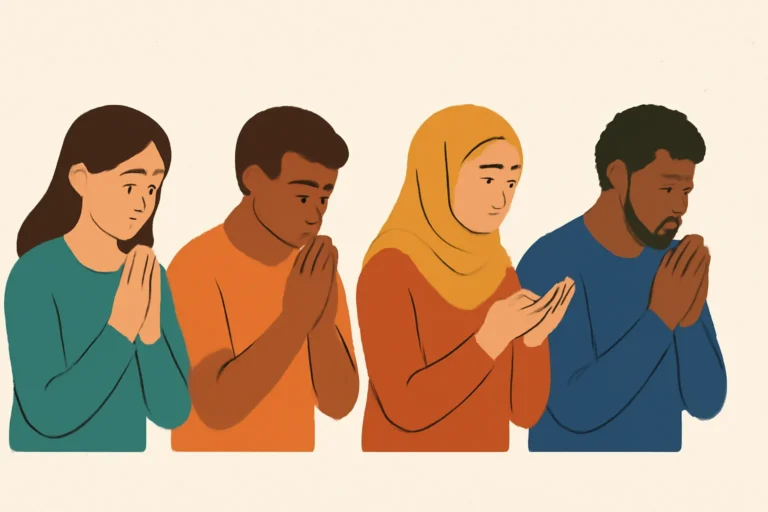
Prayer is a universal practice that spans cultures, traditions, and personal temperaments. It is not a single technique but a spectrum of methods that helps people connect with the sacred, reflect on life, find guidance, and cultivate compassion. This practical guide surveys a wide range of prayer methods, offering clear descriptions, practical steps, and tips for experimenting with what resonates. Whether you seek quiet silence, structured liturgy, or creative engagement, there is a path that can fit your personality and daily rhythms.
Across traditions, prayer takes many forms. Some approaches emphasize stillness and listening, others focus on spoken words or singing, and still others integrate daily actions with intention. The goal is not to force a particular method but to discover practices that deepen attention, nurture humility, and orient the heart toward what is good, true, and beautiful. In exploring different prayer methods, you can cultivate flexibility: you might favor one method during quiet mornings and another during stressful days, or you might combine several approaches in a single practice session.
Personal prayer practices
Silent contemplative prayer
Silent contemplative prayer centers attention inward, inviting God or the sacred to meet the seeker in stillness. It is less about talking and more about open receptivity. This practice is accessible to beginners and spiritually seasoned practitioners alike.
Find a quiet place and adopt a comfortable, upright posture to support alert stillness.
Set a gentle intention, such as “May I be present to what is here.”
Close your eyes or soften your gaze, and allow thoughts to pass without engagement.
Rest in silence for a chosen duration (often 5–20 minutes to start).
When distractions arise, acknowledge them briefly and return to the stillness.
In silent contemplative prayer, the emphasis is on being rather than doing. Some practitioners use a single word or mantra to anchor attention, returning to that focus whenever the mind wanders. This can cultivate a sense of inner spaciousness and attentiveness that carries into daily life.
Breath-based prayer
Breath-based prayer uses the rhythm of breathing to ground awareness and invite a cadence of prayer into ordinary moments. Short phrases synchronize with inhalation and exhalation, creating a bodily rhythm that can ease anxiety and foster steadiness.
Choose a short phrase or word (for example, “Come, Lord,” or “Be near”).
Inhale with the phrase integrated mentally, then exhale with the completion of the phrase.
Repeat slowly for several minutes, allowing the breath to guide gentle focus.
If the mind drifts, return to the breath and the chosen phrase.
Breath prayer can be practiced anywhere: at a desk, in a car (when safe), or while walking. It provides an accessible doorway to ongoing prayer in the midst of a busy life.
Centering prayer
Centering prayer invites intact attention to a sacred symbol, such as a word, phrase, or image, with the aim of quieting mental noise and opening to divine presence. It is typically practiced for 20 minutes but can be adapted to shorter spans.
Choose a sacred word or phrase to symbolize your intention (for example, “God,” “Jesus,” or “Love”).
Seated comfortably, breathe gently and silently repeat the sacred word when distractions arise.
Return to the word as the anchor whenever the mind wanders.
Conclude with a moment of gratitude or silent listening.
Centering prayer is often recommended as a daily practice to cultivate interior stillness and awareness of the sacred throughout the day, not merely during designated prayer times.
Prayer of gratitude
Gratitude-centered practices help reframe perspective and build resilience. A simple gratitude prayer can be a nightly or morning ritual, acknowledging small and large blessings alike.
Make a short list of things you are thankful for, naming each one aloud or in writing.
Offer a brief prayer of thanksgiving that explicitly names the source of the blessing and your response to it.
Close with a neutral, sincere statement, such as “May I steward these gifts with care.”
Regularly naming gratitude trains attention toward the good that often goes unseen, fostering a positive and grounded spiritual posture.
Scriptural and word-centered approaches
Lectio Divina (divine reading)
Lectio Divina is an ancient practice that invites slow engagement with sacred texts through four movements: reading, meditating, praying, and contemplating, followed by productive living in daily life. It is less about analysis and more about response and resonance with the divine presence within a passage.
Lectio (reading): Read a short Scripture passage slowly, perhaps aloud, letting the words settle.
Meditatio (meditation): Reflect on the passage; notice what stands out, what questions arise, and what it might be inviting you to notice about your life.
Oratio (prayer): Speak to God in response to the text—praise, gratitude, confession, or a plea for guidance.
Contemplatio (contemplation): Rest in the sense of companionship with the divine; listen for inward movements or quiet insights.
Some practitioners extend the practice with a fifth step, operatio or action: how will the insight shape your choices or service in the coming days?
Prayer with the Psalms
The Psalms offer a robust pantry of prayers: lament, praise, confession, gratitude, and petition. Praying through a Psalm can ground your voice in a long tradition while honoring your own emotional range.
Choose a Psalm that matches your mood (e.g., Psalm 23 for comfort, Psalm 51 for confession).
Read it slowly, aloud if possible, and notice phrases that resonate.
Turn those phrases into your own words, maintaining the psalm’s rhythm and imagery.
End with a note of trust or a petition for guidance and strength.
The Jesus Prayer
The Jesus Prayer—“Lord Jesus Christ, Son of God, have mercy on me, a sinner”—is a compact form of invocation that has been cherished in various Christian traditions for centuries. Repeating it gently can center attention, humble the heart, and cultivate mercy-focused awareness.
Repeat the phrase slowly for several minutes, letting the breath guide the cadence.
When distractions arise, return to the simple invocation without judgment.
As familiarity grows, invite the prayer into ordinary activities to sustain awareness.
Intercessory and communal prayers
Intercessory prayer for others
Intercessory prayer is the practice of praying on behalf of others—neighbors, family, communities, and global concerns. It can be a structured habit or a flexible, spontaneous rhythm.
Make a list of people and situations you wish to lift in prayer.
For each person or need, offer a brief, specific petition and a note of confidence in the possible good outcomes.
Set aside a regular time for intercession, or carry the practice into daily moments as needs arise.
Intercessory prayer often strengthens empathy and builds communal bonds, reminding us that our prayers are part of a larger fabric of care.
Communal worship and prayers in groups
Praying in community—whether in a formal service, a small group, or an informal gathering—can enhance accountability and shared energy. Group rituals may include responsive readings, shared prayers, songs, and liturgy.
Participate regularly in a local community or online gathering to experience collective prayer.
Bring a personal intention to the group in a way that respects others’ needs and boundaries.
Use common prayers or chants as a means of solidarity and shared devotion.
Liturgical and formal prayers
The Lord’s Prayer as a template
The Lord’s Prayer (Our Father) functions as a master template for prayer—addressing the divine, honoring God’s will, seeking daily provision, requesting forgiveness, and seeking strength to resist temptation. It can be prayed verbatim or adapted as a framework for own words.
Affirm reverence by naming God in a respectful manner.
Align your desires with divine will (“Thy kingdom come, thy will be done”).
Request daily sustenance and ongoing transformation (“Give us this day our daily bread”).
Ask for forgiveness, and commit to extending mercy to others.
Many traditions offer short, rhythmic, or poetic prayers that can be adopted into daily practice. For example, traditional liturgical prayers, devotionals, and creedal statements can anchor routine and connect personal practice to a larger lineage. You might incorporate a brief daily prayer from a tradition that resonates with you, followed by personal reflection or adaptation to your context.
Creative, embodied, and daily-life prayers
Prayer walks and nature-centered prayer
Prayer can be embodied in movement and attentive nature-perception. A prayer walk invites you to notice the world with sacred intent, offering gratitude, petitions, or intercession while moving through a neighborhood, park, or trail.
Set a length, pace, and intention for the walk (e.g., praying for neighbors, remembering the vulnerable, thanking creation).
Observe details: the weather, sounds, people, birds, trees. Let these observations become avenues for gratitude or petition.
Conclude with a moment of stillness, and carry a sense of connection into the rest of your day.
Journaling and letter prayers
Putting thoughts into writing can render prayer tangible and trackable. Journaling prayers might involve writing letters to God, to your future self, or to a spiritual guide. You can also respond to prompts that prompt honesty, confession, or aspiration.
Begin with a date and a prompt, such as “What do I most need to entrust today?”
Write in first person, in present tense, and avoid censoring emotion.
End with a closing line that expresses trust or commitment (for example, “I surrender this to you.”).
Art, music, and nature as prayer
Artful prayer uses color, form, sound, or movement to express longing, gratitude, or awe. Creating an icon, sketch, mandala, or a simple melody can function as a devotional practice. You don’t need to be an artist to engage in this approach—improvisation and repetition can be deeply prayerful.
Choose a theme (peace, healing, courage) and translate it into felt-sense art or short musical phrases.
Use music to accompany prayer—soft instrumental tunes, chants, or liturgical hymns.
Bring attention back to breath or sensation as you create, letting the process become prayerful.
Prayer in daily life: integrating practice with action
Prayer that flows into service
Many people find that prayer and service illuminate each other. Praying for others can encourage practical acts of mercy—visiting the sick, advocating for justice, or offering time and resources to those in need.
Pair a prayer with a concrete action—e.g., pray for a neighbor and then drop a note of encouragement or a small token of support.
Let your sense of divine guidance inform choices about how to use your talents and resources for the good of others.
Keep boundaries healthy: prayer should not replace ethical action or personal self-care.
Tools, settings, and rhythms for sustainable practice
Creating a dedicated prayer space
A small, intentional space can support habit formation. Consider a quiet corner with a comfortable chair, a candle, a cross or icon, a journal, and a mug of tea or water. A personal prayer corner is not about perfection but about consistency and invitation to pause.
Using calendars, reminders, and guided prompts
Digital tools can help sustain a rhythm without becoming a distraction. You might schedule brief reminders, guided audio prayers, or a weekly theme (e.g., forgiveness, generosity, or discernment). It can be helpful to balance spontaneous practice with structured prompts to keep you moving forward.
Set a daily reminder for a short practice (5–10 minutes).
Use a guided audio track or a written prompt to avoid aimless wandering.
Review your practice weekly and note what resonates or what stalls.
Building a practical, personal practice
Starting small and staying flexible
The most important principle is sustainability. A consistent practice—even if brief—tosters a meaningful habit over time. Start with 5–7 minutes a day, then adjust upward as you feel a natural rhythm forming.
Creating variation to sustain interest
To keep prayer from becoming routine without meaning, vary your methods across the week. You might dedicate Mondays to Lectio Divina, Wednesdays to silent contemplative prayer, and Fridays to gratitude journaling or a prayer walk. Variation helps you explore different dimensions of prayer and keeps the practice fresh.
Consider a simple log: date, method used, a brief line describing your experience, and a note about any insights or commitments. This is not a test but a gentle record that you can review to observe patterns, seasons, and shifts over time.
Challenges and practical tips
Dealing with distraction and dryness
Common obstacles include wandering thoughts, fatigue, and a sense of dryness or distance from the divine. Practical approaches include returning to a simple anchor (breath, a word, or a short phrase), shortening the practice, or switching to a different method for a season. Remember that desert experiences are a normal part of many spiritual journeys and can precede deeper renewal.
Balancing prayer with life responsibilities
It is natural to ask how prayer fits into paid work, parenting, school, or caregiving. The answer is adaptability: short, frequent moments can be woven into daily routines—pausing before opening a door, during a commute, or as you prepare a meal. The goal is not to add guilt but to invite a steady thread of awareness into ordinary tasks.
Managing expectations and avoiding legalism
Prayer should deepen freedom, not become another set of duties. If you notice that a practice feels coercive or guilt-driven, pause and reframe. Try choosing a method you genuinely enjoy, or reduce the duration to a comfortable minimum. The relationship you cultivate matters more than the particular form you use.
What makes a prayer method meaningful?
Meaning in prayer often arises from three core ingredients: attention, humility, and trust. Attention means being present to what is true in the moment; humility invites a posture of dependence and openness; trust sustains you through uncertainty and change. A practical approach is to select a few complementary methods that nourish these dimensions: for example, combine a silent practice (attention) with a brief Christ-centered invocation (humility) and a gratitude exercise (trust). Over time, this blend can become a reliable and life-affirming rhythm.
Ethical and inclusive considerations
Prayer is most life-giving when it respects others and honors diverse paths. Many people draw strength from intercessory practice, creative rituals, and liturgical forms while recognizing that different traditions have unique contours. If you are joining a community with a particular prayer style, approach it with curiosity and humility, and be clear about your own boundaries and beliefs. The goal is mutual enrichment rather than competition or coercion.
A practical starter kit for experimenting with methods
5-minute silent contemplative starter with a chosen silence anchor or breath awareness.
5-minute breath prayer session using a short phrase aligned with your breath.
Lectio Divina short passage using a brief Scripture reading (one paragraph) with the four steps.
Gratitude journaling for five minutes, listing at least three things you are thankful for today.
Prayer walk around your neighborhood or yard, offering a few phrases for neighbors and creation.
In summary: embracing the richness of prayer
Different methods of prayer offer varied routes to presence, guidance, and transformation. By exploring silent contemplation, breath-based practices, Lectio Divina, psalmic and Jesus-prayer traditions, intercessory and communal prayer, liturgical forms, creative expression, and daily-life integration, you can cultivate a robust and flexible spiritual practice. The most important outcome is not adherence to a specific technique but a cultivated capacity to live with greater awareness, compassion, and openness to what is beyond us yet speaks to us in the present moment.
As you try these approaches, remember to honor your own pace and preferences. Some days you may crave quiet stillness; other days you might need the energy of a group, the cadence of a familiar prayer, or the healing of simple gratitude. The path of prayer is not a test of endurance but a journey toward a more attentive, generous, and anchored life. May your exploration be generous, generous in time, generous in heart, and generous in the acknowledgement that prayer is a gift you can continually shape in your own unique way.