Setting the Scene: The Feast of Tabernacles in Jewish Tradition
The Feast of Tabernacles, also known as Sukkot, is one of the most vibrant and long-standing annual festivals in ancient Israel. It commemorates the wilderness sojourn of the people of God after the Exodus, during which the Israelites dwelt in temporary shelters or sukkahs (booths) to remember God’s care and provision. This festival follows the harvest, spans seven days of outdoor feasting and ritual, and culminates in special prayers and processions. For Jewish families and communities, Sukkot is not only a memory of the past but a living expression of dependence on God’s abundance and protection.
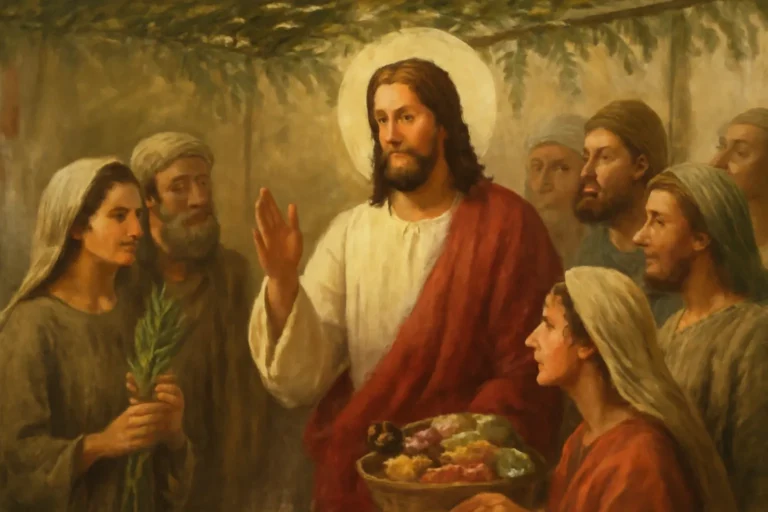
The central symbols of Sukkot include the sukkah (the booth), the lulav (palm branch) combined with the etrog (citron), and, during certain periods of the festival, ceremonial water drawing and temple illuminations. In this cultural and liturgical context, the appearance of Jesus at the Feast of Tabernacles—whether described in the Gospel of John as “Jesus during the Feast of Sukkot” or as “the Christ at Sukkot”—takes on a layered significance. It provides a bridge between ancient ritual imagery and the New Testament proclamation about who God has sent into the world.
Historical and Liturgical Context: What Happens During Sukkot
To fully appreciate the encounter with Jesus, it helps to grasp the layers of meaning embedded in the festival:
Dwelling in booths as a reminder of God’s guidance and protection in the wilderness.
Lulav and etrog as a multicolored harvest symbol, representing unity and the fullness of creation.
Water drawing (nisuch hamayim) ceremony, a ritual petition for rain and spiritual irrigation, often linked to a vision of renewal and life.
Illumination ceremonies in the temple precincts, where giant candelabras were lit to symbolize divine guidance and the presence of God among the people.
The Gospel writers, especially in the account commonly associated with Jesus at the Feast of Tabernacles (often read as “the Jesus at Sukkot narratives”), place the Sukkot stage in a way that highlights two key motifs: light and living water. These motifs are not extraneous decorations but windows into who Jesus claims to be and what his mission entails. The phrase “Jesus at the Feast of Tabernacles” becomes a hinge where Jewish ritual expectation meets Christian proclamation.
The Gospel Accounts: Jesus during the Feast of Tabernacles
Contextual Setting: The Temple and the Crowds
In the Gospel narrative style, the appearance of Jesus during the Feast of Tabernacles unfolds amid crowds—pilgrims coming to Jerusalem, religious leaders watching for signs, and a rising sense that the festival is a moment of judgment and revelation. The scenes move from public teaching to private interrogation, and from questions about his origins to claims about his divine identity. In this context, the phrases “Jesus at Sukkot” and “the Christ at Tabernacles” function as invitations to interpret his words against the backdrop of a festival that is about provision, protection, and the presence of God among his people.
Water and Living Water: The Nisuch Hamayim Imagery
One of the most striking aspects of Jesus at the Feast of Tabernacles is the moment when he speaks into the temple’s water ceremony. The festival’s ritual pourings of water were a cry for rain and blessing, and they pointed forward to a deeper, spiritual renewal. In this setting, the articulation of living water becomes a powerful christological claim. In the gospel account, we read of Jesus saying something like, “If anyone thirsts, let him come to me and drink” (paraphrasing the living-water verses). This is not merely a poetic metaphor; it is a declaration that the true sustenance of life comes from a relationship with the one whom God has sent.
Hence, the phrase “Jesus and the water ceremony” often appears in discussions of the Feast of Tabernacles. The exchange reframes thirst as a spiritual condition and presents Jesus as the source of enduring life. For readers and listeners, this link invites a reconsideration of where true nourishment comes from—bread, rain, rain showers in the grain, and ultimately, the life-giving streams of the Spirit as promised in Scripture.
Light in the Temple: Jesus as the Light of the World
Another keynote moment for Jesus at the Feast of Tabernacles centers on light. The festival’s temple illumination ceremonies created a luminous ambiance in the Court of the Women, highlighting the divine presence among the people. In the Gospel, Jesus proclaims: “I am the light of the world.” This statement is framed by the festival’s own symbolism of illumination. The imagery suggests that Jesus brings a revelation that surpasses the physical lamps—he offers spiritual illumination that guides people through darkness, much as the candles guided travelers at night in ancient times.
Meaning and Teachings: What the Encounter Teaches
Jesus as the Fulfillment of Covenant Radiance
Across the narratives of the Feast of Tabernacles, one of the strongest claims about Jesus is that he embodies the ongoing presence of God with his people. In this sense, the Christ at Sukkot is the one who fulfills the festival’s deeper longing: the longing for divine dwelling (emmanuel — God with us) and the longing for spiritual sustenance that never runs dry. The festival’s emphasis on God as provider and guide becomes a lens through which readers see Jesus at the feast as the one who makes God’s presence tangible and accessible.
The living-water motif that accompanies Jesus at the Feast points to a central teaching about salvation and life in the Spirit. The invitation to come to Jesus and drink indicates an ongoing relationship rather than a one-time response. The source of this life is not a ritual act alone but the person of Christ himself. “Living water” becomes a symbol of the Spirit’s activity within believers—an ongoing stream that renews, refreshes, and sustains the community. In short, the Feast of Tabernacles and Jesus together present salvation as a living, pervasive presence rather than a distant concept.
When Jesus at the Feast of Tabernacles proclaims himself as “the light of the world”, it also evokes themes of truthfulness and judgment. The festival’s ritual lights pointed toward divine guidance; Jesus’ declaration reframes light as a personal manifestation of God’s moral and spiritual truth in the midst of a doubting or questioning audience. This teaching does not shy away from controversy; it invites listeners to decide whether they will walk in the light or remain in darkness. The intersection of light and judgment is a pointed invitation to examine one’s life in light of who Jesus is.
Theological Themes Arising from the Encounter
God’s presence among his people—the idea that Jesus at Sukkot embodies the divine dwelling in a new, more intimate sense.
Provision and sustenance—the living water imagery ties physical abundance to spiritual nourishment found in Christ.
Revelation and discernment—the light motif challenges listeners to discern Jesus’ identity against religious expectation.
Inclusion and invitation—while the temple festival was a Jewish celebration, Jesus’ words broaden the invitation to thirsting souls beyond a single national boundary.
Conflict and faithfulness—the narrative tension between Jesus and religious authorities models the friction that often accompanies prophetic calls to repentance and trust.
Historical Perspectives: How Early Christians Read the Festival Narrative
Early Christian interpreters who engaged with the gospel accounts of Jesus at the Feast of Tabernacles frequently linked the festival’s motifs to Christological and ecclesiological themes. For them, the imagery of light and water aligned with the idea that Jesus inaugurates the new era of God’s redemptive work. The festival’s emphasis on dwelling with God offered a natural backdrop for understanding the church as a people who dwell in Christ’s presence by the Spirit. The messianic expectations associated with Sukkot provided fertile ground for seeing Jesus not only as a historical figure in Jerusalem but as the ongoing fulfillment of prophetic promises about God’s nearness and blessing to all nations.
Practical Reflections for Believers Today
Lessons for Spiritual Nourishment
The call to drink from the living water invites contemporary believers to cultivate a daily reliance on Christ as the source of life. Practically, this means regular rhythms of prayer, Scripture intake, and participation in communal worship that keep one in touch with the Spirit’s sustaining work. The festival’s imagery of ongoing refreshment resonates with Christian practices like confession, repentance, and renewal, which restore the soul just as water renews the body.
Walking in the Light
The declaration that Jesus is the light of the world challenges believers to walk in truth, to embody integrity, and to be a light in their own communities. In a skeptical age, the call to reflect Christ’s light through acts of mercy, justice, and truthful living remains a powerful witness. The narrative about the Feast of Tabernacles invites Christians to consider how they live as people who carry a divine illumination into both private and public spheres.
Hospitality, Refuge, and Community
The tents and booths of Sukkot emphasize hospitality and communal care. In the Christian imagination, this can translate into a renewed emphasis on hospitality within the church and toward outsiders. Just as the festival teaches dependence on God’s provision, believers are encouraged to be generous with resources and to welcome travelers, strangers, and the vulnerable as a practical expression of faith in a God who provides for all.
Descriptive Variants: How People Talk About this Narrative
In discussions about Jesus at the Feast of Tabernacles, you may encounter several interchangeable phrasings that preserve semantic breadth:
“Jesus during Sukkot in Jerusalem”
“Christ at the Feast of Booths”
“Jesus at the Tabernacles festival”
“During the Feast of Tabernacles, Jesus spoke about living water”
“the Word at Sukkot” illuminating the temple court
These variations help English readers capture the dynamic overlap between Jewish liturgy and Christian proclamation. They also remind us that the festival is not merely a backdrop but a speaking stage for profound claims about who Jesus is and what God is doing in the world.
Frequently Asked Questions about Jesus at the Feast of Tabernacles
What is the significance of the water ritual in relation to Jesus’ teaching?
The water ritual symbolized longing for God’s blessing and rain, but in Jesus’ teaching it points to a deeper nourishment—the living water that only he can provide, signifying the Spirit and eternal life.
How does the claim “I am the light of the world” relate to the temple ceremonies?
In the festival, the temple lights symbolized divine presence and guidance. Jesus’ declaration reframes that symbol, presenting him as the source of spiritual illumination, truth, and guidance for every person who follows him.
Who is invited by the message proclaimed during the festival?
The invitation extends beyond any single group. While the festival has a national and religious dimension, Jesus’ offer to thirst for life and drink deeply is an invitation to all who hear his voice, inclusive of all nations and peoples in the biblical narrative’s broader scope.
What is the broader theological purpose of Jesus’ words at Sukkot?
Christians often see the statements at the Feast of Tabernacles as pointers to the Kingdom of God: God dwelling with humanity, provision through the Spirit, and a call to live in light and truth as citizens of that divine realm.
How should modern readers respond to this narrative?
A balanced approach combines reverence for Jewish festival imagery with an attentive reading of Christ’s self-revelation. Believers are encouraged to encounter Jesus as the one who makes God present, who offers living nourishment, and who calls them to become bearers of light in a world longing for hope.
Concluding Thoughts: The Ongoing Significance of Jesus at the Feast
The episodes surrounding Jesus at the Feast of Tabernacles remain deeply resonant for readers today. They invite a holistic response: trust in the generous provision of God, a commitment to living in the truth that Jesus embodies, and an eagerness to share the light and life that come from him with a world that hungers for both meaning and renewal. By engaging with the festival’s rich symbolism—booths, water, and light—Christians can cultivate a more integrated spirituality that connects historical memory with present faith. In this sense, the Feast of Tabernacles becomes a living bridge between ancient covenantal faith and contemporary Christian hope.