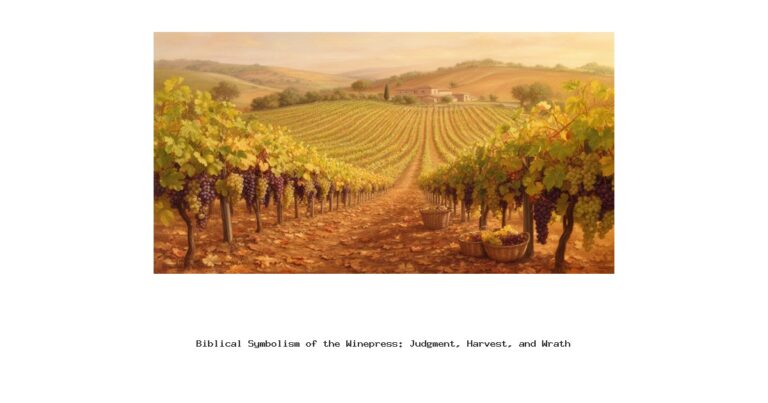
The winepress in Scripture symbolizes divine judgment and wrath, the process of purification, and the preparation of harvest. It represents God's righteous act of punishing evil and refining His people through trial and judgment.
📖 Key Biblical Occurrences
Reference
Context
Symbolic Meaning
Revelation 14:19
An angel harvests the earth’s vine and throws the fruit into the winepress of God’s wrath.
Represents divine retribution and God’s wrath poured out upon the wicked.
Isaiah 63:3
The Lord describes treading the winepress alone, indicating divine vengeance.
Signifies God’s judgment and the righteous wrath against sin.
📜 Old Testament Usage
In the Old Testament, the winepress often symbolizes both divine judgment and blessing. It appears as a metaphor for God's harvesting of His people or nations, emphasizing periods of punishment and purification. For example, in Isaiah 63, God is depicted as treading the winepress alone, illustrating His sovereignty in executing justice. Similarly, the imagery of crushing grapes conveys the theme of judgment, wherein the blood of the enemies flows like wine, symbolizing ultimate victory over evil. The Old Testament also connects the winepress with blessings of abundance, signifying the fruitful harvest of a righteous people. This duality underscores the idea that proceeding judgment leads to redemption and blessing for the faithful, while punishing the wicked.
✝️ New Testament Usage
In the New Testament, the winepress becomes a prominent symbol of divine wrath and judgment, especially in apocalyptic contexts like Revelation. The image of the winepress of God's wrath (Revelation 14:19–20) underscores the severity of divine justice against evil nations and individuals. Jesus also uses the imagery in parables related to harvest and judgment, illustrating the separation of the righteous and unrighteous. The winepress symbolizes the culmination of God's redemptive plan—that divine wrath will be enacted upon sin, leading to the establishment of God's eternal reign. Over time, the symbol shifts from a focus on wrath to also encompass themes of judgment leading to salvation and purification for believers.
Initially, in Genesis and Exodus, the winepress primarily represented abundance and divine blessing, symbolizing harvest and joy. As biblical theology develops, especially in prophetic texts, it acquires a layered meaning—signaling divine judgment, wrath, and purification. The images of crushing grapes serve as metaphors for God's righteous punishment. In the New Testament, particularly Revelation, the winepress vividly portrays divine wrath and final judgment, emphasizing both justice and the impending hope of redemption. Over centuries, the symbolism evolves from a symbol of agricultural abundance to a profound emblem of divine justice, mercy, and ultimate victory over evil, reflecting God's holistic plan for salvation and judgment across biblical history.
🏛️ Ancient Near East Context
Ancient Near Eastern cultures, including Egypt, Babylon, Greece, and Rome, viewed the winepress as a symbol of fertility, abundance, and divine authority. The act of crushing grapes was associated with royal power, ritual purification, and divine judgment. In Mesopotamian society, the winepress was linked to deities overseeing harvest and prosperity, while Greek and Roman traditions sometimes portrayed it as a symbol of the triumph over chaos through divine intervention. The imagery of blood flowing from crushed grapes also reinforced ideas of both life-giving abundance and divine wrath, serving as a potent symbol of power in governance and religious worship.
✡️ Jewish Interpretation
Jewish rabbinic tradition interprets the winepress as a symbol of God's divine justice and mercy. It reflects the dual themes of judgment upon the wicked and blessing for the righteous. In mystical Jewish thought, the winepress can symbolize the process of tikkun (repair) and purification, where divine judgment cleanses and refines the soul. The image underscores God's sovereignty in punishing sin and restoring holiness, emphasizing that divine wrath serves ultimately to bring about justice and redemption. The concept aligns with biblical themes of harvest and judgment, serving as a reminder of divine authority and the importance of righteousness.
Christian tradition, especially through the Church Fathers, interprets the winepress as emblematic of Christ’s judgment and the outpouring of divine wrath upon sin. It also symbolizes the suffering and atonement of Christ, who is depicted as the divine vinedresser. The winepress imagery illustrates the judgment awaiting the wicked and the refining process that leads to spiritual renewal for believers. It underscores themes of divine justice intertwined with mercy, emphasizing that Christ's sacrifice fulfills the symbolism of judgment and redemption. The winepress becomes a profound metaphor for the Passion and the final judgment, reinforcing the hope of ultimate victory through Christ.
🔗 Typology: Connections to Christ
The winepress prefigures Christ’s suffering and sacrificial death, embodying the crushing of sin and the shedding of blood for salvation. It typifies His role as the divine Judge and the righteous vinedresser who prunes and cultivates His people. The winepress also prefigures the Eucharist—where wine symbolizes Christ’s blood—and the divine judgment at the end of times. As a typological symbol, it connects Jesus’ atoning death with the moment of divine wrath that secures redemption and judgment for humanity.
⛪ In Worship & Liturgy
The symbolism of the winepress appears in Christian liturgy through the Eucharist, where wine represents Christ's blood and the new covenant. In some traditions, it is used as a visual or symbolic reminder of divine judgment and mercy. Architectural motifs in churches may include vineyard and winepress imagery to emphasize themes of harvest, judgment, and redemption. During certain feast days, especially those emphasizing Christ’s sacrifice, the winepress imagery inspires reflection on divine justice and grace.
The winepress symbol has influenced art, literature, and popular culture by evoking themes of judgment, victory, and divine justice. Paintings depict Christ and angels trampling the winepress in apocalyptic scenes. Literature uses the image to symbolize upheaval and divine intervention. In contemporary media, it often appears in apocalyptic movies and novels, illustrating divine wrath or the final battle between good and evil. The symbol continues to evoke powerful imagery of justice, purification, and victorious harvest in cultural expressions.
⚠️ Common Misconceptions
Misconception: The winepress solely symbolizes celebration and abundance. Correction: While it can symbolize blessing, biblically it predominantly represents judgment, wrath, and divine justice.
Misconception: The winepress is only a literal agricultural tool in Scripture. Correction: It is mainly a metaphorical symbol with rich theological significance related to judgment, purification, and divine justice.
❓ Frequently Asked Questions
Does the winepress only symbolize God’s wrath?
No, it also symbolizes blessing, harvest, and divine purification, representing both judgment and redemption in biblical context.
How is the winepress connected to Jesus Christ?
It prefigures Christ’s suffering and atoning sacrifice, symbolizing the crushing of sin and the shedding of blood, which leads to salvation.
Is the winepress mentioned in Revelation only?
No, the imagery appears in various parts of Scripture, especially in Prophets and Psalms, foreshadowing final judgment and divine justice.
Can the winepress symbolize hope?
Yes, although often associated with judgment, it also signifies hope for salvation, purification, and the eventual harvest of righteousness.
✨ Did You Know?
Archaeological excavations have uncovered ancient winepresses dating to biblical times, providing insight into the agricultural and religious significance of the symbol. Some of these presses show evidence of ritual use, linking physical craftsmanship to divine symbolism in ancient cultures.