Current Jewish Year 5784 Explained: Meaning and Dates
This article explains the current Jewish year 5784, exploring its meaning, how it is counted, and the key dates and observances that shape this year in the Jewish calendar. Readers will find practical information about how the Hebrew year is formed, how it maps to the Gregorian calendar, and what makes 5784 unique as a leap year with two Adars and a distinct set of holidays.
What the year 5784 signifies in the Jewish calendar
The year 5784 is the way Jews denote a specific year in the Hebrew calendar, a calendar that combines lunar months with solar adjustments to keep holidays aligned with the agricultural and seasonal year. The number 5784 is read as “ה’ תשע״ד” (hei-tet-shin-ayin-dalet) in Hebrew letters, a numeric convention that encodes the 5,000-plus count plus the remaining 784. In common parlance, many people simply say “the year 5784” or “this Hebrew year 5784.” The structure of the number tells a story: the prefix indicates the thousands (the fifth millennium of the Hebrew count since Creation), while the trailing digits spell out the remaining hundred and units.
From a historical and religious perspective, the year count is tied to the traditional calendar of the Jewish people. The count begins with Creation, as calculated in traditional rabbinic sources, which marks this era as the 5th millennium. Within that framework, the year 5784 represents a specific interval of time during which the Jewish holidays, Shabbatot, and daily life unfold according to the Hebrew calendar’s rules.
Is 5784 a leap year and what that means for the calendar
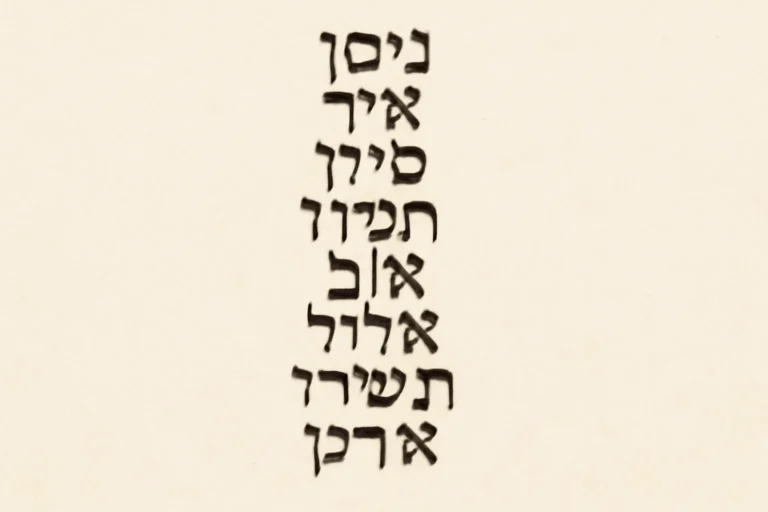
Yes. 5784 is a leap year in the Hebrew calendar. In the Hebrew leap-year cycle, there are 13 months instead of 12, because an extra month—Adar I—is inserted before Adar II. This means the year contains Adar I and Adar II, followed by Nisan, Iyar, Sivan, Tammuz, Av, Elul, and the rest of the months. Leap years occur seven times in a 19-year cycle, and the placement of Adar II (the second Adar) moves certain holidays to different months compared to non-leap years.
Because 5784 is a leap year, the Hebrew calendar for this year includes:
Thirteen months rather than twelve, to align lunar months with the solar year.
Adar I and Adar II (with Purim typically celebrated in Adar II).
Adjustments to the length of months like Cheshvan and Kislev to preserve the overall cycle and ensure holidays land on appropriate weekdays per Dehiyyot (postponement rules).
Understanding that 5784 is a leap year helps explain why the calendar feels a little longer and why certain holidays appear in different months than they would in a common year. For families and communities, the leap-year structure matters for planning, synagogue schedules, and agricultural traditions that still influence ritual practice.
How the Hebrew calendar is constructed and how 5784 fits in
The Hebrew calendar is a lunisolar calendar, meaning it tracks lunar months while keeping the solar year in reasonable alignment so that holidays stay in their proper seasons. The calendar uses a 19-year cycle in which seven of the years are leap years (with an extra month). This cycle ensures that major holidays like Passover in the spring and Sukkot in the fall occur in the appropriate seasons. The leap years are typically the 3rd, 6th, 8th, 11th, 14th, 17th, and 19th years of the cycle.
Within each year, the months follow a fixed order, with a few important points of variation:
The sequence begins in the month of Tishrei, the time of Rosh Hashanah, and includes the High Holiday season, followed by the three pilgrimage festivals later in the year.
In leap years, the month Adar I precedes Adar II.
The months themselves vary in length: most are either 29 or 30 days, and the cycle of months is adjusted to keep holidays in their correct seasons.
Postponement rules (Dehiyyot) can shift the weekday on which Yom Tov begins or ends, ensuring that certain holidays do not fall on certain weekdays for logistical and ritual reasons.
In practice, this means that 5784 spans a range from the late summer of 2023 to the fall of 2024, with Rosh Hashanah opening the year and the following holidays shaping the rhythm of life in Jewish communities around the world.
Dates and mapping to the Gregorian calendar for 5784
The Hebrew year 5784 began in the fall of 2023 and ended in the fall of 2024. The following subsections provide approximate Gregorian mappings for major milestones within this year. Exact dates can vary by community depending on local observance and the sighting of the new moon, but the general frame is well established.
Key seasonal milestones within 5784
Rosh Hashanah 5784 — began in the evening of Friday, September 15, 2023, and continued through the two-day observance through the night of Sunday, September 17, 2023, in many communities.
Yom Kippur 5784 — observed on the evening of Sunday, September 24, 2023, through the evening of Monday, September 25, 2023.
Sukkot 5784 — began at sunset on Friday, September 29, 2023, and continued through the following days, culminating with Simchat Torah in early October 2023.
Shemini Atzeret and Simchat Torah — observed as the concluding moments of Sukkot in early October 2023 (observed on the evenings and days around October 6–8, depending on community).
Hanukkah (in Kislev) — falls in the Kislev month, typically in December; the exact dates shift slightly by year but generally occur in December 2023 for 5784.
Passover (Pesach) 5784 — occurs in spring 2024, with the first Seder on the evening of April 21–22, 2024, and the festival running through April 29–30, 2024 depending on location (Israel vs. diaspora).
Shavuot 5784 — occurs in late spring/early summer 2024, typically around the first week of June 2024 (the holiday often begins the evening before the day observed).
For readers seeking precise local dates, consult a trusted Jewish calendar or a synagogue’s yearly calendar, which will show the exact candlelighting times and the observed days in your community. The above dates provide a framework for understanding how 5784 unfolds across the Gregorian year 2023–2024.
How 5784 is counted in practice: An explanation of the numbering
The year 5784 embodies a conventional counting method in the Jewish tradition, combining a centuries-old reckoning with modern-day observation. The practice of numbering the years from Creation (Anno Mundi) is a long-standing feature of Jewish timekeeping. In common terms:
The prefix “ה’” (hei) in the Hebrew year notation signals the thousands—here, the start of the fifth millennium of Jewish history since Creation.
The trailing digits (784) encode the remaining portion of the year. When this is combined with the thousands, the full year reads as 5784.
In writing, you may see the year abbreviated as ה’תשע”ד (hei-tav-shin-ayin-dalet) or simply as 5784 in many contexts.
Because the Hebrew calendar is lunisolar, the year 5784 does not align exactly with any single Gregorian year. Instead, it overlaps two (or parts of two) secular years: it begins in the autumn of 2023 and ends in the autumn of 2024, with the first and last days of the year often differing in the way they are observed by communities around the world.
Practical implications for communities and daily life in 5784
A leap-year cycle like 5784 shapes several practical aspects of Jewish life. For families, synagogues, schools, and community organizations, the addition of Adar I and Adar II has ripple effects:
Holiday timing: The presence of Adar I and Adar II shifts the calendar for Purim and other holiday-related observances compared with non-leap years.
Shabbat and festival planning: Weekly Shabbat times, as well as the timing of festivals, are coordinated with the calendar in mind, which can affect daily schedules and travel plans.
Reading cycles and liturgy: The diaspora and Israel may adopt the same liturgical cycle for Torah readings, but some readings and customs differ by community and by the year type (leap vs. non-leap).
Educational calendars: Jewish schools and yeshivot often align their curricula with the year’s cycle of holidays, focusing on themes that appear or reappear in a leap year’s unique configuration.
In addition to religious observance, the year 5784 intersects with cultural and social rhythms in Jewish communities. Holiday seasons, family gatherings around Shabbat and festivals, and community-wide events all follow the calendar’s rhythm. For many families, the leap-year structure sometimes means planning for a larger Adar month, which can affect Purim shaloch manos (gift-giving), Purim readings, and other communal practices.
Glossary of key terms and concepts linked to 5784
Anno Mundi (AM) – the Latin phrase embedded in the Hebrew calendar that denotes counting from Creation; the Hebrew year 5784 reflects year 5784 AM in Jewish reckoning.
Hebrew year vs Gregorian year – the Hebrew year is based on the lunisolar calendar; the Gregorian year is the solar calendar commonly used in civil life.
Adar I / Adar II – in leap years, the month of Adar is split into two months: Adar I (earlier) and Adar II (later), with Purim typically celebrated in Adar II.
Tishrei – the first month of the civil year in the Hebrew calendar, home to Rosh Hashanah and the Ten Days of Repentance leading to Yom Kippur.
Dehiyyot – postponement rules that determine the earliest possible start date for certain holidays to avoid certain weekdays, shaping when holidays occur within the week.
Molad – the mean lunar conjunction used in calendar calculations; the molad and postponement rules are part of how the calendar is constructed.
Cheshvan and Kislev – two months in the Hebrew calendar whose lengths can vary from year to year, affecting the overall length of the year.
What does 5784 mean for personal and family planning?
For individuals and families, the year 5784 has practical significance when scheduling life events, travel, and family ceremonies. Given that this is a leap year, many households plan around the two Adars:
The presence of Adar II often means that Purim occurs later in the winter–early spring window than it would in a non-leap year, affecting party-planning, food shopping for festive treats, and charitable giving tied to the holiday.
The extended calendar year can influence school calendars, synagogue programming, and community events, particularly in places with coordinated, multi-year planning.
As with every Hebrew year, keeping track of the annual cycle—Rosh Hashanah, Yom Kippur, Sukkot, Shemini Atzeret/Simchat Torah, Passover, Shavuot—helps families anticipate moments of rest, study, and celebration.
Users who follow Jewish life cycle events closely can benefit from noting the key turning points of the year: the fall High Holidays, the spring festival of Passover, and the early summer festival of Shavuot. In 5784, those turning points sit within a leap-year frame that adds an extra layer of rhythm to the year’s cadence.
How to convert or read the year 5784 in everyday life
If you are new to reading the Hebrew calendar, here are practical tips for understanding and using the year 5784 in daily life:
Recognize that 5784 refers to the Hebrew year, which runs from Rosh Hashanah in the fall of 2023 to the eve of Rosh Hashanah in fall 2024.
Remember that this is a leap year, so a 13-month cycle includes Adar I and Adar II.
When planning trips, weddings, or other events, check with a local calendar for the exact holiday start times (which can shift by community) and candlelighting times.
Use a trusted Hebrew-Gregorian calendar converter if you need to convert specific dates for a given year or for a fixed event date.
The ability to read the year 5784 in Hebrew letters—often written as ה’תשע״ד—can be useful in readings, bulletins, or community newsletters. Being aware of the leap-year status and the Adar II placement helps when planning Purim-centered activities or charitable campaigns tied to the month of Adar II.
Frequently asked questions about the year 5784
Is 5784 the current year in all Jewish communities?
In 5784, the calendar shows a leap-year configuration, and most communities, including those in the Diaspora and in Israel, observe the same general rhythm. Local differences may exist in candlelighting times, holiday observances, and customs, but the overall framework—Rosh Hashanah to Rosh Hashanah—remains consistent.
Why do the dates of holidays differ from year to year?
The Hebrew calendar is designed to re-align with the agricultural year and the seasons. Because the months follow lunar cycles and the year must stay roughly solar in length, holidays drift through the Gregorian calendar over time. Leap years, month lengths, and postponement rules contribute to this variation. The main effect for 5784 is the inclusion of Adar I and Adar II, which shifts the scheduling of Purim and other month-bound observances compared to common years.
How can I stay informed about 5784’s observances in my community?
The best sources are your local synagogue calendar, community bulletins, and reliable online calendars that publish the Hebrew calendar year with the current dates. If you’re traveling or visiting a different country, check local practice and daylight-savings rules for candlelighting times and festival observances. Many communities publish annual calendars well in advance, including the exact times for candle-lighting, the start and end times of holidays, and special services.
Putting 5784 in a broader context
Beyond the practical dates, the year 5784 sits within a long lineage of Jewish timekeeping that blends continuity with change. The calendar’s structure—months that follow lunar cycles, the annual cycle of holidays, the insertion of Adar I in leap years—embodies both tradition and adaptation. For scholars and students of Jewish history, 5784 offers a concrete example of how time is measured, how communities arrange their rituals, and how the calendar’s rules shape daily life.
For those curious about the broader religious and cultural landscape, 5784 represents a moment in which a leap-year rhythm coexists with a normal year’s pattern in the 19-year cycle. This configuration has implications for the pace of study, the timing of communal events, and the way families connect around the table for Shabbat and holidays. The interplay of ritual timing, calendar mechanics, and spiritual intention gives 5784 its distinctive character within the ongoing calendar of Jewish life.
Final notes on 5784: meaning, dates, and daily life
In sum, the Hebrew year 5784 is a leap year that broadens the monthly tapestry with Adar I and Adar II, and it situates the year within the fall 2023 to fall 2024 span in the Gregorian calendar. The year’s meaning is not only a numerical label but a living framework for the cycle of holidays, the rhythm of study, and the pattern of family life that Jewish communities observe each year.
As with any year in the Jewish calendar, the specifics of 5784—its exact holiday dates for a given locale, the precise candlelighting times, and the way the leap-year rules play out in practice—will be shaped by local custom and by official calendar publications. By understanding the core ideas outlined above, readers can better appreciate how 5784 fits into the broader arc of Jewish history and daily life, and how to plan the year with awareness of the holidays, the seasonal timing, and the communal rhythms that define this milestone in the Jewish timeline.