Timeline of Jesus’ Life: A Comprehensive Chronological Guide
Understanding the timeline of Jesus’ life involves weaving together gospel narratives, historical context, and theological interpretation. This life timeline of Christ is presented as a structured chronology that surveys major milestones, settings, and messages from birth through legacy. Readers will encounter both the gospel-based accounts and the broader historical framework that shapes how scholars and believers describe the timeline of Jesus’ life.
The chronology of Jesus’ years begins within a wider context of first‑century Judaism, Roman rule, and the anticipation of a Messiah. Before the events of his public ministry, several factors condition how the timeline unfolds: genealogical lineage as presented in tradition, the religious calendar that frames his narrative, and the social networks that would carry his message. This opening section outlines the ancient roots and the ways in which eras intersect to form a backdrop for the life of Jesus.
Birth Narratives and Early Years
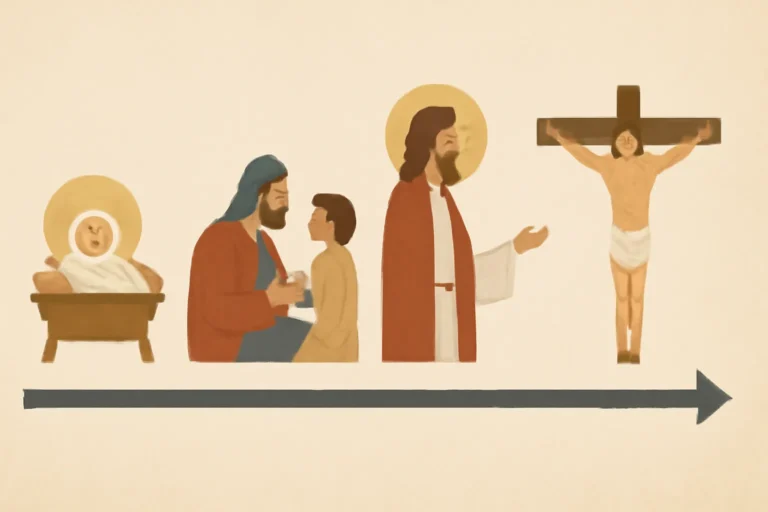
Many readers locate the earliest moments of the life timeline of Jesus within birth narratives that have resonated through art, devotion, and scholarship. The events surrounding birth in Bethlehem and the subsequent childhood story are recorded in gospel sources, but also discussed in the context of historical markers and cultural expectations. Below is a composite view of what the birth and infancy period represents within the broader timeline of Jesus’ life.
Birth in Bethlehem and Early Moments
c. 4–6 BCE is a commonly cited range for the birth year of Jesus, inferred from the reign of Herod the Great and related timelines.
The nativity story centers on Bethlehem, with themes of humility, divinity, and fulfillment of prophecy.
Family circumstances, including a journey to Nazareth and early exposure to Jewish law, set the stage for a youth marked by reverence and learning.
Childhood, Growth, and Hidden Years
Little is documented about Jesus’ childhood in canonical texts, but the tradition notes formative years in Nazareth where he “grew in wisdom and stature.”
Within the timeline of Jesus’ life, the period of silent years or “hidden years” is often referenced as a time of ordinary development before public ministry begins.
As the narrative moves toward manhood, questions about identity, vocation, and service begin to surface—often seen in the transition from quiet family life to a public calling.
Public Ministry: Announcement, Formation, and Early Circles
The ministry of Jesus marks a decisive turn in the life chronology of Jesus. It is during these years that he travels, teaches, gathers followers, and begins to challenge established norms. The sequence below follows the commonly accepted arc of his public life, while acknowledging divergent scholarly estimates on exact dates.
Announced by John the Baptist
The forerunner John the Baptist proclaims a coming baptism of repentance and identifies Jesus as the one who will baptize with the Holy Spirit.
Jesus’ baptism in the Jordan River is often treated as a pivotal moment, signaling entry into public ministry and the reception of divine affirmation.
The encounter with the Spirit’s descent and the Father’s voice provides a foundational theme for the remainder of the chronology of Jesus’ life.
Call of Disciples and Early Galilean Ministry
In the countryside of Galilee, Jesus calls a group of fishermen and other followers to become his disciples, forming a core community for mission.
Parables, teachings, and healings begin to populate the narrative, with key locations including towns around the Sea of Galilee, such as Capernaum, Bethsaida, and the surrounding rural regions.
The timeline of Jesus’ ministry expands as crowds grow, questions arise about authority, and rival leaders begin to scrutinize his claims.
Locations, Mission Strategy, and the Structure of the Journey
Throughout the narrative, Jesus travels between villages and synagogues, emphasizing accessible teaching and action in everyday life.
Important themes include the Kingdom of God, moral clarity, and inclusive invitations that challenge prevailing social and religious norms.
Discipleship involves both direct teaching and demonstrations of power through miracles, which together shape the trajectory of the life timeline.
Teachings, Parables, and the Core Messages
Among the most enduring aspects of the Jesus life chronology are his teachings and the distinctive use of parables. These elements are not merely anecdotes; they function as a pedagogical system that clarifies ethics, spirituality, and the meaning of the Kingdom he proclaimed.
Core Messages and Ethical Teachings
Love for God and neighbor stands at the center of his ethic, expressed in a range of commands, stories, and dialogues.
The radical invitation to mercy, forgiveness, and transformation challenges listeners to reframe power, wealth, and social status.
Compassion becomes a practical practice—healing the sick, feeding the hungry, and engaging with marginalized voices in every community he touches.
Parables as a Bridge Between Heaven and Earth
Parables like the Sower, the Mustard Seed, and the Good Samaritan use everyday imagery to reveal deep spiritual truths.
They are a bridge between concrete experience and abstract meaning, inviting audiences to interpret and apply the lessons to their own lives.
In the broader timeline of Jesus’ life, these parables function as a steady voice guiding followers toward a transformative vision of reality.
Miracles and Signs as Confirmation
Miracles serve as signs that the divine presence is at work in the world, often accompanying proclamation and confrontation with religious authorities.
Healings, exorcisms, nature demonstrations, and feeds are presented within a framework that emphasizes compassion and restoration.
Each miracle contributes to the developing narrative arc of the life timeline by elevating Jesus’ authority and revealing his mission.
The Journey Toward Jerusalem: Prophecy, Conflict, and the Final Passover
As the chronology of Jesus’ life progresses, the journey moves steadily toward Jerusalem, where destiny intersects with political tension, religious conflict, and prophetic fulfillment. This section traces the arc from itinerant ministry to the climactic events surrounding Holy Week.
Predictions and Sign-Types
Jesus forecasts his own suffering and resurrection, delivering a message that challenges followers to understand leadership through service and sacrifice.
The predictions function as a thematic hinge in the narrative, guiding readers toward the paradox of victory through apparent defeat.
Public Encounters, Authority Debates, and the Final Week
Jesus engages with religious leaders over strict canonical interpretations, while teaching with renewed intensity about the inclusivity of God’s reign.
The final days in Jerusalem bring a sequence of councils, confrontations, and rapid shifts in public sentiment that shape the last chapter of the life timeline.
Crucifixion, Death, and Burial
The crucifixion stands as a central pivot in the life chronology of Christ, provoking a wide range of theological reflections about atonement, justice, and divine love. The events surrounding the arrest, trial, and execution on a hill outside the city walls form a sorrowful yet pivotal moment in the timeline.
Arrest, Trial, and the Public Trial Narrative
Jesus is seized in the Garden of Gethsemane, a moment of deep agony, solidarity with his followers, and fidelity to his mission.
The trial narratives emphasize charges of blasphemy and claims about kingship, with the political dynamics of the era complicating the proceedings.
Crucifixion, Burial, and the Sabbath Silence
The crucifixion is carried out under Roman authority, and the symbolism of the cross becomes a focal point for interpretation across traditions.
Jesus’ body is laid in a new tomb, fulfilling certain prophetic expectations about burial and the exposure of the dead to social restraints.
The pause in the timeline, often described as a sacred Sabbath, transitions into a narrative of hope that prefigures the next major phase.
Resurrection, Appearances, and Ascension
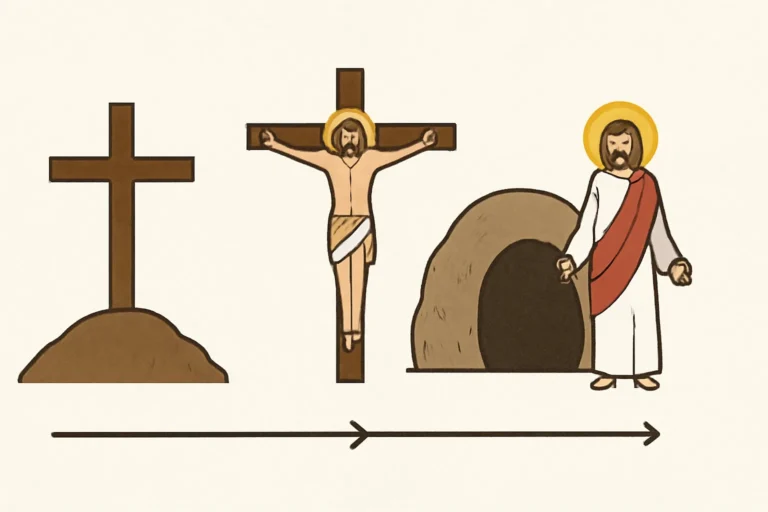
The events following the crucifixion complete a critical arc in the Jesus life chronology. The resurrection, witnessed appearances, and the ascension into heaven become the theological framework for the ongoing mission and the founding of the early Christian faith. This section surveys these climactic moments and their implications for both theology and history.
Early morning discoveries of the empty tomb become a turning point that signals that the timeline of Jesus’ life has moved beyond the grave.
Women followers and a cohort of disciples witness the empty tomb, and their testimonies catalyze a broader proclamation of life after death.
Appearances and Commissioning
Post-resurrection appearances establish continuity with the living Jesus, reinforcing the claim that the divine purpose persists beyond death.
Jesus commissions his followers to spread the message, promising empowerment by the Spirit and guiding them into a renewed sense of mission.
Ascension and Ongoing Mission
The Ascension marks a transition from visible presence to ongoing spiritual leadership, shaping Christian expectations about ministry and the eventual return.
The life timeline of Jesus thus expands into a continuing narrative: a risen Lord guiding a global movement.
Legacy, Impact, and Theological Intersections
Even after the visible end of the earthly life, the influence of Jesus persists in religious practice, literature, art, law, and ethics. The timeline of Jesus’ life as interpreted by different faith communities reveals a spectrum of emphases—from salvific work and divine identity to social justice and ethical instruction. This section surveys some of the major themes that keep the story alive in history and memory.
Christological understandings of who Jesus is, as Son, Messiah, and divine figure, shape doctrinal debates that span centuries and regions.
The ethical teachings continue to inform moral discussions about forgiveness, mercy, peacemaking, and the treatment of the marginalized.
The historical method applied to this life timeline blends archaeology, textual criticism, and cultural analysis to approximate the sequence of events with responsible humility.
Timeline Line-by-Line Snapshot
For readers who prefer a concise, date-driven outline, the following chronology sketch condenses major milestones into a year-by-year framework. It is important to note that dating varies among scholars and traditions; the purpose here is to present a coherent, readable sequence that captures the essential epochs of Jesus’ life.
c. 4–6 BCE — Birth of Jesus in Bethlehem; early childhood in Nazareth begins; genealogical and theological signifiers emerge in tradition.
c. 1 BCE–AD 6 — A period of growth and education in a traditional Jewish setting, with whispered expectations of a coming Messiah.
AD 27–29 — Baptism by John the Baptist; initiation of public ministry; the Spirit’s descent is described as a divine endorsement.
AD 29–31 — Galilean ministry intensifies; teaching in synagogues, healings, and parables become central to the message.
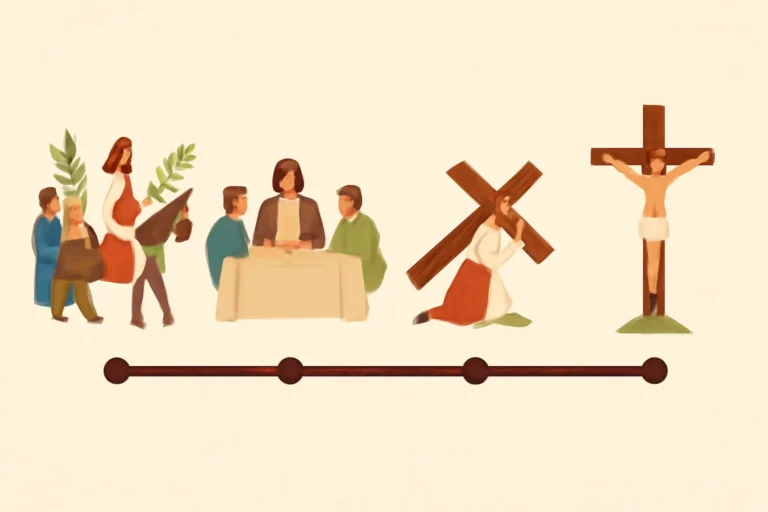
AD 30–33 — Journey toward Jerusalem; triumphal entry is followed by escalating conflicts with religious authorities and political authorities.
AD 31–33 — Last week in Jerusalem, the Last Supper, arrest, and trial; crucifixion under Roman authority; burial in a new tomb.
AD 33 or later — Resurrection as commemorated by followers; post-resurrection appearances and commission to the disciples.
AD early decades — Transformation of the Apostolic Church; missionary expansion, tradition-building, and the shaping of early Christian doctrine.
Variations in the Timeline of Jesus’ Life Across Traditions
Different Christian traditions emphasize distinct aspects of the timeline of Jesus’ life. Some place heavier emphasis on the incarnation and divinity, others foreground the ethical teachings or the perspective of the early church. Non-Christian historical scholarship tends to focus on the historical setting, the political climate, and the social dynamics of First-Century Judea and the surrounding regions. Across these variations, the following core milestones remain central to most renderings of the Life Timeline of Christ:
The birth and infancy narratives that situate Jesus within divine and human dimensions.
The baptism and initiation into public ministry, often framed as a turning point in the narrative arc.
The range of teachings, miracles, and parables that reveal the kingdom-oriented message.
The journey to Jerusalem and the events of Holy Week, reflecting the tension between prophetic mission and political power.
The crucifixion as a central event tied to atonement concepts and the breadth of Christian theology, followed by resurrection and ascension as the opening to a new phase of mission.
To fully appreciate the timeline of Jesus’ life, it helps to place the gospel narratives within historical inquiry. This section highlights how historians, theologians, and scholars approach the chronology with varying methodologies, sources, and interpretive frameworks.
Historical Jesus research examines what can be known about Jesus outside theological interpretation, focusing on verifiable data and the social-historical setting of Roman Judea.
Gospel documents are evaluated for their literary genres, purposes, and chronological cues, recognizing that some events are shaped by faith communities seeking to preserve meaning.
Understanding the chronology of Jesus’ life thus becomes an exercise in balancing historical probability, textual interpretation, and theological significance.
As readers navigate the timeline of Jesus’ life, certain names and terms recur as anchors in the narrative. Here is a brief glossary that can help readers track the chronology more clearly:
Messiah/Christ — The title associated with the anointed deliverer within Jewish expectation, central to Jesus’ self-understanding in various gospel accounts.
Synagogue — A place of teaching and worship where Jesus often appears during his ministry.
Kingdom of God — A motif that frames much of Jesus’ preaching about God’s rule and its implications for life in the present age.
Last Supper — The final meal Jesus shares with his disciples before his arrest, rich with covenantal symbolism and ritual memory.
Ascension — The event in which Jesus is believed to depart from earth to heaven, inaugurating ongoing spiritual leadership for the church.
Visualization Aids for the Timeline
For educators, students, and curious readers, several visualization approaches can illuminate the narrative clearly. Here are some methods commonly used to present the life timeline of Jesus in accessible formats:
Timeline charts showing BCE/CE dates, with markers for key events like birth, baptism, ministry milestones, crucifixion, and resurrection.
Maps tracing the geographic arc of Jesus’ travels—from Nazareth to the Jordan River, through Galilean towns, and into Jerusalem.
Chronological summaries paired with primary source excerpts for quick reference and cross-cultural study.
Frequently Encountered Questions About the Timeline
Scholars, students, and lay readers often wonder about the specifics of dating and sequence. Here are some common questions and brief clarifications to help organize the understanding of the timeline of Jesus’ life.
Q: How precise are the dates associated with Jesus’ birth and early years? A: Dates are approximate, with most scholars favoring a birth in the range of 4–6 BCE, but ancient dating is not exact with contemporary standards.
Q: Why do gospel accounts differ on certain details? A: The four canonical gospels were written with different purposes, audiences, and theological aims, which can lead to variations in chronology and emphasis.
Q: How do historians treat the “silent years” of Jesus’ youth? A: Because the historical record is sparse for that period, those years are often summarized as formative while acknowledging limited direct evidence.
Connecting the Timeline to Faith Practice
While the historical timeline offers a framework for understanding the life of Jesus, many readers also explore how this chronology translates into faith practice and daily life. The narrative arc—from birth through resurrection—provides a story of vocation, challenge, and renewal that continues to inspire sermons, liturgy, and personal devotion. In this sense, the timeline of Jesus’ life is not only a historical outline but also a living tradition that informs how communities interpret love, justice, and hope in the modern world.
The journey outlined in this comprehensive guide to the life timeline of Jesus presents a coherent path through birth, ministry, conflict, death, and resurrection, followed by an enduring legacy. By integrating gospel narratives with historical context, readers gain a richer sense of how the events of Jesus’ life are understood across communities and eras. Whether you study the chronology for academic reasons, for devotional growth, or for cultural literacy, the timeline offers a map that invites reflection on how first‑century events became a global story that continues to shape ethics, art, law, and spirituality.