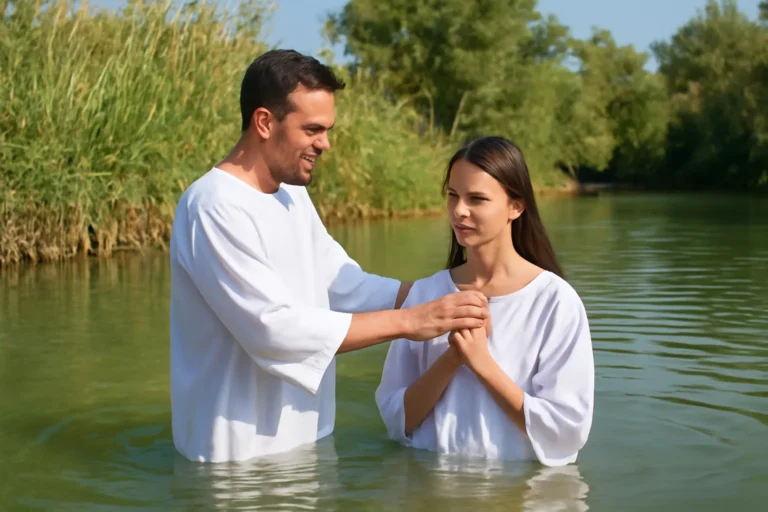
In biblical symbolism, the river often signifies divine life, blessing, and God's presence, but also judgment and cleansing. It embodies the flow of life from God and His covenant with His people.
📖 Key Biblical Occurrences
Reference
Context
Symbolic Meaning
Genesis 2:10
The river watering the Garden of Eden, splitting into four heads
Represents divine provision and the abundance of paradise.
Revelation 22:1
The river flowing from the throne of God and the Lamb in the New Jerusalem
Symbolizes eternal life, divine purity, and God’s restorative presence.
📜 Old Testament Usage
Rivers in the Old Testament often symbolize God's provision, blessing, and covenant. The Euphrates and Nile exemplify divine authority and fertility. Rivers like the Jordan signify transition, judgment, and the fulfillment of God's promises, such as the Israelites crossing into the Promised Land. In poetic texts, rivers evoke the sustenance and life that flow from God's holiness, serving as metaphors for spiritual nourishment and divine blessing. The river's role in cleansing and covenant renewal is prominent in prophetic literature, highlighting God's sovereignty over nature and His people’s fortunes.
✝️ New Testament Usage
In the New Testament, rivers take on deeper meaning as symbols of spiritual renewal, cleansing, and eternal life. The River of Life in Revelation illustrates the fulfillment of God's promise of universal salvation and divine presence. Jesus' baptism in the Jordan emphasizes themes of purification, new beginnings, and identification with God's people. Additionally, rivers are used metaphorically in teachings about the abundance of spiritual gifts and the Holy Spirit's flow into believers, underscoring themes of grace, regeneration, and hope for eternity.
Initially representing physical life, fertility, and divine blessing in Genesis, the river evolves into a symbol of spiritual renewal and divine justice in prophetic texts. Through Christ's ministry in the Gospels, rivers symbolize cleansing and covenantal commitment. In Revelation, the river becomes emblematic of ultimate salvation, eternal life, and the consummation of God's kingdom. Over time, the river's symbolism shifts from natural to spiritual, encapsulating God's ongoing relationship with humanity and the promise of eternal life beyond physical existence.
🏛️ Ancient Near East Context
Ancient Near Eastern cultures viewed rivers as sacred conduits of divine power and life. The Egyptians celebrated the Nile as a godly giver of fertility, while Babylon regarded rivers as symbols of cosmic order. Greek and Roman traditions associated rivers with gods and mythic boundaries. These cultures saw rivers as liminal spaces where divine and human worlds intersected, emphasizing their significance in cosmology, religious rituals, and kingship, paralleling biblical symbolisms of divine blessing and judgment.
✡️ Jewish Interpretation
Jewish rabbinic literature often interprets rivers as symbols of divine abundance, Torah, and spiritual renewal. The waters of the Red Sea signify deliverance from bondage, while the Jordan represents transition into God's promise. Mystical traditions see rivers as channels of divine grace, connecting heaven and earth. The flowing waters symbolize God's ongoing mercy and His covenant with Israel, emphasizing purity, renewal, and divine nourishment for the soul.
✝️ Christian Interpretation
Christian tradition views rivers as symbols of baptism, purification, and the Holy Spirit’s flow. The River of Life in Revelation signifies eternal salvation and divine fellowship. Church Fathers like Augustine connected the river with grace that sustains believers, and the Jordan references Christ's baptism, highlighting new life in Christ. The river’s flowing water embodies the ongoing work of the Holy Spirit, spiritual cleansing, and the promise of eternal life in communion with God.
The river prefigures Christ as the source of spiritual life, with His sacrifice flowing like a divine stream that purifies and renews. The River of Life symbolizes the Church as a conduit of divine grace, drawing believers into eternal communion. The crossing of the Jordan foreshadows baptism and entry into spiritual promised land, connecting the natural symbol with Christ's redemptive work and the ongoing life of the church.
⛪ In Worship & Liturgy
Rivers symbolize purity and renewal in Christian liturgy, often invoked in baptismal rites. Architectural features like baptismal fonts and fonts in Eastern Orthodox and Catholic churches evoke rivers of cleansing. Psalms and hymns celebrate divine streams that refresh the soul, and church art often depicts flowing waters as divine blessing. Rituals invoking water symbolize renewal, spiritual growth, and God’s divine presence among His people.
🌍 Modern Cultural Impact
Rivers inspired countless works of art, literature, and music, symbolizing life, renewal, and divine grace. The image of flowing water appears in hymns, novels, and films as emblematic of hope and spiritual awakening. The biblical river motif influences contemporary spiritual retreats, environmental movements emphasizing water protection, and popular symbolism in media portraying renewal and divine blessing.
⚠️ Common Misconceptions
Misconception: Rivers in the Bible only symbolize physical life. Correction: They also represent spiritual renewal, judgment, and God’s divine presence.
Misconception: Rivers are solely natural elements with no deeper meaning. Correction: They are rich symbols of divine blessing, covenant, and eternity in biblical theology.
❓ Frequently Asked Questions
What does the river symbolize in the Bible?
The river represents divine life, blessing, renewal, judgment, and God’s presence, evolving from physical water to spiritual significance throughout Scripture.
Why is the Jordan River significant?
The Jordan symbolizes transition, covenant, and new beginnings, notably in Israel’s entry into the Promised Land and in Jesus’ baptism, marking spiritual renewal.
What is the meaning of the River of Life in Revelation?
It signifies eternal life, divine blessing, and the ultimate fulfillment of God’s promises in the New Jerusalem.
How do rivers relate to baptism in Christian tradition?
Rivers symbolize cleansing and rebirth, emphasizing the spiritual renewal and initiation into the community of faith through baptism.
✨ Did You Know?
Ancient archaeological evidence shows that river symbols in biblical sites often align with ritualistic practices of water purification, suggesting a deep-rooted cultural understanding of water as a sacred element across civilizations, not just in biblical contexts.