Mormons Baptising the Dead: History, Beliefs, and Practices Explained
Among the distinctive practices of the Latter-day Saints, or Mormons, baptism for the dead stands out as a highly debated and deeply meaningful ordinance. This article explains what the practice is, how it developed historically, what believers think it accomplishes, and how it is carried out today—along with common questions, criticisms, and the broader religious and cultural context. The focus here is on careful descriptions of beliefs and procedures, not on promoting a particular standpoint.
The concept of performing certain ordinances for those who have died emerged in the early history of the Latter-day Saint movement. Baptism for the dead is often described as a vicarious rite designed to offer deceased persons the opportunity to accept or reject the gospel in the afterlife. The idea rests on the belief that baptism is a gateway ordinance and a necessary step in the path toward exaltation for those who did not receive the earthly privilege of baptism. In the 1840s, as the church outgrew its early centers in the United States, leaders reflected on the possibility that the living could act on behalf of others who had died. This practice was framed as a way to honor the agency of those individuals while still providing an avenue for posthumous spiritual progression.
Historians note that the scriptural justification for such proxy ordnance has long included references to baptism for the dead in the Christian tradition, particularly in the apostle Paul’s mention of the practice in 1 Corinthians 15:29. While Mormons interpret this and other passages within a unique restorationist framework, the late 19th century and early 20th century saw a crystallization of the practice within the temple rites that would come to define modern Latter-day Saint authority and worship. In the Nauvoo era, temple-related rites began taking formal shape, and the theology surrounding baptism for the dead was intertwined with the broader program of temple ordinances that would later become central to the church’s identity.
From Nauvoo to global expansion
In the city of Nauvoo, Illinois, the tradition took on a visible form as temple ordinances—baptism among them—were integrated into religious life. After the church relocated first to the Salt Lake Valley and then to other areas, the practice did not disappear; rather, it was reinterpreted and standardized within the broader system of temple work that prioritized genealogical research and the performance of proxy ordinances. As the church grew into a global faith, the practice of baptisms for the dead was carried out not only in the temples of the United States but also in temples around the world where temple work was established. The growth of family history work—an emphasis on tracing ancestry and building family trees—became closely linked to the capacity to identify names for whom the living could perform proxy ordinances.
Theological beliefs behind baptisms for the dead
Core doctrine of salvation and agency
At the heart of the practice is a particular view of salvation and human freedom. Salvation for the dead is not a mere curiosity; it is a considered aspect of the church’s understanding of human destiny. Believers argue that the opportunity to participate in the ordinances is offered so that each person may ultimately choose for themselves whether to accept the gospel in the afterlife. This emphasis on agency—the belief that individuals retain the power to accept or reject spiritual truths—shapes how the ritual is framed. The living perform the ordinance by proxy, acting as surrogates for the deceased, with the understanding that assent or refusal lies with the dead person’s own rendition of choice in the hereafter.
Another important doctrinal thread is the assertion that the living’s participation in proxy ordinances does not override the deceased person’s personhood or autonomy. Rather, the ritual is seen as a way to extend grace and to offer the deceased the possibility that they may be benefited by a new opportunity to embrace liberty and eternal life. This perspective helps explain why many church members emphasize that the dead themselves are not automatically converted, but rather given the chance to accept or decline the ordinance in the afterlife.
A second pillar of the belief system is the notion that such ordinances require proper priesthood authority. In Latter-day Saint theology, the ability to perform temple ordinances—whether for the living or the dead—depends on holding and exercising authorized priesthood keys. Proxy baptism is thus described as a temple ordinance conducted under the authority of the priesthood, and the ritual takes place in a temple setting rather than in ordinary chapels. The temple environment is understood to provide a sanctified space in which sacred ordinances can be performed with appropriate reverence and order. This is a fundamental reason why baptisms for the dead are typically associated with temples, and why they are not conducted publicly in standard worship spaces.
Within this framework, the emphasis on names, records, and family history becomes essential. The living participants rely on genealogical data to identify the individuals for whom the ordinances will be performed. The process is thus connected to a broader historical-consciousness about family continuity, ancestry, and the sense that families endure beyond death.
Modern practice and procedures
Genealogy, names, and the preparation process
Today’s practice of baptism for the dead is inseparable from the church’s emphasis on genealogy and family history. Members are encouraged to search historical records, family trees, and public archives to discover names of ancestors who did not have the chance to receive baptism during their lifetimes. The resulting list of names becomes the focus of temple work. The church supports genealogical research through an extensive network of family-history centers, online databases, and temple resources.
Before a proxy baptism is performed, a living member studies and verifies information about the deceased person, such as their name, birth and death dates, and place of origin. Only those names that can be documented through reliable records typically move forward in the temple system. This process is not just bureaucratic; it is viewed as a sacred collaboration between the living and the dead, with an emphasis on respect for the memory of those who have passed away.
The role of the proxy and the ritual sequence
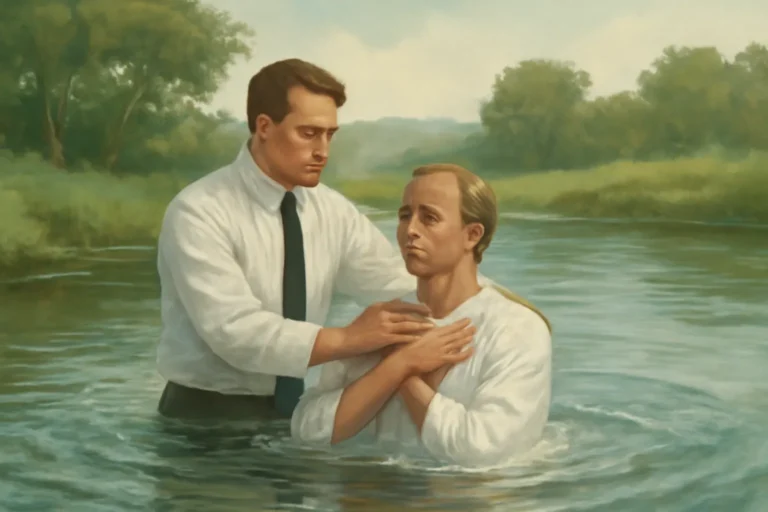
In the actual ceremony, a living participant—the proxy—stands in for the deceased and undergoes the baptismal rite on that person’s behalf. The proxy’s action is not to supplant the deceased’s will but to offer a posthumous opportunity for the ordinance to be received. The standard elements typically include a baptism by immersion, performed in a temple font, with the proxy reciting the deceased person’s name and performing the ritual prayerful sequence that accompanies baptism. The ceremony is conducted under the directing authority of the temple and its priesthood leadership, and the exact liturgical words are part of a carefully maintained sacred text.
Practically, this means that:
Names are selected from family histories or submitted by legitimate lineages and genealogical researchers.
The living participant who acts as proxy is baptized “in behalf of” the deceased, often with the phrase that the baptism is performed “for and in behalf of” the person named.
The procedure is conducted within the temple by someone who holds the appropriate priesthood authority.
The public audience is typically not present; the ceremony is a private, reverential event within the temple complex.
Temple settings, attire, and ritual atmosphere
The environment of baptism for the dead is defined by the broader temple context. Temples are considered houses of the Lord where sacred ordinances are administered to the living and the dead for the purposes of salvation and exaltation. The living participants often wear white clothing as a sign of purity and spiritual renewal, a practice that aligns symbolism with the doctrinal emphasis on new life in Christ. The temple’s font, water, and quiet spaces are purpose-built to foster a atmosphere of solemnity and focus. Matters of privacy and reverence are foregrounded, and social or ceremonial disturbances are discouraged during these rites.
Beyond the actual baptism, many faithful members emphasize the preparatory and follow-up aspects, including reflection on ancestral ties, ongoing family history work, and the later possibility of additional ordinances such as endowments and sealing of families, which are also carried out within the temple setting.
Ethical considerations, theology, and practical questions
A recurring ethical question concerns whether proxy ordinances presume consent from the deceased or impose a pathway the person did not choose in life. Church leaders consistently stress that the living participants are acting with the belief that the dead retain agency and opportunity in the afterlife. The living’s role is to offer the ordinance, not to compel conversion. In this sense, baptisms for the dead are presented as opportunities offered, rather than guarantees conferred. Consent and personal autonomy in the afterlife are framed as matters that belong to the deceased’s own spiritual process, even though the living perform the rite.
Different theological interpretations exist about what it means for someone to be “saved” or to receive the gospel in the afterlife. In the context of Mormons’ broader soteriology, the baptism for the dead is part of a longitudinal view of salvation that extends beyond mortal life. Some believers stress the possibility that posthumous ordinances are necessary steps toward eventual exaltation for those who had not embraced the gospel in life. Others emphasize that the afterlife involves ongoing judgment and progression in which baptisms for the dead may play a facilitating role but are not a guarantee of immediate or universal acceptance. The complexity of this doctrine encourages ongoing dialogue within the faith community about identity, eternity, and the purpose of temple work.
Public perception, criticism, and contemporary debate
Ethical concerns about consent and representation
Public discussions of baptisms for the dead often raise concerns about whether it is appropriate to perform religious ordinances on behalf of people who never consented or who lived in different times and cultures. Critics sometimes question whether modern readers can or should reframe these ancient or historical names within a different ethical framework. Proponents respond by highlighting the agency of the deceased as a central tenet of the doctrine and by clarifying that the living do not claim to convert the dead automatically but provide a choice that the dead can accept or reject.
Historical criticisms and cultural contexts
Historically, some observers have noted tensions between the practice and various social or political critiques of the church’s growth, especially in periods when genealogical data, immigration, and community structures intersected with evolving standards of religious freedom. Others have explored how the public’s perception of proxy baptism intersects with debates about religious authority and the role of sacred secrets and private rites in a high-profile religious movement. In contemporary discourse, scholars tend to focus on the functions of temple work within the church’s broader mission, the role of religious identity, and the ways in which the dead are imagined to participate in the living community’s religious life.
Global reach and the international dimension of temple work
Worldwide temples, genealogical networks, and cross-cultural practice
As the church expanded beyond North America, the practice of baptisms for the dead was adapted to a global context. Temples opened in diverse regions, including Latin America, Europe, Africa, and East Asia, each serving local members and international visitors alike. The genealogical networks—often termed family history work—that feed into temple ordinances are international in scope, drawing from civil records, church archives, and community genealogies. This global reach has contributed to a sense of shared purpose among Latter-day Saints around the world while also highlighting the cultural variety of the church’s membership.
In many places, lay members and church-affiliated genealogists work together to identify ancestors who might benefit from proxy ordinances. This cooperative effort illustrates how the church’s theological commitments translate into practical, daily life—rooted in genealogical curiosity, family storytelling, and the belief that families can endure beyond death through ritual acts performed in the temple.
Variations in language and practice across contexts
Terminology and semantic breadth
Within the broader conversation about this practice, you will encounter several variations of the phrase used to describe the same underlying rite. Some common forms include baptism for the dead, baptizing for the dead, proxy baptism, and baptisms by proxy. These variations reflect different linguistic emphases—some foreground the deceased, others foreground the proxy, and still others highlight the concept of authority and temple governance. Regardless of wording, the core idea remains: living members perform a baptism on behalf of someone who has died, within a temple setting, under priesthood authority, and with the intention of offering the deceased the opportunity to accept the gospel in the afterlife.
Different church communities and observers may emphasize certain aspects more than others. Some focus on the genealogical dimension—the gathering of names and family histories as a spiritual discipline. Others emphasize the theological logic of posthumous agency and the open-ended nature of salvation. Still others highlight the temporal and organizational aspects—the way temple work is scheduled, the governance of ordinances, and the way modern technology (like online genealogical databases) facilitates access to names. In all cases, the practice is framed as a meaningful exercise in faith and family continuity, rather than a mere ritual performance.
Religious education and the lived experience of members
How adherents learn about baptisms for the dead
Church publications and official websites that outline doctrine, history, and procedures.
Religious education classes and seminars focused on temple worship, genealogy, and family history.
The guidance of local leaders and temple presidencies who oversee the conduct of ordinances and ensure that procedures respect doctrine and privacy.
Personal study of scriptures, church manuals, and historical documents related to the development of temple rites.
Personal and family implications
For many members, baptisms for the dead intersect with everyday family life. People engage in genealogical research as a form of spiritual practice, sometimes discovering surprising or meaningful connections to ancestors. Families may gather to discuss lineage, share stories, and reflect on the continuity of family lines across generations. The practice is often presented as part of a broader commitment to building and preserving families for eternity, which is a distinctive feature of Latter-day Saint belief.
Frequently asked questions and common misconceptions
Does baptism for the dead mean the dead are forced to convert?
No. In the church’s framework, baptism for the dead is not a coercive act. It is a posthumous opportunity offered in the spirit of agency and grace. The deceased retain their own capacity to accept or refuse the ordinance in the afterlife. This nuance is central to how practitioners understand the ethics and aims of proxy ordinances.
Can any deceased person be included in proxy baptisms?
In practice, the church emphasizes that names must come from documented genealogical records and be submitted in a respectful, authorized manner. The process is designed to ensure accuracy and to avoid amplifying the ordinance for individuals who are not part of a recognized genealogical line or for whom consent cannot reasonably be considered.
What about controversy or opposition from other faiths?
Public conversation about baptisms for the dead has included significant criticism from various religious groups. Some opponents worry about potential ethical concerns, others about theological differences. Proponents respond by pointing to the distinct religious framework of the Latter-day Saint tradition, its emphasis on agency, and the belief that temple work is carried out in a context of reverence, shared memory, and religious responsibility. The dialogue around these issues continues in both religious and secular settings, reflecting broader questions about how traditions handle death, memory, and posthumous spiritual possibilities.
Closing reflections on history, belief, and practice
The practice of baptisms for the dead—often described in various ways as baptism for the dead, baptising for the dead, or proxy baptisms—is one of the most distinctive features of Latter-day Saint religion. It embodies a particular synthesis of theology, temple worship, and genealogical dedication. The historical development from early revelations to contemporary temple practice reveals how a faith community translates ancient questions about life, death, and judgment into concrete religious actions that shape identity, community life, and personal spirituality.
For adherents, the practice represents more than a ritual alone; it is a living expression of belief in eternal families, the ongoing availability of gospel blessings, and the conviction that the dead can be offered a path to moral and spiritual progression. For observers, it invites careful examination of how a modern religious movement interprets scripture, authority, and the meaning of posthumous grace. By understanding both the historical roots and present-day realities of proxy baptism, readers can engage more thoughtfully with the complex conversation surrounding this unique practice within Mormonism.