The Old Testament, also known in Jewish tradition as the Hebrew Bible or as the Tanakh, is a foundational collection of writings that has shaped religious thought, literature, history, and moral imagination for millennia. This comprehensive overview uses the phrase Old Testament summary in its broader sense—a synthesis of its books, themes, and timeline—so readers can grasp how the parts fit together and why the whole continues to speak today. While Christian traditions typically organize the material into a single canon that begins with the Pentateuch (the first five books) and proceeds through the prophetic and wisdom writings, Jewish communities preserve a slightly different order and emphasis. Regardless of tradition, the core concerns are consistent: the creation and sustenance of life, the formation of a people, the encounters between divine revelation and human response, and the ongoing call toward justice, holiness, and hope.
This article aims to present a long, coherent outline that emphasizes notable themes—such as covenant, law, worship, prophecy, and exile and restoration—while offering a survey of the literary genres, narrative arcs, and historical horizons that together create what scholars call the Old Testament summary. For readers new to the material, the outline below provides a map of the terrain, and for seasoned readers, it highlights the threads that bind disparate books into a single, evolving story.
Canonical Framework: How the Old Testament Is Structured
Most Christians divide the Old Testament into the Law, History, Wisdom and Poetry, and the Prophets. In the Jewish tradition, these books appear in a slightly different order and grouping: Torah (the Law), Nevi’im (the Prophets), and Ketuvim (the Writings). Despite these organizational differences, the content concerns are the same: creation, law, national identity, divine instruction, and the long arc toward a hopeful future.
Torah or Pentateuch
The first five books form the core of the narrative and theological framework. They are often described as the book of origins because they tell the story from the creation of the world through the patriarchal lineage to the formation of a people at Sinai, and finally toward the early reception of divine instruction.
Genesis—Origins and early human history: creation, the fall, the flood, and the ancestors—Abraham, Isaac, and Jacob—through whom all nations are called into relationship with the living God.
Exodus—Deliverance from Egypt, the revelation at Mount Sinai, and the giving of the law that shapes worship, civil life, and social justice.
Leviticus—Priestly codes, purity laws, sacrifices, and holiness instructions that guide ritual life and community ethics.
Numbers—Wilderness wandering, census records, and the testing of faith as the people move toward the promised land.
Deuteronomy—A second retelling of the law and a covenant renewal before entering a new phase of national existence.
Historical Books
The historical books trace the emergence of Israel and Judah as political and religious communities, their leadership, missteps, and the consequences of fidelity or rebellion against the divine will.
Joshua—Conquest and settlement of the land; leadership that completes the transition from wilderness to homeland.
Judges—A cyclical pattern of apostasy, oppression, repentance, and deliverance that reveals patterns of faith across generations.
Ruth—An intimate narrative of loyalty, providence, and inclusion within the covenant community.
1–2 Samuel—The rise of monarchy, the reigns of Saul and David, and the complexities of political power, faith, and leadership.
1–2 Kings—The united and divided monarchy, the prophetic voices, and the ultimate exile of the people, culminating in the Babylonian period.
1–2 Chronicles—A retrospective retelling focused on leadership, temple worship, and priestly devotion, with a more devotional lens than the Kings narrative.
Ezra and Nehemiah—Post-exilic return, rebuilding the temple and the walls of Jerusalem, and the reestablishment of community identity.
Esther—A story of courage and providence within a foreign empire, exploring themes of identity, providence, and justice.
These books offer reflections on human experience, the nature of wisdom, and the ethical life. They are often characterized by poetry, proverbs, songs, and meditations on life’s meaning.
Psalms—A diverse collection of prayers, laments, hymns, and songs of praise that express the breadth of human emotion before God.
Proverbs—Practical and theological maxims about daily living, virtue, and the fear of the Lord as the beginning of wisdom.
Job—A profound inquiry into suffering, divine justice, and the limits of human understanding.
Ecclesiastes—A meditation on meaning, time, and the limits of earthly acumen, often concluding with a call to reverence toward the divine absent of illusions of control.
Song of Songs—A lyrical celebration of love, beauty, and human relational life within a framework of spiritual symbolism for the larger covenantal story.
Other writings—A few texts such as Job and Proverbs are sometimes grouped differently depending on tradition, but their purpose remains to illuminate wisdom, worship, and human flourishing.
Prophetic Writings
The prophetic books present messages believed to come from God through chosen messengers. They address the people’s fidelity, social justice, and the hope of future restoration, often comparing present events with God’s past acts of salvation.
Major Prophets—Isaiah, Jeremiah, Lamentations, Ezekiel, and Daniel (in many canons regarded as prophetic literature with apocalyptic angles).
Minor Prophets—The twelve shorter prophetic books, sometimes labeled as the Twelve, including Hosea, Joel, Amos, Obadiah, Jonah, Micah, Nahum, Habakkuk, Zephaniah, Haggai, Zechariah, and Malachi.
Timeline and Major Eras in the Old Testament Narrative
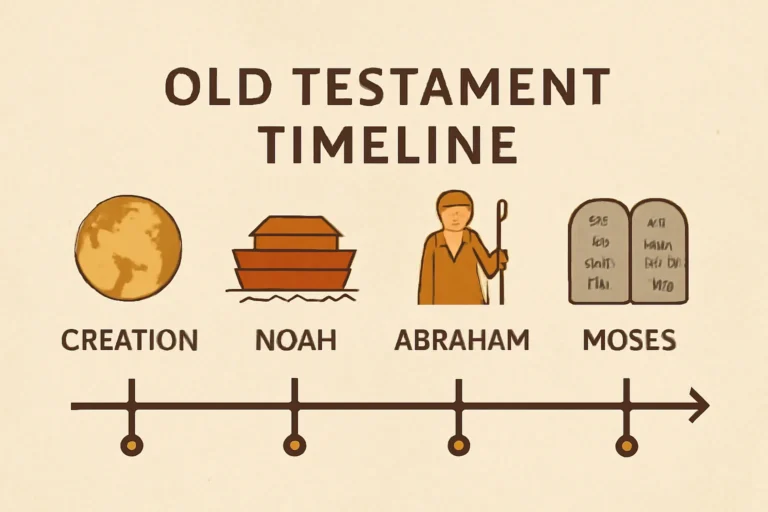
Although the timelines differ by tradition and scholarly interpretation, a broad chronology helps readers understand the progression from creation to restoration. The following overview highlights key epochs and turning points that shape the Old Testament summary.
Primordial and patriarchal era — The accounts of creation, early humanity, and the calling of the patriarchs establish the divine invitation to relationship with humanity and set the terms for a people who will bear witness to God’s ways.
Sojourn in Egypt and the Exodus — A dramatic liberation narrative that introduces the covenant at Sinai and the formation of a people with a distinctive legal and liturgical life.
Desert formation and lawgiving — The giving of the law shapes worship, civil order, justice, and communal life; the wilderness tests faith and fidelity.
Conquest and settlement in the Promised Land — The book of Joshua narrates how the community takes possession of its homeland, followed by cycles of leadership in the period of the judges.
United monarchy — The reigns of Saul, David, and Solomon create a centralized kingdom, temple worship, and a link to a national identity that carries forward into future generations.
Divided kingdom and prophetic critique — Regionally separated kingdoms face internal strife, foreign threats, and prophetic critique highlighting social justice, fidelity, and the demand for repentance.
Exile and return — The destruction of temples, exile to foreign lands, and eventual return to the land, with a renewed emphasis on worship, reform, and rebuildings, such as the temple and walls of Jerusalem.
Interplay of hope and lament — Across the prophetic and poetic literature, themes of judgment, mercy, and future restoration offer hope for a reconciled relationship with God, even amid suffering.
Major Thematic Arcs: Covenant, Law, and the Promise of Restoration
A central thread running through the Old Testament summary is the covenant—a binding relationship between God and the people that involves promises, obligations, and faithfulness. This covenant framework ties together the legal codes, the sacred rituals, and the call to social justice.
From the initial call to Abraham to the Sinai covenant and beyond, the biblical writers present a relationship built on trust, obedience, and divine deliverance. The language of covenant faithfulness contrasts with episodes of unfaithfulness, creating a dynamic dramatic arc that propels the narrative forward.
Law and Worship
The law provides a blueprint for ethical living, ritual purity, social justice, and communal worship. The sanctuary, priesthood, and festival calendar encode a way of life that sanctifies ordinary life and binds the community to God’s ordinances.
Prophecy and Hope
Prophetic books interpret current events in light of covenant faithfulness or its neglect, calling people back to justice, mercy, and humility. Prophecy also looks forward to a time when God’s justice will be perfected, and a future restoration will renew the land and the people.
The experience of exile is a turning point in the Old Testament story. It reframes identity’s core and intensifies the longing for a restoration of relationships with God, a rebuilt temple, and renewed worship.
Key Figures and Narrative Arcs
Across the Old Testament, certain figures stand as focal points for the unfolding drama of divine-human interaction. Their stories anchor the theological themes and human experiences depicted in the text.
Adam and Eve and the Fall—Exploring how sin enters creation and reshapes human capacity for relationship with God.
Noah—A model of faith in a generation marked by corruption, and the sign of the covenant through the rainbow.
Abraham, Isaac, and Jacob—The patriarchs through whom the promise of descendants and blessing is articulated and tested.
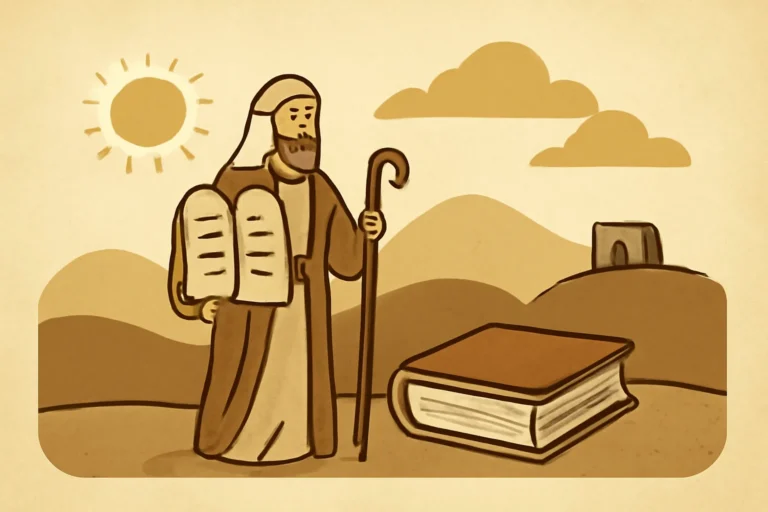
Moses—The founder of Israel’s national identity in the Sinai covenant, lawgiver, and leader in the exodus journey.
David—A king whose reign becomes a paradigm for kingship, faithfulness, penitence, and messianic expectation in later Christian and Jewish readings.
Solomon—A wise ruler whose temple-splendor reflects an era of religious and cultural flourishing, accompanied by warnings about moral and spiritual decline.
Prophets—Messengers like Isaiah, Jeremiah, Ezekiel, and the Twelve carry God’s word to kings, priests, and communities, challenging injustice while offering consolation and future hope.
Each figure embodies tests of leadership, fidelity, and trust in God. The cumulative effect is a portrait of a people learning to live within a sacred vocation, often stumbling but repeatedly called back to divine purposes.
Literary Genres and Styles in the Old Testament
The Old Testament is not a single genre but a composite library. Its diverse language, poetry, mythic narratives, historical prose, prophetic discourse, and wisdom literature produce a rich texture that invites careful reading.
Narrative history—Stories that recount personal and communal journeys, battles, migrations, and divine interventions.
Law codes—Structured ordinances that regulate worship, social justice, and daily life.
Poetic and devotional poetry—Direct expressions of praise, lament, or wisdom that distill truths about life and God’s character.
Prophetic oracles—Direct speech from a messenger challenging the status quo and outlining God’s plans for the present and future.
Wisdom literature—Reflections on human experience, ethics, and the nature of wisdom, often with a practical bent for the daily life of readers.
Apocalyptic and symbolic literature—Visions and symbols that portray cosmic conflict and ultimate consummation, emphasizing God’s sovereignty over history.
The Old Testament in Jewish and Christian Traditions
Readers from different faith communities approach the same texts with distinct interpretive lenses. Jewish interpretation emphasizes the Tanakh as a coherent, living tradition bound to covenant and law, with a focus on history, worship, and community practice. Christian readers, for their part, often read the Old Testament in light of the New Testament fulfillment motifs, seeing figures and prophecies pointing toward Jesus and the redemptive work proclaimed in the gospel.
Despite these interpretive differences, the shared material remains a major source of ethical reflection, liturgical practice, and narrative imagination. The way a community interprets prophecy, remembers the exile, or studies the covenant shapes how those communities understand identity, mission, and hope.
How to Approach Reading the Old Testament: Practical Guidance
A long, thoughtful engagement with the Old Testament summary benefits from a few practical approaches. The following ideas help readers glean meaning without getting lost in the complexity of the material.
Read with a structure in mind—Know the four major divisions (Law, History, Wisdom/Poetry, Prophets) and read a book within its genre to understand its aims.
Note recurring motifs—Covenant, land, kingship, temple, exile, and restoration recur across books, attaching narrative threads to ethical and spiritual concerns.
Pay attention to literary devices—Poetry, parallelism, imagery, and symbolism convey meaning beyond a straightforward reading of events.
Use cross-references—See how similar phrases or themes appear in different books to grasp the broader theological conversation.
Consider historical context—A sense of when a book was written, its audiences, and its political or religious circumstances clarifies its purpose.
Compare translations and traditions—Different textual traditions and translations illuminate nuances in language and meaning.
Whether you call it Old Testament narrative or simply the Hebrew Bible, the text invites ongoing study, conversation, and reflection on how faith communities have understood power, responsibility, justice, and hope across generations.
Why the Old Testament Summary Continues to Matter Today
The enduring relevance of the Old Testament comes from its ambitious questions and its insistence that life in community is inseparable from the divine call to righteousness. Its pages explore the tension between human striving and divine mercy, the limits of power and the discipline of humility, and the persistent conviction that life is oriented toward a future in which justice rules and creation is renewed.
Ethics and justice—The prophetic voices consistently challenge oppression, exploitation, and social inequity, calling for integrity in leadership and care for the vulnerable.
Identity and vocation—The narratives invite readers to understand themselves as a people called to stewardship, worship, and neighborliness within a covenant community.
Worship and ritual—The law and the prophets shape how communities approach God through sacrifice, prayer, and acts of devotion that reflect mercy and righteousness.
Hope amid adversity—Despite cycles of judgment and exile, the biblical authors maintain a forward-looking hope anchored in God’s promises.
Thus, a thorough Old Testament summary matters not only to scholars and theologians but to anyone seeking to understand the roots of Western literary traditions, moral reasoning, and the ongoing conversation about how communities live with integrity in the face of hardship.
Concluding Reflections: A Living Archive
The Old Testament, in its breadth and depth, functions as a living archive for readers who wish to study how people relate to the divine in everyday life and extraordinary moments. Its stories invite readers to recognize the paradoxes of faith—how weakness often becomes the cradle of strength, how exile can produce a longing for home, and how memory can become a guide toward ethical action. In this sense, the Old Testament summary is not a mere catalog of books; it is a map for spiritual formation, historical understanding, and ongoing conversation about what it means to live in a world shaped by sacred stories.
Whether approached as a religious document, a work of ancient literature, or a source of cultural memory, the Old Testament remains a vital and dynamic record. By guiding readers through its narratives, laws, and prophetic voices, this collection invites ongoing inquiry into how people should live with honesty, courage, and hope.