Old Testament Timeline: Key Events and Chronology Explained
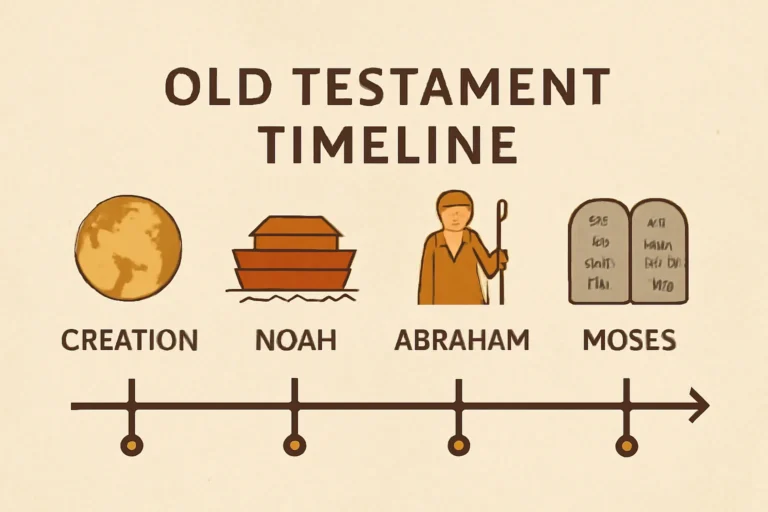
Old Testament timeline or Old Testament chronology is a framework that helps readers understand how the biblical narrative unfolds across centuries. Rather than a single, continuous narrative, the Hebrew Bible presents a sequence of eras—from creation narratives to exilic and post-exilic developments—each with its own leaders, events, and theological themes. This article surveys the major periods, key episodes, and the broad dates scholars assign to them, while highlighting how different traditions organize and interpret the same material. We will use variations of the term “old testament timeline” to keep the discussion semantically broad and to show how scholars and readers speak about the same chronology in different ways.
Overview of the timeline and its guiding questions
When approaching the Old Testament timeline, it is useful to distinguish three layers that often interact in discussions of chronology:
Historical-narrative layer: the storyline as it unfolds in the biblical books—creation, patriarchs, exodus, conquest, monarchy, exile, and restoration.
Theological layer: how the text presents God’s purposes, covenants, judgment, mercy, and promises that shape the sequence of events.
Textual and canonical layer: how different canons order, group, or emphasize certain periods and figures, affecting the sense of chronology.
Across centuries, readers have wrestled with dating and sequence. Some dates are traditional and close to the biblical geographic frame (for example, the Exodus around the 15th century BCE in some early sources), while modern scholarship often favors broader ranges, emphasizes archaeological context, and notes that some events are best understood as theological milestones rather than precise historical timestamps. In this article, you will find both conventional dates and ranges that reflect scholarly consensus and ongoing debate. Throughout, chronology is presented as a tool for understanding the flow of salvation history, not just a set of numbers.
Creation, primeval history, and the patriarchs
Primeval origins and the beginnings of time in the biblical text
The opening chapters of Genesis sketch a theological creation narrative that lays the ground for the entire biblical storyline. In this view, time begins with God as the Creator, with humanity placed in a world that is both good and unsettled by human disobedience. While not a conventional historical timeline in the modern sense, the primeval period establishes patterns—God’s initiative, humanity’s response, and cycles of blessing and judgment—that recur throughout the Old Testament cycle.
The patriarchs: Abraham, Isaac, Jacob, and Joseph
Following creation and the flood narratives, the patriarchs section centers on the calls and covenants given to Abraham, then to Isaac and Jacob (also named Israel), and finally to Joseph in Egypt. The timeline of the patriarchs is often placed in the second millennium BCE in traditional harmonizations—roughly 2000–1800 BCE in some readings—though most modern scholars discuss these figures as part of an earlier or foundational era rather than fixed, verifiable dates. The important thing for the overarching timeline is the emergence of a people chosen to be a blessing to the nations and a people defined by covenant fidelity and divine promise.
Abraham’s call and the formation of a people of faith
Migration to Canaan and the patriarchal pattern of blessings tied to obedience
The formation of households that become the seedbed for a nation
These early chapters provide a theological framework for the later episodes, especially the exploration of land, family, blessing, covenant, and the role of faith in preparing for the life of Israel as a people. The patriarchal period is commonly treated as a bridged era between primeval history and the events that unfold in Egypt and beyond.
The Exodus, Sinai, and the wilderness generation
Exodus from Egypt and the giving of the Law
Many readers recognize the Exodus as a turning point in the biblical chronology: liberation from oppression, a newly formed covenant community, and the reception of the Law at Sinai. The Exodus narrative frames Israel’s identity as a people who have been delivered by God and bound by a set of commandments and ceremonial practices. In terms of dating, traditional readings often locate the Exodus in the second millennium BCE, with some estimates around the 15th century BCE, though many scholars prefer a later window in the 13th century BCE. The important feature for the timeline is not a fixed date but the movement from bondage to covenant life and the establishment of a national community around worship and law.
The wilderness period and covenant maintenance
After receiving the Law, the Israelites wander in the wilderness for several decades. This wilderness generation serves as a litmus test for fidelity to the covenant. The narrative highlights episodes of faith, rebellion, discipline, and leadership under figures such as Moses and Joshua. Chronologically, this period is positioned between the Exodus and the entry into Canaan, often framed as a formative era where God shapes the people into a nation with a distinctive identity and loyalties.
Formation of the Tabernacle as the center of worship
Covenant stipulations and the moral, civil, and ceremonial laws
As the Israelites enter Canaan, the narrative records a combination of military campaigns, settlement, and social organization under tribal leadership. In some strands of the story, the conquest is rapid and dramatic; in others, it is more gradual and contested. The overall storyline moves from nomadic encampments to a settled, agrarian society that wrestles with the challenges of nation-building and obedience to the LORD. Chronologies for this era vary widely, with some scholars suggesting a late second millennium BCE or a transition into the early first millennium BCE for the settlement phase.
The era of the Judges
With the settlement comes the period of the Judges, charismatic leaders who deliver Israel from foreign oppression and govern in times of transition. This era is characterized by cycles of apostasy, oppression, repentance, and deliverance. The timeline here is often seen as spanning several centuries, roughly from the late Bronze Age into the early Iron Age, and culminating in the movement toward centralized leadership and a monarchy.
Localized leadership under figures such as Deborah, Gideon, Samson, and others
Recurring patterns of moral and national crisis
A shifting sense of national identity and resistance to fragmentation
The United Monarchy: Saul, David, and Solomon
The rise of a centralized monarchy
In this crucial phase of the biblical timeline, the tribes are drawn toward a united political and religious center. Saul becomes the first king, followed by David, who consolidates the kingdom, expands its borders, and establishes Jerusalem as the political and religious center. Solomon completes the consolidation, builds the First Temple, and deepens international relations and cultural production. The traditional dates place the United Monarchy roughly in the 11th to 10th centuries BCE (c. 1050–931 BCE). The era is defined by strong leadership, a durable administrative framework, and a temple-centered cult that shapes Jewish worship for generations.
Saul’s anointing and early resistance to external threats
David’s expansion of territory and the establishment of Jerusalem as capital
Solomon’s building projects, wisdom literature, and a more centralized state
This period lays the groundwork for the subsequent division of the kingdom, as the centralization of power and the temple cult become focal points of religious and political life. The legacy of the United Monarchy is a touchstone in the story of Israel’s identity and its relationship with neighboring powers.
Division, exile, and the collapse of the northern and southern kingdoms
The split into Israel and Judah
After Solomon, political and religious tensions contribute to the divided monarchy: the northern kingdom of Israel (often called Israel) and the southern kingdom of Judah. The two kingdoms endure for roughly two to three centuries, each with its own line of kings, religious reforms, and episodes of crisis. The chronology here is marked by interwoven narratives of faithfulness and rebellion, alliances and conflicts, and the rising influence of prophetic voices that critique leadership and call for covenant fidelity.
The fall of Israel and the exile of Judah
The northern kingdom is conquered by the Assyrians in the early 8th century BCE, while the southern kingdom falls to Babylon in 586 BCE. The destruction of Jerusalem and the temple marks a watershed moment in the biblical narrative and in Jewish collective memory. The exile reorganizes religious life, theological understanding, and communal identity, as the people reflect on divine judgment and hope for restoration. In canonical terms, this period is sometimes dated from the late 8th century BCE to the mid-6th century BCE, with the exile lasting around 586 BCE and the temple’s destruction a central tragedy in the story.
Assyrian conquest of Israel around 722 BCE
Babylonian exile of Judah culminating in 586 BCE
Destruction of the First Temple and the relocation of elites to Babylon
Return, restoration, and the Persian period
The return from exile and the rebuilding effort
Following the fall of Babylon to the Persian Empire, Cyrus the Great issues a decree that allows exiled peoples to return home. The Israelites who choose to return begin the process of rebuilding the temple and reorganizing worship and society in the homeland. This period is commonly dated from the late 6th century BCE onward, with significant activity in the 520–515 BCE rebuilding of the Temple and the subsequent efforts led by leaders such as Ezra and Nehemiah. The post-exilic period reshapes religious practice, language, and identity, laying the foundations for the later literature that completes the Hebrew Bible.
The post-exilic prophets and the shaping of faith for a new era
Among the prophetic voices, figures such as Haggai, Zechariah, and Malachi (the latter part of the prophetic corpus) address the challenges of rebuilding the temple, renewing covenant faithfulness, and interpreting recent history through the lens of divine promise. The Persian period thus becomes a bridge—between the trauma of exile and the emergence of a renewed religious life that will later influence Second Temple Judaism and, by extension, early Christian thought. Chronologically, this era spans from roughly 539 BCE through the 4th century BCE, depending on which events one emphasizes and how one subdivides the narrative.
Decrees facilitating return and temple reconstruction
Reorganization of religious leadership and communal life
The emergence of post-exilic prophetic voices and wisdom traditions
Wisdom literature and the late prophetic period within the timeline
Wisdom literature and the shaping of communal memory
As the canon develops in the post-exilic period, the Wisdom literature (especially Proverbs, Ecclesiastes, Job) engages questions about the nature of justice, suffering, and daily living. In the timeline sense, these books reflect a mature reflection on life under foreign rule and social change, offering guidance that intersects with political history. The dating of wisdom writings is debated, with some portions probably produced or completed during the late monarchic or early post-exilic periods. Regardless of precise dating, the wisdom tradition becomes a crucial part of the timeline by connecting practical living with transcendent understanding.
The Major and Minor prophets in their historical frame
The prophetic books span both the pre-exilic, exilic, and post-exilic periods. The timeline here is not a single arc but a series of shorter arcs in conversation with each other: major prophets such as Isaiah, Jeremiah, and Ezekiel deliver messages that respond to threats from Assyria and Babylon, address the exile, and speak of future restoration. The minor prophets—a number of shorter books such as Hosea, Amos, Micah, and others—offer timely reflections on social justice, covenant faithfulness, and hope. Reading these prophetic voices within the timeline helps readers understand how the biblical authors interpret current events and how those interpretations shape the sense of a grand, redemptive history.
Prophetic critique of leadership and social injustice
Predictions and promises about restoration and a future hope
Influence on liturgy, worship, and community identity
Canonical development, textual layers, and the overall chronology
How the canon forms and why chronology matters
In addition to the narrative chronology, scholars study how the Hebrew Bible coheres as a canon. The process of canon formation involved selecting, arranging, and transmitting books across generations. In some traditions, the order emphasizes history, poetry, and prophecy in ways that affect how readers experience time. A robust Old Testament timeline thus also considers how scriptural canons were closed, how different religious communities view the sequence of events, and how textual layers—deuteronomistic history, priestly editing, and prophetic announcements—shape the overall sense of time.
Writings, exilic memory, and the return
The late biblical writers often weave a thread of memory—remembrance of what happened in Egypt and the exile—into prose and poetry, underscoring the continuity of God’s promises across eras. In this way, the chronological arc moves from ancient creation through formation, conquest, exile, and restoration, concluding with a sense of promise and renewed identity for the post-exilic community.
Historical narratives appear alongside poetry, wisdom, and prophecy
The temple-centered worship and the covenant identity persist into the post-exilic era
The timeline culminates in a literature that anticipates future restoration and hope
Key moments in the timeline summarized
For readers who want a compact reference, here is a chronological outline of major milestones often highlighted in discussions of the Old Testament timeline. Note that the dates are approximate and vary by scholarly tradition:
Creation and primeval history — early chapters of Genesis establish theological time and human vocation in the world around God’s design.
Pearls of the patriarchs — the stories of Abraham, Isaac, Jacob, and Joseph introduce the covenant people and the beginnings of divine promise.
Egyptian sojourn and the Exodus — liberation from oppression, the giving of the Law, and formation of covenant community (dates range, with traditional readings often placing the Exodus in the second millennium BCE and others in the 13th century BCE).
The wilderness era — testing, faith formation, and the establishment of worship practices centered on the tabernacle.
Conquest and settlement — the land is apportioned, and communities organize themselves for life in Canaan.
The Judges era — cycles of apostasy, deliverance, and leadership by various judges across generations.
The United Monarchy — Saul, David, and Solomon unite and then rule with a centralized temple and sacred space in Jerusalem (c. 11th–10th centuries BCE).
The division of the kingdom — Israel and Judah, with separate kings and religious trajectories (roughly 9th–6th centuries BCE).
The exile — conquest by Assyria and then Babylon; destruction of the temple; exile becomes a defining moment in identity and memory (586 BCE).
Return and restoration — Persian permission to return; rebuilding of the temple and reforming of religious life (late 6th–5th centuries BCE).
Prophetic and wisdom traditions in the post-exilic era — voices of hope, critique, and interpretation shape the community’s life and memory.
How to read the Old Testament timeline: practical tips
Different frameworks, different emphases
Readers often encounter several frameworks for understanding the timeline. Some emphasize a strictly linear sequence from creation to exile to restoration, while others present a cyclical pattern where cycles of obedience and disobedience recur across generations. Still others emphasize a theological chronology: creation, covenant, judgment, and restoration as the recurring arc of God’s interaction with humanity. When studying the Old Testament timeline, it can help to:
Keep the narrative arc in view: creation, patriarchs, exodus, conquest, monarchy, exile, return.
Note the geographic frame: Egypt, Canaan, Jerusalem, Babylon, and the various exilic and post-exilic locales shape events and memory.
Distinguish the literary genres: historical prose, poetry, wisdom, and prophetic writing all contribute to the sense of time in different ways.
When dates differ, what can be said with confidence?
Scholars agree on the broad outlines of the timeline, even if precise dates vary by hundreds of years depending on the method of dating and interpretation of the sources. The main chronological anchors are:
The era of the Patriarchs as the founding era of the people of Israel and the seedbed for the covenant people.
The Exodus event as the religious and national turning point that forms the identity of Israel as God’s chosen people.
The period of the Judges and the eventual establishment of a centralized monarchy under David and Solomon.
The Divided Kingdom and the subsequent exiles (Assyrian for Israel, Babylonian for Judah) as a major disruption that redefines the people’s sense of home and faith.
The Persian period of restoration, temple rebuilding, and post-exilic reformulation of identity and worship
Cross-textual notes: variations in the timeline across traditions
Different religious traditions and scholarly approaches may rearrange or reinterpret certain periods for theological or literary reasons. For example, the sequence of the minor prophets and the order of the writings in the Writings (Ketuvim) can vary between canons (Jewish, Protestant, Catholic). Some chronologies place the exilic and post-exilic events in a tighter window, while others allow more extended timelines for the same events. The central point across variants is that time in the Old Testament is anchored in a relationship with God—promises, judgments, and restorations—rather than being a mere inventory of dates.
A final note on the rhythm of the timeline
The Old Testament timeline, in any of its common forms, tracks the movement of a people through trial and blessing, judgment and mercy, exile and return. It is less about pinning every event to a precise year and more about understanding how each era reveals a facet of God’s purposes and Israel’s faith. Whether you call the sequence the Bible’s chronology of salvation history, the Hebrew Bible timeline, or the timeline of the Hebrew Scriptures, the overarching pattern remains recognizable: a people who are formed, tested, grown, and shaped by acts of divine intervention and faithful response. This perspective helps readers appreciate the continuity between the events of ancient times and the themes that echo throughout the rest of biblical literature.
Timeline at a glance: quick reference
The following compact timeline outline provides a high-level view of the major blocks in the Old Testament narrative, with approximate dating ranges that are commonly used in survey readings. This is not meant to replace deeper study, but to offer a helpful scaffold for learners and readers new to the material.
Creation to patriarchs — primordial time and the calling of Abraham; formation of the covenant community (traditional BCE ranges vary, often placed in the second millennium).
Egypt and the Exodus — liberation from slavery, covenant at Sinai, giving of the Law (commonly dated in the late second millennium to the 13th century BCE in many readings; ranges vary).
Wilderness and conquest — wanderings, Tabernacle worship, entry into Canaan, judges rule in a decentralized fashion (roughly 14th–11th centuries BCE in some schemes, though dates differ).
United Monarchy — Saul, David, Solomon; temple instantiated; Jerusalem as capital (c. 1050–931 BCE).
Divided monarchy — Israel (north) and Judah (south) with prophetic critique and political upheaval (roughly 9th–6th centuries BCE).
Exile and destruction — Assyrian conquest of the north; Babylonian exile of Judah; destruction of the First Temple (586 BCE).
Return and restoration — Persian permission to return; rebuilding of the Temple; reform leadership under figures like Ezra and Nehemiah (late 6th–5th centuries BCE).
Post-exilic and prophetic wisdom — the shaping of identity, covenant faithfulness, and wisdom literature in a restored community (late 6th century BCE onward).
In closing, the Old Testament timeline is a multifaceted tool for understanding how ancient texts organize time around pivotal acts of divine intervention and human response. Whether you approach it as a narrative arc, a theological drama, or a canonical formation, the core idea remains: time in the Hebrew Bible is meaningful because it chronicles God’s persistent engagement with a people through seasons of testing, blessing, and hope for renewal.