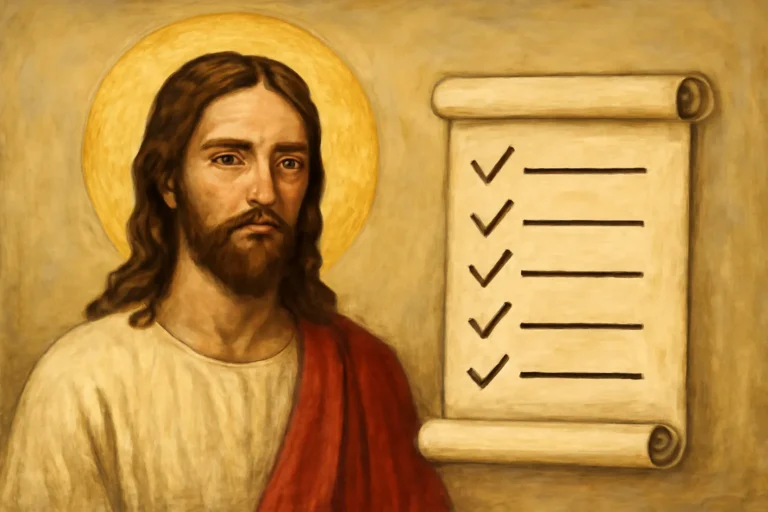
The Coming of the Messiah: Key Prophecies and Signs
Across cultures, the expectation of a future figure who will usher in a new era has shaped history and religion. In this article, we examine key prophecies and signs associated with the coming of the Messiah, exploring how each tradition articulates the advent and what those signs are believed to entail. We will look at Jewish, Christian, and Islamic perspectives, noting common themes and notable differences. The goal is to provide an informative overview that helps readers understand the breadth of the discourse without endorsing any particular claim.
Defining the Messiah: An Anointed Vision Across Traditions
The term Messiah derives from the Hebrew word mashiach, meaning anointed one. In Christian usage, the Greek equivalent is Christ, a label that has become a personal name for Jesus in many traditions. Although the figures and expectations differ by faith, a shared thread runs through these traditions: the idea of a divinely chosen agent who will repair what is broken, restore justice, and inaugurate a new era of peace and righteousness. Readers should approach the topic with a sense of both continuity and distinction—continuity in the motif of a world-transforming leader, and distinction in the particular anticipations, roles, and timelines each tradition assigns.
In discussing the coming of the Messiah, it helps to distinguish between the advent (the initial arrival or emergence of the messianic figure) and the messianic age (the broader transformative era that follows). Some traditions emphasize a single climactic arrival, while others foreground a sequence of events, reforms, and spiritual awakenings leading toward universal peace and knowledge of the divine. The language used to describe these events often blends prophecy, liturgy, and ethical exhortation, and it invites both awe and careful interpretation.
Jewish Prophecies and Signs of the Messianic Era
In Jewish thought, the coming of the Messiah is closely tied to redemptive prophecies found in the Hebrew Bible, later rabbinic writings, and liturgical traditions. The expectation centers on a righteous leader from the line of David who will guide the people back to faithful covenantal living and bring about a new era of peace and holiness. While there is not a single canonical universal checklist accepted by all Jewish sects, several motifs recur across sources and communities.
Davidic Royalty and Covenant Renewal
A predominant thread is the emergence of a king in the Davidic line who will reestablish a sovereign Jewish kingdom in Jerusalem. This figure is often described as a shepherd-king who will uphold justice, restore proper worship, and ensure that the people remain faithful to the divine covenant. The promise is sometimes paired with the notion of a renewed Davidic Covenant that secures enduring peace and national vitality. The messianic reign is frequently imagined as a time when righteousness and ethical conduct become the norm, and when the people experience a deepened sense of belonging to the land and to God.
The Temple or a revitalized worship center in Jerusalem is anticipated as a focal point of religious life during the era of the Messiah.
There is an expectation of restored sacred service, with a renewed emphasis on Torah study and ethical living as the basis for national and spiritual renewal.
Law and justice are envisioned to spread outward, influencing neighboring nations and shaping world affairs toward peace.
In many streams of Jewish thought, the Messiah’s arrival signals not only political sovereignty but also a spiritual reorientation—an age in which knowledge of the divine becomes universal and the peoples of the world recognize the sovereignty of God.
Ingathering of the Exiles and Universal Peace
A second core motif is the ingathering of the exiles—the gathering of Jewish people from scattered lands back to the land of Israel. This reunion is frequently paired with a broader dream of universal peace and safety for all peoples. Prophetic imagery often links national restoration with a gentler, more just relationship among nations, a world in which conflict gives way to cooperation and mutual respect.
Exile and dispersion are imagined as addressed through a divine act of return and restoration, fulfilled in the Messiah’s era.
The era of peace is expected to extend beyond a single people, influencing ethical norms, commerce, and everyday life across the globe.
Knowledge of the one God is said to become widespread, guiding moral decisions and communal life.
Signs and Challenges Mentioned in Rabbinic Texts
Rabbinic literature adds additional signals or signs that many interpret as precursors to the Messiah’s arrival. These are often allegorical or symbolic rather than a literal countdown, and they stress moral preparedness, repentance, and the removal of idolatry and injustice from the world. Some common motifs include a period of heightened turmoil or tribulation that precedes redemption, as well as the emergence of righteous leaders who model humility and justice.
Christian Perspective: Jesus as the Messiah and the Advent
In Christian tradition, the Messiah is intimately tied to Jesus of Nazareth, whom Christians affirm as the long-awaited deliverer who fulfills prophecies found in the Hebrew Scriptures. The narrative centers on the Advent of Christ, his life, death, and resurrection, and the eschatological hope anchored in his promised return. The New Testament presents a coherent storyline of fulfillment, but it also invites ongoing reflection on how prophetic signs point toward a future consummation.
Old Testament Prophecies Read as Fulfilled in Christ
Christians commonly cite several passages as fulfillments of messianic expectation. These include prophecies or themes about a suffering servant, a righteous ruler, a king from David’s line, and a light to the nations. While different Christian traditions interpret these texts with varying nuance, many regard the following motifs as central to the messianic mission:
A suffering or atoning dimension: the idea that the Messiah bears pain on behalf of the people and brings about reconciliation with God.
A cosmic sign: the Messiah’s coming has implications for the nations, not just Israel, signaling a universal plan of salvation.
Inauguration of an era of justice and mercy, in which the marginalized receive their rightful place and the weak are protected.
Distinctive Christian readings emphasize the Word made flesh, with the Incarnation seen as the means by which divine promises take tangible form in history. The crucifixion and resurrection are viewed as the pivotal events that validate the Messiah’s mission and reveal the nature of the coming kingdom.
Signs of the End and the Return
In Christian eschatology, the Second Coming or Advent of Christ is described as a final, transformative intervention in human history. Even as interpretations vary, several signs are commonly discussed in sermons, liturgical cycles, and apocalyptic literature:
Global upheavals, including wars, natural disasters, and moral unrest, are seen as warnings that the present order is passing away.
The rise of false prophets and deceptive influences, contrasted with the proclamation of the gospel to all nations.
Cosmic signs—collectively described in vivid imagery—that herald the return of the Messiah and the judgment of all people.
The visible, personal return of Jesus to establish a purified creation and to judge nations with justice.
In this framework, the advent of the Messiah is not only a historical event but also a call to ethical renewal and spiritual readiness among believers, encouraging repentance, humility, and faithful witness.
Islamic Perspective: Isa and the End Times
Islamic eschatology offers a distinctive, consequential account of the Messiah’s return. In Muslim thought, Isa (Jesus) is regarded as a revered prophet who will return near the end of time. The Qur’an itself mentions Jesus’s miraculous birth and his prophethood, but the details of the Second Coming are elaborated primarily through hadith and later theological traditions. The figure of the Messiah in Islam is often associated with a broader eschatological sequence in which moral renewal, justice, and the defeat of falsehood prevail in the world.
Isa as the Messiah in Qur’anic and Hadith Traditions
In Islamic sources, Jesus’s return is linked to reforming beliefs, breaking false doctrines, and guiding people toward monotheism and ethical living. Some common themes include:
Jesus’s descent near the Day of Judgment to restore justice and to clarify doctrinal misunderstandings among people.
His role in defeating various forms of tyranny and in establishing a just social order for a period of time, often described as a sign of the approaching Day.
He prays behind the Mahdi (in certain traditions), signifying unity under authentic guidance and the restoration of correct worship.
It is important to note that there are differences of emphasis among Sunni and Shia Muslims regarding the timing and exact nature of Isa’s role, the identity and function of the Mahdi, and the sequence of end-time events. Nevertheless, a shared expectation is that Isa’s return will help bring humanity to a purer form of faith and ethics, culminating in a renewed world order under divine sovereignty.
The Role of the Mahdi in Islamic Eschatology
In many traditions, the Mahdi is a messianic figure who prepares the ground for Isa’s return. The Mahdi is described as a righteous leader who restores justice, unites Muslims, and renews adherence to the true path. Some accounts present the Mahdi as a reformer in the footsteps of the Prophet, while others emphasize a more symbolic restoration of moral order. When paired with Isa’s return, these signals are read as a coordinated eschatological sequence in which human agency and divine sovereignty cooperate to heal the world of oppression and corruption.
Common Threads Across Traditions
Despite differences in details and chronology, several themes recur when people discuss the coming of the Messiah in Jewish, Christian, and Islamic contexts. Notable commonalities include:
Righteous leadership grounded in justice, mercy, and fidelity to God.
Restoration of a rightful order—whether political, spiritual, or communal—that enables people to live in harmony with divine will.
Peace and safety for the vulnerable, along with an end to oppression and fear.
An emphasis on ethical transformation—personal repentance, social fairness, and commitment to truth.
A shift toward greater knowledge of the divine and a more inclusive recognition of the divine plan among nations.
Because these motifs appear in different forms, the readings of them vary. What counts as a sign in one tradition may be understood as a symbolic call to moral renewal in another. This plurality of readings reflects the depth and diversity of religious imagination when addressing the question of how the world will change on the day when the Messiah comes.
Across communities, people interpret the signs of a coming Messiah in ways that reflect their historical context, doctrinal commitments, and lived experience. Some approaches are:
Liturgical anticipation: communities incorporate prayers, rituals, and readings that keep the hope of redemption alive and shape ethical conduct today.
Scholarly hermeneutics: scholars analyze prophecies in their historical and literary contexts, distinguishing timeless ethical themes from specific historical itineraries.
Ethical activism: believers channel messianic hope into social justice initiatives, peacemaking, and care for the marginalized as a form of preparation for the age to come.
Personal discernment: individuals reflect on their relationships with God, family, and community, seeking to align life with prophetic ideals in everyday choices.
In this light, the coming of the Messiah is not solely a distant future event. It also acts as a call to conversion, repentance, and responsible stewardship in the present world. The signs, whether interpreted as literal events or symbolic patterns, invite a reorientation of life toward compassion, humility, and faithfulness.
Interpretive Cautions: Reading Prophecy with Care
Because prophecies about the Messiah cross centuries, languages, and cultural boundaries, readers should approach them with careful discernment. Here are some practical cautions to keep in mind:
Beware of apocalyptic sensationalism: sensational claims about imminent events can obscure thoughtful analysis and responsible interpretation.
Recognize diversity within traditions: not all scholars or communities agree on every sign or timeline. Plurality is a normal feature of prophetic interpretation.
Consider historical context: many prophecies emerged in times of crisis. Their language often speaks to immediate needs as well as ultimate hope.
Distinguish what is timeless from what is contingent: some motifs are enduring ideals (justice, peace, ethical living) while others depend on historical circumstance.
Preparing for a Future Era: Ethical and Spiritual Implications
While the exact timetable for the coming of the Messiah remains a matter of faith and debate, many believers agree on a set of practical implications that flow from the hope of redemption. These include strengthening ethical commitments, seeking reconciliation across communities, stewarding the environment, and serving those in need. The prospect of a transformed era motivates acts of kindness, courage, and solidarity in the face of suffering and injustice. Rather than viewing prophecy as a speculative forecast alone, many see it as a moral invitation to live with greater compassion and integrity today.
Putting the Signs in a Personal and Communal Context
Individuals and communities often translate these ancient motifs into contemporary practices. For some, this means engaging in interfaith dialogue to understand how different traditions describe the messianic moment. For others, it means involvement in social justice, peacemaking, and humanitarian work as expressions of the ethical vision associated with the coming age. In every case, the language of the Messiah becomes a lens through which people interpret history, respond to injustice, and envision a more just and hopeful world.
Concluding Reflections: The Promise of Hope and the Work of Faith
The coming of the Messiah—whether framed as the advent of a single prophetic figure or as the dawning of a transformative messianic era—continues to shape faith, practice, and imagination. The prophecies and signs discussed here are not merely predictions; they function as scripts for moral courage, communal responsibility, and reverent awe before the divine. By exploring the Jewish, Christian, and Islamic strands of the tradition, readers gain a broader understanding of how humanity has long anticipated a future in which justice, peace, and knowledge of God prevail. The journey toward that future, in every tradition, involves fidelity to truth, compassion for the vulnerable, and humble hope that the able and the righteous can help heal a fractured world.