The Feast of Tabernacles: Origins, Practice, and Scriptural Significance
Feast of Tabernacles, known in Hebrew as Sukkot and sometimes referred to as the Festival of Booths, is one of the central annual feasts described in the Hebrew Bible. Its purpose goes beyond agricultural celebration; it embodies memory, worship, and hope. In the biblical narrative, this festival recalls the wilderness journey of the Israelites and their reliance on God’s provision. The practice involves the construction of temporary shelters, or sukkahs, where families live during the festival’s duration, typically seven days, with an additional day for a concluding celebration. The imagery of dwelling in tents links the people to a time of dependence on God’s presence. Beyond the booths themselves, Sukkot includes the waving of the four species—the lulav (palm frond), the etrog (citron), the hadassim (myrtle), and the aravot (willow)—as a symbolic act of praise, unity, and gratitude for the harvest.
In the biblical landscape, the course of the festival runs through the book of Leviticus, where God instructs the people to celebrate during the seventh month with booths and joyful commemoration (Leviticus 23:34-43). The symbolism of agricultural harvests, paired with a portable, temporary dwelling, points forward to a deeper spiritual meaning: a people who live in trust, praising God for daily provision and looking for the fullness of God’s presence among them. The tabernacle motif—God’s tent-like dwelling with his people—frames the festival and becomes a lens through which Christians later read the life and work of Jesus.
In this section, you will encounter key elements of the Feast of Tabernacles: the seasonal calendar, the ritual actions, the symbolic use of light and water, and the enduring themes of pilgrimage, God’s presence, and ingathering. Exploring these elements helps illuminate how the gospel writers situate Jesus within the rhythms of Israel’s festival calendar, shaping the Christian reading of the feast as a foretaste and fulfillment of Messianic hope.
Jesus at the Feast: the context of the Feast of Tabernacles in John 7–8
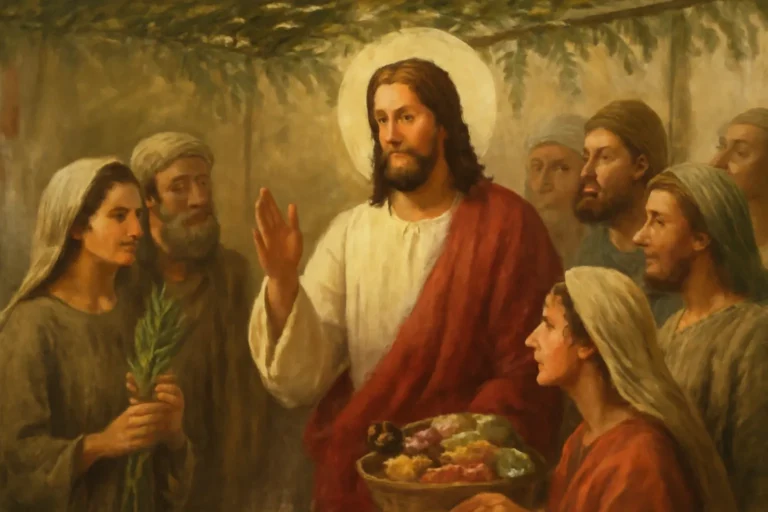
Several gospel narratives place Jesus in Jerusalem during the time of Sukkot, presenting a vivid intersection between divine revelation and public ritual. The Gospel of John especially foregrounds this connection, emphasizing how the seasonal feast becomes a stage for Jesus to reveal his identity and mission in fresh and surprising ways. Readers encounter a layered drama: Jesus’ human behavior within a crowded festival, the tensions with religious leaders, and the expressions of belief and skepticism among the crowd.
John 7: The setting, the invitation, and the water festival
In John 7, the festival atmosphere is already thick with expectation. The narrative notes that Jesus’ brothers encourage him to show himself publicly at the festival in order to gain recognition. Jesus responds that his “hour” has not yet come, but he nevertheless goes to the festival, spending time in the temple courts and teaching the crowd. A distinctive feature of the scene is the water-drawing ceremony tradition, known as nisuch hamayim, which symbolizes God’s provision and the spirit-empowered life promised to God’s people. While this act is a ritual backdrop, Jesus uses the moment to declare a surprising alternative: he invites the thirsty to come to him for living water. The phrasing in the text links the imagery of the festival’s water ritual to a personal claim about himself as the source of life-giving supply (John 7:37-39). This is where the festival’s symbolism becomes personal revelation: the Messiah stands in the midst of the crowd and offers a spiritual fulfillment that exceeds the ritual form itself.
John 8: Light, truth, and the festival’s illumination motif
In John 8, the discourse expands into a proclamation that resonates with the festival’s imagery of light. The narrative places Jesus in a setting where debates about truth and authority run high. At a moment when the festival would emphasize illumination—some traditions describe large lights in the Temple courts during the nights of Sukkot—Jesus declares, “I am the light of the world” (John 8:12). This declaration is not merely poetic; it reframes the festival’s outward ritual as a moment for recognizing the divine light incarnate in Jesus. The interplay between light in the temple, the crowd’s confusion or acceptance, and Jesus’ bold self-disclosure creates a defining turn in the Gospel’s presentation of Jesus’ identity. For readers, the combination of the feast’s symbols with Jesus’ claims yields a powerful interpretation: the incarnate Son brings true illumination, guiding people not just toward ritual correctness but toward a living, transformative relationship with God.
Across biblical interpretation, the feast of tabernacles has a rich symbolic depth that Christians read through the lens of Christology and soteriology. The central image—God dwelling with his people in a tent or booth—points forward to the person and work of Jesus, who is described in the Gospel of John as the Word becoming flesh and tabernacling among us. This connection is not merely a stylistic parallel; it is a theological claim about how God makes himself known in history and in the life of the church.
Tabernacle and incarnation: from tent to temple in the Christian imagination
In Christian readings, the festival’s core motif—God’s presence with a people in a fragile, migratory shelter—finds its ultimate fulfillment in the incarnation: “the Word became flesh and tabernacled among us”, a phrase drawn from John 1:14 that echoes the festival’s language of dwelling. The Greek term eskenosen (tabernacled) conveys a sense of God’s presence living in a fragile human form. This theological move reframes the Feast of Tabernacles not only as a commemoration of the wilderness era but as a foretaste of the divine plan to live among humanity through the Son. The Christian claim is that Jesus embodies the divine presence in a more complete and personal way than the old tent could contain, offering access to God through his life, death, and resurrection.
Living water and the Spirit: fulfillment of the festival’s signs
The water imagery associated with Sukkot becomes a powerful Christological symbol in John 7. The gospel writer presents Jesus as the one who can satisfy spiritual thirst in a way that the water ceremonies only foreshadowed. The living water motif points to the Spirit’s presence and activity poured out after Jesus’ exaltation (John 7:39; cf. Acts 2). In this reading, the festival’s rituals function as signs that point beyond themselves to a person—Jesus—who offers an ongoing, life-giving relationship with God through the Spirit. The interpretation emphasizes the continuity between Old Covenant symbols and New Covenant realities, with Jesus acting as the primary fulfillment of the festival’s deepest longing: God’s life and presence among his people in the world.
Christian interpretation often reads the Feast of Tabernacles as a typological signpost pointing to Jesus’ mission and person. This section highlights several facets of this fulfillment, drawing connections between korbanot, prophetic expectation, and gospel testimony.
The incarnation as fulfillment of the festival’s sheltering motif
The festival’s insistence on God’s people dwelling in temporary shelters prefigures the stability of the divine presence in Jesus. If the tents were symbols of dependence and pilgrimage, Jesus embodies the ultimate reality of God-with-humans. The church’s belief that God became flesh and took up residence among people echoes the Sukkah-themed longing for a tangible encounter with the divine. In this light, Jesus is not simply a teacher who visited the festival; he is the divine presence that the festival anticipated, now present in the world in a new and transformative way.
Water, life, and the Spirit’s flow in the age of the church
The water imagery attached to the feast points forward to Christ’s gift of the Spirit to the church. The living water Jesus offers is an eschatological abundance—an eschaton-in-the-present through the Spirit’s ongoing work in believers. In a broader sense, the festival’s rhythm of blessing and harvest becomes the church’s calling to bear witness, to bring living water to a thirsty world, and to participate in the Spirit’s activity that gathers people from every nation into the living community of God.
To understand how the Feast of Tabernacles becomes a lens for reading Jesus, it helps to situate Sukkot within its broader historical and biblical contour. The festival’s institution in Leviticus, its agricultural and national dimensions, and its liturgical evolution in years following the exile shape the way readers encounter the gospel’s portrayal of Jesus during the festival season.
Leviticus and the biblical basis for Sukkot
Leviticus 23 lays out the essential contours of the festival: timing, ritual actions, the sense of fellowship, and the call to live in huts for seven days as a reminder of the wilderness wandering. The festival’s framework binds together memory (what God did in the past), practice (how the people live during the festival), and expectation (the hope of God’s ongoing provision and presence). The Christian reader often follows this trajectory into the New Testament, where the life and ministry of Jesus are interpreted as a dramatic fulfillment of those same motifs.
Hoshana Rabbah, illumination, and Jewish festival praxis
Among the festival’s ritual practices, the seventh day of Sukkot—often called Hoshana Rabbah—is a day of special prayers and processions. The symbolic imagery of trees, branches, and water relief (alongside liturgical prayers for deliverance and help) provides a background against which Jesus’ declarations about himself acquire added resonance for readers. The Gospel writers do not present Jesus as simply engaging with the festival’s customs; they present him as the fulfillment of the festival’s deepest yearnings, inviting people to discover in him a more enduring dwelling with God than any temporary shelter could provide.
Across Christian traditions, the Feast of Tabernacles is read as a compelling example of how God’s work in Jesus intersects with Jewish festival worship. The interpretation varies among denominations—Catholic, Protestant, and Orthodox alike—but several core themes recur: the incarnation as the fulfillment of divine presence, the Spirit’s ongoing work as the fulfillment of living water, and the call to a faith that embraces God’s presence not as a distant doctrine but as a present, transforming reality.
Incarnation, dwelling, and the pattern of worship
For many Christian theologians, the Feast of Tabernacles provides a narrative template for understanding the incarnation. The festival’s focus on God’s dwelling among his people becomes a platform for describing how Jesus, God’s own Son, brings the divine presence into the everyday world. The idea that God lives with humanity—across time and space, in the person of Jesus—offers a framework for Christian worship: not merely ritual acts but relationships with a living God who draws near and makes himself known in tangible ways.
Light, life, and the church’s mission
The festival’s emblematic image of light translates into a Christian vocation: to reflect Christ’s light in a dark world, to proclaim the life that comes through him, and to invite others into a living encounter with God. The “I am the light of the world” declaration, tied to the festival’s nocturnal illumination imagery, becomes a missional summons: the church is called to radiate the truth of Jesus, guiding others toward the One who enlightens every human heart.
Harvest, ingathering, and the eschatological hope
Finally, the ingathering aspect of Sukkot—gathering grapes, olives, and grains—speaks to the church’s eschatological hope: a fullness of the harvest in the kingdom of God. Christians interpret the festival as pointing forward to the final judgment and the ultimate gathering of all peoples into God’s presence. In this sense, the feast becomes a living reminder that God’s redemptive plan extends beyond a single historical event and continues to shape the church’s worship and witness.
What does it mean for modern readers to engage with the Feast of Tabernacles in light of Jesus’ life and teaching? Several practical themes emerge that can inform personal devotion, communal worship, and gospel witness.
Dependence and provision: Just as the Israelites relied on God’s provision in the wilderness, Christians are called to live in daily reliance on God’s grace and sustenance—recognizing that spiritual nourishment is a gift to be received, not earned.
Presence and relationship: The idea of God dwelling with his people invites believers to cultivate intimate, continual relationships with God through prayer, Scripture, and community life. The incarnational truth means that the divine remains near in every season of life.
Hospitality and mission: The tent motif can inspire a hospitality-centered faith—welcoming others into God’s presence through acts of generosity, service, and shared worship, so that the church becomes a living shelter for the weary and the seeking.
Spiritual nourishment: The water and light motifs invite believers to seek the Spirit’s work in their lives—receiving living water that springs up within and walking in the light that Jesus provides, which dispels fear and confusion.
Hope of ingathering: The festival’s harvest imagery can motivate the church to pursue missionary efforts and social justice, participating in God’s redemptive work to gather people from every tribe and nation into his presence.
In studying the relationship between the Feast of Tabernacles and Jesus, a number of questions naturally arise. Providing careful, biblically grounded responses helps readers engage with the topic more critically and faithfully.
Was Jesus born during Sukkot?
Some scholars speculate about possible connections between the timing of Jesus’ birth and the festival season, given the gospel writers’ emphasis on light, life, and divine presence. However, there is no definitive biblical or historical evidence to confirm that Jesus was born specifically during Sukkot. The gospels do not provide a precise birth date, and tradition places Jesus’ birth in a different season in many Christian calendars. The discussion remains a worthwhile exploration, not a doctrinal assertion, and it highlights how the feast’s imagery has shaped Christian imagination about the Incarnation.
How should Christians engage with Sukkot today?
Christians may engage with the Feast of Tabernacles in various ways that honor its biblical roots while recognizing the distinct claims of the New Covenant in Christ. Practical approaches include:
Studying the scriptural passages about Sukkot and Jesus’ teachings during the festival season to discern the ways in which God’s presence is revealed in Christ.
Participating in shared meals or worship experiences that reflect hospitality, community, and dependence on God’s provision.
Reflecting on the themes of light and water in personal devotion, prayer for grace, and acts of mercy toward those in need.
Considering missional outreach that embodies the ingathering aspect of the festival, welcoming outsiders into the life of the church through generosity and inclusion.
To aid readers, here is a concise glossary of important terms encountered in the discussion of the Feast of Tabernacles Jesus reads as.
Sukkah — the temporary shelter or booth built for Sukkot.
Sukkot — the Hebrew name for the Feast of Tabernacles.
Lulav — the palm frond used with the other species in processions.
Etrog — the citron, one of the Four Species.
Hoshana Rabbah — the seventh day of Sukkot, a day of special prayers.
nisuch hamayim — the water-drawing ceremony associated with Sukkot.
Shekinah — the divine presence dwelling among God’s people, a concept related to the festival’s dwelling imagery.
The Feast of Tabernacles Jesus narrative invites believers to see how God’s ancient people lived in expectancy and dependence, while the gospel reveals how Jesus fulfills that expectancy in the fullness of time. The festival’s motifs—dwelling with God, spiritual nourishment, illumination, and harvest—find their richest meaning in the person of Christ and in the Spirit given to believers. In studying Feast of Tabernacles and Jesus, readers uncover a robust thread in early Christian memory: that the God who led his people through the wilderness now invites humanity into a living relationship with himself through the Son. Whether one approaches from a devotional, academic, or liturgical angle, the synthesis of scriptural Reading with Christ-centered interpretation offers a rich, enduring invitation to trust, worship, and mission.
In sum, the exploration of the Feast of Tabernacles and its encounter with Jesus yields a multi-faceted portrait: a divine presence that draws near, a source of living water that satisfies the soul, and a light that discerns truth in a world darkened by fear and confusion. The festival remains a powerful pointer to the Christian belief that God’s dwelling with humanity is not confined to a temple or a season but is made visible in the embodied life of Jesus and sustained by the Spirit in the church. Readers are invited to reflect on how this ancient festival speaks into modern faith—encouraging trust in God’s provision, fostering hospitality in community, and proclaiming the gospel as the true fulfillment of every festival’s longing.
Note: The discussion above presents a synthesis drawn from biblical texts (notably Leviticus 23, John 7–8), historical understandings of Jewish festival practice, and traditional Christian interpretations. Different denominations may emphasize distinct aspects of the feast and its connection to Jesus, but the core themes of dwelling, provision, light, and life remain central across much Christian reflection.