Christianity in Israel: History, Communities, and Sacred Sites
The story of Christianity in Israel spans nearly two millennia and remains a living thread through the country’s religious, cultural, and social fabric. From the earliest days of the Church in Jerusalem and the Galilee to the diverse and vibrant communities today, Christianity in this land has been shaped by geography, tradition, and ongoing dialogue among communities of faith. This article surveys the history of the Christian presence, the varied communities that flourish under different liturgical and theological families, and the sacred sites that have become pilgrim destinations for Christians worldwide. It also highlights how ecumenical cooperation and interfaith engagement continue to influence daily life, education, and charitable work in Israel and the surrounding territories.
History: from the ancient church to a plural Christian landscape
The birth of Christianity in the Holy Land is inseparable from the life of Jesus and the Apostles in first-century Palestine/Israel. Early Christian communities emerged in and around Jerusalem, Bethlehem, and Galilee, where eyewitnesses and their first-generation followers preached, prayed, and organized fledgling congregations. By the late antique period, a framework of patriarchates and feasts, synods and liturgies had begun to crystallize, and pilgrimages to the sites of Jesus’s ministry became a defining practice for many Christians.
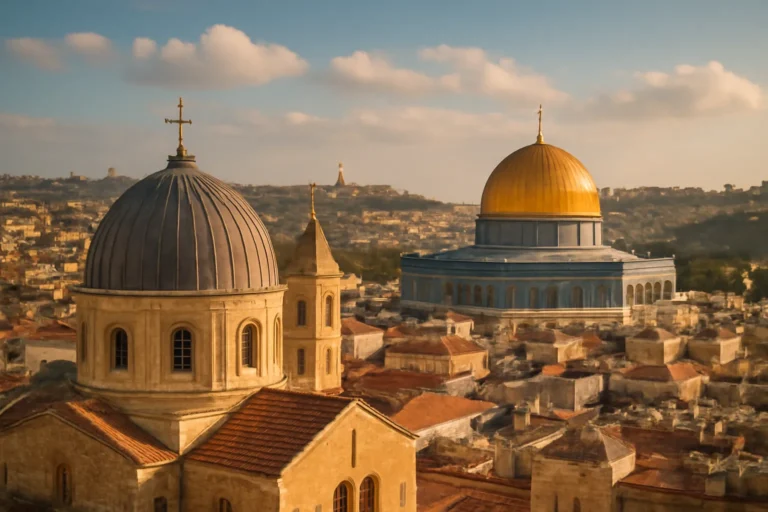
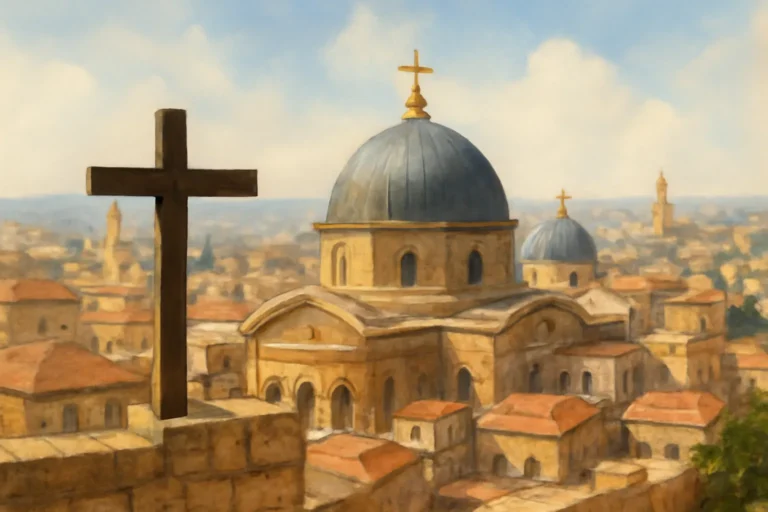
Over the centuries, the region saw shifts in political power, from Roman and Byzantine rule to successive empires and the enigmatic trajectory of Crusader, Mamluk, and Ottoman periods. Each era left distinct architectural testimonies and liturgical traditions. In particular, the Church of the Holy Sepulchre in Jerusalem emerged as a focal point for the commemoration of the Passion and Resurrection, shared by several churches under a complex but historically coordinated framework. The Crusader era introduced new devotional landscapes and constructed churches, monasteries, and fortifications that still influence the Christian topography of the city.
The mid-second millennium saw a diversification of Christian life in the region. East of the Jordan River, the Eastern Orthodox and Eastern Catholic families maintained enduring spiritual centers, while the Latin Church—represented by the Latin Patriarchate of Jerusalem—and the Franciscan Custody of the Holy Land played pivotal roles in safeguarding holy places and fostering pilgrimage. In parallel, Armenian, Syriac, and Coptic Christian traditions kept strong presences in places where their historical communities had taken root, contributing to a plural mosaic of rites and languages.
In modern times, the 19th and 20th centuries witnessed renewed interest in archaeology, biblical studies, and the restoration of ancient churches, cathedrals, and monasteries. The establishment of formal ecclesiastical jurisdictions aligned with global Christian communities helped articulate the rights and responsibilities of churches in a land where politics and faith intersect closely. The 20th century brought new social and demographic dynamics as Jews, Muslims, and Christians—among them Arab Christians and Jewish Christians—lived side by side within the borders of the modern state of Israel and in the Palestinian territories. These populations contributed to a living, evolving history that continues to this day.
Contemporary scholarship and heritage work emphasize the continuity of sacred memory alongside the new realities of coexistence and cooperation. The narrative of Christianity in Israel is not a single story but a tapestry of experiences across denominations, languages, and communities that practice their faith in diverse ways—liturgies in Greek, Arabic, Armenian, Syriac, and Latin, as well as contemporary ministry in Hebrew and English.
Communities: a diverse Christian presence in a multi-faith country
Today, Christian communities in Israel consist of several traditional families with long histories in the land, as well as newer congregations that reflect broader evangelistic and missionary movements. The country hosts a spectrum of traditions that collectively illustrate the resilience and adaptability of Christian life in a land defined by the Jewish majority and Muslim population, with Druze and other communities contributing to the social fabric.
Greek Orthodox and Greek Catholic (Melkite) communities have deep roots in Jerusalem and the surrounding regions, often serving as custodians of important holy sites and as active participants in local ecumenical life.
Latin (Roman Catholic) communities are centered on the Latin Patriarchate of Jerusalem with a network of parishes, schools, charitable institutions, and the Custody of the Holy Land presiding over many sacred places.
Armenian Apostolic and Armenian Catholic communities maintain centuries-old churches and maintain Armenian liturgical customs in places such as Jerusalem, Acre, and beyond.
Syriac Orthodox and Syriac Catholic congregations contribute to the linguistic and liturgical diversity, especially among Christian Arab communities.
Ethiopian Orthodox Christians have a historic, though comparatively smaller, presence that reflects the broader Ethiopian Christian diaspora with distinctive liturgies and traditions.
Arab Christians and other local communities
Arab Christians (including Greek Orthodox, Roman Catholics, Melkites, Syriacs, and others) form a substantial portion of the population in cities such as Nazareth, Beit Jala, Beit Sahour, and Bethlehem, as well as in Jerusalem, Jaffa, and surrounding areas.
Indigenous and mixed communities of mixed heritage—Greek, Arab, and other Mediterranean backgrounds—often participate in shared social services, schools, and interfaith initiatives, reflecting the intertwined history of the land.
Messianic Jewish congregations and other evangelical networks have grown in various urban and suburban centers, bringing a distinct form of Christian practice that emphasizes belief in Jesus as the Messiah along with Jewish roots and identity.
Protestant churches—including Baptist, Evangelical, Pentecostal, Anglican, and Lutheran groups—offer additional expressions of faith, education, and social outreach, often focusing on youth, refugee communities, and development projects.
Education, charity, and social service
Schools, universities, and charitable organizations affiliated with various churches play a significant role in education access, particularly in under-resourced areas and in interfaith contexts.
Hospitals, clinics, and social service agencies run by Christian communities provide healthcare, elder care, and humanitarian relief in collaboration with secular authorities and other faith groups.
Ecumenical partnerships—often coordinated through local councils of churches, regional conferences, and international church networks—support dialogue, human rights advocacy, and peacebuilding efforts.
Visiting Christians, scholars, and pilgrims encounter a living reality: Christian communities in Israel not only preserve ancient traditions but also innovate in education, media, and social outreach. This dual impulse—respect for tradition and commitment to contemporary service—helps explain why Christianity remains a visible and influential presence in the country.
Sacred sites: places where memory, worship, and daily life intersect
The geography of Christianity in Israel is inseparable from its most sacred sites. From the Church of the Holy Sepulchre in the heart of Jerusalem to the Basilica of the Annunciation in Nazareth, these spaces continue to shape liturgy, pilgrimage, and ecumenical cooperation. The surrounding towns and landscapes—Bethlehem, Nazareth, Capernaum, Tabgha, and the Jordan River—are not only tourist attractions but also ongoing religious centers where local Christians live their faith and welcome visitors.
Jerusalem: a matrix of Christian devotion
Church of the Holy Sepulchre: a central pilgrimage site for many Christian communities, this basilica is traditionally believed to enclose both the site of the crucifixion and the tomb of Jesus. Its custody has historically involved several Christian denominations, with the Franciscan Custody of the Holy Land playing a pivotal role today in ongoing maintenance and ecumenical caretaking.
Garden of Gethsemane and the Basilica of All Nations (Church of the Agony) on the Mount of Olives: these spaces anchor the narrative of Jesus’s final prayers and betrayal, attracting pilgrims who walk the path of the Via Dolorosa.
Via Dolorosa and the stations of the Cross: a living route through the Old City that connects the sacred memory of suffering with contemporary acts of devotion.
Church of St. Peter in Gallicantu and other sanctuaries on the Mount of Olives and Mount Zion, which preserve stories of Peter’s denial, the Last Supper, and the early church.
Holy Monasteries and convents such as the Latin Patriarchate and the Greek Orthodox Patriarchate facilities scattered around the city, which host liturgies, lectures, and ecumenical events.
Armenian Quarter and other Christian neighborhoods in the Old City: places where history, art, and liturgy converge with modern urban life.
Nazareth: the Annunciation and the Galilean heartland
Basilica of the Annunciation: one of the most revered sites in the Christian world, commemorating the moment when the angel Gabriel spoke to Mary. It stands as a major pilgrimage destination for Christians from around the globe and a center of local worship in Nazareth.
St. Joseph’s Church and other traditional Christian sites in the town reflect the domestic life of Jesus’s family in Galilee.
Cultural spaces and monasteries in Nazareth host concerts, symbols of interfaith tourism, and educational programs that explore biblical geography, languages, and archaeology.
Bethlehem: the Nativity and the Judean countryside
Church of the Nativity: built over the cave traditionally identified as the birthplace of Jesus, this church complex is held by multiple Christian communities, including Greek Orthodox and Roman Catholic authorities, with the Lodging of the Nativity area signifying hospitality to pilgrims.
The surrounding towns of Beit Jala and Beit Sahour host churches, monasteries, and charitable organizations that serve local communities and visitors alike.
Field of Shepherds and other nearby sacred landscapes connect biblical memory with contemporary devotional life.
Sea of Galilee region: where Jesus’s ministry unfolded
Capernaum and the remains of the ancient synagogue, a site associated with Jesus’s teaching and miracles, and home to early Christian communities documented in the Gospel accounts.
Tabgha (Church of the Loaves and Fishes) and the Church of the Primacy of Peter overlooking the lakeshore, reflect the formation of early Christian communities and the commissioning of Peter in Galilee.
Mount of Beatitudes offers a contemplative overlook where Jesus delivered the Sermon on the Mount, often visited by pilgrims seeking peace and reflection.
Yardenit Baptism Site on the Jordan River provides a contemporary setting for baptismal rites that connect today’s Christians with biblical terminology and symbolism.
Other sacred landscapes and pilgrimage routes
Ein Kerem in Jerusalem, associated with the birth narrative of John the Baptist and with reconciliation imagery, hosts churches and convents in a tranquil hillside village.
Bethany Beyond the Jordan and related sites in the surrounding region attract scholars and pilgrims who study the Jordan Valley’s biblical geography and early Christian itineraries.
Ein Dor and other ancient settlements preserve archaeological contexts that illuminate how early Christians worshipped in domestic and public spaces.
Theological and liturgical diversity: a living ecumenism
The Christian presence in Israel encompasses a spectrum of traditions, each with its own liturgy, language, and governance. This diversity is not merely historical; it is a dynamic feature of everyday worship, education, and social action. While the oldest communities preserve ancient rites in Greek, Armenian, Syriac, and Coptic streams, modern churches in Israel also celebrate in Hebrew, Arabic, English, and other languages to reach multilingual congregations and visitors.
Liturgy, language, and governance
Eastern Orthodox and Eastern Catholic rites maintain liturgies in classical languages, with contemporary Arabic and Greek used in many parishes and monasteries.
Latin (Roman) Catholic structures are coordinated through the Latin Patriarchate of Jerusalem and the Custody of the Holy Land, which preserves sanctuaries, conducts pilgrimages, and runs charitable enterprises.
Armenian, Syriac, and Ethiopian traditions contribute distinct calendars, hymns, saints, and devotional calendars that enrich the liturgical calendar across Israel.
Protestant and evangelical churches—including Anglican, Lutheran, Baptist, and Pentecostal communities—often adopt contemporary worship, social outreach, and missions that connect with diaspora Christians and local youth.
Ecumenical life and shared worship
Despite denominational differences, there are robust ecumenical efforts in the Holy Land. Local councils of churches, dialogue forums, and joint social projects foster cooperation on education, humanitarian aid, and interfaith understanding. Notable ecumenical milestones include joint prayer services during major religious seasons, shared venues for charitable work, and coordinated responses to social challenges facing communities of faith in the region.
Modern realities: demographics, politics, and cultural life
The modern landscape of Christianity in Israel reflects remarkable demographic realities. In Israel proper, Christian communities are a recognized minority with protections under civil law, the right to worship, and access to education and health services. In the Palestinian territories, Christian communities navigate different governance structures, economic conditions, and mobility considerations that shape church life and pastoral care. Across the board, Christian institutions emphasize education, cultural preservation, and social service as ways to contribute to the broader society.
In Israel, Christian communities are dispersed across major urban centers and rural towns, with significant clusters in Jerusalem, Nazareth, Beersheba, and the Galilee corridor.
In the West Bank and Gaza (where applicable), Palestinian Christians form important minority communities in cities such as Bethlehem, Beit Jala, and Beit Sahour, often sharing neighborhoods with Muslim and other minority communities.
The diaspora effect means that many Christians from Israel and the Palestinian territories maintain strong ties with churches in Europe, North America, Africa, and the wider Middle East, reinforcing a global network of support for churches in their homeland.
Education, media, and cultural production
Christian schools, colleges, and seminaries offer curricula that blend local languages with biblical studies, comparative religion, and social sciences, contributing to broader citizenship education and intercultural literacy.
Christian media outlets, publishing houses, and NGOs in Israel document the region’s heritage, promote peacebuilding, and provide humanitarian aid to vulnerable communities.
Cultural programs—concerts, art exhibitions, and archaeology exhibitions—showcase the rich patrimony of Christian communities and their contributions to the Israeli cultural landscape.
Pilgrimage, tourism, and the global Christian imagination
The Holy Land remains one of the world’s most important pilgrimage destinations. For many Christians, traveling to Israel and the Palestinian territories is a way to connect scripture with geography, to walk the terrain where biblical narratives unfolded, and to engage with living communities that keep these stories alive. Pilgrimage networks include organized tours, academic study programs, and monastic routes that enable visitors to participate in liturgical life—often in collaboration with local parishes, monasteries, and cultural centers.
Pilgrims encounter a balanced reality: sacred awe and everyday life interwoven in markets, classrooms, and neighborhoods. The presence of historic holy sites coexists with contemporary concerns about governance, mobility, and interfaith dialogue. This dynamic environment invites visitors to reflect on questions of memory, reverence, and responsibility toward neighbors who practice different faiths.
Notable patterns in devotion and practice
Across the country, several distinguishing patterns recur:
Ecumenical hospitality—churches and monasteries frequently welcome pilgrims of diverse backgrounds with open doors and educational programs.
Liturgical variety—services may be conducted in multiple languages and musical idioms, ranging from centuries-old chants to contemporary congregational singing.
Educational mission—the church often operates schools, universities, and outreach programs designed to empower local communities and promote social justice.
Archaeological and scholarly engagement—institutions pursue biblical archaeology, ancient languages, and historical theology to illuminate the context of early Christianity and its present-day expressions.
Interfaith engagement—dialogue with Jewish and Muslim neighbors is a central feature of many Christian institutions, encouraging mutual respect and civic cooperation.
For readers interested in exploring Christianity in Israel, several practical paths can deepen understanding and appreciation:
Visit major sanctuaries in Jerusalem, such as the Church of the Holy Sepulchre, the Basilica of the Agony, and the Church of St. James, to observe how different traditions share sacred space.
Explore Nazareth and Bethlehem to learn how local Christian communities preserve liturgical calendars tied to the Annunciation and Nativity.
Undertake a guided itinerary along the Sea of Galilee to encounter sites like Tabgha, Capernaum, and the Mount of Beatitudes, linking geography with Gospel narratives.
Engage with local parishes and educational programs that welcome visitors, providing context about ecumenical cooperation, social outreach, and historic memory.
Whether you are drawn by history, theology, art, or spiritual practice, the Christian landscape in Israel and the Palestinian territories offers a unique opportunity to encounter a living heritage—one that has endured, adapted, and contributed to the broader story of faith in the Middle East and the world.