What Are the 4 Types of Theology? A Quick Guide to Theological Traditions
Theology is a field of study that asks big questions about God, the world, humanity, and how we ought to live. Across denominations and traditions, scholars and pastors have developed distinct ways of organizing their reflections. When people ask, “What are the four types of theology?” they are usually pointing to four well-established traditions that drive a great deal of scholarly and pastoral work. Each of these traditions has its own methods, questions, and contributions to the broader conversation about faith. Together, they provide a comprehensive map for understanding doctrine, interpretation, and life in light of religious conviction.
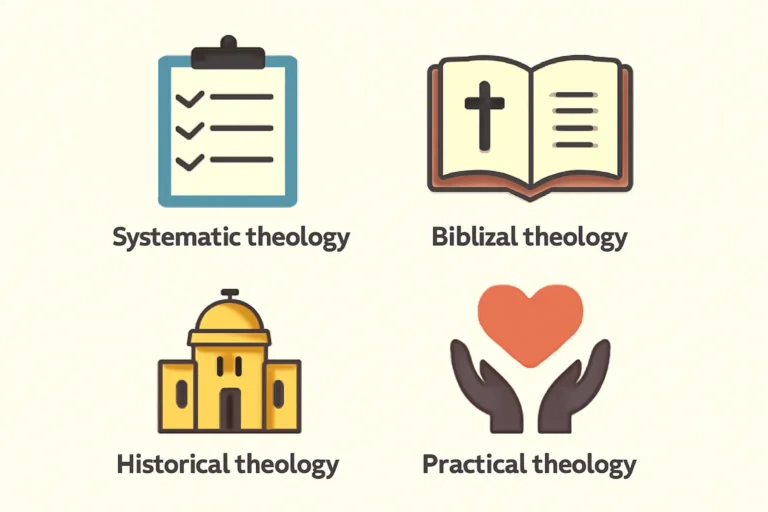
In academic and ecclesial settings, theologians often distinguish four primary modes of theological reflection. They are Biblical Theology, Historical Theology, Systematic Theology, and Practical Theology. Each tradition asks different questions and employs different methods, yet they are deeply interrelated. A robust theological project typically draws on all four in a sustained dialogue rather than treating them as isolated silos.
Biblical Theology: traces the message and story of God as it unfolds within the biblical texts themselves.
Historical Theology: charts how doctrines have developed through time in the church’s life and thought.
Systematic Theology: organizes beliefs into coherent, cross-cutting categories that summarize what the church confesses about God, creation, humanity, and salvation.
Practical Theology: applies theological insights to ministry, pedagogy, worship, and daily living.
Biblical Theology: tracing the Bible’s own story
Biblical Theology is sometimes described as the theology that emerges when one reads the Bible as a unified story rather than as a random collection of books. It asks: What does the biblical text say about God, humanity, salvation, and world, as they appear across its diverse literature—from narrative to poetry to prophecy to exhortation? The aim is to discover the theological message that is embedded in the narrative arc of Scripture, rather than imposing a later system onto the text.
Goals and core questions
Some of the central questions in Biblical Theology include:
What does the Bible reveal about God’s character and God’s actions in history?
How do the covenants shape the storyline of salvation from Genesis to Revelation?
What is the progressive revelation theme, and how do later books illuminate earlier ones?
How should we read individual passages in light of the canonical storyline?
Practically, scholars of Biblical Theology use literary and canonical methods. They consider the order of books, genre, and the authors’ intended purposes, and they read texts within the whole canon to see how themes recur and develop. They may emphasize the storyline of creation, fall, promise, exile, resurrection, and new creation; or they may trace themes like kingdom of God, covenant, or salvation history across books and genres.
Strengths and challenges
This approach excels at clarifying how a given passage fits into the broader biblical narrative. It helps readers avoid reading isolated verses out of context. A potential limitation is that it can be difficult to reconcile text-specific questions with larger doctrinal formulations if emphasis on narrative arcs overshadows systematic coherence.
Historical Theology: doctrine in the life of the church
Historical Theology is concerned with how Christian beliefs have taken shape over time. It studies the development, debates, and reception of doctrines in various historical contexts—through councils, creeds, reform movements, revivals, and scholarly exchanges. Rather than asking only what is true in the abstract, historical theology asks how communities have understood and confessed truth in the face of new challenges, questions, and cultural environments.
Patristic era (roughly 2nd–5th centuries): early church fathers wrestled with questions about the nature of Christ, the Trinity, and the relationship between faith and reason.
Medieval period (5th–15th centuries): scholastic structures, monastic disciplines, and the synthesis of faith with philosophy shaped doctrinal formulation.
Reformation and post-Reformation (16th–17th centuries and beyond): doctrinal disputes over justification, authority, sacraments, and the church’s authority led to lasting confessional statements and new denominations.
Modern and contemporary era (18th century to present): critical methods, science, secular thought, and global Christianity brought new questions about authority, revelation, and the nature of religious experience.
What historians of theology study?
Historical theologians examine creeds and confessions, key figures (such as the church fathers, reformers, and modern theologians), the impact of ecumenical councils, and the way doctrines shift as communities encounter new questions—whether about grace, soteriology, or ethics.
Influential figures and ideas
From Augustine and Aquinas to Luther and Calvin, then to Schleiermacher, Barth, and contemporary voices, historical theology traces how these thinkers engaged with Scripture, philosophy, culture, and ecclesial practice. The strength of this approach lies in showing how doctrine is not static but a living conversation shaped by history, language, and context.
Systematic Theology: building a coherent map of belief
Systematic Theology attempts to present the Christian faith as a coherent system. It gathers all sources—Scripture, tradition, experience, and reason—into organized categories that answer fundamental questions about God, creation, humanity, sin, salvation, the church, and the last things. The goal is not merely to summarize isolated beliefs but to articulate an integrated framework that believers can use for preaching, teaching, and personal formation.
Key categories and questions
Typical topics in Systematic Theology are organized into several broad domains:
Doctrine of God — What is God like? How do we understand divine attributes, Trinity, and providence?
Creation and Providence — What is the nature of the universe, and how does God relate to it?
Anthropology — Who is human, and what does it mean to be created in the image of God?
Christology and Soteriology — Who is Jesus, and how does salvation work?
Ecclesiology and Sacraments — What is the church, and what roles do baptism and the Lord’s Supper play?
Eschatology — What is the last thing, and how do creation and history culminate?
Ethics — How should belief translate into conduct in personal life and public society?
Methods and tools
Smith and Brown might describe Systematic Theology as employing philosophical argument, careful analysis of biblical language, and attention to tradition. The method often includes laying out a doctrinal proposal, defending it with scriptural and historical warrants, and then examining implications for worship, pastoral care, and social engagement. Some theologians emphasize philosophical rigor and logical coherence, while others stress pastoral usefulness and clarity for lay audiences. Regardless of method, a hallmark of this tradition is its commitment to a unified vision of the Christian faith across diverse topics.
Strengths and potential pitfalls
Systematic Theology excels in producing a workable framework for preaching, catechesis, and apologetics. It helps churches articulate a shared faith in ways that can be taught across generations. A potential challenge is that rigid systems can drift toward abstraction or exclusivity if they do not remain anchored in Scripture, the church’s living wisdom, and pastoral concern.
Practical Theology: applying faith to life and ministry
Practical Theology centers on how beliefs shape practice. It bridges theory and everyday life—how sermons are crafted, how communities worship, how churches respond to social needs, and how individuals grow in faith. In many contexts, practical theology is described as the doing of theology: translating doctrine into actions that reflect love for God and neighbor.
Focus areas in practical theology
Core domains include:
Pastoral care and counseling — applying theological empathy to human distress, moral decisions, and spiritual formation.
Worship and liturgy — shaping communal praise, prayer, and rites so they express and shape belief.
Spiritual formation — practices and disciplines that foster growing dependence on God and a life of virtue.
Mission and social ethics — how the gospel translates into outreach, justice, and public witness.
Preaching and teaching — turning theological insight into sermons, classes, and curricula that equip believers for daily life.
Practitioners of Practical Theology often work closely with congregations, students, and communities to identify real-world needs and test theological responses. They use case studies, lived-experience analysis, and action-reflection cycles to ensure that theology remains relevant, compassionate, and effective. The aim is to connect belief with behavior—so that faith informs choices, relationships, and service in tangible ways.
Strengths and cautions
The strength of this mode lies in its direct relevance to ministry, pastoral care, and everyday ethics. It helps communities translate doctrinal commitments into concrete action. A potential caution is that it can risk conflating practicality with truth if it neglects robust engagement with Scripture, history, and systematic coherence.
How the four traditions relate to one another
While each type of theology has its own questions and methods, they are not isolated corridors. They form an integrated ecosystem in which insights from one tradition illuminate and challenge the others. For example:
Biblical Theology provides the scriptural ground for Systematic Theology, ensuring that doctrinal formulations derive from the Bible’s own themes and language.
Historical Theology shows how interpretations have changed over time, offering humility and perspective to Systematic Theology and informing Practical Theology with past lessons about church life and reform.
Systematic Theology supplies a coherent map that Practical Theology can use to train leaders, shape worship, and guide ethical decision-making.
Practical Theology grounds all reflection in real-world needs, testing doctrinal ideas through ministry, evangelism, and service, and inviting revision when theory fails to meet people’s lived realities.
In the best scholarly and ecclesial contexts, the four types engage in a constructive dialogue rather than a compartmentalized debate. A robust faith formation process often moves back and forth among these modes, allowing biblical foundations, historical insights, coherent systems, and practical applications to inform one another.
Practical pathways for studying these four traditions
Whether you are a student, a pastor, or a curious lay reader, engaging with the four types of theology can be approachable and fruitful. Here are some practical steps and resources to pursue:
Read foundational texts from each tradition. For Biblical Theology, consider curated surveys of biblical-theological themes across the canon. For Historical Theology, look for surveys of major doctrinal developments by period. For Systematic Theology, study introductory volumes that map core doctrines. For Practical Theology, explore works on pastoral care, sermon planning, and spiritual formation.
Engage with seminar or classroom discussions that intentionally pair readings from different traditions on the same topic, such as grace, creation, or church authority.
Practice cross-disciplinary synthesis by writing brief essays that apply a biblical-theological insight to a contemporary ethical issue or a pastoral scenario.
Participate in study groups that rotate a focus among the four traditions, with each meeting offering case studies, discussion questions, and practical takeaways.
Utilize credible resource lists from seminaries, universities, and church denominations to find accessible introductions and more advanced texts.
Choosing a path for personal growth
Depending on your context—whether you are preparing to preach, teach a Sunday school class, or simply deepen your faith—one or more of these theological traditions may be especially relevant. For some, the journey begins with the Biblical Theology of Scripture, then expands into the Historical and Systematic inquiries that help articulate a public profession of faith. For others, the immediate need is Practical Theology, seeking answers to how to care for people, resolve conflicts, and lead communities with wisdom and compassion. Both pathways are legitimate and valuable; the key is to remain attentive to the integrity of the whole, not just the parts.
Common questions about the four types of theology
Readers often ask how these traditions interact in real life. Here are some frequently asked questions, with concise answers that reflect a balanced perspective:
Do these four types contradict each other? No. They are complementary. Each tradition answers different kinds of questions and, when done well, informs the others to produce a more holistic understanding.
Can one study all four at once? Yes. In fact, many theologians intentionally study each tradition in parallel, using cross-references to test ideas and illuminate connections.
Which one should I start with? It depends on your aims. If you want to grasp what Christians believe from Scripture, begin with Biblical Theology. If you want to know how beliefs are lived out in church life, start with Practical Theology.
How do these traditions relate to other fields like philosophy or the sciences? The systematic and historical strands often engage with philosophy, history, and the humanities, while biblical and practical strands emphasize interpretation of sacred texts and pastoral application, respectively. Healthy dialogue among disciplines strengthens all four.
Examples of how the four types illuminate a single topic
Let’s consider a perennial topic: grace. A Biblical Theology reading might trace grace as a through-line from Genesis through the Gospels and Paul, highlighting how God’s mercy operates within promise-fulfillment and salvation-historical patterns. A Historical Theology perspective would examine how different eras understood grace—whether as a forensic gift, a transformative power, or a combination—along with key confessional statements and debates. A Systematic Theology approach would organize the doctrine of grace under categories such as justification, sanctification, and assurance, articulating how grace functions across sinner and saint, creation and redemption. A Practical Theology lens would ask how the doctrine of grace shapes preaching, pastoral care, and schemes of social mercy in church life. Walking through these four perspectives on a single topic reveals the richness that each tradition contributes to the whole.
Putting it all together in modern ministry and study
In today’s church and academy, ministers and scholars often collaborate to produce theology that is faithful to Scripture, historically informed, philosophically coherent, and pastorally useful. Schools and seminaries frequently structure programs around these four tracks, ensuring that students rotate through courses that cultivate skills in exegesis, historical survey, systematic argumentation, and practical leadership. The living church benefits when pastors can faithfully interpret the Bible, understand doctrinal history, articulate a clear system of beliefs, and apply those beliefs with wisdom to real-life ministry, social engagement, and personal formation.
Key takeaways for learners and leaders
To summarize the landscape, here are the essential messages about the four types of theology:
Biblical Theology centers on the text of Scripture and its internal logic, helping readers understand the Bible as a unified narrative with a coherent message about God and salvation.
Historical Theology teaches how beliefs have developed, arguing for humility and awareness of the church’s own past as it encounters contemporary questions.
Systematic Theology provides an integrated framework for belief, enabling clear articulation of doctrine across different topics and life situations.
Practical Theology translates doctrine into ministry, worship, ethical action, and spiritual formation, bringing theory into everyday life.
Nobody expects a single approach to answer every question in theology. The four traditions together form a robust and dynamic approach to understanding faith and practice. By studying all four, believers gain not only a deeper love for the Bible and the church’s history but also the tools to teach, lead, and live out their faith with integrity and impact.
As you engage with the four types of theology, you may find your understanding enriched in several ways:
You gain a more accurate reading of Scripture when you consider Biblical Theology in conversation with Historical Theology.
You improve your ability to teach and preach when you can present a Systematic Theology framework that is faithful to the Bible and mindful of historical developments.
You serve your community better when you apply theological insights through Practical Theology, addressing real-world needs with care and clarity.
You cultivate intellectual humility by recognizing that doctrine is both ancient and alive, shaped by communities across generations and cultures.
Whether you are a student constructing a seminary paper, a pastor shaping a sermon series, or a layperson exploring faith for personal growth, the fourfold framework offers a versatile scaffold. It invites you to read the Bible with awareness of its own story, to trace the history of ideas across centuries, to articulate beliefs in a coherent system, and to live out those beliefs with love and justice. In this light, the quick guide to theological traditions becomes a comprehensive invitation to deeper study, richer worship, and more meaningful service.