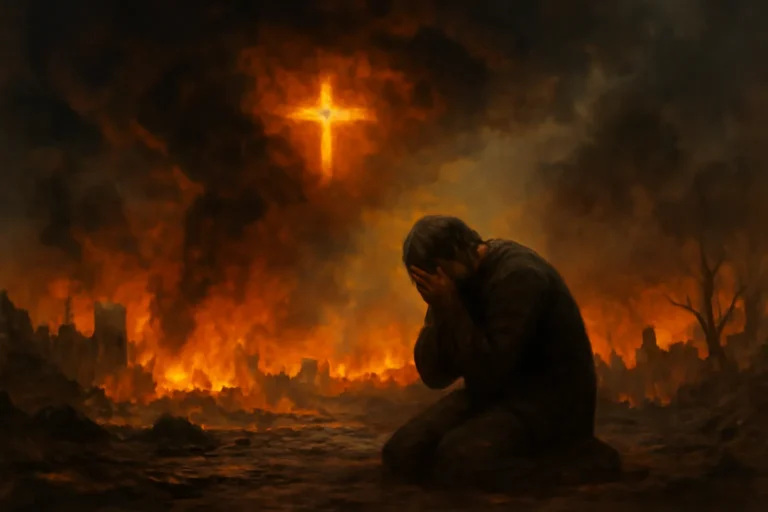
Timeline of Jesus’ Last Week: A Day-by-Day Holy Week Timeline
The final days of Jesus of Nazareth, often called the Passion Week, form a compact and highly influential narrative in the Christian tradition. This day-by-day overview presents a clear chronology of events commonly identified in the Gospel accounts as Jesus’ last week on earth, a sequence that culminates in the crucifixion, burial, and, according to Christian faith, the resurrection. This article offers a detailed timeline of the Holy Week, sometimes referred to as the last week of Jesus’ life, the Passion Week chronology, or the timeline of Jesus’ final days, with emphasis on key moments, places, and teachings that readers may encounter in biblical study, liturgy, or devotional reflection.
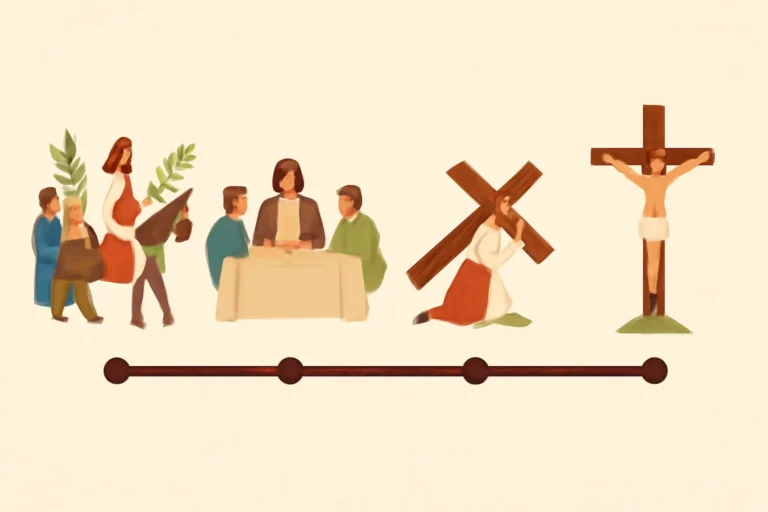
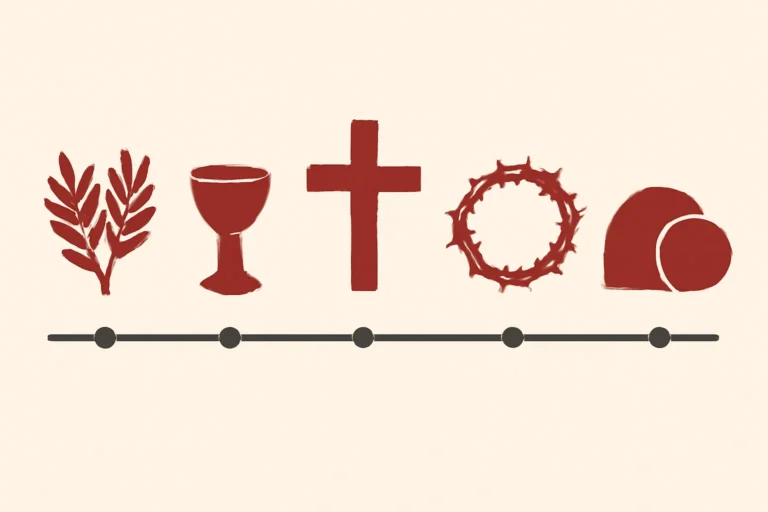
On the Sunday before the Passover, often called Palm Sunday, Jesus enters Jerusalem in a moment that many scholars and readers view as a deliberate, symbolic action. The setting is significant because it frames the coming days within a framework of prophecy and anticipation. The crowds welcome him as a messianic figure, spreading cloaks and palm branches on the road and shouting greetings that echo ancient expectations of a king who would liberate Israel. This day marks the start of the observable public phase of the Holy Week timeline, and it signals the intensifying conflict with religious authorities while drawing the attention of the broader crowd in the city.
Jesus rides a donkey into Jerusalem, fulfilling a prophecy and signaling a message of peace rather than conquest. The act itself is a deliberate contrast to political rebellion and a statement about the nature of the coming kingdom.
Crowd reaction includes shouts of praise and the spread of garments and palm branches, illustrating popular hope and expectation surrounding Jesus as he enters the holy city.
The setting at Jerusalem introduces a sequence of temple activity, teachings, and confrontations that will unfold over the next several days in the Holy Week narrative.
Temple surroundings provide the backdrop for the early signs of tension between Jesus and the religious authorities, a tension that will grow in the days ahead.
Monday of Holy Week: Cleansing the Temple and Teaching in the Temple Courts
The narrative commonly identified as Monday of the Holy Week centers on the cleansing of the temple and Jesus’ sustained teaching within the temple precincts. The events of this day highlight the clash between Jesus’ authority and the commercial and bureaucratic structures that had developed around the sacred space. While the Gospel accounts vary in their emphasis, a consistent theme is the rejection of greed and the call to spiritual and ethical renewal. This day also showcases Jesus’ healings and interactions with those who seek him, occurring within the temple precincts and its immediate surroundings.
Cleansing of the temple: Jesus overturns tables and drives out the money changers, a powerful symbolic act against exploitation in worship and the misalignment of spiritual priorities with economic practices.
Prophetic teaching: Jesus teaches in the temple courts, challenging the leaders and prompting questions from religious authorities who seek to find fault or trap him in his words.
The fig tree motif (as some traditions retell): Jesus curses a barren fig tree earlier in the week, a symbolic action that many interpret as a sign of judgment on spiritual fruitlessness, which some tie to the Monday–Tuesday period in Holy Week chronology.
Outreach to worshippers and the ongoing display of Jesus’ authority, which deepens the antagonism of enemies who will later mobilize against him.
Tuesday of Holy Week: Teaching, Debates, and Predictions
The day commonly identified as Tuesday in Holy Week centers on intense teaching, debates with religious authorities, and prophetic warnings about the future. In the synoptic gospels, Jesus engages with scribes, Pharisees, and leaders as he lays out essential moral and theological challenges. This timeline of Jesus’ last week presents the Olivet discourse and other teachings as a focal point, offering a window into Jesus’ expectations regarding the temple, the end times, and the coming kingdom. In many readers’ eyes, Tuesday becomes a day in which the public strategy of opposition becomes clearer, setting the stage for the trials to come.
Teaching in the temple courts: Jesus offers parables and direct teaching that confront the leadership and reveal how the crowd should respond to spiritual leadership and moral integrity.
Parables and responses: The religious leaders pose questions and Jesus uses them to illustrate the nature of faith, loyalty, and justice within God’s plan.
Warnings about the temple’s future: Jesus predicts significant events concerning the temple and the city, framing the events of the coming days within a larger divine purpose.
Continuation of public engagement: Despite growing opposition, Jesus continues to teach and draw crowds, reinforcing the juxtaposition of light and darkness in the week’s storyline.
Wednesday of Holy Week: Spy Wednesday and Betrayal in View
In many Christian traditions, the day now known as Spy Wednesday marks the point when Judas Iscariot’s plan to betray Jesus becomes more clearly defined. The Gospel narratives place the betrayal in the period leading up to the Last Supper, and by Wednesday some traditions emphasize Judas’ decision to betray Jesus for money as the turning point that intensifies the week’s drama. While some scholars treat the exact timing as fluid across sources, this day is widely recognized as a hinge moment in the Holy Week timeline, a day in which the narrative’s human drama—greed, loyalty, and the price of betrayal—comes into sharp focus.
Judas’ agreement to betray Jesus: The antagonistic alliance is formed, shaping the events that will lead to the arrest later in the week.
The chief priests and elders’ plotting: The religious authorities solidify their strategy to capture Jesus in a way that avoids public uproar or religious danger to themselves.
Continued tension in Jerusalem: The city remains a theater for heated exchanges and strategic moves among competing factions.
The anointing of Jesus (as recounted in various traditions): Some traditions recount anointment events that foreground the recognition of Jesus’ anointed role in preparations for the days ahead.
Maundy Thursday: The Last Supper, Washing of Feet, and Gethsemane
The most spiritually dense day in the sequence, Maundy Thursday, centers on the Last Supper, the feet-washing ritual, the Garden of Gethsemane, and the arrest that follows in the dark hours of the night. This day is often treated as the hinge between the public ministry of Jesus and the suffering that follows in the Passion narrative. The term “Maundy” derives from a Latin word meaning “new commandment,” reflecting Jesus’ new commandment to love one another as he loved his disciples. The events of this day reveal both intimate fellowship among the disciples and the grave gravity of what is about to occur.
The Last Supper: Jesus shares bread and wine with the disciples, presenting them as symbols of his body and blood, establishing what Christians often call the Eucharist or Communion. The language of the institution of the covenant becomes a central focus of this day’s memory.
Foot washing: Jesus washes the disciples’ feet, modeling service, humility, and moral leadership for his followers. He instructs them to imitate his example of sacrificial care for others.
Gethsemane prayer: In the Garden of Gethsemane, Jesus prays with deep distress, seeking alignment with the Father’s will while his disciples struggle to stay awake and support him.
The arrest: Judas arrives with a cohort of soldiers to arrest Jesus, marking the moment when the public trial and trial-by-night begin to unfold, setting the stage for the subsequent trials.
Good Friday: Trials, Crucifixion, and Death
Good Friday presents the central event of Christian faith—the crucifixion of Jesus. The timeline of Jesus’ last week on earth on this day features a sequence of interrogations, legal proceedings, and an execution that is deeply significant within Jewish and Roman contexts. The trials before religious authorities and then before civil authorities, the carrying of the cross, and the final crucifixion at Golgotha all play out with dramatic force. In many traditions, this day is observed with solemn remembrance as the moment of greatest suffering and sacrifice, culminating in Jesus’ death and the tearing of the temple veil as a sign of cosmic significance.
Night and early morning trials: Jesus faces a night-long sequence of questioning before the Sanhedrin and then the Roman authorities, marked by charges of blasphemy and political insurrection.
Pilate’s examination and decision: The Roman governor questions Jesus, and political realities intersect with religious arguments, leading to a verdict that intensifies the week’s trajectory toward the cross.
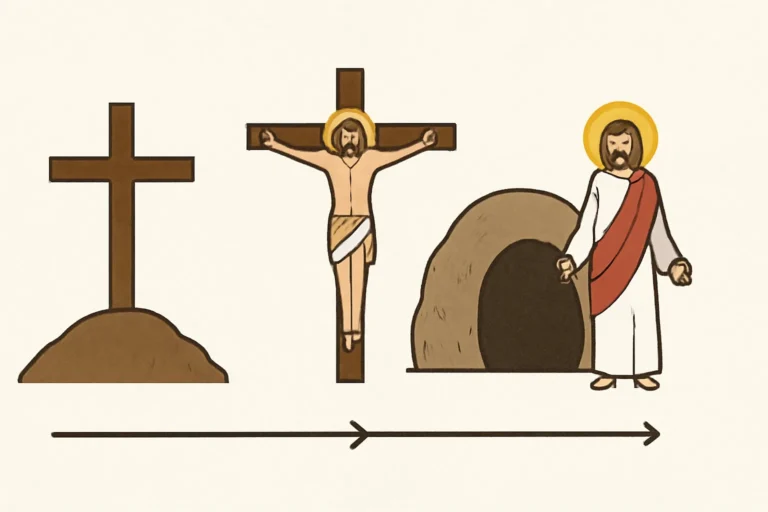
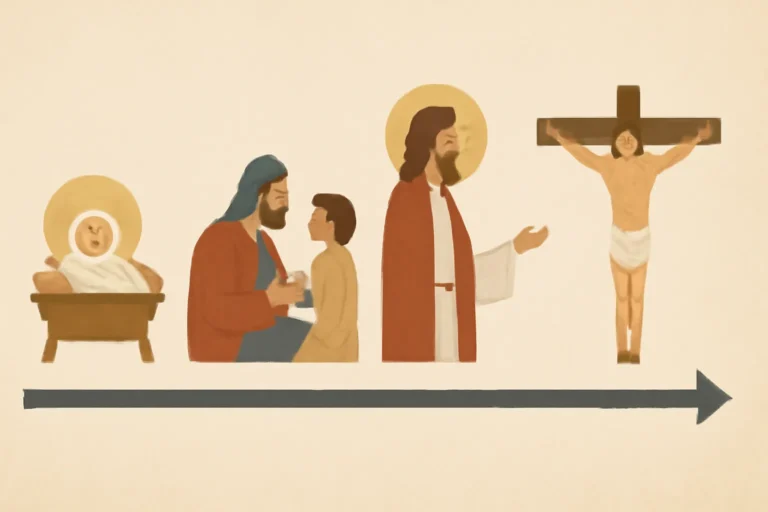
The crucifixion: Jesus is led to Golgotha, crucified between two criminals, and the inscription above the cross declares him as “King of the Jews.” The event is surrounded by moments of darkness, torn temple veil, and intimate moments of compassion from Jesus to those who stand nearby.
Death and burial: Jesus dies on the cross, and his body is placed in a tomb, watched by guards, as the Sabbath approaches and the city of Jerusalem holds its breath.
Holy Saturday is traditionally a day of solemn waiting, a pause in the narrative that corresponds to the Jewish Sabbath. In the Gospel accounts, it is a time when Jesus’ body rests in the tomb and the world marks a moment of quiet expectation. The heavy weight of Friday’s events settles into a different kind of anticipation as the faithful await what comes next in the timeline of Jesus’ last week on earth. This day is often celebrated quietly in liturgical contexts, with readings that reflect on the mystery of Jesus’ death and the promise of life beyond the grave.
Burial and entombment: Joseph of Arimathea and Nicodemus place Jesus’ body in a new tomb cut from rock, wrapping him in linen cloth and spices in a final act of devotion.
Security around the tomb: A stone is set at the tomb entrance, and guards are described as keeping watch, aligning with the Sabbath rest observed by Jesus’ followers.
Preparation for Sunday: The faithful prepare for a dawn watch and for the possibility of life beyond the grave, reflecting the anticipation that characterizes the Easter narrative.
Resurrection Sunday: The Dawn of Easter and the Appearance Narratives
The final day of the week, commonly known as Easter Sunday or Resurrection Sunday, is the culmination of the Holy Week timeline. It presents the discovery of the empty tomb, the angelic proclamation that Jesus has risen, and a series of appearances to his followers that confirm the risen presence of Jesus. This day is central to Christian faith, signaling victory over death and the fulfillment of Jesus’ promises. In various gospel accounts, early-morning searches by women, encounters with angels, and subsequent appearances to the disciples provide the core narrative of the Resurrection. The day’s events are celebrated in liturgy and worship around the world and are interpreted as the definitive demonstration of Jesus’ divine authority and the hopeful future of his followers.
Women visit the tomb and the vanishing stone
The stone is rolled away, and the tomb is found to be empty. The women who come to anoint Jesus discover that Jesus has risen, and an angelic message invites them to share the good news. The miraculous discovery frames the entire Resurrection story as a turning point in the timeline of Jesus’ last week, moving from death to life and from sorrow to joy.
First appearances and early preaching of the risen Jesus
The risen Jesus appears to several individuals and groups, beginning with individuals such as Mary Magdalene and others who encounter him near the tomb. The resurrection appearances serve as foundational moments for Christian belief, offering tangible experiences of the risen Christ and transforming fear into proclamation.
Road to Emmaus and the commissioning of the apostles
In one of the most well-known resurrection narratives, two followers encounter Jesus on the road to Emmaus without recognizing him at first, only to realize his true identity in a later moment of breaking bread. This episode emphasizes Christian interpretations of scriptural fulfillment, revelation, and the spread of the good news to the broader community of disciples. The day culminates with Jesus appearing to the larger group of disciples, bestowing peace, instructing them to proclaim the gospel, and empowering them for ministry.
Enduring themes across the day-by-day Holy Week timeline
Across the timeline of Jesus’ last week, several enduring motifs recur, shaping the theological and devotional reading of these events. First, the fulfillment of prophecy is a thread that runs through the entry into Jerusalem, the teachings in the temple, the betrayal, and the crucifixion, producing a sense of divine purpose and continuity. Second, the contrast between darkness and light intensifies as the week progresses—from praise at the start to the crucifixion and finally the resurrection, which is understood as the ultimate light breaking into darkness. Third, the ethical and communal dimensions of Jesus’ ministry—servant leadership, compassion for the marginalized, and the call to love one another—are consistently foregrounded, especially in the Maundy Thursday moments of the Last Supper and the washing of feet. Fourth, the tension with authorities—both religious and political—provides a dramatic frame for the week, illustrating the human and institutional forces at work in the Passion narrative. Finally, the transformative power of the Resurrection serves as the culmination of the day-by-day Holy Week chronology, shaping Christian hope, mission, and worship across centuries.
Variations in naming and emphasis: broader semantic breadth
Within Christian tradition and scholarship, you will encounter several ways to refer to this sequence, reflecting different emphases in theology, liturgy, and biblical study. The phrase timeline of Jesus’ last week may appear in discussion guides, while others speak of the final week of Jesus’ life, the Passion Week chronology, or the Holy Week timeline. Yet another common expression is the last week of Jesus’ earthly ministry. Each of these formulations highlights the same core sequence of events, even as they foreground slightly different interpretive angles—prophecy, obedience, sacrifice, or the triumph of the resurrection. In exploring this timeline, readers gain a richer understanding of how a single week’s events became a foundational story in world history and religious history alike.
Why this day-by-day approach matters: learning from a structured chronology
Presenting the Holy Week events in a day-by-day format helps readers notice both the continuity and the change across the week. It makes visible how each day builds on the previous one, how public ministry gives way to private struggle, and how the message of Jesus moves from public teaching to personal encounter with suffering, death, and ultimately life. For students of theology, Bible study, or church history, this approach clarifies the sequence of episodes, the geographical settings (Jerusalem, the temple precincts, the Garden of Gethsemane, Golgotha, and the tomb), and the temporal flow that marks the Passion narrative. For devotional readers, it reinforces the sense of a sacred journey—one that invites reflection, reverence, and hope in equal measure.
Those who wish to study the timeline of Jesus’ last week in more depth may consult a variety of sources, including the canonical Gospels of Matthew, Mark, Luke, and John, as well as early Christian commentary and patristic writings. Modern biblical scholarship offers different harmonizations and numerical approximations for specific events on specific days, while liturgical calendars help communities situate these events within yearly celebration. Regardless of the approach, the day-by-day Holy Week timeline remains a powerful way to engage with the Gospel narratives, the meanings they carried for first-century audiences, and the enduring implications for faith communities today.
With this day-by-day overview of the timeline of Jesus’ last week, readers can trace a continuous arc from the Triumphal Entry through the Empty Tomb and the Resurrection appearances. The sequence invites both historical curiosity and spiritual reflection, encouraging a more integrated understanding of how the final days of Jesus’ earthly life have shaped art, worship, ethics, and the ongoing story of Christian faith worldwide.