Dogmatic Theology vs Systematic Theology: A Quick Guide
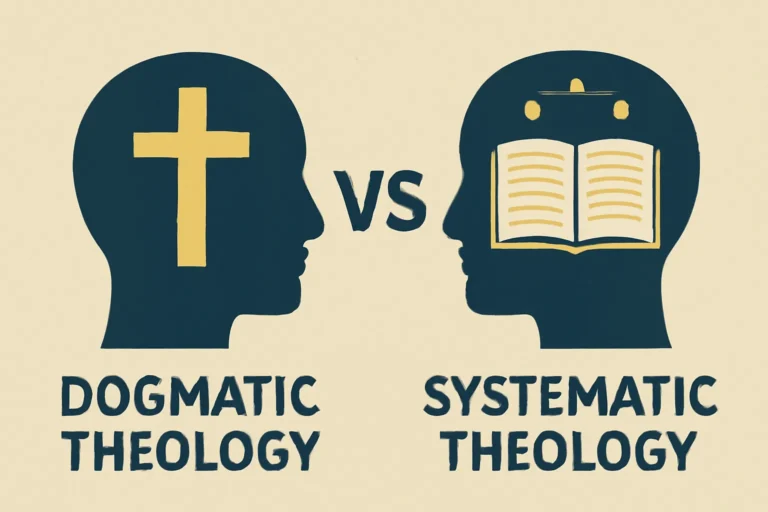
In theological study, two enduring modes frame how Christians think about belief: dogmatic theology and systematic theology. Although they share a common goal—understanding what the faith teaches and why it matters—each approach has distinct emphases, methods, and historical legacies. This guide offers a clear, practical comparison of dogmatic theology and systematic theology, sometimes called dogmatics and systematics, and explains how scholars, pastors, and lay readers can benefit from knowing how these disciplines relate, differ, and cooperate.
Dogmatic theology (or dogmatics) is the study of Christian doctrine as it is confessed or held as a matter of faith within a particular church tradition or a broader ecumenical framework. It emphasizes the authoritative content of doctrine—what must be believed for orthodox faith—and often traces the development of those beliefs through historical creeds, councils, and confessional statements. The language of doctrine, dogma, and orthodoxy are central to dogmatic inquiry.
Systematic theology (or systematics) is the project of organizing the whole of religious belief into a coherent, logically ordered system. It starts with topics or categories—such as God, humanity, sin, salvation, church, eschatology—and analyzes what various sources (Scripture, tradition, reason, and experience) say about each topic, striving for internal harmony and clear articulation. The aim is not only to summarize belief but to reveal how the pieces fit together.
Although these definitions set a baseline, real-world practice often blends the two. In many settings, dogmatic theology provides the non-negotiable content laid down in confessions, while systematic theology supplies the method by which that content is organized, explained, and made accessible to pastors, students, and interested readers.
Historical roots and development
The two projects grew out of different ecclesial needs and intellectual climates, though they have always influenced each other.
Dogmatic theology in historical confession
From the early church through the medieval era, and into the modern period, dogmatic theology often emerged as a way to articulate and defend the faith against heresy, error, or misunderstanding. Key moments included:
Ecumenical councils shaping central dogmas about the Trinity and the incarnation.
Creeds and confessions that crystallized essentials of belief for particular communities, such as the Apostles’ Creed or the Nicene Creed.
Historically situated debates that produced concise formulations about the person and work of Christ, the Holy Spirit, and the nature of salvation.
Systematic theology as a scholarly discipline
Systematic theology matured as a distinct scholarly method in various Christian traditions, especially from the Reformation onward. It responded to a need for clarity, education, and reform by providing a method to compare confessional content with biblical texts, to address new questions, and to present doctrine in a way that could be taught in seminaries, universities, and pulpits. The rise of disciplined dogmatic projects—often called systematics—reflected a broader trend toward critical and organized scholarship.
Key aims and questions
Understanding the aims of each enterprise helps illuminate how they are used in church life and academia.
What dogmatic theology seeks to accomplish
Preserve the content of faith as entrusted to the church through revelation and tradition.
Clarify the non-negotiable dogmas and the boundaries of orthodox belief to resist error.
Explain how doctrinal statements have emerged from the church’s historical experience, while affirming the unity of the core faith across time and cultures.
What systematic theology aims to achieve
Provide a coherent map of Christian belief by organizing doctrines into teachable categories.
Engage with a broad range of sources—primarily Scripture, but also tradition, reason, and experience—to show how belief coheres across topics.
Offer practical and contemporary interpretation that can guide preaching, teaching, and personal faith formation.
The difference in approach is most evident in the way each discipline uses sources and constructs arguments.
Sources in dogmatic theology
In dogmatics, the primary authority often rests in a traditional framework:
Creeds and confessional documents that explicitly articulate the church’s settled beliefs.
Councils and church polity that authorize the statements of faith.
Historical theology that traces how doctrines were developed and defended.
Pastoral and liturgical contexts where the content of the faith is taught and confessed.
The aim is to articulate what is necessary to hold as the faith once delivered to the saints, with attention to the continuity of tradition.
Sources in systematic theology
Systematic theology foregrounds a broader, often more critical, engagement with sources:
Scripture as the primary canonical source, interpreted in light of historical contexts.
Tradition (the church’s accumulated teaching) as a resource to inform understanding, not just to confirm it.
Reason and philosophical reflection to test coherence and address philosophical questions about reality, knowledge, and ethics.
Experience—including moral, spiritual, and communal insights—to evaluate how beliefs relate to life in the world.
These sources are often weighed differently depending on the tradition. For example, in some denominations, confessional confessions may guide the systematics, while in others, more biblical-theological or historical-critical approaches may shape the method.
The two disciplines differ in what they consider the proper scope of study and how open they are to change.
Scope in dogmatic theology
Emphasizes the essentials of faith and the boundaries of orthodoxy.
Often centers on central doctrines such as the Trinity, Christology, salvation, and ecclesiology.
Framed by a particular confessional tradition or church family, which shapes the selection and wording of doctrines.
Scope in systematic theology
Spans a broad range of topics, including creation, anthropology, pneumatology, angelology, and eschatology, as well as the church and mission.
Often aims to cover questions that arise in pastoral life, ethical debates, and cultural engagement, even if they are not framed as “doctrines” per se.
Allows for alternative models or formulations of doctrine, provided they maintain coherence and fidelity to core biblical and historical commitments.
Differences and overlaps: a practical comparison
While the two approaches share common ground—both seek to articulate what Christians believe and why—it helps to map their differences and overlaps side by side.
Key differences at a glance
Authority source: Dogmatic theology relies heavily on confessional authority and historic creedal statements; systematic theology relies on a broader assembly of sources, including Scripture and reason, with an emphasis on internal coherence.
Aim: Dogmatics seeks to preserve and defend the faith as it has been confessed; systematics seeks to explain, organize, and apply the faith in a way that makes sense across contexts and times.
Boundaries: Dogmatic work often emphasizes the non-negotiables of faith; systematic work tends to explore the implications of beliefs and may entertain alternative formulations while still seeking unity.
Approach: Dogmatic work is often more resistant to revision in order to maintain doctrinal continuity; systematic work is more open to revision in light of new insights, questions, and cultural changes.
Audience: Dogmatic projects frequently serve the church’s teaching and formation within a confessional context; systematic projects target students, pastors, and scholars who seek a synthetic understanding of faith across topics.
Where they converge
Both disciplines are deeply tied to the church’s life and its mission in the world.
Both rely on careful interpretation of biblical texts and historical sources.
Both need to address contemporary questions while preserving fidelity to core Christian claims.
Examples and applications: how theory meets practice
To see the distinction in action, it helps to look at concrete manifestations in creedal statements, confessional traditions, and contemporary theological work.
Creeds such as the Apostles’ Creed and Nicene Creed articulate foundational beliefs about the Trinity and the incarnation. In dogmatic theology, these texts often serve as a starting point for what must be confessed by all Christians within a tradition.
Confessions such as the Westminster Confession of Faith, the Belgic Confession, or the Lutheran Book of Concord provide a more explicit articulation of doctrine for a particular church family. They guide preaching, catechesis, and church discipline, illustrating how dogmatic content becomes pastorally useful.
Systematic formulations in practice
Systematic theologies organize material into chapters or sections on topics like theology proper, creation and humanity, salvation, church and sacraments, and eschatology.
Many modern systematic theologians write in a way that engages with current debates—bioethics, social justice, technology, and interfaith dialogue—while seeking to show how these concerns connect to laity’s daily lives and the church’s mission.
Contemporary practice and debates
The contemporary scene offers vibrant discussions about how to practice dogmatic theology and systematic theology in a pluralistic age.
Confessional fidelity vs. ecumenical openness
Some communities emphasize confessional fidelity—prioritizing the integrity of established creeds and confessions—while others prioritize ecumenical dialogue and broader consensus, which can require flexible formulations or paraphrased expressions of doctrine.
Fundamentalism, liberalism, and postliberal thought
Debates about how strictly to interpret doctrinal statements—whether to treat them as timeless propositions or as historically conditioned expressions—shape current work in both dogmatics and systematics. Postliberal approaches, for example, emphasize the narrative and communal aspects of doctrine, often challenging claims of pure rational deduction. In contrast, fundamentalism might stress the inerrancy or finality of doctrinal statements, raising tensions with ongoing theological exploration.
Critiques and limitations: thoughtful self-assessment
No theological method is without critique. Recognizing limitations helps readers use these disciplines more wisely.
Common criticisms of dogmatic theology
Overemphasis on authority can suppress legitimate questions or new insights.
Rigid confessional boundaries may hinder pastoral adaptability to diverse cultural contexts.
Historical confessions reflect particular eras and can require careful interpretation to avoid anachronisms.
Common criticisms of systematic theology
Excessive rationalization can detach doctrine from the lived life of faith.
Attempts at comprehensive system-building risk imposing coherence where data suggests tension or mystery.
Dependence on diverse sources can create tensions between tradition and contemporary scholarship.
Practical implications for pastors, scholars, and lay readers
Understanding the distinction and relationship between dogmatic and systematic approaches can enrich preaching, teaching, and personal faith.
In pastoral ministry
Using dogmatic language when necessary helps articulate key beliefs clearly to the congregation and aligns teaching with the church’s confessional tradition.
Employing systematic methods enables pastors to connect doctrinal content with real-life questions—discipleship, ethics, and community life.
In theological education and scholarship
Textbooks and courses often blend both approaches, teaching dogmatics to ground students in essential beliefs while presenting systematics to develop critical thinking and integrative skills.
Scholars may argue for critical engagement with confessional sources, clarifying how and why certain formulations emerged and what they imply today.
In lay reading and faith formation
Clear, accessible introductions to systematics help readers understand how beliefs fit together, even if they do not possess expertise in historical theology.
Engaging with dogmatic summaries—such as creeds or catechisms—can provide a reliable anchor for faith during seasons of doubt or upheaval.
How to study dogmatic theology and systematic theology effectively
Whether you are a student, a pastor, or a curious reader, practical steps can help you engage these disciplines fruitfully without becoming overwhelmed.
Clarify your aim: Decide whether you need a confessional orientation (dogmatics) or a broad, integrative understanding (systematics), or a thoughtful blend of both.
Know the sources: For dogmatic work, study confessions, creeds, and councils specific to your tradition. For systematic work, begin with careful biblical exegesis, then engage historical and contemporary sources.
Map the structure: Create a topic outline (e.g., God, creation, fall, redemption, church, last things) and fill in how different sources speak to each category.
Evaluate coherence: Test for logical consistency among doctrines. Note where tensions arise and how scholars resolve or acknowledge them.
Engage with critique: Read critiques and alternative formulations with charity. This strengthens understanding and helps explain it to others.
A practical workflow might combine reading a confessional article or creed to ground you in the dogmatic content, followed by a chapter of a systematic theology that portrays how the content is organized and interpreted for present-day life. This dual approach can sharpen both clarity and depth.
Terminology and variations you’ll encounter
The field uses several variants that reflect tradition, emphasis, or scholarly lineage. Being comfortable with the terminology helps in academic reading and community conversations.
Dogmatic theology vs. dogmatics (often used interchangeably in many traditions).
Systematic theology vs. systematics (the method or product of organizing doctrine).
Confessional theology as a subset that centers on confessions; confessional approach often collaborates with the dogmatic plane.
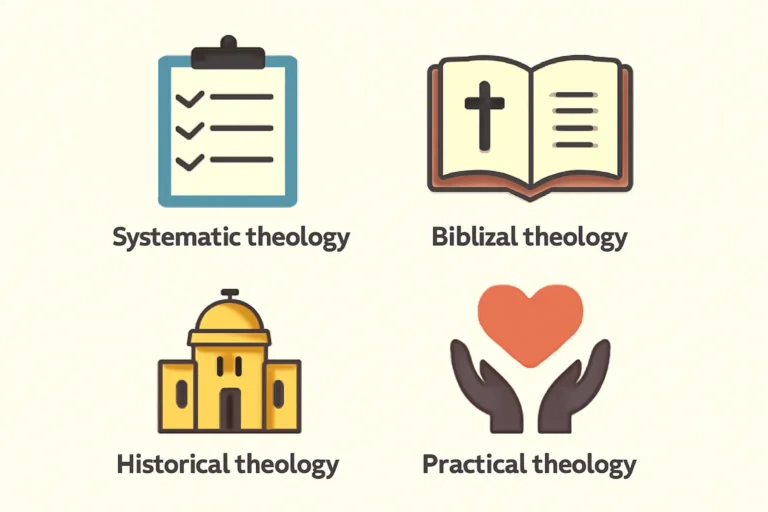
Biblical theology as a related mode that emphasizes the progressive historiography of Scripture before moving into systematics.
Integrative notes: blending dogmatic and systematic work
In practice, most theologians blend the two to fruitful effect. The best work often respects classical confessions while still offering a robust, coherent system that can engage with contemporary questions.
Confessional systematics: A hybrid approach in which a systematic framework is built within the boundaries of a confessional tradition. This keeps doctrinal content anchored while allowing for careful modernization of language and emphasis.
Ecumenical/systematic dialogue: Systematic treatises that explicitly seek to describe and evaluate common ground with other Christian traditions, clarifying where agreements exist and where differences remain.
Pastoral-theological synthesis: A practical synthesis that translates dogmatic conclusions into sermon-ready outlines, catechesis, and ministry strategies without sacrificing doctrinal integrity.
Common pitfalls to avoid
Being aware of potential missteps can help readers and practitioners engage these disciplines more responsibly.
Assuming that all confessions are timelessly accurate without historical critique.
Treating doctrine as a purely abstract system divorced from the life of faith and the church’s mission.
Overemphasizing one source to the neglect of others (for example, privileging Scripture to the neglect of tradition or reason, or vice versa).
Final reflections: why both approaches matter
The conversation between dogmatic theology and systematic theology is not a contest but a collaborative enterprise. Each method sheds light on different dimensions of the Christian faith:
Dogmatics preserves the church’s entrusted beliefs and ensures continuity with the faith handed down across generations.
Systematics clarifies, expands, and communicates those beliefs, helping the faith speak clearly across cultures and eras.
Together, they enable a church to confess its faith with fidelity while engaging boldly with new questions, challenges, and opportunities for witness.
Whether you are reading to understand a confessional statement, studying a modern theological treatise, or preparing a lesson for a local congregation, recognizing the distinction between dogmatic theology and systematic theology, and noticing how they interrelate, will deepen both knowledge and practice.
In sum, the quick guide to Dogmatic Theology versus Systematic Theology points toward an enduring truth: belief is best grasped when it is both confessed in a faithful tradition and coherently organized for reasoned understanding and fruitful living. By attending to both the concrete content of the faith and the strategic method by which that content is arranged, readers and practitioners can cultivate a robust, responsive, and responsible approach to Christian doctrine.
If you’d like to explore further, consider starting with a study of a confessional creed in one tradition and then pairing it with a contemporary systematic overview that situates that creed within broader topics such as God’s nature, humanity and sin, salvation, the church, and eternity.