Where Were the Dead Sea Scrolls Discovered: Locations and Significance
Where the Dead Sea Scrolls were discovered is one of the most famous questions in archaeology and biblical studies. The short answer points to a spectacular site: the Khirbet Qumran plateau on the northwest shore of the Dead Sea, in the region historically known as Judea and today part of the West Bank. But the full story involves a complex sequence of finds, a string of caves, and a transformation in how scholars understand the texts that illuminate Second Temple Judaism and the transmission of the Hebrew Bible. This article surveys where the scrolls were discovered, why that location mattered, and what the discoveries have meant for religion, history, and textual scholarship.
A geographic and historical frame for the discovery
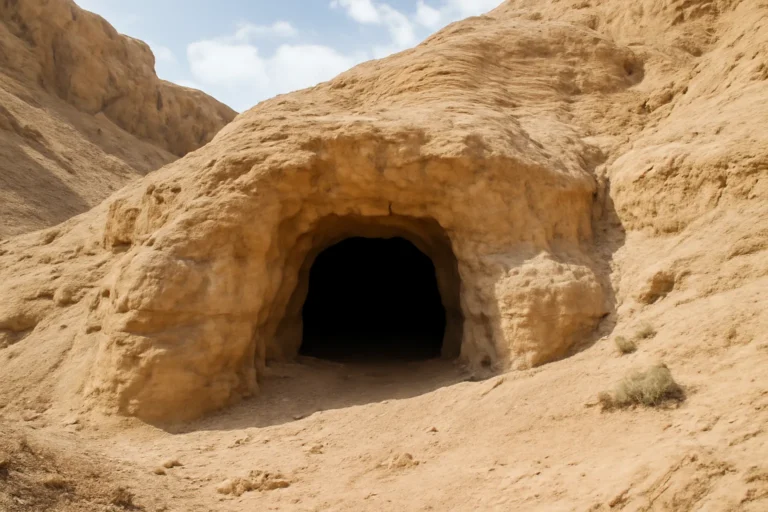
The discovery site centers on the village and cliff-top settlement known as Khirbet Qumran, sitting just inland from the Dead Sea in a harsh desert landscape that has preserved organic matter surprisingly well over two millennia. The location is also tied to a broader landscape of Judaean Desert caves and desert settlement patterns that flourished during the late Second Temple period. When people ask where the scrolls were discovered, a geographic answer is given: they were found in a cluster of caves along the limestone escarpments near Qumran, not scattered across a broad museum district but concentrated in a small, rugged desert zone. The Dead Sea region provides the environmental conditions—dry air, stable temperatures, and mineral-rich soil—that helped preserve parchment, leather, and papyrus for centuries.
Beyond geography, the discovery is also a historical hinge. The scrolls testify to a Jewish community living in the last centuries BCE and the first century CE, a period commonly described as Late Second Temple Judaism. In this sense, the question where were the Dead Sea Scrolls discovered expands to: in which cultural and religious currents did these texts circulate? The answer points to a milieu that included distinctive religious movements, liturgical practices, and a robust process of textual transmission that predates and occasionally intersects with early Rabbinic Judaism and early Christianity.
The moment that began the modern discovery: 1947 and the Bedouin find
To understand where the scrolls were discovered, we begin with the famous 1947 event. In the fall of that year, a young Bedouin shepherd named Muhammad edh-Dhiq (also rendered as Muhammed edh-Dhib) and his companions allegedly found a scroll in a cave near Qumran while on a routine herding trip. This initial discovery led to the retrieval of a scroll wrapped in leather, later identified as the Great Isaiah Scroll (1QIsaa), one of the most complete biblical manuscripts ever found from the ancient world. The Bedouin’s find triggered a wave of archaeologists and scholars who sought to document more of the cave cluster around Khirbet Qumran.
The early period of discovery is often remembered for a mix of luck and systematic search. Although the first scrolls were found by chance, subsequent work followed formal excavation strands that tried to determine if the caves represented a single repository or multiple hideouts used over generations. In the initial years, the question where were the Dead Sea Scrolls discovered was answered through a combination of cave-by-cave exploration and careful cataloging of inscriptions and fragments. The answer, at that stage, was clear: a narrow corridor of caves carved into the Qumran escarpment housed a remarkable library of texts.
From the outset, the finds were controversial in some respects—ranging from questions about ownership to debates over the authenticity and dating of fragments. Yet the core fact remained: the discovery happened at a very particular set of locations along the western edge of the Dead Sea, in a landscape that was both spiritually meaningful to local populations and rich in material remnants from antiquity. The bedrock reality is that the first finds emerged from Cave 1 near Qumran, a cave that would yield several of the best-known scrolls, and that the subsequent years expanded the scope to additional caves in the same vicinity.
Expeditions, caves, and the network of discoveries
After the initial Bedouin find, organized expeditions intensified the search. The team led by Roland de Vaux of the École Biblique in Jerusalem played a central role in the early excavations between 1951 and 1956. These efforts established the formal list of caves that would come to be associated with the Dead Sea Scrolls. In total, eleven caves near Qumran yielded manuscripts—though not every cave contained scrolls, and many fragments were found in multiple caves across the site. This cluster of caves became the core discovery zone from which the full library was gradually assembled and studied.
Cave 1: Home to the best-known biblical and non-biblical texts, including the Great Isaiah Scroll (1QIsaa) and other major manuscripts such as the Genesis Apocryphon and the War Scroll (1QM).
Cave 3: Famous for the Copper Scroll, a unique, metal-text manuscript listing hoards of precious metals and other valuables rather than biblical passages.
Cave 11: Associated with the Temple Scroll (11Q19), one of the most expansive and complex sectarian documents among the finds.
Other caves yielded a variety of biblical manuscripts (copies of parts of the Hebrew Bible) and sectarian writings such as the Community Rule (1QS) and the Damascus Document (CD), among other pesher and interpretive texts.
In addition to these highlights, many other fragments and scrolls appeared across the cave system. The material ranges from Hebrew and Aramaic manuscripts to some Greek letters and scribal notes, reflecting a multilingual literary culture. The sheer volume—hundreds of scrolls and tens of thousands of fragments—gave scholars a powerful, if piecemeal, view of textual transmission at this historical moment.
So, when you ask where the scrolls were discovered, know that the answer is layered: it is about a specific desert site, a cluster of caves, and a set of manuscripts that emerged over several years through careful excavation, careful conservation, and sometimes fortuitous luck.
The contents: what types of texts were found and what they mean
The Dead Sea Scrolls comprise a broad spectrum of texts. Scholars categorize them into two broad families: biblical texts and non-biblical or sectarian texts. The biblical texts include copies or fragments of books that later became part of the canonical Hebrew Bible. In their origins, these manuscripts are among the oldest known copies of biblical books, predating the later Masoretic text by roughly a millennium in some cases. The non-biblical texts illuminate the beliefs, rules, and daily life of a Jewish community that some scholars associate with the Essenes, a Jewish sect or movement active in the broader Second Temple period.
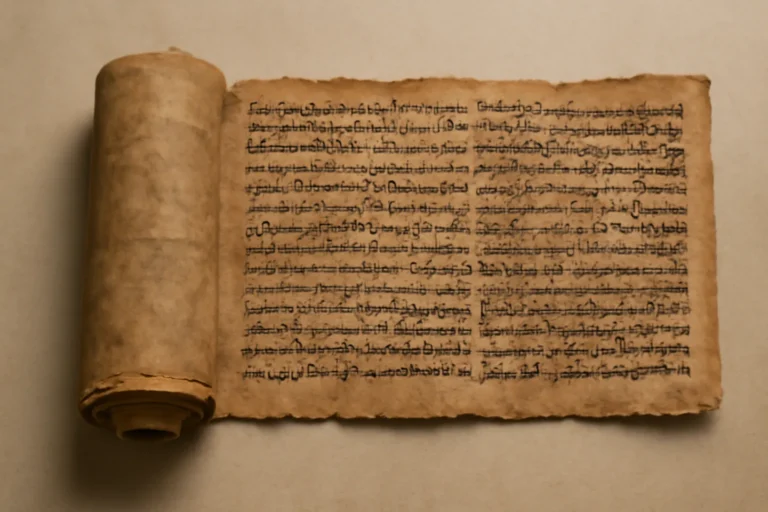
Great Isaiah Scroll (1QIsaa): a near-complete copy of the Book of Isaiah, dating from the 2nd century BCE, one of the best-preserved biblical manuscripts from antiquity.
Genesis Apocryphon (1Q20): a substantial Aramaic retelling of parts of Genesis, providing insights into narrative expansion and interpretation in this period.
War Scroll (1QM): a military manual describing siege tactics, ritual purity expectations, and organizational rules for a community under imminent threat.
Copper Scroll (3Q15): a unique metal scroll listing items of metal and other riches, not a biblical text in the usual sense but a record of found wealth and storage locations.
Temple Scroll (11Q19): a lengthy document outlining laws, ritual practices, and temple-related regulations, reflecting a vision of an idealized temple system.
Community Rule (1QS): a foundational sectarian document describing the rules, governance, and communal life of a community, often linked to Essene-like groups.
Damascus Document (CD): a penitential and legal text that discusses covenant, reversal of sin, and the ethics of law within a community.
Numerous commentaries, psalms, and other ritual or liturgical pieces demonstrate a diverse literary culture around the central desert site.
The significance of these texts lies not only in their age but in what they reveal about the transmission of the biblical text, the diversity of Jewish practice in the late Second Temple era, and the social and legal frameworks of a community living under various political pressures. In short, the question where the scrolls were discovered becomes a gateway to questions about how scripture was formed, interpreted, and circulated in a world very different from later rabbinic Judaism or mainstream Christianity.
A closer look at a few famous manuscripts and their caves
To illustrate the breadth of the finds, here is a compact snapshot of a few representative manuscripts and the caves most associated with them. While cave numbers can vary in the literature, the following associations are widely cited among scholars:
Great Isaiah Scroll (1QIsaa) – one of the most complete biblical manuscripts, preserved in Cave 1 near Qumran, and among the earliest extant copies of Isaiah.
Genesis Apocryphon – a substantial Aramaic expansion of Genesis, also tied to Cave 1, offering unique retellings and interpretive lines that broaden understanding of biblical reception in antiquity.
War Scroll (1QM) – a visionary military manual with prophetic eschatology, associated with the Qumran settlement and preserved in Cave 1 among other fragments.
Copper Scroll (3Q15) – a rare metal scroll found in Cave 3, famous for its inventory-like list of hidden treasures rather than a narrative or legal text.
Temple Scroll (11Q19) – a long, elaborate text from Cave 11 outlining temple-related regulations, ritual practices, and organizational details that reflect an extensive religious program.
Community Rule (1QS) and related sectarian materials – scattered fragments across multiple caves, with substantial portions preserved in early finds tied to Cave 1 and other locations, revealing communal governance and ritual life.
Damascus Document (CD) – a text with covenantal and legal themes, known from multiple fragments that circulated among the Qumran finds, illustrating the ethico-legal concerns of the group.
These examples illustrate where the scrolls were discovered in a geographic sense (the Qumran caves) while also showing the breadth of texts recovered there, from canonical biblical books to distinctive, internally developed religious writings.
Why the location matters for biblical studies and Jewish history
The Qumran site and its caves are not a footnote in religious history but a central piece of evidence about how ancient Jewish communities read, copied, interpreted, and stored their texts. The location matters for several reasons:
Textual witnesses: The scrolls provide some of the oldest surviving copies of biblical books, offering a window into the textual transmission processes that predate later standardization. This helps scholars compare variants against the later Masoretic Text and the Greek Septuagint, deepening understanding of how the biblical text evolved over time.
Religious milieu: The non-biblical scrolls illuminate a vibrant religious world with distinct beliefs, liturgies, and regulations. The presence of laws, rules, and interpretive writings helps contextualize how a particular Jewish community understood covenant, purity, temple service, and communal life.
Historical dating: The artifacts and palaeographic features allow researchers to place the texts within a broad timeframe spanning roughly the 3rd century BCE to the 1st century CE, bridging the late Second Temple era with the beginnings of Rabbinic Judaism and early Christian currents.
Archaeology and technology: The discovery process—cave by cave, with careful preservation and later digitization—illustrates how modern techniques, international collaboration, and scholarly debate shape what we know about the ancient world today.
The broader significance emerges when we answer not only where the scrolls were discovered but what it tells us about how scripture functioned in ancient communities, how different textual traditions coexisted, and how a desert site could house a library of texts that would transform biblical scholarship for generations.
The discovery, the texts, and the ongoing debates
The Dead Sea Scrolls have spurred a wide range of scholarly debates. Some of the most enduring questions include:
Identity of the Qumran community: Are the scrolls the library of a single group, perhaps linked to the Essenes, or do they reflect a wider spectrum of desert religious life? The textual variety suggests a complex milieu that cannot be reduced to a single label.
Textual origins and transmission: How do the scrolls align with other ancient manuscripts in Hebrew, Aramaic, and Greek? What do they reveal about variations in spelling, grammar, and interpretation that later generations chose to standardize or preserve?
Relationship to later traditions: What connections exist between the beliefs expressed in the scrolls and later rabbinic Judaism, early Christian thought, or other late-antique religious movements?
Preservation and access: How should ancient manuscripts be preserved, studied, and shared with the public and with scholars around the world? The history of ownership, publication, and distribution has raised ethical and practical questions about accessibility, reproduction rights, and digitization.
These debates continue to animate the field. Each new discovery or renewed analysis of a fragment can shift scholars’ interpretations of how communities understood law, prophecy, and ritual in a time of political and religious change. The location of discovery—Khirbet Qumran and its caves—remains central to how researchers frame these conversations, because the environment, archaeology, and historical context are inseparable from the textual material itself.
Preservation, access, and the modern footprint of the scrolls
In the decades since their initial discovery, the scrolls have undergone intense conservation, cataloging, and, in many cases, digital reproduction. The practical and ethical challenges of keeping fragile manuscripts intact while allowing scholars and the public to study them have shaped how the scrolls are handled today. The main points of interest in terms of where the scrolls are kept include:
Preservation centers: Museums and laboratories that specialize in manuscript conservation, climate control, and careful handling to prevent further deterioration of parchment, leather, and metal artifacts.
Major repositories: The bulk of the scrolls are affiliated with institutions in Israel, Jordan, and other countries that hold fragments and full texts. The Shrine of the Book at the Israel Museum in Jerusalem is a central hub for public exhibitions and research in Israel, with a long-standing role in housing the most iconic texts.
Public exhibitions and accessibility: Publicly accessible displays allow visitors to engage with replicas and, in some cases, original fragments. Scholarly access often occurs through academic libraries, digital libraries, and collaborative projects that make high-resolution images and critical editions available to researchers worldwide.
Digitization and scholarship: Modern digitization efforts enable global access while reducing the handling burden on fragile artifacts. Digital catalogs and online databases serve as critical tools for text-critical work and for teaching about the Scrolls in classrooms and online programs.
Understanding where the scrolls are kept today helps readers appreciate the modern life of these ancient texts. It is a reminder that discoveries from a desert cave have become a shared cultural heritage, studied by scholars across continents and enjoyed by readers around the world through museums, libraries, and digital platforms.
Visiting and studying the Scrolls today: where to look and what to expect
For those curious about where the scrolls were discovered and their present-day footprint, several practical paths exist:
Museums in Jerusalem: The Shrine of the Book houses the Great Isaiah Scroll and many other essential fragments. The museum grounds also host interpretive displays that connect the artifacts to their discovery in the Qumran caves and to the broader context of Second Temple Judaism.
Jordan Museum in Amman and related Jordanian institutions: Some scroll-related artifacts or related material are preserved in Jordan, reflecting the cross-border dimensions of the Scrolls’ history and ownership.
British and European libraries: Several scroll fragments and high-resolution images are held by major libraries and research centers around Europe and North America, enabling international scholars to engage with the texts without traveling to every site.
Digital resources: Numerous projects provide online access to high-quality photographs, translations, and scholarly apparatus. For students and teachers, these digital resources offer a powerful way to explore the texts in a structured, classroom-friendly format.
Visitors and readers should approach the Scrolls with an awareness of their fragility and the careful stewardship required to preserve them for future generations. The discovery of the scrolls is not only a historical event; it is a living scholarly project that continues to grow as new analyses, new fragments, and new technologies emerge.
Legacy: why the discovery still matters
The discovery of the Dead Sea Scrolls has left a lasting legacy across multiple domains:
Textual history: The scrolls provide crucial evidence about how the biblical text was transmitted and what textual variants existed in the centuries closest to the original composition of many prophetic and historical writings.
Religious history: They illuminate diversity within Judaism during the late Second Temple period and offer a contrast to later rabbinic and Christian traditions, helping scholars understand a broader landscape of belief and practice.
Archaeology and science: The manner in which the Scrolls were discovered—careful cave exploration, stratigraphic recording, and later preservation—has become a model for how to approach fragile manuscripts in challenging environments.
Public understanding: The Scrolls captured the public imagination, fueling curiosity about ancient languages, biblical history, and the daily life of people who lived two millennia ago. They have become a touchstone for discussions about religious heritage, archaeology, and the history of the Bible.
As scholars continue to publish new analyses, and as conservation methods improve, the question of where the scrolls were discovered remains more than a historical curiosity: it is a gateway into ongoing conversations about how we reconstruct the past from fragments, how much of ancient life survives in written form, and how communities interpret their sacred texts across generations.
In sum, the Dead Sea Scrolls were discovered at a specific desert site—the Qumran plateau near the Dead Sea—across a network of caves that collectively housed a library of biblical manuscripts and sectarian writings. The location is inseparable from the content: the texts illuminate a world of religious practice, legal codes, liturgical texts, and prophetic interpretations that shed new light on how communities produced, copied, and interpreted their sacred writings. The enduring significance of these discoveries lies in their ability to connect a remote desert landscape with the long, intricate history of the Bible, Jewish thought, and the religious experiments that thrived at the margins of ancient civilizations.