Jewish Dietary Laws: A Guide to Kashrut and Kosher Observance
Across Jewish communities around the world, dietary practice is guided by Kashrut and the standard designation Kosher foods. This article offers a comprehensive guide to the laws, customs, and practicalities that shape how observant Jews eat, cook, and shop. It covers core principles, the categories of permissible and forbidden foods, how supervision and certification work, and the way these rules interact with modern life, travel, and celebration. The aim is to provide a clear, structured overview that is useful for beginners and helpful as a reference for households seeking to deepen their practice.
Kashrut is a set of religious and legal standards derived from Jewish law that govern which foods may be eaten, how they are prepared, and how they are served. The term comes from the Hebrew root that suggests fit or proper for consumption. In everyday usage, communities refer to Kashrut as the framework that determines what is Kosher and what is not. The purpose behind these laws is multifaceted: they are seen as a means of sanctifying daily life, elevating ordinary eating into a religious act, and fostering communal discipline and mindfulness about what goes onto the table. For many households, following Kashrut is a daily practice that reflects identity, tradition, ethical considerations about animals, and a sense of continuity with generations of Jewish practice.
Key Concepts in Jewish Dietary Law
Kashrut is the overall system of Jewish dietary rules, including what foods are permitted, how they are prepared, and how they are separated in meal service.
Kosher describes foods that conform to these rules and may be consumed by observant Jews.
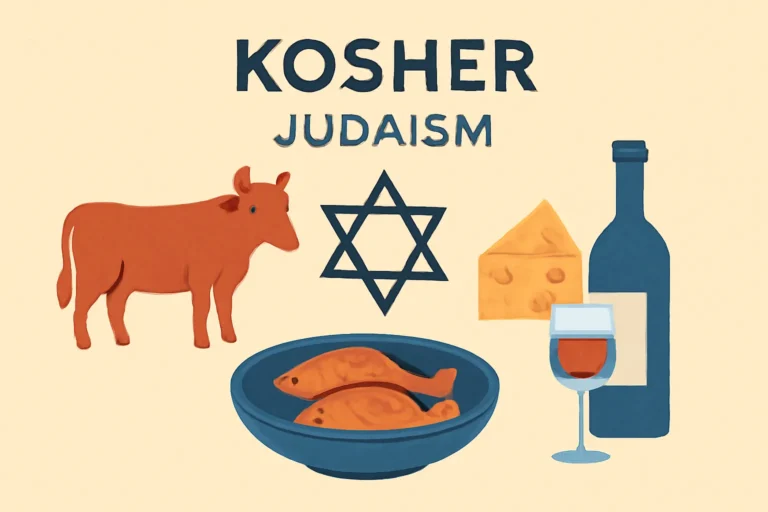
The basic categories of foods are meat, dairy, and pareve (neutral foods like fruit, vegetables, grains, and fish that do not contain meat or dairy ingredients in practice).
A central prohibition is the meat-and-dairy separation, which forbids cooking or eating meat and dairy together and often requires separate utensils, cookware, and even dining spaces in many households.
Many rules about slaughter, processing, and preparation are shaped by halacha (Jewish law) and classical rabbinic literature, and communities may observe variations in practice based on tradition and interpretation.
In contemporary life, kosher certification from rabbinic authorities provides assurance that products meet the standard, especially for processed foods, beverages, and restaurant service.
Animals, Birds, and Sea Creatures
Land Animals
One of the foundational categories in Kashrut concerns which land animals are permitted. The guiding criterion states that a land animal is kosher only if it has both a completely split hoof that does not close again and chews the cud. This dual requirement excludes pigs, camels, horses, and most other mammals, even though some may have other appealing attributes. The practical implication is that a limited set of domesticatable animals—such as cows, sheep, and goats—are typically considered kosher when slaughtered and prepared in accordance with ritual guidelines. Wild animals and non-domestic species are generally not consumed when the standard criteria are not met.
In addition to the animal’s physical features, the ritual slaughter process—shechita—is a significant factor in determining if meat is kosher. The method is designed to minimize suffering and ensure a humane, swift handling of the animal. While most households do not perform shechita themselves, many communities rely on specialized facilities and licensed slaughterers to provide meat that bears reliable supervision. For households seeking stricter adherence, considerations about animal welfare, humane slaughter, and the source of meat become part of the choice of supplier and brand, often reflected in terms like glatt kosher, which refers to a higher standard of respiratory health in the animals, though its usage and interpretation vary among communities.
Birds
Among birds, the general rule is that kosher birds are those that are not predatory and are traditionally prepared for consumption in Jewish communities. The list of permissible birds commonly includes domesticated fowl such as chicken, turkey, duck, goose, and often pheasant or quail, depending on local custom and supervision. Since birds of prey and scavengers are not kosher, the family of non-kosher birds is understood through a principle of prohibiting birds that are predatory in nature. It is important for households to source birds from reliable suppliers who provide appropriate supervision to certify that the birds are kosher throughout the processing chain.
The laws governing sea life are, in many ways, clear and precise: a creature from the sea is considered Kosher only if it has both fins and scales. This rule excludes shellfish, mollusks, and other marine life such as shrimp, crabs, or lobsters. The distinction has a practical impact on what families can eat and how seafood is labeled and prepared. Some communities allow certain fish products that are processed with non-kosher ingredients if the processing is certified; however, the core requirement remains intact: fins and scales. The result is a broad but well-defined range of acceptable seafood alongside a clearly demarcated set of forbidden options.
Meat and Dairy Laws
A central pillar of Kashrut is the separation of meat (basar) and dairy (chalav) in virtually all aspects of eating and kitchen life. This separation is expressed in several interlocking rules that shape meal planning, kitchen design, and daily routines. The primary principle is simple in conception but far-reaching in practice: never cook or eat meat and dairy together, and use separate utensils, cookware, and sometimes even dishwashing facilities for meat and dairy products.
Separation of Meat and Dairy
The basar-b’chalav prohibition forbids combining meat and dairy in the cooking, serving, or consumption process. The practical implementation includes measures such as keeping separate sets of cutlery, pots, pans, plates, and storage spaces for meat and dairy foods. Some households maintain two full kitchens, while others manage with carefully labeled and dedicated sections, routinely cleaning and separate washing rules. The rules can vary by community, but the underlying moral and ritual intention remains the same: to keep meat and dairy distinct as a religious discipline and a daily reminder of the laws governing food.
Waiting Periods and Dishware
After consuming meat, many households observe a waiting period before consuming dairy, and the length of this interval varies by tradition. Common practice ranges from about three hours to six hours, with some communities adopting shorter or longer times depending on local custom or rabbinic guidance. Conversely, after dairy, some traditions require waiting before eating meat, while others permit immediate consumption with the caveat that the meat is prepared with separate utensils and cookware. Families often track these times on a household calendar or app to avoid accidental mixing during meals. The waiting period logic reinforces discipline and helps prevent cross-contamination in both prep and serving areas.
Utensils and cookware used for meat must not be used for dairy without proper ritual cleansing or a formal separation process, and vice versa. Some households maintain a “double kitchen” approach, while others rely on the practice of kashering (purifying) dishes and pots through heat, immersion, or alternate cooling methods, depending on material and the degree of contact with food. The rules regarding kashering are nuanced and depend on factors such as the type of material, whether it is porous, and the level of use. For many, the practical upshot is regular labeling, careful storage, and disciplined cleaning protocols to maintain the integrity of each set of utensils.
Bishul Akum and Preparation Standards
Another important concept is bishul akum, which refers to food that has been cooked by a non-Jewish person under circumstances that render it non-kosher unless certain conditions are met. In modern settings, this rule manifests as a concern about whether a non-Jewish cook would be considered sufficient for certain dishes or processes. Many homes ensure that essential cooking tasks performed by staff or non-Jewish partners are supervised or completed in a way that satisfies local rabbinic authorities. In commercial settings, restaurants frequently rely on certified kitchens and staff under supervision to ensure compliance with kashrut standards. The underlying principle is to maintain appropriate control over the act of cooking to preserve the legitimacy of the resulting food as Kosher.
Kosher Certification and Supervision
Because modern food production often involves complex processing, labeling, and international supply chains, kosher certification serves as a critical bridge between ancient law and contemporary commerce. Certification marks indicate that a product, ingredient, or facility has been reviewed by a competent rabbinic authority and found to conform to the standards of Kashrut. The label may appear as a symbol, initials, or a name on packaging, indicating the certifying agency has verified the product’s ingredients, processing equipment, and supervision practices. Consumers rely on these marks to assess eligibility for consumption within a given tradition, and restaurants rely on them to assure patrons of compliance.
Common certification organizations include well-known marks such as OU, Kosher K, OK, and Kof-K, among others. The exact symbol is less important than the credibility and reputation of the supervising authority and the scope of the certification (e.g., dairy, meat, Pareve, or bottles and labels).
The term glatt kosher often implies a stricter standard related to the animal’s lungs and respiratory health, but its meaning can vary by community and organization. Some communities view glatt as a superior measure of quality, while others emphasize it as a traditional preference rather than a universal requirement.
For home cooks, it is useful to look for product certifications on processed foods, beverages, and bakery items. For dining out, choosing restaurants with recognized certifications reduces the risk of non-kosher practices and helps maintain confidence in adherence to dietary laws.
During Passover, additional prohibitions and customs come into play. The primary prohibition is against chametz, which refers to leavened products made from flour and water that have fermentation or rising properties. The annual reading of the Exodus story also informs meals and practices during the festival. In many communities, the Matzo, which is unleavened bread, becomes the central staple during Passover, replacing ordinary bread and bakery goods for the duration of the holiday. The Passover framework adds another layer of complexity to Kashrut, and practitioners may adjust their kitchen setup, grocery lists, and recipes to align with the additional requirements.
Another area of variation during Passover concerns kitniyot—legumes and certain starches that Ashkenazi communities historically avoided during Passover due to concerns about confusion with chametz or about processing methods. Sephardic and Mizrahi traditions often permit kitniyot, and many communities now allow them as a matter of convenience and modern practice. In any case, Passover observance can be deeply personal and communal, and households may follow the customs of their own tradition or the guidance of their rabbi.
Practical Observance in Modern Life
Living a life guided by Kashrut in the twenty-first century involves combining tradition with practicality. Here are practical considerations for households seeking to integrate these laws into daily life, travel, and social occasions:
Kitchen layout: Plan for clear meat and dairy zones, with dedicated storage, cutting boards, knives, and utensils. Label shelves and containers to prevent cross-contamination.
Shopping: Look for Kosher certification on packaged foods, especially if the ingredients are processed or near products that might contain non-kosher additives. For fresh produce, wash thoroughly and rely on local rabbinic guidance for any concerns about insects or contamination.
Dining out: When possible, choose restaurants with visible supervision or a reliable certification. In places without on-site supervision, look for establishments that prepare under the guidance of a certified kosher kitchen or have strict policies about meat and dairy separation and equipment use.
Etiquette and etiquette-related questions: If attending an event with mixed dietary observance, communicate preferences ahead of time, ask about meat-and-dairy separation, and consider bringing a personal item such as a snack or utensil kit if needed.
Travel: Pack portable utensils or compact dishware to maintain separation on long trips. Some travelers rely on hotel kitchens or rental accommodations with dedicated spaces for meat and dairy and schedule meals around available kosher services.
Education for children: Teach the rationale behind the rules, from the importance of separation to the humane treatment of animals and the ritual aspects of preparation. A family approach fosters consistent practice and a sense of purpose behind the laws.
Celebrations and rituals: For weddings, bar/bat mitzvahs, and holidays, plan meals that honor the community’s standards, including appropriate certification for processed foods and careful menu planning to avoid accidental mixtures.
Several questions frequently arise as people explore Kashrut and Kosher living. Here are concise clarifications to common points of confusion:
Does Kashrut apply to only meat-based dishes? No. It applies to meat, dairy, pareve foods, and the utensils and methods used in their preparation and service.
Is all meat automatically Kosher? No. Meat must come from a permissible animal and be slaughtered and processed according to ritual guidelines; non-kosher slaughter or improper handling can render meat non-kosher.
Can dairy products be used with dairy-relevant ingredients in processed foods? Not without supervision. Certification marks indicate the product is suitable for consumption under the given dietary framework.
Are there kosher restrictions on fruit and vegetables? Generally no, but they must be free from insects and handled according to standard cleaning practices. Special concerns may apply during certain holidays or in particular agricultural contexts.
What about special products like wine or grape juice? Many communities require that grape-derived products be produced under rabbinic supervision because of concerns about ritual contamination.
Throughout history, the observance of Kashrut has evolved in response to changing economies, technologies, and cultural interactions. In ancient times, many foods were prepared in accordance with simpler ritual standards; as communities settled and urbanized, the need for formal supervision grew. In modern times, the expansion of global supply chains, mass production, and international trade has made Kosher certification an essential tool for maintaining confidence in dietary compliance. Within the Jewish world, there are regional and denominational variations in practice—from Orthodox to Conservative to Reform approaches—though all generally acknowledge the core categories of meat, dairy, and pareve, and the basic concept of separation. Some communities place particular emphasis on humane slaughter, ethical sourcing, and animal welfare, while others focus more on ritual purity and textual interpretation. The end result is a diverse yet coherent landscape in which the common aim—bringing sanctity to everyday meals—persists across styles and cultures.
Kashrut – The body of Jewish dietary laws and practices governing what is permitted to eat and how foods are prepared.
Kosher – Food that conforms to Kashrut rules and is permitted for consumption.
Basar B’Chalav – The prohibition on cooking or consuming meat and dairy together.
Shechita – Ritual slaughter performed by a trained, licensed person to make meat kosher.
Kashering – The process of making utensils and cookware acceptable for use with different categories (meat vs dairy) or restoring them to a kosher state after contact with non-kosher substances.
Pareve – Foods that are neutral with respect to meat and dairy and may be eaten with either category under allowable circumstances.
Hechsher or Kosher certification – A rabbinic endorsement that a product or establishment adheres to Kashrut.
Glatt kosher – A designation indicating a higher standard of animal health (particularly lungs) in some meat production, though its interpretation varies by authority.
Bishul Akum – The prohibition on meals cooked by a non-Jewish person unless certain conditions are met.
Building a Personal Practice: A Step-by-Step Approach
For readers seeking to cultivate or deepen a personal or family practice of Kashrut, here is a practical, step-by-step approach that can be adapted to individual circumstances:
Assess your tradition and community norms: Start by speaking with a rabbi or knowledgeable community member to clarify the local custom regarding waiting times, glatt considerations, and acceptable certification marks.
Inventory your kitchen: Separate zones for meat, dairy, and pareve. Label shelves, designate cutting boards, knives, and cookware for each category, and plan a kashering strategy if needed.
Create a sourcing plan: Identify trusted suppliers and familiar kosher brands. Look for widely respected certification marks and consider establishing relationships with a local butcher or distributor who can provide reliable guidance.
Plan meals with intention: Build menus that clearly separate meat and dairy courses, or design meals that are pareve to simplify planning and reduce cross-contamination risk.
Educate household members: Teach children and partners the rationale for the rules. Provide simple explanations about why certain ingredients are avoided and how to read labels correctly.
Document and track variations: If you observe regional or family customs that differ from the community norm, document them so that guests and cooks understand the expectations when meals are shared outside the home.
Conclusion: A Living Practice Within a Rich Tradition
This guide has explored the core principles of Kashrut, the criteria for what makes a food Kosher, and how practical life—shopping, cooking, and dining—unfolds in homes, restaurants, and communities around the world. While the details may differ from one tradition to another, the overarching aim remains consistent: to elevate ordinary eating into a mindful, purposeful practice that reflects faith, heritage, and ethical reflection about food and life. Whether you are just starting to explore these laws or seeking to refine a long-standing routine, the journey through Kashrut offers a window into how Jewish law engages with daily life, culture, and the shared table that binds families and communities together.