What Is the Abyss in the Bible? Meaning and Key References
In biblical literature, the word abyss appears in several contexts, and it does not always point to the same place or idea. The term carries nuances in Hebrew and Greek that scholars continually discuss, and its usage shifts across genres—from creation narrative to prophecy to apocalyptic literature. To understand what is the abyss in the Bible, we must explore its linguistic roots, its biblical contexts, and the theological purposes behind its appearance. The result is a picture of the abyss as both a concrete locale in some passages and a symbol of cosmic depths, restraint, and spiritual conflict in others. Below you will find a guided tour of the major meanings, key verses, and the ongoing conversation among interpreters.
The word commonly translated as abyss appears in different forms, reflecting distinct but related concepts. In Hebrew, a primary term for deep waters, the primeval ocean, or the deep is tehom, often rendered in English Bibles as the deep or the depths. In Greek, the term abyssos carries a related idea of a deep, bottomless place, but it is used in multiple senses: as a primordial sea, as a hidden pit, and as a place of confinement for evil powers. In some passages, the abyss is a place before which humans stand as observers of divine mystery; in others, it is a physical or spiritual prison for rebellious beings.
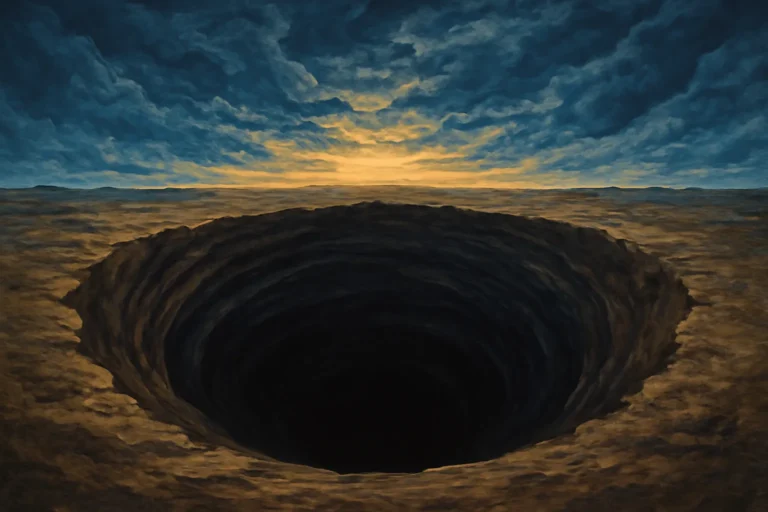
To say what is the abyss in the Bible is to acknowledge that the concept straddles description and symbol. The biblical authors sometimes speak of a literal subterranean darkness that is inaccessible to humans; at other times, they speak of a realm of restraint—where danger is held in check by divine authority and where certain beings are kept until the appointed time. The distinction is not simply geographic but theological: the abyss reveals something about God’s sovereignty, human frailty, and the ongoing drama between chaos and order in the biblical cosmos.
Linguistic Roots: Hebrew Tehom and Greek Abyssos
A sound grasp of the abyss requires attention to its linguistic foundation. The two primary languages of the Bible—Hebrew and Greek—employ terms that readers have translated in shades of meaning as abyss.
Hebrew background: tehom and the depths
In the Hebrew Bible, the word most closely related to the abyss is tehom, typically translated as the deep or the depths. This term appears in Genesis 1:2, where the earth is described as being formless and void, with darkness over the surface of the tehom and the Spirit of God hovering over the waters. In that creation context, the deep connotes the primordial chaos of the oceanic depths before God orders the chaos into cosmos. The image is more cosmic than geographic: a water-filled, unknowable expanse that God reshapes in the act of creation.
Other passages employ the language of depths or seas to evoke vastness, danger, or hiddenness. For example, in Job 38:16, the question is posed about entering into the springs of the sea or walking in the recesses of the deep, a rhetorical way of pointing to human limits before the vast, mysterious depths God alone penetrates. In Psalms such as Psalm 42 and related Psalms, the language of depths or the depths to deep (the repetitive poetic structure) communicates the feel of being overwhelmed or drawn into an intimate encounter with divine attributes in a world of powerful forces.
Greek background: abyssos and the image of a bottomless place
In the New Testament, the Greek term abyssos (often transliterated “abyss”) becomes prominent. Abyssos conveys the sense of a deep, likely bottomless, place—whether literal or metaphorical. It appears in several key contexts:
In Luke 8:31, the Gerasene demoniac encounter includes the demons begging Jesus not to command them to go into the abyss. This is one of the clearest biblical moments where the abyss functions as a feared realm into which evil beings can be sentenced or cast.
In Revelation, the bottomless pit is identified with the prison of darkness from which plagues and demonic forces emerge in apocalyptic drama. Revelation 9:1–2 speaks of the opening of the bottomless pit and the release of smoke and locusts, a vivid image of spiritual warfare and divine judgment.
In Revelation 11:7 and 17:8, the beast is described as coming from the abyss or rising from the deep, reinforcing the notion that this place is a source of profound, hidden power and danger within the cosmic struggle described in Revelation.
Across these Greek usages, abyss carries a sense of a deep, boundary-crossing space—one that cannot be fully grasped by human reason, yet one that God regulates and sometimes uses as a location for restrained power or for divine judgment.
Key Biblical References to the Abyss: Where It Appears
The concept of the abyss appears in several canonical books, and each occurrence serves a distinct purpose within its literary setting. Here are some of the most important passages, organized by genre and theme.
The Abyss in Creation and Cosmic neighbors: tehom as primeval chaos
Genesis 1:2 — The earth was without form, and void; and darkness was on the face of the deep (the tehom). The Spirit of God hovers over the waters. This passage frames the abyss as the chaotic primeval water that God orders in creation.
The depths in wisdom literature, such as Job 38:16 (Have you entered into the springs of the sea, or have you walked in the depths of the abyss?). The rhetorical question underscores human limits before the unfathomable, divine depths.
The Abyss as a locus for demonic beings: Luke and the gospel vantage
Luke 8:31 — The demons beg Jesus not to command them to go into the abyss, affirming the abyss as a place of imprisonment and fear. This is one of the clearest biblical images of the abyss as a punitive space for demonic powers.
Beast, dragon, and the abyss in Revelation: prophetic drama of confinement and release
Revelation 9:1–2 — The bottomless pit is opened; smoke rises, and out of the smoke come locusts with authority. The event depicts a controlled release of disruptive power within God’s sovereign plan.
Revelation 11:7 — The beast that comes up out of the abyss engages in a climactic confrontation with the witnesses, highlighting the abyss as a source or origin of formidable, malevolent power within the cosmic conflict.
Revelation 17:8 — The beast that you saw was, and is not, and is to come, rising from the abyss, signaling mystery, hidden origins, and eventual judgment.
Revelation 20:1–3 — An angel binds Satan and casts him into the abyss for a thousand years, sealing it so he cannot deceive the nations until the end of that period. This passage casts the abyss as a place of temporary restraint and cosmic order in eschatology.
The larger biblical frame: Sheol, Hades, Tartarus, and the abyss
Sheol/Hades is the biblical concept of the underworld in Hebrew Bible and some New Testament usage; it flags a realm of the dead more than a place of punishment. Some passages differentiate between the grave and the place of spiritual punishment, while others merge these ideas in poetic language.
Tartarus appears in 2 Peter 2:4 as a place of dark imprisonment for certain angelic beings, inviting comparison with the abyss. While not always used interchangeably with abyssos, the terms share a sense of a hidden, guarded, and disciplined space under divine oversight.
These references reveal a spectrum: from the void of creation’s chaos to a bound space reserved for the powers of evil, to a disciplined prison within the eschatological drama. The exact nature of the abyss—whether literal, symbolic, or both—depends on the contextual lens through which a passage is read.
The Abyss and Demonology: How the Scriptures Picture It
One of the most sustained strands of biblical engagement with the abyss is its relationship to demonic power. The abyss functions as a realm of restraint where malevolent forces are held in check by God’s authority. In Luke’s gospel, the demons acknowledge the abyss as a controlled boundary that Jesus can command them to enter or avoid, reflecting a divinely ordered cosmos. In Revelation, the abyss serves as a source and a prison for empowering forces that participate in cosmic warfare and judgment.
The interplay between the abyss and demonic beings raises questions about the nature of evil, the scope of divine sovereignty, and the timing of judgment. Some readers interpret the abyss as a literal subterranean prison that will play a role in the climactic events of the end times. Others view it as a symbolic representation of spiritual powers that are beyond human control yet ultimately subjected to God’s plan. In either interpretation, the biblical portrait emphasizes that evil operates within the boundaries God sets and that restraint, not unbounded chaos, characterizes the present order.
The Abyss in Theology: What It Teaches About God, Creation, and Evil
The biblical notion of the abyss offers a number of theological lessons that go beyond geography. Foremost among them is the claim that God governs even the deepest and most ominous dimensions of reality. Divine sovereignty is on display as God both creates the order of the cosmos out of primordial chaos and maintains control over powers that would threaten that order. The abyss, as a concept, helps theologians articulate the tension between chaos and order, between evil and restraint, and between hiddenness and revelation in Scripture.
For readers today, the abyss invites a sober reflection on spiritual warfare and the reality that not all forces are visible. It underscores the need for discernment and faith, reminding believers that the present age is marked by tensions that require courage, prayer, and trust in a God who has ultimate power over the deepest waters.
Abyss, Eschatology, and Symbolism: How We Read It
The way readers interpret the abyss depends significantly on their hermeneutical approach. Some traditions treat the abyss as a mostly literal location with a defined role in end-times narrative. Others approach it as a symbolic construct used by biblical writers to communicate truths about the nature of evil, divine judgment, and the cosmic struggle between truth and deception. In either approach, certain constants endure:
The abyss is under God’s control and serves a purpose within His redemptive plan.
It is associated with evil powers that are diabolically dangerous but ultimately restrained or judged.
It frequently functions as a rhetorical and symbolic tool to convey awe, fear, and the reality of spiritual dimensions beyond ordinary perception.
Practical Reflections for Readers: How to Engage with the Abyss Texts
For readers seeking to understand what is the abyss in the Bible and how it applies today, several practical steps can help:
Study in context: Examine the immediate literary setting of each abyss passage and ask what the author intends to emphasize—cosmic order, divine judgment, or spiritual warfare.
Compare languages: Note how tehom, abyssos, and related terms are translated across Bible versions and what nuance the translators aim to convey.
Distinguish genres: Remember that apocalyptic literature (like Revelation) uses symbolic language to convey truths about final things, while historical narratives (like Luke) use more concrete scenes to illustrate divine authority over evil.
Reflect theologically: Consider what the abyss teaches about God’s sovereignty, human vulnerability, and the nature of spiritual conflict in a fallen world.
Be cautious with literalism: Not every detail about the abyss should be read as a full blueprint for future events; much is framed in symbolic or theological language meant to provoke faithfulness and hope.
Common Questions About the Abyss in the Bible
To address frequent inquiries, here are answers to questions often raised by readers and students:
Is the abyss a literal location? Some passages treat it as a literal, physical place, while others describe it in symbolic terms. The safest approach recognizes that the texts use the image to convey real spiritual realities without insisting on a single, uniform geography across all books.
Are there multiple abyss-like places in Scripture? The Bible sometimes uses related ideas—Sheol, Hades, Tartarus, the bottomless pit—to describe realms of the dead, imprisonment, or entrapped powers. These concepts are related, but they carry different nuances in their respective contexts.
What is the purpose of the abyss in prophecy? In prophetic and apocalyptic literature, the abyss often functions as a stage for divine judgment, the release and restraint of demonic forces, and the drama of last things. It helps convey the seriousness of spiritual realities while maintaining a sense of divine control.
In Summary: A Rich, Multilayered Picture
The question what is the abyss in the Bible does not yield a single technical definition but a layered portrait. In creation narratives, the abyss embodies primordial chaos from which God orders the cosmos. In the Gospels and Acts, the abyss appears as a place associated with demonic power and divine restraint. In the Apocalypse, it becomes a stage in which cosmic drama unfolds—a place of confinement for evil at certain moments, then release in others as God’s purposes advance toward their culmination.
Across these usages, one thing remains constant: the abyss reveals something essential about the Biblical worldview. It points to forces—whether creative or destructive—that are beyond human control, yet under the sovereignty of God who is able to bind, judge, and ultimately transform all things. For readers who take the biblical witness seriously, the abyss invites both sober caution and hopeful expectation: caution as we navigate moral and spiritual danger, and hope as we trust in a God who can calm the deepest waters and restore all things.