Baptism Symbolism in Romans 6: Meaning and Significance
Baptism in Romans 6 stands as one of the clearest and most powerful symbolic renderings of what it means to belong to Christ. The apostle Paul does not present baptism merely as a ceremonial rite or a public confession; he frames it as a divinely orchestrated identification with the life, death, and resurrection of Jesus. In this sense, baptism becomes a dramatic sign that orients the believer’s entire life. It signals a decisive break with the old pattern of living for sin and a radical turning toward new life in Christ. The symbolism in Romans 6 is richly layered, inviting readers to consider how the past, present, and future are interwoven through union with Christ, how the body is redeemed, and how ethical asks follow from theological truth.
Foundations of the metaphor: baptism into Christ’s death and into his life
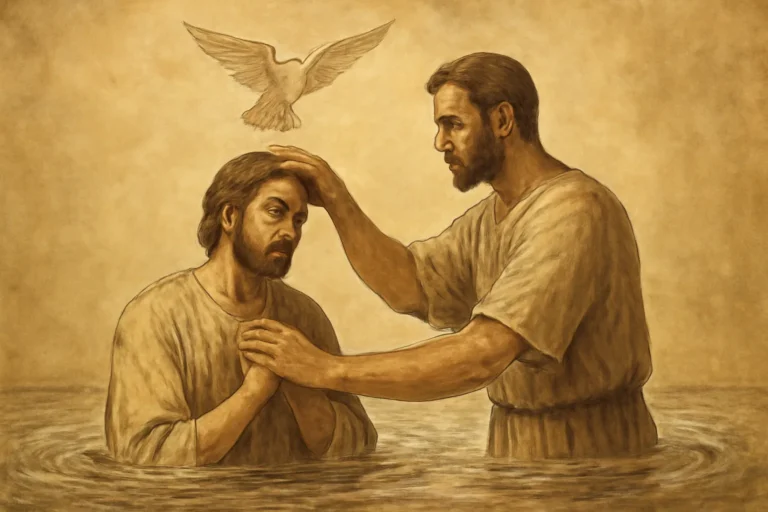
The core claim in Romans 6 rests on the idea that believers are baptized into Christ Jesus and, more specifically, into his death. Paul writes that we are “baptized into his death” so that, just as Christ was raised from the dead, we too may live a new life. This triadic sequence—death, burial, resurrection—frames baptism not as merely outward water but as a participation in the saving acts of Jesus. The language is intentionally juridical and corporate: the believer’s old order is legally and spiritually united with Christ’s death, while the believer is also united with Christ in his resurrection power. The effect is twofold: a break with sin’s reign and an orientation toward a life now lived in accordance with God’s glory.
baptized into Christ—identity established in union with Jesus.
into his death—death is accepted as the end of the old life’s authority.
buried with him through baptism into death—a symbol of being laid in the ground, so that the life that follows is new and empowered.
raised with him for a new life—a present reality of living in the power of the resurrection.
Several semantic threads run through this framework. First, the prepositional phrase “into Christ Jesus” emphasizes a union that is not merely symbolic but ontological: believers are taken up into the very life-work of Christ. Second, the emphasis on death and burial communicates a decisive break with the power of sin as a controlling force. Third, the resurrection motif glows with hope for a transformed existence characterized by obedience to God’s will. Collectively, these strands illuminate how baptism functions as a theological school of thought: it teaches, declares, and enacts the Christian story in the present moment.
Triadic imagery: death, burial, resurrection as a single transformative arc
Paul’s argument in Romans 6 presents a sequence that unfolds the believer’s transformation in three connected moves. Each stage reinforces the others, so that the entire arc culminates in a change of life orientation. The triadic imagery is not accidental; it maps onto the biblical pattern of salvation that moves from death to life, from separation to union, from slavery to freedom.
Death to sin: The old order is exposed as a dead end. By participating in Christ’s death, the believer is thereby released from sin’s dominion and its charge against the conscience—at least in terms of authority over daily conduct.
Burial with Christ: The scene of burial evokes a decisive planting of the old self into a tomb, where it is sealed away from the living world of obedience and faith. The burial signals the end of one era and the decisive entrance into another through identification with Christ’s demise.
Resurrection to new life: The resurrection is the sign that the new life has already begun in the believer and is sustained by the power of God. This is not a mere metaphor; it is the present reality of living by the Spirit, empowered to walk in righteousness rather than in sin.
In this sense, baptism is less about a ritual act and more about a dramatic reorientation: a former bond to sin is broken, a new bond to Christ and his people is established, and a forward-looking life is inaugurated. The verb choices Paul uses—“died,” “buried,” “raised”—are action-packed and speak to a decisive transfer of allegiance and existence.
Old self crucified and the new self created for life of obedience
Romans 6 makes a striking claim about the old self and the new self, connecting the death of Jesus with a corresponding death of the self within the believer. The passage explicitly states that the old self was crucified so that sin’s power would be dethroned and that believers might walk in “newness of life.” This is not merely a symbolic claim about feelings or external behavior; it is an ontological claim about identity. The crucifixion of the old self signals that the believer’s inner disposition has been reoriented toward God, enabling a life marked by righteousness rather than self-centeredness or rebellion against divine authority.
The phrase “the old self was crucified with him” underscores a decisive defeat of sin’s claim over the believer’s life.
The language of burial and resurrection implies that the old patterns—habits, loyalties, and desires associated with sin—are not merely restrained but definitively terminated.
The result is a transformed life where the believer is alive to God and empowered to pursue righteousness.
This section also invites reflection on how the old self persists in everyday struggle. Paul acknowledges the ongoing tension between living in the “old” life and embracing the “new.” The symbolism of baptism thus becomes a continuous reminder that the believer’s present ethical choices are rooted in a history of God’s saving work. It is not enough to acknowledge a past event; one must live consistently with the implications of union with Christ in death and life. The crucified old self stands as a witness to the power of grace to redefine the person from within.
Ethical implications: living as those who are dead to sin and alive to God
One of the most practical outcomes of the baptismal symbolism in Romans 6 is a call to ethical transformation. If believers have died to sin and are alive to God in Christ, then sin should no longer be the reigning principle of life. In Romans 6:11-14, Paul urges Christians to consider themselves as dead to sin but alive to God, and to present themselves to God as instruments of righteousness. This ethical exhortation grounds itself in the metaphysical reality of baptism: what is true about the believer’s status must translate into daily conduct.
Count yourselves dead to sin—a conscious alignment with the reality of Christ’s death as the believer’s own death to the old life.
Present yourselves to God as those brought from death to life—a renewed purpose oriented toward righteousness rather than self-gratification or rebellion.
Offer yourselves to righteousness as instruments—the body is to be used for God’s purposes, not for sin’s passions.
Resisting sin’s reign—the exhortation to not let sin reign in the mortal body invites Christians to practice daily disciplines and form habits that reflect their new status.
This ethical dimension is essential: baptism is not a one-time event that merely certifies membership; it is a formative event that reconfigures identity, appetite, and aims. The symbolism invites believers to interpret temptations and decisions through the lens of death and life in Christ, turning the moral struggle into a narrative shaped by grace and faith.
Baptism as identification with Christ and incorporation into his body
Beyond individual ethics, Romans 6 locates baptism within the broader reality of Christic union and corporate belonging to the church. To be baptized into Christ is to be incorporated into his life so that the believer shares in the benefits and duties of the new community. This is reflected in other Pauline writings as well—for example, Colossians speaks of being buried with Christ in baptism and raised through faith (Colossians 2:12), and Galatians emphasizes putting on Christ in baptism (Galatians 3:27). The Romans text, however, emphasizes the experiential and practical integration: being united to Christ’s death and resurrection translates into life lived in harmony with the gospel’s mission and in covenant relationship with the Spirit’s power in the church context.
Baptism as a public sign of inclusion in the body of Christ.
Identification with Christ’s death implies solidarity with his people in their sufferings, as well as their triumphs.
The new life is not an isolated achievement but a shared life within the community of faith.
In this sense, baptism becomes a sign of belonging, a visible mark that affirms a spiritual reality: the believer has entered into a story bigger than oneself, a story of God’s redemptive work in history through Jesus Christ. It also points forward to the church’s life of worship, sacramental practice, and mutual accountability where believers encourage one another to live in light of the resurrection power that equips them for obedience.
Water baptism versus spiritual baptism: interpreting the rite in Romans 6
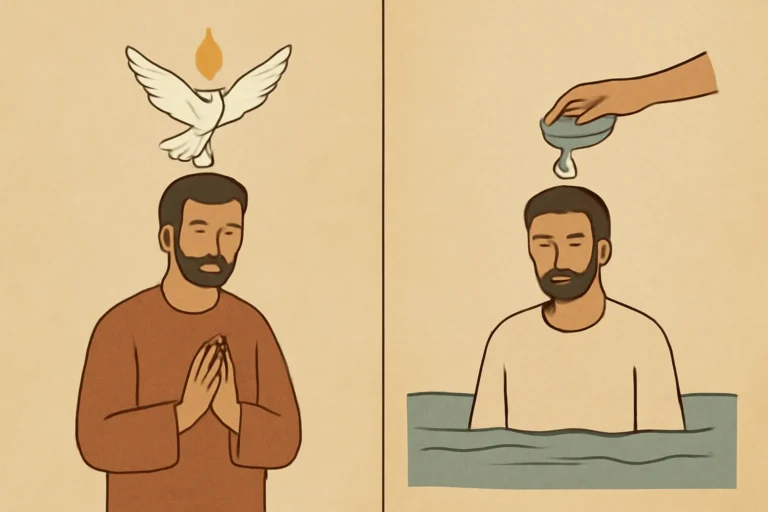
Scholars and theologians routinely debate what form of baptism Paul envisions in Romans 6. Is his language primarily about a water baptism—the ritual act practiced by early Christians—or does it describe a spiritual baptism, a symbolic immersion into the life of Christ that precedes or accompanies any outward rite? There are compelling readings on both sides, and many find a synthesis persuasive: baptism is a passioned symbol that Christians experience both inwardly (spiritual baptism) and outwardly (water baptism) as a public confession of faith and a sign of the inward reality.
Water baptism as sign and seal: for many traditions, water baptism publicly signifies the believer’s death to sin and new life, aligning with Romans 6’s imagery.
Spiritual baptism as primary: some interpreters emphasize that Paul’s language is about a spiritual act—being baptized into Christ’s death—in a sense that transcends the physical rite.
Historical readings often view the two as inseparable in the gospel economy: baptism, whether viewed primarily as sign or primarily as spiritual grant, functions to appropriate and celebrate the reality of being new in Christ.
Pastoral implications: churches may welcome infant or believer’s baptism with the understanding that the outward rite accompanies an inward faith and pledge to live out the gospel in community.
Whichever angle one favors, the central point remains stable: the act of baptism is a door through which a believer steps into the drama of Christ’s death and resurrection, and into a life shaped by that dramatic divine work. The symbolism invites careful attention to how communities teach, practice, and accompany new believers through the early stages of faith formation.
Theological significance: justification, sanctification, and new life intertwined
The symbolism in Romans 6 harmonizes with broader Pauline themes about justification by faith and sanctification as a progressive, Spirit-enabled transformation. While Romans explains justification by faith as a legal declaration of righteousness before God, Romans 6 adds the sanctifying dimension: the believer’s union with Christ in death and resurrection enables a genuine, ongoing transformation of behavior and desire. Baptism, then, becomes a vivid pedagogy for sanctification. It teaches that the believer’s identity is now defined by Jesus’ life rather than by the old patterns that once defined the self.
Justification by faith and the new life that follows to demonstrate the truth of God’s saving work.
Sanctification as participation in the death and resurrection of Christ—one does not earn holiness by striving alone, but grows into holiness by being united with Christ in his work.
The Spirit’s power animates this transformation, enabling believers to live in accord with their new identity and to resist the enslaving power of sin.
Additionally, baptism in Romans 6 serves as a catechetical instrument—educating believers about who they are in Christ, what God has accomplished on their behalf, and how that reality should direct daily decisions. This pedagogical function aligns with Paul’s broader aim in Romans: to explain the practical implications of the gospel for every facet of life, from personal ethics to social relationships, and into the rhythms of worship and communal life.
Readers and congregations can draw several practical lessons from the baptism symbolism in Romans 6. These insights help shape preaching, catechesis, baptismal practices, and pastoral care. Below are actionable takeaways that reflect the depth of the text.
Preaching and catechesis: teach baptism as a dramatic narrative of death and life, helping believers connect their personal struggles with the cosmic work of Christ.
Baptismal preparation: emphasize the theological meaning behind the rite—participation in Christ’s death and resurrection—so that candidates understand what they are confessing and committing to.
Public profession: view baptism as a communal event that invites the church to witness and support the believer’s growth in grace and obedience.
Pastoral care: remind believers that their ongoing fight against sin is rooted in the reality of their union with Christ, not in their own strength, and that sanctification is a collective journey in the Spirit’s enabling power.
Worship and liturgy: incorporate baptism imagery into worship to reinforce the themes of death to sin and new life in Christ, making the church’s life together a continuous celebration of the gospel.
In practice, Romans 6 challenges every community to consider how it communicates the meaning of baptism, how it supports new believers in their spiritual formation, and how it livingly demonstrates the transformative power of the gospel in everyday life. The symbol is meant to shape a culture—one that values repentance, faith, and obedience as the ongoing fruit of being united with Christ.
Historical and scholarly perspectives
Scholars have debated the precise nuances of Paul’s language in Romans 6 for generations. Some argue that Paul writes with a deliberately universal rhetoric, inviting all Christians to think of baptism as their entry into a death-to-sin and resurrection-to-new-life pattern. Others stress the anthropological and social dimensions: baptism is a ritual of transition within the first-century church that both marks ethical change and signals membership in a new community that shares in Christ’s mission. Some scholars also compare Romans 6 to Colossians 2:12 or Galatians 3:27 to illuminate how Paul develops the same theme across his letters, showing a consistent biblical logic of burial with Christ and rising to new life. Regardless of interpretive nuance, the consensus remains that baptism serves as a powerful anchor for Christian identity and behavior, grounding lived faith in the reality of Christ’s saving work.
Variations in interpreting the rite across the Pauline corpus
When one reads Romans 6 alongside other Pauline texts, several patterns emerge that illuminate the psalm-like cadence of Paul’s theology. In Galatians 3:27, for instance, to “put on Christ” echoes the transformative effect of baptism; in Colossians 2:12, being buried with Christ in baptism and raised through faith connects to a broader motif of spiritual circumcision and renewal. The consistency across these writings reinforces the idea that baptism, whether understood primarily as a symbolic outward act or as an inward spiritual experience, is deeply connected to identity in Christ, empowerment by the Spirit, and a transformed life marked by obedience to God. For readers today, these cross-textual connections invite a cohesive understanding of baptism that honors both its theological depth and its pastoral usefulness.
Closing reflection: embracing the transformative horizon of baptism
Ultimately, the symbolism of baptism in Romans 6 invites believers to see their lives as part of a divine drama: a narrative of death to the old, a burial that embraces the past, and a resurrection that inaugurates a new mode of existence. The baptism into Christ’s death and the resurrection to new life that follows are not abstract truths but the scaffolding for a daily life oriented toward God’s purposes. Through this symbol, Christians are reminded that they have been joined to Christ in such a way that their identity, desires, and actions are continually reframed by the gospel. The ceremony of baptism thus becomes a meaningful, enduring reminder that God’s redeeming love has broken the chains of sin and has launched them into a life of worship, service, and hope—the life that God has graciously prepared for all who are in Christ.