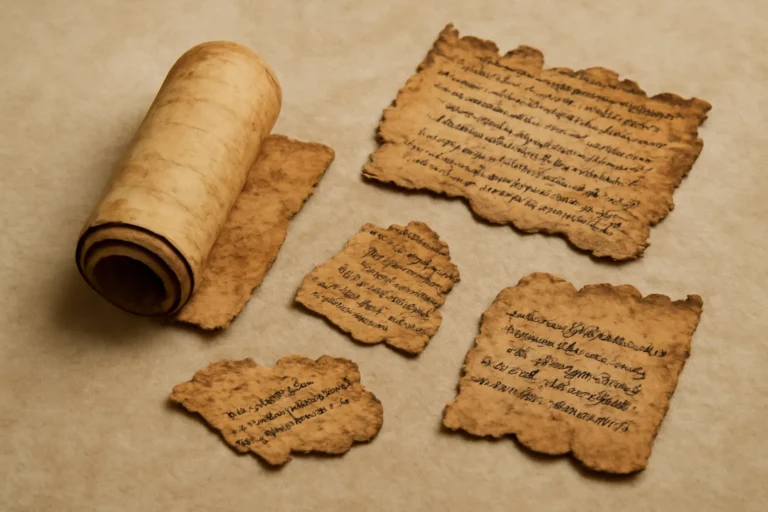
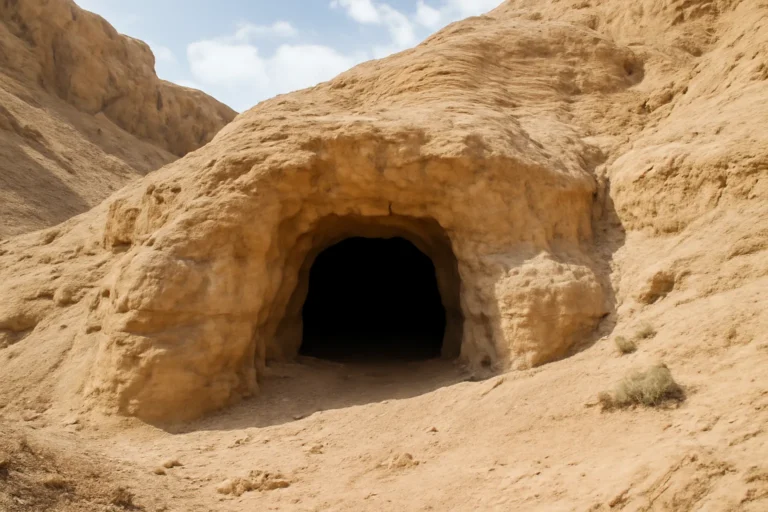
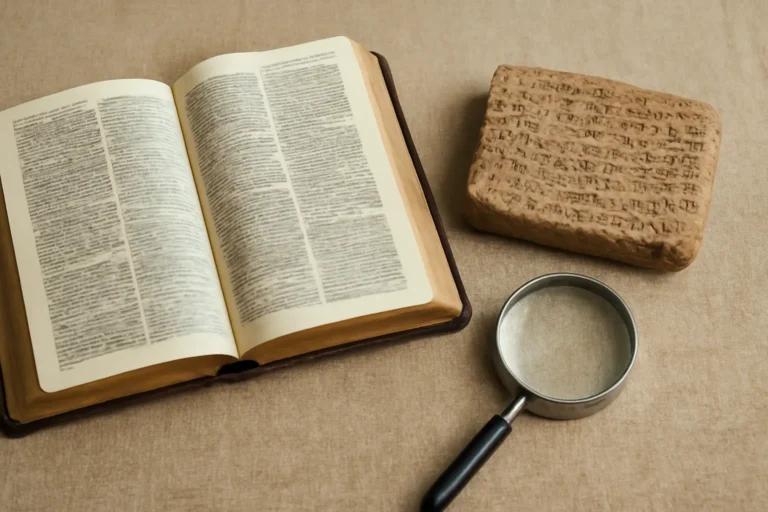
The story of the Dead Sea Scrolls begins in the mid‑twentieth century with a remarkable archaeological and textual treasure hidden for centuries in caves along the Judaean Desert near the Dead Sea. In 1947, a Bedouin shepherd and his companions encountered a cave filled with pottery jars sealed with clay. Inside, fragments of parchment and vellum were found, some of them wrapped in leather and containers that had survived the arid climate. These initial discoveries opened a channel to an ancient world of Jewish literature that had remained largely unknown to modern readers.
The first scrolls recovered in the wake of that encounter sparked a feverish wave of exploration. Early results were modest in number but astonishing in scope, leading to systematic excavations in the surrounding region. The finds soon grew into a larger corpus associated with a settlement at Qumran, a site located near the northwestern shore of the Dead Sea. The material collected over the following years included a range of scroll fragments, whole texts, and even the distinctive copper scroll. The broader collection would come to be known as the Qumran library, one of the most significant archeological and textual discoveries of the 20th century.
Over the decades, scholars identified that this corpus represents centuries of scribal activity in and around a religious community. The scrolls span a broad timeframe, with the earliest copies dating to around the 3rd century BCE and the latest to the 1st century CE. The discovery and subsequent interpretation of the Dead Sea Scrolls reshaped understandings of biblical transmission, Jewish history, and the religious landscape of late Second Temple Judaism. The term Dead Sea Scrolls has become a catchall phrase that covers a diverse set of manuscripts from multiple caves, written in Hebrew, Aramaic, and, in a few cases, Greek.
What the Scrolls Are: Composition and Materials
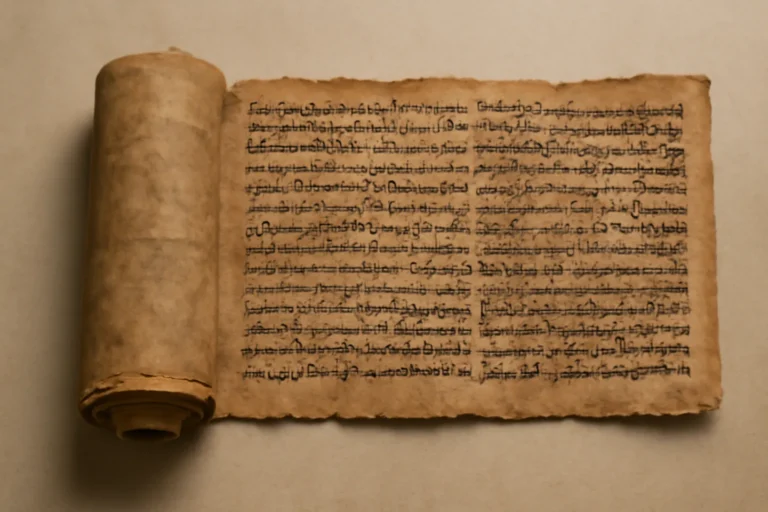
The Dead Sea Scrolls comprise a varied set of texts, including biblical manuscripts, apocryphal works, and a large set of sectarian writings that illuminate the beliefs, practices, and daily life of a community that lived near the Dead Sea. The physical materials and the way they were produced offer a window into ancient scribal culture.
Materials, scripts, and preservation
Parchment and papyrus make up the majority of the scrolls, though a copper scroll exists as a unique artifact from Cave 3.
The inscriptions are written in several scripts, predominantly Hebrew square script, with sections in Aramaic, and traces of Paleo-Hebrew in a few fragments.
The arid, desert environment greatly aided preservation, especially for leather, parchment, and ink. Yet the fragile nature of the texts also means that many fragments survive only in partial form, requiring careful reconstruction and scholarly collaboration to interpret.
What kinds of texts are included
Biblical manuscripts that reflect textual traditions of several of the books of the Hebrew Bible, in some cases dating earlier than the Masoretic Text.
Apocryphal and pseudepigraphal writings that shed light on Jewish interpretive tendencies and religious imagination in the Second Temple period.
Non-biblical or sectarian compositions produced by a specific community, including legal, liturgical, and eschatological writings.
The Geographical and Archaeological Context
The finds are inextricably linked to the landscape of the Judean Desert and the broader history of the region. The community associated with the scrolls appears to have lived in the vicinity of Qumran, a site near the northwest shore of the Dead Sea. This was not a single, isolated library but a network of caves across the rugged cliff faces, where texts were stored for safekeeping or secrecy.
The excavations, which began in the 1950s under the direction of archaeologists such as Roland de Vaux, revealed clues about the daily life, governance, and ritual practices of a community often identified with the Essenes in popular historiography. While the precise identity of the sect remains a subject of scholarly debate, the consensus is that the Qumran settlement and its surrounding caves housed a library that reflected distinctive beliefs, a codified rule of life, and a distinctive approach to scriptural interpretation.
Contents and Classification
The Dead Sea Scrolls are typically grouped by content into biblical, non-biblical, and sectarian texts. This broad arrangement helps scholars compare textual traditions across genres and understand how different Jewish communities engaged with their scriptures and laws.
Biblical manuscripts
Genesis through Deuteronomy are among the best represented biblical books in the scrolls, with several complete or near-complete copies.
Fragments and copies of Isaiah, including the famous Great Isaiah Scroll (1QIsaa), demonstrate a remarkably complete text from an early period.
Other canonical writings represented include portions of Psalms, Exodus, Leviticus, and Deuteronomy, among others.
Non-biblical and pseudepigraphal writings
Rule of the Community and related sectarian rules outline ethnic, ritual, and organizational norms for the group.
Damascus Document (also known as 1QSa) provides a legal-ethical framework and community guidelines that illuminate how the group understood covenant and law.
War Scroll (1QM) describes eschatological warfare and apocalyptic expectations, offering a window into the community’s view of conflict and divine intervention.
Thanksgiving Hymns (Hodayot) contain spiritual poetry and personal prayers that reveal intimate perspectives on divine grace and personal piety.
Temple Scroll (11Q19) and other liturgical and ritual texts illuminate concepts of worship, purity, and the religious calendar as understood by the authors.
Textual variation and significance
The range of texts across different manuscripts shows that the Septuagint and Masoretic Text traditions had divergent strands even before their later standardization. The Great Isaiah Scroll (1QIsaa) stands out as a near-complete copy of Isaiah in Hebrew from around the 2nd century BCE, providing crucial evidence about early textual forms of a major prophetic book. Other biblical manuscripts display variations—differences in spelling, wording, and order—that illuminate how copyists handled sacred texts in a pre‑standardized state.
Language, Script, and Paleography
The scrolls offer a unique laboratory for the study of ancient scripts and linguistic practices. The linguistic diversity across the corpus helps scholars trace how Hebrew evolved during this period and how Aramaic served as a lingua franca for certain communities.
Languages and scripts
Hebrew manuscripts are the majority, reflecting the central role of Hebrew in Jewish religious life.
Aramaic texts appear in a number of documents, illustrating cross-cultural exchange and administrative or liturgical usage.
Some portions display Paleo-Hebrew or other early scripts, marking transitional phases in writing conventions.
Paleographic dating and textual criticism
By examining letter shapes, document layout, and scribal conventions, paleographers date manuscripts and reconstruct the layers of editorial activity. The Dead Sea Scrolls provide a continuous chain of manuscript practices that help biblical scholars understand how scribes approached authority, transmission, and authority disputes. This, in turn, informs modern editions of biblical texts and the study of how early Jewish communities negotiated contradictions between tradition and innovation.
Historical Transmission and Significance for Biblical Studies
The presence of biblical manuscripts in the Dead Sea Scrolls has led to a reevaluation of the history of the Jewish scriptures and their transmission to Christian readers. The scrolls show that the textual landscape was richer and more varied before the Masoretic standardization and the later canonical definitions that influenced both Judaism and Christianity.
The discovery provided the oldest known copies of substantial portions of the Hebrew Bible, enabling direct comparison with later Masoretic and Septuagint manuscripts.
Variants observed in the scrolls illustrate how scribes performed textual corrections, interpretive insertions, and harmonizations with neighboring texts.
Scholars gained a more nuanced view of how ancient Jewish communities engaged with scripture, including practices of exegesis and retelling sacred narratives.
Relationship to the Septuagint and other textual families
While the Septuagint reflects a Greek translation tradition, the Dead Sea Scrolls show that Hebrew textual traditions existed with different archaic forms and interpretive readings that sometimes align with or diverge from the Septuagint. The interplay among scriptural traditions in the DSS helps scholars map how Jewish scripture was read and reinterpreted across linguistic and cultural boundaries.
Non-Biblical and Sectarian Writings: What They Tell Us About Community Life
The sectarian documents present a picture of a community with precise ritual calendars, communal rules, and a program of ritual purity and communal governance. These texts frame how adherents understood the divine covenant, how they organized labor and worship, and how they anticipated future divine intervention.
Rules, laws, and communal life
The Community Rule outlines a disciplined lifestyle, leadership structure, and expectations for members.
The Damascus Document situates obedience to law within a broader covenant framework, reflecting ongoing interpretive engagement with the desert community’s past and future.
Liturgical and psalm-like texts contribute to an understanding of worship practices and communal identity.
Esoteric and apocalyptic themes
Texts such as the War Scroll and other eschatological writings reveal expectations about cosmic conflict, righteousness, and the role of a decisive action by God in the end times. These works demonstrate a robust prophetic imagination and a sense of imminent salvation or judgment that shaped the community’s worldview and ethical priorities.
Preservation, Editions, and Scholarly Debates
The Dead Sea Scrolls have required careful conservation, scholarly collaboration, and ongoing critical editing. Initially, many texts were published in partial form as scholars wrestled with illegible fragments and dispersal across various institutions. Over time, major editions and comprehensive catalogs emerged, offering scholars and readers access to the materials in a more structured way.
Critical editions and translations
Scholarly editions include critical editions of the non-biblical writings, with editorial notes about textual variants and translation choices.
Translations incorporate linguistic scholarship and contextual commentary, helping readers understand grammar, syntax, and interpretive approaches.
Digital reconstructions have become increasingly prominent, enabling researchers to visualize how fragments might fit together and to compare readings across manuscripts.
Ethical and ownership considerations
The journey of the Dead Sea Scrolls has intersected with debates about provenance, ownership, and the responsibilities of museums and donors. Modern scholarship emphasizes provenance clarity, fair access for researchers, and the ethical handling of cultural heritage. In recent decades, policies and collaborations have evolved to promote open access while protecting fragile artifacts.
Modern Access, Exhibitions, and Digital Scholarship
In the digital era, a new dimension has emerged for the Dead Sea Scrolls: expanded access through online libraries and high‑resolution imaging. The Dead Sea Scrolls Digital Library project, a collaboration among museums, libraries, and technology platforms, makes many pages available to scholars and the public. This initiative enables researchers to examine script, layout, and micrographic features from anywhere in the world, accelerating comparative studies and new discoveries.
Digital initiatives and public engagement
High‑resolution scans allow researchers to examine paleographic features and ink composition without handling fragile originals.
Online catalogs include metadata about each fragment, its dating, provenance, and textual content, enhancing scholarly workflows.
Educational programs and online exhibits bring the Dead Sea Scrolls into classrooms and museums, helping a broad audience appreciate ancient Jewish literature and its modern significance.
Religious, Cultural, and Intellectual Significance
The Dead Sea Scrolls have reverberated far beyond the walls of academic study. They illuminate how diverse Jewish communities understood sacred texts, enacted law, and imagined the end of days. They also illuminate the broader milieu out of which early Christianity and other Jewish currents emerged.
Impact on Jewish scholarship and practice
Scholars gain a more nuanced picture of how scriptural interpretation functioned before standardization of texts and practices that later shaped rabbinic Judaism.
The scrolls reveal a wealth of liturgical and ritual practices that influenced later traditions and continue to inform the study of Jewish worship in the ancient world.
Impact on Christian origins studies
While the Dead Sea Scrolls do not document Christianity itself, they illuminate the religious environment in which early Christian communities arose. The scrolls provide context for how Second Temple Jewish ideas—such as messianic expectation, eschatology, and covenantal fidelity—existed alongside emerging Christian interpretations. The range of texts includes potential conceptual resonances with New Testament themes, as well as a clearer understanding of the diversity of thought within Judaism during the late Second Temple period.
Legacy and Continuing Research
The ongoing study of the Dead Sea Scrolls remains a dynamic field. New fragments continue to be discovered, cataloged, and incorporated into scholarly discourse. Interdisciplinary work—combining textual criticism, linguistics, archaeology, conservation science, and digital humanities—continues to refine our understanding of the scrolls and their historical context.
Future directions in scrolls research
Refined paleographic dating and improved dating techniques may situate more fragments within precise chronological windows, clarifying how communities evolved over time.
Continued digitization and image processing can reveal faint letters and corrections not visible in traditional photographs, enabling more accurate reconstructions.
Cross-disciplinary collaboration between archaeologists, textual scholars, and theologians can deepen insights into how the scrolls shaped Jewish and Christian thought across generations.
In sum, the Dead Sea Scrolls, often preserved as the Qumran library collection, constitute a monumental corpus that spans biblical,apocryphal, and sectarian literature. They illuminate a complex world in which faithful readers sought to interpret sacred texts, regulate communal life, and prepare for a future they believed was imminent. The enduring relevance of these scrolls lies not only in their antiquity but in their capacity to illuminate the diverse ways ancient communities engaged with the divine, the law, and the moral life.
Key Terms and Places to Know
— a collective label for the manuscripts discovered around the Dead Sea, spanning biblical texts, apocrypha, and sectarian writings.
Qumran — the archaeological site near the Dead Sea where many of the scrolls and related materials were found and where a community likely resided.
Great Isaiah Scroll (1QIsaa) — one of the best-preserved biblical manuscripts, dating to the 2nd century BCE.
War Scroll (1QM) — a text describing eschatological warfare and expected cosmic conflict.
Damascus Document (CD or 1QSa) — a legal and covenantal text with community regulations.
Community Rule (1QS) — a foundational sectarian text outlining the rules of the community and its governance.
Copper Scroll — a unique artifact listing various treasure inventories, discovered in Cave 3.
The story of the Dead Sea Scrolls is not merely about ancient parchment; it is a story about how communities preserved memory, negotiated authority, and kept faith with a set of scriptures across centuries. From the first jar in a desert cave to modern digital libraries, the scrolls have continued to challenge, enrich, and broaden our understanding of the biblical world and its enduring legacies.