Trinitarian Baptism Formula: History, Meaning, and Practice
Trinitarian Baptism Formula sits at the center of how many Christians understand baptism as a participation in the life of the Triune God. This article traces its history, explains its theological meaning, and surveys how it is practiced across traditions and languages. The goal is to provide a thorough, balanced overview that can help readers appreciate why the formula matters for church life, catechesis, and liturgy.
The most widely cited biblical basis for the Trinitarian baptism formula is the Great Commission in the Gospel according to Matthew. In Matthew 28:19, Jesus commands his followers to baptize “in the name of the Father and of the Son and of the Holy Spirit.” This compact triad has functioned as the governing invitation and authorization for baptism across much of Christian history. The exact wording in Greek is commonly rendered as “baptize in the name of the Father and of the Son and of the Holy Spirit.” The emphasis is clear: baptism is not merely an external act or a personal declaration; it is an act of incorporation into the life of the Triune God, done under the authority and presence of the triune Godhead.
Other biblical passages contribute to the broader understanding of baptism that often accompanies the formula, even if they do not present a complete triadic formula in a single verse. For example, various passages in Acts describe the baptism of new converts by invoking the authority of Jesus and by naming faith in Christ and his Spirit. In some early contexts, the language of baptism is paired with confession and the reception of the Spirit, reinforcing the sense that baptism is a rite of initiation into a new community under the sovereignty of God. The Connections between baptismal practice and doxological confession—the naming of God’s activity in Jesus Christ and in the Spirit—help explain why the triune formula became so central.
In addition to the canonical text in Matthew, early Christian writers and liturgical documents reflect a growing consensus around invoking the Trinity at baptism. The Didache, a late first- or early second-century teaching document, provides a key evidence point: it prescribes baptism “into the name of the Father and of the Son and of the Holy Spirit.” This early witness is especially important because it shows that the triune formula was already being used in practice in the first generation after the apostles. While the exact wording varied slightly in different manuscripts and translations, the sense of baptism as an act carried out under the triune authority remained constant and persuasive for later generations.
The Historical Development of the Formula
The history of the Trinitarian baptism formula unfolds across centuries, cultures, and language families. Its development can be traced through liturgical texts, catechetical manuals, and the writings of major theologians. Three broad strands help illuminate the history: textual witnesses to the formula, liturgical practice in East and West, and the theological reflections that shaped understanding of baptism as a Triune act of God’s grace.
Early witnesses and liturgical practice
In the earliest centuries, baptism was often conducted with immersion under the order of the local church. The invocation during the rite typically invoked the Father, the Son, and the Holy Spirit, though the exact wording could differ from one Christian community to another. The Didache’s instruction to baptize “into the name” of the Father, Son, and Spirit indicates that early Christians did not simply utter the names in sequence; they recognized baptism as a participation in the life of the triune God. The language of “into the name” carries a sense of entering under the authority and character of the Trinity, rather than merely reciting a formula.
Over time, the formula took on a canonical texture in major liturgical centers. In the Western Church, Latin liturgy and theology frequently expressed the baptismal rite as in nomine Patris et Filii et Spiritus Sancti (in the name of the Father and of the Son and of the Holy Spirit). In the Eastern Churches, the corresponding Greek form—Εν τω ονόματι τοῦ Πατρός καὶ τοῦ Υἱοῦ καὶ τοῦ Ἁγίου Πνεύματος—was similarly structured, often within a rite that included immersion in the baptismal pool, the laying on of hands, and the recitation of other catechetical and penitential elements.
Differences between “in the name” and “into the name”
A nuanced but important distinction emerges in some early sources between the phrasing “in the name” and “into the name”. The Didache’s wording hints at participation and initiation into the divine life, while the broader Pauline and apostolic materials sometimes emphasize the source of authority by saying baptism is conducted in the triune name. Scholarly discussions often explore how these variants reflect different liturgical sensibilities: a more juridical sense of “in the name of” as conferring authority, versus a more missional or initiatory sense of “into the name” as entering a new life in Christ through the Spirit.
Regardless of minor linguistic differences, the central idea remained stable: baptism is carried out under the triune reality—the Father who initiates, the Son who saves, and the Holy Spirit who empowers and seals the believer. The unity of the three Persons in a single act of saving work is the theological center that gives the rite its shape and its meaning.
Meaning and Theological Significance
The meaning of the Trinitarian baptism formula goes beyond a memorable phrase recited at a specific moment. It is a compact, sonic expression of core Christian convictions about God, salvation, and community. Three aspects of significance are particularly important: identity, authority, and incorporation into the life of God.
Identity: The triadic formula explicitly names the Father, the Son, and the Holy Spirit, signaling that the baptized person is being joined to the living God who exists as a Trinity. This is not merely a personal declaration about belief; it is a spiritual act that places the believer within the divine life as revealed in Jesus Christ and opened by the Spirit.
Authority: The use of the triune name attributes the act of baptism to the one God who reveals Himself in three Persons. It asserts that the church’s baptism is not a human rite but an act authorized by God himself. The word “name” here connotes authority, character, and relationship, not simply a collection of words.
Incorporation: Baptism is a doorway into the church and into the life of the Spirit. The formula signals that the baptismal act is an initiation into the new creation accomplished by the Father, through the Son, and in the Spirit. This incorporation is often linked with the reception of faith, repentance, and, in many traditions, the subsequent reception of the Eucharist or the ongoing life of the church.
From a theological perspective, the formula functions as a concise dogmatic statement embedded in a practical rite. It translates the abstract doctrine of the Trinity into a liturgical act that shapes identity, worship, and mission. For catechists and pastors, the formula becomes a teaching moment: it invites the baptized person to understand that salvation is not merely an individual decision but a communal, divine gift that binds believers to the Triune God and to the body of Christ, the Church.
Practice Across Traditions and Languages
Across Christian traditions, the Trinitarian baptism formula is generally preserved, but the practice surrounding baptism—its mode, its preparatory rites, and its accompanying formulas—varies. What remains stable is the invocation of the Triune God as the sovereign authority over the rite. What changes is often the context of worship, the method of baptism, and the liturgical setting in which the formula is embedded.
Common modes and contexts
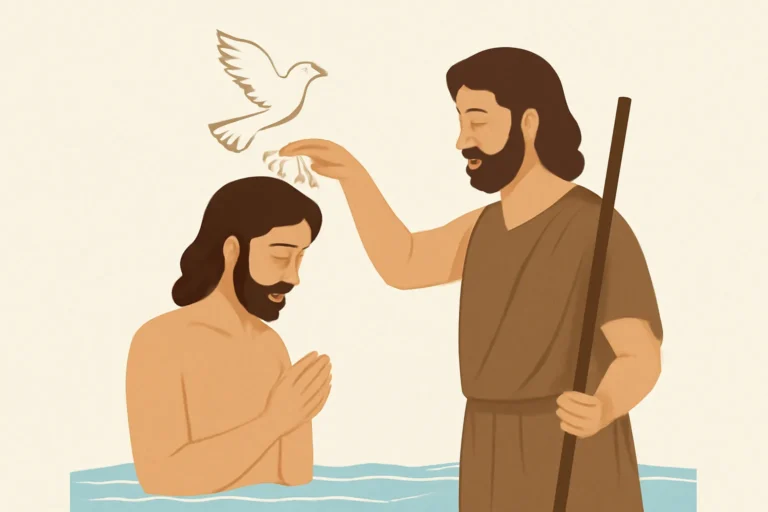
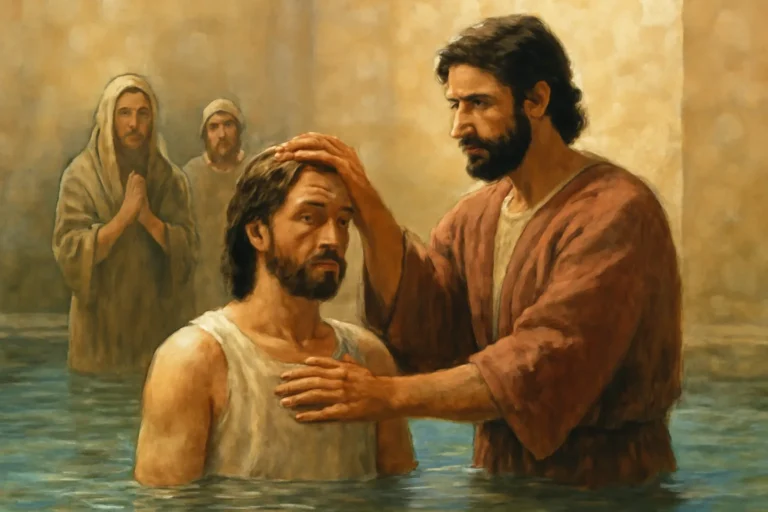
Immersion in water, symbolizing death to the old self and rising with Christ, remains a significant practice in many traditions, especially within Eastern Orthodoxy and some Protestant groups.
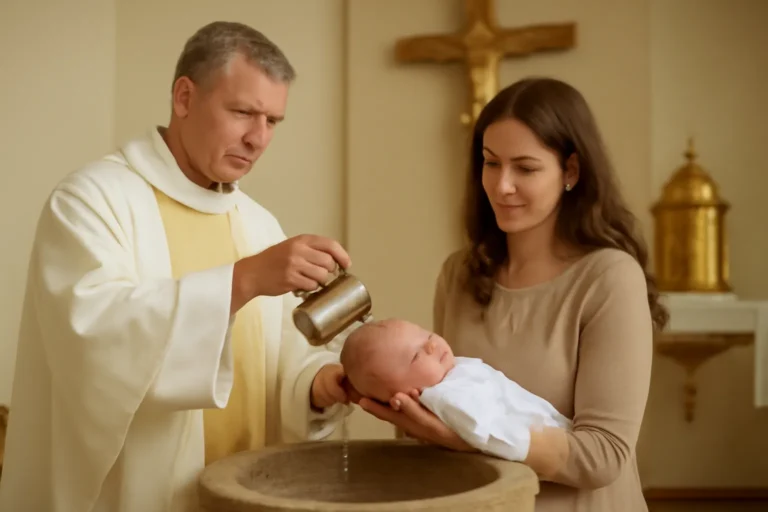
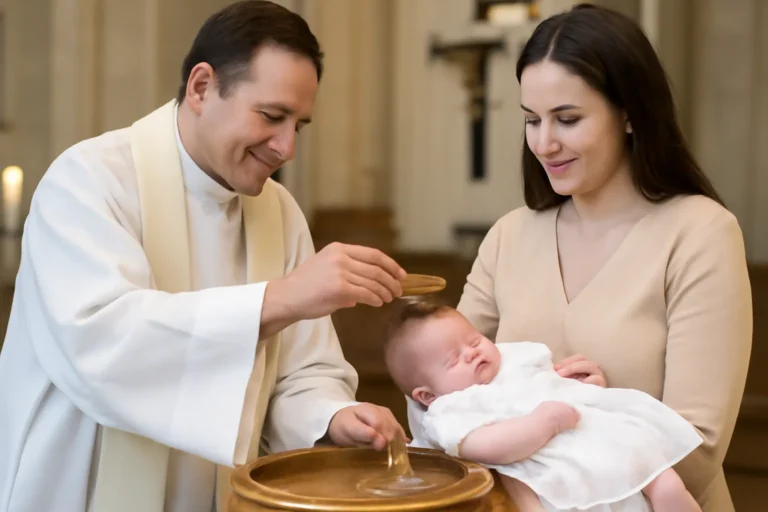
Pouring (affusion) of water over the head is common in Western liturgical contexts and in many Protestant denominations, due to practical considerations or theological preferences.
In some traditions, baptism is administered by one or more clergy with the congregation present; in others, it may occur in a home setting, in a hospital, or in community services during special seasons like Easter or Epiphany.
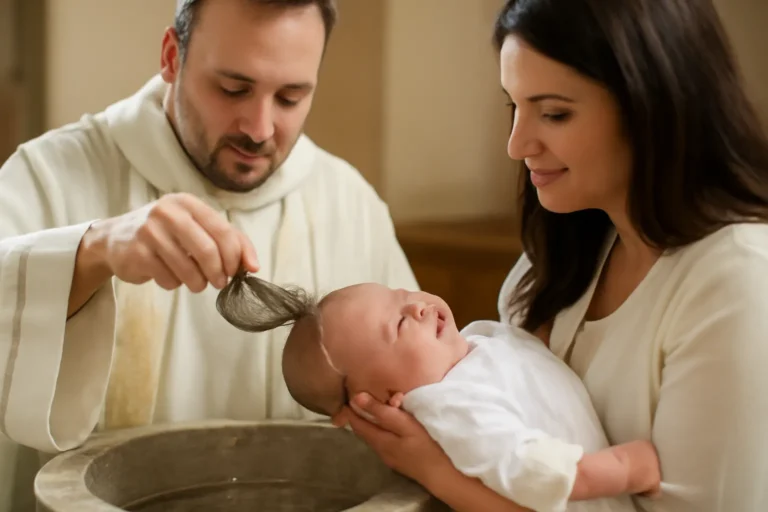
Reception of the threefold invocation often accompanies the water rite, with the celebrant saying “I baptize you in the name of the Father and of the Son and of the Holy Spirit” or a near-equivalent, depending on the liturgical tradition.
Variations in language and form
Latin-speaking contexts frequently render the formula as in nomine Patris et Filii et Spiritus Sancti, emphasizing a canonical and timeless structure that harmonizes with the broader Latin rite.
Greek-speaking and Eastern Christian contexts tend to maintain the form Εν τω ονόματι τοῦ Πατρός καὶ τοῦ Υἱοῦ καὶ τοῦ Ἁγίου Πνεύματος, with the triune name spoken aloud in the rite, often within the setting of a baptismal font and a corresponding litany of prayers.
Translations into modern languages preserve the triune structure while adapting syntax to contemporary usage, yielding variants such as “in the name of the Father and of the Son and of the Holy Spirit” or “into the name of the Father, the Son, and the Holy Spirit” in different locales and traditions.
Non-Trinitarian or non-orthodox understandings exist in some groups, most notably where baptism is performed with a different formula, such as “in the name of Jesus Christ” or other Christ-centered formulations. While these are historically significant in their own right, they are typically distinguished from mainstream Trinitarian practice by their broader ecclesial context and doctrinal commitments.
Variations of the baptismal formula reveal both the unity of core Christian baptismal practice and the diversity of language and liturgical custom. The most common and historically influential variant is the triune formula used in Matthew 28:19, which anchors the rite in Trinitarian theology. Yet, the Didache’s early witness to baptism “into the name” shows that the earliest communities used a closely related form with a slightly different preposition, highlighting how early Christians framed the act of baptizing within the authority of the Trinity.
In addition to these primary variants, language families and translation practices introduce:
Latin and Western languages—often preserving the threefold structure with precise prepositions and syntax that emphasize obedience to the Trinity.
Greek and Byzantine rites—maintaining the canonical sequence while weaving the rite into the broader liturgical calendar and eucharistic worship.
Modern vernacular translations—making the formula accessible to congregants without sacrificing doctrinal clarity or reverence for the rite.
Regional ceremonial details—where the rite is embedded in baptismal theologies, exorcisms, catechesis, or confirmations, sometimes accompanying the baptism with rites of cleansing, anointing, or blessing that are culturally and liturgically distinctive.
Even when the precise wording shifts, the theological intention tends to remain constant: baptism marks entrance into the life of the Triune God through the authority and saving work of the Father, Son, and Spirit. This unity of intention, despite linguistic variety, is a key feature of Christian ecumenism: the shared core meaning of baptism as initiation into the Christian life under the Triune God remains one of the most visible signs of communal identity across traditions.
For pastors, catechists, and church educators, the Trinitarian baptism formula functions as a teaching instrument and a pastoral anchor. The rite educates the faithful about what it means to be joined to Christ and to the Church within the Trinitarian life. It also calls the baptized to participate in ongoing formation, worship, and service as members of the Body of Christ.
Key pastoral considerations
Catechesis: Before baptism, teaching about the Trinity and the meaning of the rite helps candidates and families understand what is being celebrated and what it requires in daily life—faith, repentance, and formation in discipleship.
Preparation for sponsors or godparents: In many traditions, sponsors or parents undertake a preparatory period to articulate the commitments assumed at baptism and the responsibilities of guiding the child or adult in the faith.
Pastoral sensitivity to infant baptism: When infants are baptized, the church often foregrounds the future nurture and formation of the child, while maintaining a robust understanding of baptism as incorporation into the Triune life, available to all who respond in faith.
Liturgical setting: The choice between immersion and pouring, the placement of the rite within the broader liturgy (e.g., Easter vigil, Sunday worship, or a dedicated baptism service), and the inclusion of the doxology or prayers of blessing all shape how the formula is experienced by the gathered community.
Ecumenical awareness: In increasingly multi-denominational contexts, many churches emphasize unity around the core baptismal formula while acknowledging differences in practice and governance. This approach can foster mutual respect and shared catechesis.
Practical guidance for educators and celebrants
Ensure the celebrant articulates the formula clearly, with proper pronunciation and a slow cadence that allows the congregation to hear and affirm the invocation.
Explain the meaning of “in the name of” as a phrase denoting authority, relationship, and alignment with God’s saving work, not merely a formula to be recited mechanically.
Offer brief catechetical material or a pre-baptism class that covers the Trinity, the church’s life, and the responsibilities of baptismal discipleship.
Provide pastoral materials for families that connect baptism with the liturgical year, ongoing formation, and the community’s support for the baptized person across life stages.
Ecumenical Perspectives and Contemporary Debates
Across Christian traditions, the Trinitarian baptism formula enjoys broad acceptance as a normative expression of baptismal faith. However, debates persist in some circles about the exact formulation, the mode of baptism, and the proper context for the rite. A few prevalent themes emerge in contemporary conversations:
Ecumenical convergence: Many denominations recognize baptism performed by another church if it uses the same basic formula and intention, though some require conditional baptism if the recipient’s previous status is unclear or if the form of the rite was nonstandard.
Infant vs adult baptism: The formula remains the same in either case, but the accompanying catechesis and the understanding of the baptism’s effects may differ, influencing how the church emphasizes faith formation, confirmation, or first communion.
Non-Trinitarian distinctions: Some groups interpret baptism through different theological lenses (for example, Christ-centered or unitary statements). While these traditions are important for historical and ecumenical study, they represent the boundaries of outside of mainstream Trinitarian practice in many contexts.
Liturgical diversity: In some communities, there is a careful effort to preserve the triune formula while also honoring local liturgical styles, music, and ritual innovations—an example of how renewal and tradition can coexist within a shared doctrinal core.
The Trinitarian baptism formula is not a mere liturgical nicety; it is a living symbol of Christian identity and mission. Through baptism in the Triune name, Christians claim a shared story: God the Father, who creates and sustains; God the Son, who saves and reconciles; and God the Spirit, who empowers and sustains faith. This triple assent shapes not only how believers are initiated but how they live in relation to God, to one another, and to the world.
In practical terms, the formula anchors catechesis and mission in three interrelated commitments. First, a commitment to worship that centers on God’s triune life—Father, Son, and Spirit—each sings in the church’s prayer and praise. Second, a commitment to evangelism and discipleship that sees baptism as the entry point into ongoing formation, service, and communal life. Third, a commitment to unity and integrity within the church’s shared life: while practices may differ, the essential act of baptism in the Triune name binds communities across cultures and eras into one body in Christ.
Case Studies: How Different Traditions Treat the Formula
To illustrate how the Trinitarian baptism formula functions in real-world practice, consider brief snapshots from diverse traditions. While these examples are simplified, they show the breadth of how churches preserve doctrinal continuity while accommodating local custom.
Roman Catholic and Anglican practice
In Roman Catholic and Anglican contexts, baptism is often administered with immersion or affusion and the celebrant’s words emphasize the triune name. The rite is typically embedded in a larger liturgical service that includes the acolyte’s blessing, the laying on of hands, the anointing with oil (chrism), and the reception of the Eucharist at later stages. The formula functions as a concise, doctrinally precise articulation of the church’s faith, while the surrounding rites express the church’s worship life and catechetical inheritance.
Eastern Orthodox practice
The Orthodox tradition emphasizes baptism as full immersion, often in a font, followed by chrismation (anointing with holy oil) and a lengthy prayerful procession. The triune invoking formula is present, reinforcing the conviction that the baptized person is entering the life of the Trinity within the liturgical cosmos of the Church. The rite is deeply sacramental, with a focus on mystery, iconography, and liturgical rite as the visible sign of the invisible grace of God.
Protestant practice
Many Protestant churches affirm the effectiveness of baptism when performed in the name of the Father, and of the Son, and of the Holy Spirit, though the surrounding theology and the emphasis on faith and discipleship can differ. Some denominations stress believers’ baptism (adult confession of faith) and may incorporate the formula in a simpler service, with a strong emphasis on the public declaration of faith and the ongoing life of discipleship that follows.
Non-Trinitarian contexts (contextual note)
As a historical note, certain groups that do not subscribe to the doctrine of the Trinity may practice baptism using different invocations, such as “in the name of Jesus Christ.” These approaches reflect particular theological commitments and are typically positioned outside the mainstream triune baptismal tradition. When studying church history or engaging in ecumenical dialogue, it is important to understand these distinctions with sensitivity and accuracy, recognizing that the triune formula remains central to most historic Christian praxis.
Conclusionless Reflection: A Forward Look
Though this article does not present a formal conclusion, it is clear that the Trinitarian baptism formula stands as a foundational symbol of Christian identity, worship, and mission. Its endurance across centuries and cultures testifies to the core conviction that baptism is God’s own action—Father, Son, and Spirit—inviting believers into life in the Triune God. For pastors, catechists, and laypeople alike, the formula offers both a doctrinal anchor and a practical invitation: to worship the one God who saves, to live as Christ’s disciples, and to participate in the Spirit’s work within the Church and the world.
As Christianity continues to encounter new languages, cultures, and forms of ministry, the Trinitarian baptism formula remains a dynamic site of theological reflection and pastoral practice. Its variations—whether in wording, mode, or liturgical setting—do not erase its central claim: through baptism, a believer is named into the life of the triune God and then called to witness to that life in word and deed. In that sense, the formula is both a memory and a prophecy—a reminder of where Christians have come from and of where they are going: into the life of the Father, through the Son, by the Spirit, for the world God loves.