Why the Jews Rejected Jesus: Historical Context and Debates
The phrase “Why the Jews rejected Jesus” sits at the intersection of biblical interpretation, historical inquiry, and interfaith dialogue. It is essential to approach this topic with nuance: there was no single, monolithic Jewish response to Jesus in the first century, and the later Christian tradition’s use of the term “the Jews” often reflects polemical goals rather than a comprehensive historical claim about an entire people. The aim of this article is to illuminate the historical context, outline the major lines of debate among scholars, and explain how different Jewish and early Christian communities understood messianic expectations, law, worship, and the trajectory of salvation history.
To understand the reception of Jesus within Jewish circles, it is crucial to situate the discussion within First-Century Judaism under Roman rule. Palestine was a crossroads of political authority, religious leadership, and diverse religious movements. The Temple in Jerusalem, the priestly class, and the Sadducees (who often aligned with Temple worship) stood next to the Pharisees, who emphasized oral law and rabbinic interpretation. Alongside these groups, various messianic movements and apocalyptic expectations circulated among different communities.
The political climate mattered as well. Rome’s presence created tensions around any figure who claimed authority, challenged the Herodian establishment, or stirred crowds. This context helps explain why certain Jewish leaders were wary of a movement centered on Jesus, especially one that could be construed as threatening public order or the delicate balance the Romans tolerated in the land of Judea.
It is also important to note the temporal dimension. By the time the Gospels were written, the destruction of the Temple in 70 CE had profoundly shifted Jewish life. The center of religious authority moved away from temple ritual toward the study and transmission of the Law in local communities and synagogues. This historical turn set the stage for divergent paths: a continued development of Rabbinic Judaism and the emergence of Christianity as a separate faith community.
Messianic Expectations and Theologies in Second Temple Judaism
A central issue in discussions of reception is how messianic expectations functioned within various Jewish circles. In the late Second Temple period, several visions of what the Messiah would be and do were circulating. Some expected a Davidic king who would restore national sovereignty, defeat Israel’s enemies, and bring political, military, and geographic restoration. Others anticipated a priestly or priest-king figure who would uphold the covenant and reconstitute temple worship. Still others imagined a more universal or cosmic transformation aligned with apocalyptic literature.
Different messianic visions and language
Key strands included the idea of a messiah ben David—a descendant of David who would reign as king and restore Israel—and the possibility of a messiah ben Joseph, whose role could be more related to suffering, preparation, or a catalytic event preceding the ultimate deliverer. Some passages in apocalyptic and prophetic literature spoke of a time when peace would spread, the nations would acknowledge the God of Israel, and the law would be fulfilled in ways that would transform the world.
The diversity of expectation helps explain why different groups could read Jesus’ life in distinct ways. A figure who spoke with authority, performed healings, and claimed a special relationship with God might be seen by some as a potential Messiah, while others would interpret such claims within a framework that demanded different political or theological outcomes—outcomes that did not align with their expectations for covenant fidelity, temple worship, and national restoration.
Some strands of Judaism anticipated a kingly deliverer who would achieve political triumph, while others emphasized a more priests-centered or prophetic role. The covenant framework—the ongoing relationship between Israel and God under the Mosaic Law—also mattered. For many, any interpretation of the Messiah that appeared to diminish or supersede the Torah or disrupt established covenantal life would be met with strong skepticism or resistance.
Jesus in Jewish Context: The Jesus Movement and Jewish Reactions
Jesus was a Jewish teacher within a broader Jewish world. His earliest followers were Jewish, and their movement largely existed within the interpretive and ritual framework of Judaism. The question is not simply whether Jews accepted or rejected Jesus, but how different Jewish communities understood his claims, his role in salvation history, and the nature of his teachings in relation to the Torah.
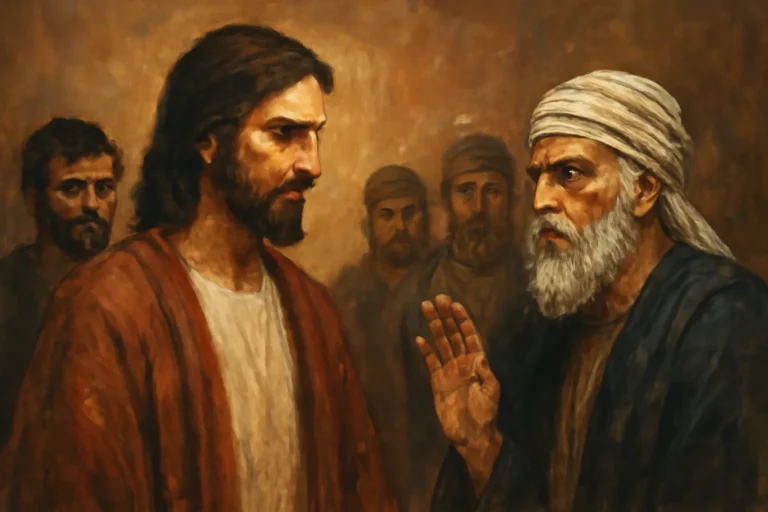
The Gospel narratives emphasize that some leaders and groups opposed Jesus, while others, including some ordinary people, saw him as a teacher with authority. The portrayal of opposition is often connected to charges brought before governing authorities, such as the Sanhedrin or other leadership circles, and to theological disagreements about Jesus’ identity and message.
It is important to recognize that some Jewish readers and interpreters of the period could have accepted Jesus as a prophetic figure without endorsing him as a divine figure. Others would have rejected him because his teachings appeared to undermine core practices, such as Torah observance, the ritual life of the Temple (before 70 CE), or the authority of the Pharisaic tradition as it shaped the oral law and later rabbinic interpretation.
In the contemporary scholarship, scholars often emphasize that early Christians were themselves a Jewish movement that gradually became more distinct. The letter of the early Christian communities to Gentiles, Paul’s letters, and the emergence of the distinct Christian canon all contributed to a complex process of separation, but this should not be read as a simple one-way rejection by a monolithic Jewish populace.
Early critiques and points of divergence
A number of points of divergence can be identified in the early debates between Jesus’ followers and their Jewish contemporaries:
Identity claims—Jesus’ followers attributed a unique status to him, including a special relationship with God that some Jews would naturally resist if it appeared to blur the boundary between creature and Creator.
Law and practice—Questions about circumcision, dietary laws, and Sabbath observance became flashpoints for disagreements about what it meant to live in covenant with God.
Temple and ritual—For communities intensely tethered to the Temple cult, Jesus’ sayings about the temple’s significance or his reinterpretation of ritual life could be seen as a threat to established worship patterns.
Messiah expectations—If Jesus did not fulfill a particular model of the Messiah (e.g., as a political liberator or as a priestly reformer), some Jews would conclude he did not meet the criteria of the long-awaited deliverer.
The Textual and Theological Debate: Scriptural Interpretation
A core aspect of the debate concerns how different communities interpreted the same prophetic materials. Scriptural interpretation often varied depending on which texts were prioritized, how messianic prophecies were read, and how the concept of the new covenant was understood.
In Christian writing, certain passages from the Hebrew Bible were re-read through a Christocentric lens. For example, Christians have long interpreted passages in Isaiah 53 (the suffering servant) and related texts as pointing to Jesus’ life, death, and resurrection. In Jewish readings, those same passages are typically understood within the broader context of a collective experience of suffering or as referring to a future national redemption rather than to a single individual who bears guilt on behalf of humanity.
The New Covenant concept, associated with passages like Jeremiah 31:31, became a focal point of divergence. Christians argued that the life and work of Jesus inaugurated a new era in which the covenant was fulfilled in a way distinct from the prior covenant, whereas Judaism generally maintains that the Torah’s covenant remains binding and unaltered by future messianic events.
A key question is whether fulfillment of prophecies is understood as a direct, literal accomplishment within a single lifetime or as a broader, ongoing process spanning eras. Jewish interpreters typically emphasize the continuity of the covenant and the ongoing role of the temple, the law, and the people in festival life and ritual practice. Christian interpreters emphasize fulfillment of prophecies in the person of Jesus and see the narrative as revealing a new phase in salvation history.
Sociopolitical Factors: Rome, Leadership, and the Risk of Destabilization
The political situation under Roman rule, and the interactions among local leadership, temple authorities, and Jewish communities, shaped how any claimant like Jesus was received. Leaders who guided or advised the people in matters of law, ritual, and civil order faced pressure to maintain stability. From this angle, some leaders might have perceived the Jesus movement as potentially destabilizing—whether by attracting crowds, challenging established authority, or signaling a shift in loyalties.
The early Christian movement’s emphasis on a kingdom that transcended earthly political power could appear incompatible with the political realities of first-century Judea. This is not to say that all Jewish leaders agreed on how to respond to Jesus; rather, it highlights a set of considerations that would factor into decisions about whether to tolerate, confront, or disassociate from the movement.
After the destruction of the Temple and the upheavals of 70 CE, the social and religious landscape shifted decisively. In many Jewish communities, efforts turned toward reconstructing a life of worship and study that did not rely on temple-based sacrifices, thereby facilitating the emergence of rabbinic leadership and a new framework for communal life.
After 70 CE: Emergence of Rabbinic Judaism and Divergent Paths
The period following the destruction of the Temple became formative for how Jewish life would be organized and how subsequent generations would think about messianic hope, law, and covenant. In the aftermath, rabbinic Judaism began to crystallize through the Mishnah, the Talmud, and a shifting interpretive tradition. Within this environment, the Jesus movement continued in some form—some groups remained within Judaism while others formed a distinct faith community that identified as Christian.
It is important to highlight that not all early followers of Jesus left Judaism. The early Jesus movement included a spectrum of communities: some insisted on continuing to observe Jewish law and identity, while others appealed to Gentile audiences and argued for a different emphasis on law and ritual. The eventual separation of Christianity from Judaism was a gradual process shaped by theological, linguistic, and institutional developments, rather than a single event.
Modern Scholarly Perspectives
Contemporary scholarship emphasizes a number of nuanced conclusions. First, there was not a single, uniform position among Jews in the first century about Jesus. Second, early Christian authors often wrote from particular communities and with specific polemical aims, which affects how they describe Jewish reception. Third, the Jesus movement itself was a complex Jewish phenomenon—one that both engaged with and diverged from mainstream Judaism in ways that became more pronounced over time.
Scholars tend to differentiate between historical reception and later theological interpretations. While some Jewish readers may have rejected Jesus due to his claims about his authority, others may have been open to the possibility of recognizing prophetic legitimacy within a broader covenantal framework—without endorsing Jesus as the divine Messiah in the Christian sense.
The overall picture is one of plural responses: some groups questioned or rejected Jesus’ messianic claims; others may have welcomed aspects of his teaching while maintaining adherence to the law; and still others moved toward a new, post-temple religious identity that eventually became the nucleus of Rabbinic Judaism or, in Christian memory, of Christian faith.
There are several frequent but misleading claims about the historical relationship between Jews and Jesus. A careful reading shows the complexity and diversity of perspectives in late Second Temple Judaism and the early Christian movement.
Myth: “All Jews rejected Jesus.” Clarification: There is evidence of diverse responses among different Jewish communities; some individuals or groups saw Jesus as an important figure, others rejected his claims, and some remained undecided until later centuries.
Myth: “Jesus started a completely separate religion from the start.” Clarification: The earliest followers of Jesus were Jewish, and the split between Judaism and what would become Christianity emerged gradually through theological interpretation, use of scriptures, and institutional development.
Myth: “The rejection was universal and permanent.” Clarification: The dynamics shifted over time; in the early centuries, debates persisted about the correct interpretation of prophecy and law, and some groups continued to identify as Jewish Christians well after the initial period.
Myth: “The New Testament presents an unbiased, contemporary report of Jewish response.” Clarification: The New Testament reflects the self-understanding and polemical aims of its authors, and it must be read alongside other contemporary sources and historical context.
Glossary of Key Terms and Concepts
Second Temple Judaism: The diverse Jewish communities and religious practices in the period roughly between the construction of the Second Temple (516 BCE) and its destruction in 70 CE.
Messiah: A Hebrew term meaning “anointed one”; in various Jewish traditions, it referred to a future leader who would fulfill God’s promises. Different schools imagined different roles for the Messiah.
Torah: The law and teaching given by God, central to Jewish religious life and practice.
Circumcision and Sabbath observance: Core markers of covenantal identity in many Jewish communities, often used as criteria for legitimate membership within the covenant people.
Sanhedrin: The Jewish council or assembly that guided religious and civil matters in certain periods of the Second Temple era.
Temple worship: The central ritual life of Judaism before 70 CE, involving sacrifices, priestly leadership, and festival observances.
Polemics: Argument and critique directed at opponents; in early Christian writings, polemics against various groups—including some within Judaism—shaped how disputes were framed.
Interfaith Understanding and Historical Memory
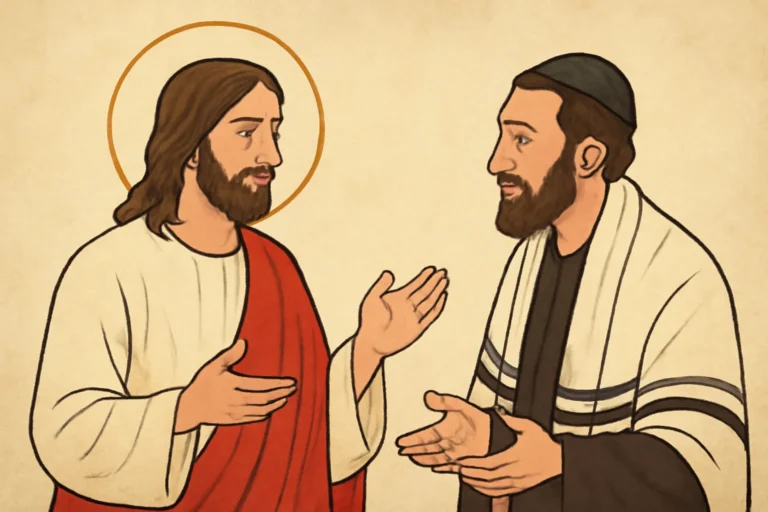
The question of why some Jews did not accept Jesus as Messiah invites careful, historically grounded dialogue. Modern readers benefit from recognizing the complexity of the period, the diversity of Jewish life in the first century, and the varied trajectories that led to Rabbinic Judaism on one side and Christian evangelical movements on the other. Rather than reducing the entire Jewish response to a single narrative, scholars encourage attention to differences among communities, political concerns, interpretive strategies, and evolving religious identities.
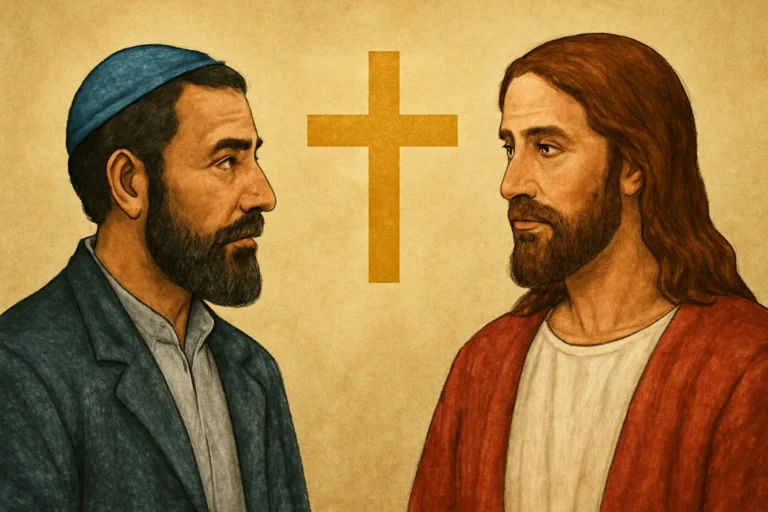
This approach has practical value for contemporary interfaith exchange. It fosters a mutual understanding that honors the historical experiences of both communities while avoiding simplistic generalizations that have fueled prejudice. By focusing on the historical, textual, and sociopolitical dimensions of the period, readers can appreciate how the question of reception emerged from a dynamic, multi-layered world.
Concluding Reflections on Historical Debates
In sum, the question of why the Jews rejected Jesus cannot be answered with a single line or a single motive. The issue rests at the crossroads of messianic expectation, interpretation of scripture, observance of law, temple worship, and the political realities of Roman-ruled Judea. The diversity of first-century Jewish thought helps explain why responses to Jesus varied and why a clear, universal rejection is not an accurate reflection of the historical mosaic.
For students and readers, engaging with a wide range of sources—including Jewish texts from the period, the Gospels, and early Christian writings—provides a richer picture of a world in which conversation about messianic hope, covenantal life, and the future of God’s people could take many forms. The ongoing scholarly conversation about this topic continues to illuminate how communities remember and reinterpret their past, and how that memory informs present-day interreligious dialogue.