Historical Evidence for the Bible: Archaeology, Textual Criticism, and Scholarly Insights
The Bible is more than a book of faith; it sits at the intersection of history, literature, archaeology, and textual transmission. When scholars discuss historical evidence for the Bible, they ordinarily categorize the material into three broad domains: archaeology and material culture, textual criticism and manuscript evidence, and scholarly insights and interdisciplinary methods. Taken together, these strands form a nuanced picture of how biblical peoples, places, events, and ideas emerged in the ancient world and how later generations understood and preserved them. This article surveys the most widely discussed kinds of evidence, explains how historians and archaeologists evaluate it, and highlights notable discoveries and debates that have shaped our understanding of the Bible’s historical context.
Old Testament contexts: cities, empires, and the material record
Archaeology does not prove every biblical claim, but it often corroborates or contextualizes them by confirming the existence of places, political entities, and cultural practices mentioned in the text. For example, the ancient Near East provides a framework in which biblical narratives unfold—kingdoms such as Israel, Judah, Assyria, Babylon, and Egypt appear in multiple, independent sources. Excavations of cities such as Jerusalem, Megiddo, Hazor, and Lachish have revealed layers of occupation, fortifications, and administrative layouts that mirror the political and religious life described in biblical accounts. While archaeology rarely confirms specific miracles or events in a direct, causal sense, it frequently confirms that the described societies had the technology, governance structures, and religious practices that the text assumes or reflects.
Two enduring themes in Old Testament archaeology are monotheistic worship and centralized cultic practices and the emergence of distinct political entities with identifiable capitals. In practice, this means that finds such as inscriptions, temple architecture, and urban planning align with the kinds of institutions the Bible presents. In some cases, material culture clarifies chronology—when a city’s destruction layer or a newly built monument is dated to a particular century, readers can better situate biblical events within a real historical timeline. In other cases, archaeology clarifies toponymy—the study of place names—helping researchers trace the geographic plausibility of a narrative, such as the routes between Jerusalem, Bethlehem, and other biblical hubs.*
Inscriptions and monumental reliefs often mention kings, their campaigns, or religious reforms that align with biblical scenes or motifs. These sources provide independent attestations of political and military dynamics reflected in the text.
Fortified cities and waterworks (for example, cisterns and channels) reveal the scale of urban life described in biblical records and the importance of water security in a land of harsh climates.
Destruction layers and rebuilding programs at sites like Lachish, Hazor, or Jerusalem illuminate cycles of conquest and renewal that parallel biblical narratives of exile and return.
New Testament archaeology: places, objects, and communities
For the New Testament period, archaeology often concentrates on sites tied to Jesus, the apostles, and early Christian communities, as well as the broader Greco-Roman milieu in which the Gospels and epistles were formed. A landmark piece is the discovery of the Pilate inscription at Caesarea Maritima, which names Pontius Pilatus as praefectus Iudaeae—a precise, contemporary reference that corroborates the Gospel account of Pilate’s role in the crucifixion narrative. While the inscription does not prove every Christian claim, it provides a credible anchor for the historical existence of Pilate in the political structure of first-century Judea.
Other discoveries illuminate the world of early Christianity: inscriptions that reference early Christian communities, burial practices in antiquity, and the diffusion of Christian symbols in the everyday landscape. The study of Galilean and Judean villages—including Nazareth, Capernaum, and Bethsaida—helps scholars understand the social and economic context in which Jesus’ ministry took place. For example, the material record from first-century settlements shows that villages often functioned as agricultural and trade hubs with tight-knit households, which supports the Gospel portraits of communities shaped by shared meals, loyalties, and religious rituals.
Dead Sea Scrolls and related finds: texture and texture of a text landscape
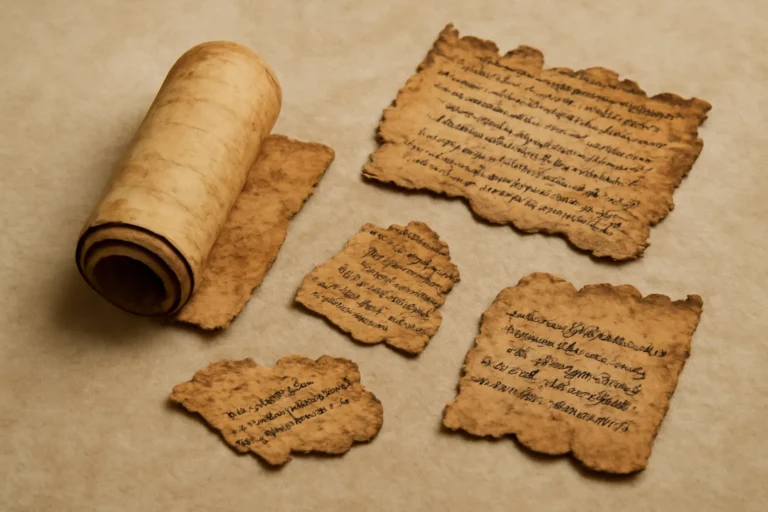
The Dead Sea Scrolls (discovered between 1947 and the 1950s) are among the most consequential archaeological finds for biblical studies. They include biblical books, apocryphal works, and community rules from the Qumran milieu, dating roughly from the 3rd century BCE to the 1st century CE. The scrolls provide several kinds of evidence:
They offer early textual witnesses to biblical books, especially Isaiah, Psalms, and the five books of Moses, which allow scholars to compare Hebrew texts with later Masoretic and Greek versions.
They reveal textual variation within the biblical corpus—differences in spelling, order, and wording that illuminate how communities copied, preserved, and interpreted sacred writings.
They shed light on interpretive contexts—including sectarian perspectives and the kinds of expectations that contemporaries attached to biblical texts.
One of the most striking observations about the Isaiah scroll from Qumran (often called the Great Isaiah Scroll) is its broad alignment with the later Masoretic text, indicating a remarkable degree of textual stability across a millennium, with some variations that modern scholars analyze to understand transmission histories. The Dead Sea Scrolls thus offer a real-time glimpse into how ancient Jewish communities handled their sacred writings and how those writings circulated in diverse forms before they reached later stages of textual standardization.
Transmission of the Hebrew Bible: behind the Masoretic text and the Septuagint
Textual criticism seeks to reconstruct the most probable original texts by comparing the various manuscript traditions that have survived from antiquity. For the Hebrew Bible, the major streams include the Masoretic Text (the basis for most modern translations), the Septuagint (Greek translation dating from the last few centuries BCE), the Samaritan Torah, and the Qumran scrolls that preserve Hebrew and Aramaic texts from a wide time span. Each stream has its own history of transmission, with deliberate or accidental variations that scholars must explain.
Key challenges in this field include distinguishing scribal additions or harmonizations from original wording, understanding how linguistic shifts (e.g., Hebrew to Aramaic) impacted translation, and evaluating how canonical shaping influenced textual preservation. The result is not a single, immutable “original text” but a well-supported reconstruction that acknowledges variation and scribal practice while identifying readings with strong or weak historical credibility.
New Testament manuscripts: breadth, dating, and reliability
The New Testament benefits from an unusually rich manuscript tradition. Today’s scholars rely on thousands of Greek manuscripts, papyrus fragments, and versions in Latin, Coptic, Syriac, and other languages. Some highlights in this corpus include:
P52 (Papyrus 52), a fragment of John 18:31–33, dated to around 125 CE, among the earliest known New Testament fragments. Its existence demonstrates that the Gospel of John circulated broadly within a few decades of the events described.
The Chester Beatty Papyri (P45, P46, P47) and other early papyri that contain portions of various New Testament books, dating from roughly the 2nd to 4th centuries CE. These documents provide a window into how early Christian communities copied and circulated the scriptures.
Codex Vaticanus and Codex Sinaiticus—two of the most complete early copies of the Bible, dating to the 4th century CE, which preserve a text tradition that many later translators used as a reference point.
Scholars often describe the New Testament as having a robust internal coherence when viewed through the lens of multiple manuscripts and external attestations. They also note that some textual variants are minor (such as spelling or phrase order) while others are more significant for interpretation. Textual criticism thus treats the manuscript record not as a single fixed text but as a dynamic evidence base from which a carefully argued reconstruction can be made.
Historical corroboration for biblical characters, events, or places frequently comes from inscriptions and other epigraphic sources produced by neighboring civilizations. These external references do not automatically validate every biblical claim, but they do provide independent anchors that help historians map the geographic and political landscape of the biblical world.
Tel Dan Stele (late 9th century BCE) mentions the “House of David,” broadly interpreted as a reference to a dynastic line associated with the biblical David. While the stele is not a biography of David, it is often cited as unique external evidence for a royal dynasty connected to the biblical figure.
Mesha Stele (Moabite Stone) from around the 9th century BCE preserves Moabite inscriptions that corroborate certain biblical regional dynamics and the existence of Moab as a political entity adjacent to ancient Israel.
Sennacherib Prism and related Assyrian annals describe campaigns in the Levant and the siege of cities such as Lachish, aligning with biblical accounts in broad strokes about Assyrian power and the political climate of the time.
Pilate Stone (Caesarea, 1st century CE) documents the presence and title of Pontius Pilatus, providing an independent confirmatory touchstone for the trial and crucifixion narrative in the Gospels.
Cyrus Cylinder (ancient Near Eastern artifact) documents a policy of allowing exiled peoples to return to their homelands, a policy that resonates with the biblical portrayal of Cyrus’s decree permitting a return to Jerusalem and the rebuilding of the temple (as described in Isaiah 44–45 and related texts).
External sources also include references from Roman historians, Jewish rabbis, and earlier Christian writers whose quotations of biblical texts reflect how the Hebrew Bible and the New Testament circulated and were interpreted in antiquity. Taken together, these inscriptions and external writings help anchor biblical events, names, and places in a broader historical framework, even as they do not always confirm every detail.
Scholarly Methodologies and Interdisciplinary Insights
Interdisciplinarity: a key to nuanced conclusions
Historical scholarship on the Bible is, by design, interdisciplinary. Historians work with archaeologists, linguists, paleographers, geographers, and biblical scholars to develop a fuller picture of the ancient world. The methodologies include:
Archaeology and landscape studies to identify plausible locations, routes, and urban configurations mentioned in the text.
Epigraphy to decipher and interpret inscriptions that mention rulers, commands, religious practices, or geopolitical events.
Textual criticism to compare manuscript traditions and reconstruct earlier text forms with as little interpretive bias as possible.
Archaeology of material culture—examining pottery styles, architectural remains, religious objects, and everyday items to understand the lived experience of ancient communities.
Chronology and paleography to date manuscripts and to align biblical events with established historical timelines.
Scholars also examine how biblical texts were interpreted and received over time—the reception history of biblical books influences not only theology but how history is written. This includes considering how later editors, translators, and communities shaped biblical texts to address their own questions, concerns, and theological commitments. Rather than treating the Bible as a static artifact, historiography recognizes that the text has a layered history of transmission and interpretation that continues to inform scholarly debates today.
The Tel Dan Stele is one of the most discussed epigraphic finds in biblical studies. The inscription, likely set up by a northern king to commemorate military victories, includes a blessing formula and a line about the “House of David”. For many scholars, this is one of the clearest external references to Davidic lineage outside the biblical text itself, offering a glimmer of historical memory about David’s dynasty that persisted into the Iron Age. Critics caution that the stele refers to a “house” or dynasty rather than a biographical portrait of a king named David, but the linguistic and archaeological context strongly suggests a connection to the biblical Davidic tradition.
The Cyrus Cylinder and imperial policy
The Cyrus Cylinder has often been cited as corroborating biblical themes, particularly the decree that allowed exiled peoples to return to their homelands and to rebuild their temples. While not a direct quotation of Isaiah or other biblical texts, the cylinder demonstrates that the Achaemenid kings pursued a policy of accommodation toward conquered peoples. When read alongside biblical passages describing Cyrus as a messianic figure in the sense of enabling restoration (e.g., in Isaiah 44–45), the cylinder provides external corroboration for the general historical backdrop of a restoration project centered in Jerusalem. Scholars emphasize that this is a contextual alignment rather than a one-to-one textual match, illustrating how ancient imperial policy and biblical narrative intersect in meaningful ways.
Destruction and revival: Lachish and Hezekiah
The archaeological record from sites such as Lachish has yielded rich reliefs and excavated layers that document a period of conflict in the late 8th century BCE. When combined with the biblical account of Hezekiah’s reforms and his confrontations with Assyria, these findings create a context in which biblical narratives can be read as reflecting real political and military pressures. The match between a time of siege and the biblical portrayal of Hezekiah’s era invites cautious interpretation: while it does not prove specific events, it reinforces the plausibility of the historical environment described in the text.
Great Isaiah Scroll and textual continuity
The Great Isaiah Scroll from Qumran, among the Dead Sea Scrolls, dates to the late Second Temple period and demonstrates remarkable continuity with later Masoretic readings of the book of Isaiah. This case study highlights how a foundational prophetic text circulated and stabilized before and after the birth of Christianity. The textual variants observed in the scrolls provide a laboratory for understanding how the Hebrew Bible was preserved and transmitted in diverse communities, which has important implications for how scholars interpret prophetic literature and its reception in later periods.
Non-Biblical Sources and External Corroboration
Beyond archaeology and manuscript study, historians rely on non-biblical sources from both rival empires and contemporary writers to gauge the biblical world. The presence of stories, motifs, or historical details in external sources can help locate biblical events within known historical frameworks, even when those sources do not recount the events themselves.
Tacitus and other Roman historians reference early Christians and Jesus in ways that illuminate the socio-political setting of the first century.
Josephus preserves passages about Jesus (the Testimonium Flavianum is subject to scholarly debate regarding later Christian interpolations) and about James, sometimes called “the brother of Jesus,” providing non-Christian contemporary attestation to some New Testament figures.
The Talmud and other Jewish writings from late antiquity reference biblical figures and events in ways that illuminate Jewish memory about biblical times, even when their accounts diverge in interpretation.
Pliny the Younger and other Roman authors offer glimpses into early Christian communities and their practices, helping scholars understand the social world in which the New Testament emerged.
These external voices do not confirm supernatural claims, but they contribute to a converging historical portrait: they help place biblical texts in a material, cultural, and political landscape that can be analyzed using standard historical methods.
Geography, Chronology, and Cultural Context
Historical evidence for the Bible gains strength when it aligns with a coherent map of geography and chronology. The study of topography—the physical layout of land, routes, and settlements—helps explain why biblical events unfolded as they did in particular places. Chronological alignment—matching events to a timeline that integrates Egyptian, Assyrian, Babylonian, and Persian histories—allows historians to situate biblical narratives within the larger arc of ancient Near Eastern history. Finally, understanding cultural practices—law codes, family structures, ritual calendars, and temple economies—helps interpret passages in Leviticus, Deuteronomy, and the prophetic books without forcing modern assumptions onto ancient contexts.
Scholars emphasize that geography and chronology do not prove every biblical claim but do condition the plausibility of historical scenes. When a biblical story requires a particular road network, a specific temple layout, or a certain political office, a well-supported reconstruction of the ancient world either corroborates or challenges that portrayal. In turn, this fosters a careful, evidence-based approach to evaluating historical assertions found in Scripture.
Historical evidence for the Bible is robust in many areas but not universal. Important caveats guide responsible scholarship:
Archaeology often confirms that a city existed or that a given people lived in a region, but it rarely demonstrates miraculous events or the precise details of a narrative.
Textual criticism reveals multiple streams of transmission with variations that must be interpreted with care; there is rarely a single “original text” but rather a historically probable reconstruction with confidence levels that vary by book and manuscript.
Certain well-known claims, such as the miraculous events surrounding biblical miracles, fall outside the scope of material or textual evidence and belong to the realm of faith or theological interpretation rather than forensic history.
Contested artifacts (e.g., certain ossuaries or inscriptions) require careful provenancing and scholarly consensus, since forgeries or misattributions can complicate claims about historical veracity.
In the end, the Bible’s historical credibility rests on a spectrum: strong corroboration for certain historical settings, places, and textual continuities, alongside acknowledged limits where evidence remains indirect or interpretive. This balanced posture—recognizing both the strengths and the boundaries of our sources—helps scholars present the best-supported conclusions while remaining open to new discoveries and reinterpretations.
Interpreting Evidence: How to Read “Historical” Bible Claims
When evaluating historical evidence for biblical claims, scholars typically steer by a few guiding principles that keep discussion precise and productive:
Convergence of evidence from independent sources strengthens confidence. If archaeology, inscriptions, and manuscript data all point to a consistent historical picture, historians weight that interpretation more strongly.
Contextual plausibility—whether a claim fits with what is known about political, religious, and economic life in the ancient world—matters greatly for assessing likelihood.
Sourcing and transmission—understanding how a text was copied, edited, and circulated helps distinguish historical memory from later editorial additions or theological emphases.
Limitations acknowledged—skepticism about supernatural claims remains a legitimate scholarly stance; historical methods are designed to illuminate naturalistic causes and human processes rather than miracles per se.
Readers should also note that “evidence” is not always uniform across contexts. Some books or passages enjoy abundant external corroboration (for example, places, rulers, or events with multiple inscriptions), while others remain largely textual in nature, with limited independent confirmation. This is not necessarily a weakness of the text; it simply reflects the uneven survival of ancient materials and the diverse kinds of data that historical inquiry can produce.
Putting It All Together: A Cohesive Picture
Taken as a whole, the historical evidence for the Bible demonstrates a remarkably intricate interplay between belief, memory, and the material world. Archaeology shows that the biblical world was a real place with real people and structures; textual criticism reveals a vigorous tradition of copyists, translators, and editors who shaped biblical texts across centuries; and scholarly methodologies—grounded in epigraphy, linguistics, geography, and history—provide a coherent framework to interpret both the content of the Bible and its historical milieu.
Crucially, this evidence does not function as a single, all-encompassing proof for every biblical claim. Rather, it constitutes a mosaic of data points that, when combined, yields a robust historical skeleton around which biblical narratives can be understood. For believers, this mosaic can reinforce faith by showing that the texts emerged from an authentic ancient world. For historians, it offers a disciplined means of understanding how communities in the ancient Near East and the Mediterranean shaped sacred literature that has influenced countless generations.
Further Reading and Resources
For readers who wish to explore these topics in greater depth, a broad range of resources—academic journals, university press volumes, and museum catalogs—offers detailed discussions of archaeology, textual criticism, and biblical studies. Key entry points include:
National and international archaeological reports on Near Eastern sites, especially those in Israel, Jordan, Turkey, and Egypt.
Critical editions of biblical texts and companion grammars that explain linguistic features and translation decisions.
Epigraphic databases and museum collections that house inscriptions and artifacts related to biblical history.
Introductory surveys that explain the history of biblical interpretation, the development of the Hebrew Bible and the New Testament, and the modern scholarly landscape.
As with any field that spans thousands of years and multiple cultures, the conversation will continue to evolve. New excavations, new manuscript finds, or fresh analyses of existing materials may shift our understanding in subtle or dramatic ways. What remains constant is the value of a careful, evidence-based approach that respects the complexity of the ancient world while inviting readers to engage with the Bible as a long-standing horizon of historical inquiry.
In summary, the historical evidence for the Bible—across archaeology, textual transmission, inscriptions, and scholarly practice—illustrates a rich, multi-layered story. It shows a people and a text that endured through centuries of change, and it highlights the ways in which modern scholarship can illuminate the worlds that produced biblical literature. Whether one approaches these materials as a scholar, a student of religion, or a curious reader, the combined weight of multiple lines of evidence offers a compelling portrait of the Bible’s historical dimensions—an enduring reminder that historical inquiry can coexist with faith, interpretation, and wonder.