Christians in the Holy Land: History and Modern Faith
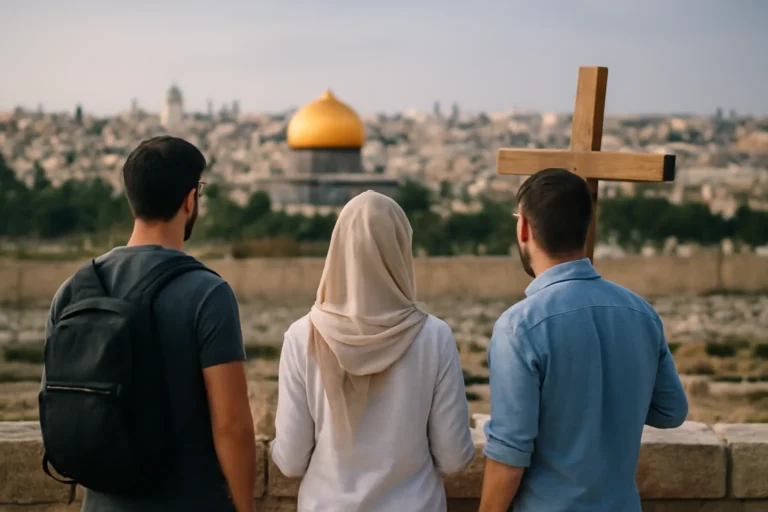
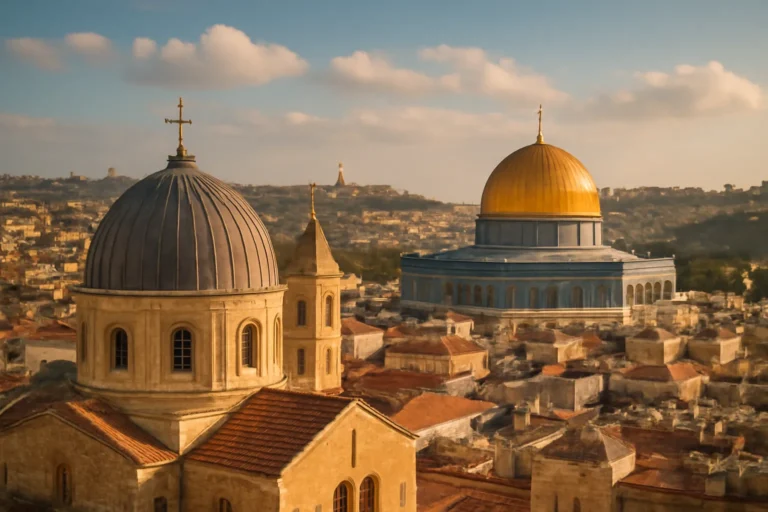
The Holy Land has long stood as a focal point for world civilizations and a cradle for Christian faith. Across centuries, the region that includes Jerusalem, Bethlehem, Nazareth, and other sacred sites has been home to diverse Christian communities whose identities have been shaped by theology, politics, and daily life. Today, Christians in the Holy Land—often referred to as Holy Land Christians or Arab Christians of Palestine and Israel—hold a distinct place in both religious and secular spheres. Their history is marked by continuity and change: from early apostolic foundations to medieval churches, from the upheavals of conquest to the complexities of modern sovereignty, and finally to ongoing efforts to sustain faith, culture, and coexistence in a contested landscape.
A long arc of history: from early Christianity to the modern era
The story of Christians in the Holy Land begins in the cities and countryside that became the theater of the New Testament and the early church. The city of Jerusalem is central to that narrative, hosting the crucifixion and resurrection traditions that anchor Christian memory. In the first centuries, missionaries, pilgrims, and local converts formed vibrant congregations that contributed to the spread of Christianity across the Mediterranean world.
Early roots and the Byzantine era
In the Roman Empire, Jerusalem and surrounding towns emerged as centers of Christian worship, pilgrimage, and monastic life. The development of sanctuaries, basilicas, and pilgrimage routes helped to codify liturgical practices and regional rites.
The Byzantine period saw state patronage for Christian institutions and the establishment of the ecclesiastical structure under the Patriarch of Jerusalem, along with fellow patriarchates in Constantinople and Antioch. Churches in cities like Bethlehem and Nazareth grew in prominence as sites connected to biblical events.
For many centuries, Eastern Christian communities—including Greek Orthodox, Armenian, and Syriac Christians—coexisted with other religious groups, maintaining liturgies in multiple languages and preserving sacred narratives through liturgical texts and icons.
Crusader, Mamluk, and Ottoman horizons
The Crusader era introduced monumental churches and castles, reshaping liturgical life and church administration. While the Crusades themselves were military campaigns, they left a lasting imprint on architecture, relics, and the idea of sacred space in the Holy Land.
During the Mamluk and later Ottoman periods, Christian communities navigated changing political powers, often enjoying a degree of protection under millet-like arrangements and paying taxes in exchange for freedom of worship. Churches continued to function, but communities faced social and economic constraints that influenced education, property rights, and mobility.
Over these centuries, Armenian Apostolic, Greek Orthodox, Latin Catholic, and Syriac Christian traditions maintained their own hierarchies, languages, and art, contributing to a layered, multi-ethnic Christian landscape in the region.
Denominations and communities today: a diverse Christian presence
Today’s Holy Land Christians represent a diverse tapestry of denominations and devotional practices. While numbers have fluctuated due to migration, conflict, and shifting demographics, the enduring presence of these communities is visible in churches, schools, charitable institutions, and cultural life.
Mainline and historic churches
Greek Orthodox (Patriarchate of Jerusalem) — One of the oldest and largest Christian families in the Holy Land, with a strong presence in Jerusalem, Nazareth, and beyond. Their liturgy unfolds in Greek and local languages, and their patriarchate maintains a network of parishes and monasteries that preserve traditional rites.
Latin (Roman Catholic) — The Latin Patriarchate of Jerusalem represents the Western Catholic tradition in the region. Catholic communities are active in education, healthcare, and social services, with historic churches in Jerusalem and Bethlehem and numerous missionary ministries.
Armenian Apostolic — The Armenian Patriarchate of Jerusalem preserves a distinct liturgical language (Classical Armenian) and a rich heritage of church buildings, schools, and cultural life tied to Armenian Christians in the Holy Land.
Melkite Greek Catholic (Chalcedonian Syriac/Greek) — A Eastern Catholic tradition in communion with Rome, often reflecting the Arab-speaking liturgical life of the region with its own archepiscopal structures and rites.
Syriac Orthodox and Syriac Catholic — Smaller but historic communities that maintain Syriac rites, monasteries, and churches, contributing to the linguistic and cultural diversity of Christian worship in the land.
Coptic Orthodox and other Oriental Christian communities — While smaller, these communities contribute to the ecumenical fabric and participate in shared Christian philanthropy and education.
Protestant and Evangelical communities — Churches and missions have a presence in urban centers, offering social services, education, and Bible-based ministries that reach both local populations and visitors.
Protestant and Anglican overlaps — The Anglican tradition and other ecumenical partners maintain parishes and schools, fostering dialogue with Orthodox and Catholic neighbors as part of broader Christian cooperation in the Holy Land.
Arab Christians — In both Israel and the Palestinian territories, reformulated civic identities as Arab Christians emphasize shared language, history, and cultural life while preserving distinct church affiliations.
Demographics and geography of current communities
Estimates vary, but Christians in the Holy Land today constitute a small but enduring proportion of the population in both Israel and the Palestinian territories. In Israel, Christians are a minority within the broader Jewish-majority state, often highlighted in rural and urban enclaves with strong church networks. In the Palestinian territories, particularly in the West Bank and East Jerusalem, the Christian minority has remained a visible, if aging, demographic that anchors many churches, family-owned businesses, and local charities. The term Palestinian Christians is commonly used to describe Arab Christians who identify with Palestinian national life as well as with their church traditions. Across both geographies, Holy Land Christians frequently participate in education, health care, and humanitarian work, alongside their religious duties.
Sacred sites, rites, and daily life: how faith is lived on the ground
Christian worship in the Holy Land is inseparable from the geography of the land itself. Sacred sites, liturgical calendars, and pilgrimage circuits shape what it means to be a believer here. Churches, monasteries, and shrines are not only places of worship but also custodians of art, history, and interfaith memory.
Important sacred sites and their communities
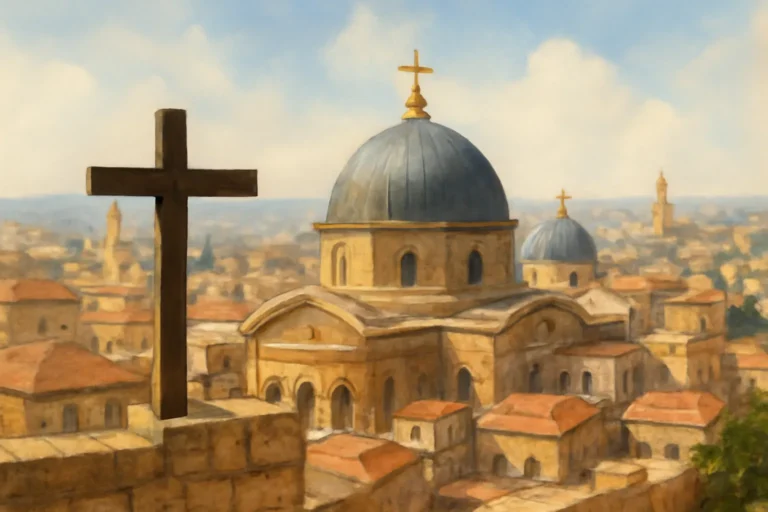
Church of the Holy Sepulchre in Jerusalem — revered as the site of Jesus’ crucifixion and resurrection, jointly managed by several Christian denominations, with each tradition maintaining its own chapels and rites within the complex.
Church of the Nativity in Bethlehem — traditionally associated with the birthplace of Jesus, a symbol of Christian devotion in the Holy Land and a focus for pilgrimages from around the world.
Church of the Annunciation in Nazareth — commemorating the archangel Gabriel’s announcement to Mary, a centerpiece of Galilean Christian worship and heritage.
Monasteries and sanctuaries scattered across the region—often high on hills or tucked into ancient towns—trace monastic traditions dating back to late antiquity and demonstrate how ascetic life has shaped Christian spirituality in the Holy Land.
Liturgy, language, and ecumenical coexistence
The liturgical life of Holy Land churches reflects a mosaic of languages—Greek, Arabic, Armenian, Syriac, Latin—and a range of musical traditions that adapt to local cultures while preserving ancient chants and prayers.
Ecumenical cooperation is a hallmark of daily life, with joint charitable work, common feasts, and inter-church dialogues that seek to bridge differences and promote shared service to communities in need.
Education and social services—carried out by church-affiliated schools, hospitals, and charitable societies—are central to Christian witness, especially in areas where state capacity is constrained or where communities face economic hardship.
Historical turning points and their lasting impact on modern faith
Several watershed moments shaped the trajectory of the Holy Land’s Christian communities in the modern era. These turning points affected governance, property rights, education, and the capacity to sustain a living faith within a volatile geopolitics.
Ottoman era, modern state formation, and the church’s role
Under Ottoman rule, Christian communities organized under millet-like systems, preserving their own legal frameworks for family law, education, and religious practice. This era fostered a sense of communal identity that persisted into the 20th century.
The emergence of modern national movements in the region intersected with religious identities. For Christians, this sometimes meant balancing allegiance to a national milieu (Palestinian, Israeli, or broader Arab identity) with loyalty to church institutions and theological traditions.
20th century upheavals: wars, displacement, and new alignments
Israel’s establishment in 1948 and the subsequent Arab‑Israeli conflicts profoundly affected Christian communities, altering demographic distributions and access to holy sites. Some towns saw shifts in church leadership or property occupancy as populations moved or reorganized.
The 1967 war and the resulting changes in administration over East Jerusalem, the West Bank, and Gaza affected mobility, security, and the daily rhythms of worship. East Jerusalem became a focal point for political and religious contention, with churches navigating complex legal and diplomatic landscapes.
Throughout these decades, the diaspora of Holy Land Christians grew, with many emigrants seeking education and economic opportunity abroad. Remittances and transnational ties helped sustain church activities and cultural life at a distance while shaping contemporary identities back home.
Contemporary life: communities, families, and civic engagement
Modern Christians in the Holy Land are deeply integrated into the social fabric of both the Israeli state and the Palestinian territories. They contribute to politics, education, media, and civil society while bearing witness to their faith in challenging circumstances.
The social and civic involvement of Holy Land Christians
Education and universities—Church-affiliated schools and colleges provide foundational education, foster bilingual or trilingual communities, and nurture leadership for minority groups within both Israeli and Palestinian contexts.
Healthcare and charity—Hospitals, clinics, and charitable organizations run by Christian denominations offer essential services to diverse populations, illustrating a tradition of solidarity beyond confessional boundaries.
Cultural preservation—Museums, archives, and cultural centers operated by churches help preserve languages, liturgical chants, and artisanal crafts, ensuring that older generations can pass on their heritage to younger Christians and visitors alike.
Interfaith dialogue—Across the Holy Land, Christian communities collaborate with Jewish and Muslim neighbors to promote mutual understanding, peace-building, and social cohesion, often participating in regional ecumenical councils and joint services during times of celebration or crisis.
Economic realities and migration patterns
Economic pressures, political instability, and the search for opportunities abroad have driven some Holy Land Christians to relocate to the Americas, Europe, or beyond. This migration affects the size of churches, the continuity of local languages, and the transmission of family legacies.
In some Palestinian communities, families maintain property and businesses while children pursue education outside the territory. The reintegration of these diasporic ties can support cultural exchange and international support for local churches and schools.
Challenges, resilience, and the road ahead for the faithful in the Holy Land
Despite their enduring presence, Christians in the Holy Land face complex challenges. Understanding these factors is essential for anyone studying regional history or engaging in contemporary interfaith work.
Demographic decline—Low birth rates in some communities, emigration, and limited natural growth contribute to aging congregations and concerns about long-term viability in certain towns.
Access to holy sites—Security concerns, mobility restrictions, and territorial fragmentation can complicate the ability of pilgrims and local parishioners to access sacred places, especially for those in the West Bank or Gaza.
Property and legal questions—Church properties, heritage buildings, and land rights intersect with state regulations and conflict dynamics, creating ongoing legal and financial burdens for congregations and monasteries.
Intercommunal tension—While many Holy Land Christians work toward peaceful coexistence, regional strife and politics can strain relations among communities and influence daily worship and social life.
Ecumenical collaboration—Joint prayer, shared service projects, and archival partnerships help Christian families address common concerns and project a united witness in a contested land.
Heritage conservation—Restoration projects for churches, chapels, and ancient sites preserve not only religious practice but also regional history and tourism potential.
Education and youth engagement—Scholarships, language programs, and leadership training strengthen intergenerational continuity and empower younger members to assume roles in church leadership and civic life.
Preserving heritage and fostering dialogue: the role of heritage, education, and ecumenism
The ongoing preservation of holy sites and the promotion of dialogue among faith communities are central to the future of Holy Land Christians. Heritage tourism, academic study, and interfaith initiatives all contribute to a more informed public and can help reduce misunderstanding about the region’s religious plurality.
Ecumenical initiatives and cultural projects
Interchurch councils and regional forums that bring together Orthodox, Catholic, Protestant, and other Christian traditions to address social welfare, education, and youth programs.
Joint relief and humanitarian campaigns that mobilize resources regardless of denominational lines, demonstrating a shared commitment to human dignity and social justice.
Academic research centers and museum collaborations that document Christian antiquity in the region, from liturgical manuscripts to church architecture, helping both locals and visitors appreciate the depth of Christian life here.
Looking to the future: prospects for Holy Land Christianity
What might the coming decades hold for Christians in the Holy Land? Much depends on political developments, socio-economic conditions, and the vigor of international and local ecumenical networks. Several themes recur in discussions about the path forward:
Continued religious plurality—The hope is for a stable environment in which diverse Christian traditions can flourish alongside Judaism and Islam, preserving sacred spaces, language heritage, and worship traditions for future generations.
Education and leadership development—Investments in schools, scholarship programs, and clergy training are essential to sustain leadership that can navigate modern challenges while maintaining ancient faith practices.
Tourism and pilgrimage—Heritage tourism remains a potential engine for community vitality, as pilgrims and travelers seek authentic experiences tied to sacred sites, local history, and Christian culture in the region.
Diaspora engagement—Strong connections with the global Christian diaspora can support churches through remittances, cultural exchange, and advocacy for religious freedom and heritage protection.
Glossary of terms and key concepts
To better understand the landscape of Holy Land Christianity, here are some essential terms and phrases commonly used in discussions about this topic:
Patriarchate — A major episcopal see headed by a patriarch; in this region, several patriarchates (Jerusalem, Constantinople, Alexandria, Antioch) influence governance and liturgical life.
Armenian Apostolic Church — An ancient church with deep roots in the Armenian community, maintaining its own liturgy and canon law while preserving an enduring presence in the Holy Land.
Latin Patriarchate — The Roman Catholic administrative structure serving Roman Catholics in Jerusalem, focusing on parishes, education, and charitable work.
Melkite Greek Catholic Church — An Eastern Catholic tradition in communion with Rome, reflecting a blend of Greek and Arabic liturgical life.
Eastern Orthodox — Churches following Eastern Christian rites, often with Greek or Arabic liturgical languages, distinct from Western Catholic traditions but sharing a common apostolic heritage.
Arab Christian communities — Christians who identify with Arab culture and language while belonging to various church families, shaping contemporary social and political perspectives in the region.
Interfaith dialogue — Cooperative efforts among Christian, Jewish, and Muslim communities to address shared concerns, promote peace, and build mutual respect.
Key takeaways: the enduring presence of faith in a contested landscape
The history and modern faith of Christians in the Holy Land reveal a story of steadfast faith amid changing political realities. From ancient basilicas to bustling modern churches, from Arabic liturgies to multilingual chants, the Christian communities of the region have preserved sacred memory while contributing to education, social service, and cultural life. Their resilience lies in a combination of deep religiosity, robust institutional networks, and a commitment to dialogue that transcends sectarian divides. As long as the Holy Land remains a place of pilgrimage for Christians and visitors from around the world, its holy heritage, its faithful communities, and its shared hopes for peace will continue to shape the story of Christianity in the region and beyond.