Theology and Philosophy Difference: Understanding the Distinctions
Theology and philosophy are two venerable strands of human inquiry, each with its own aims, methods, and horizons. When people speak of the theology and philosophy difference, they often mean not a single simple distinction but a spectrum of contrasts that illuminate how human beings think about reality, truth, meaning, and value. In broad terms, Theology is the study of the nature of the divine, the interpretation of sacred texts, and the articulation of doctrinal beliefs within a faith tradition. By contrast, Philosophy is the rigorous, often universal, inquiry into the nature of reality (metaphysics), knowledge (epistemology), and value (axiology), conducted through reasoned argument and critical reflection. This article surveys the distinctions between theology and philosophy, while also tracing how they intersect and enrich one another in various historical and contemporary contexts.
To speak of the theology and philosophy difference is also to acknowledge that language, method, and authority differ in kind as well as degree. The aim here is not to elevate one discipline over the other but to describe how their goals, tools, and standards of justification diverge and yet can converge in fruitful dialogue. Throughout, you will encounter variations of this theme—theology vs. philosophy, philosophical theology, religious philosophy, and philosophy of religion—that reflect different emphases within related conversations about ultimate questions.
The core distinction between theology and philosophy
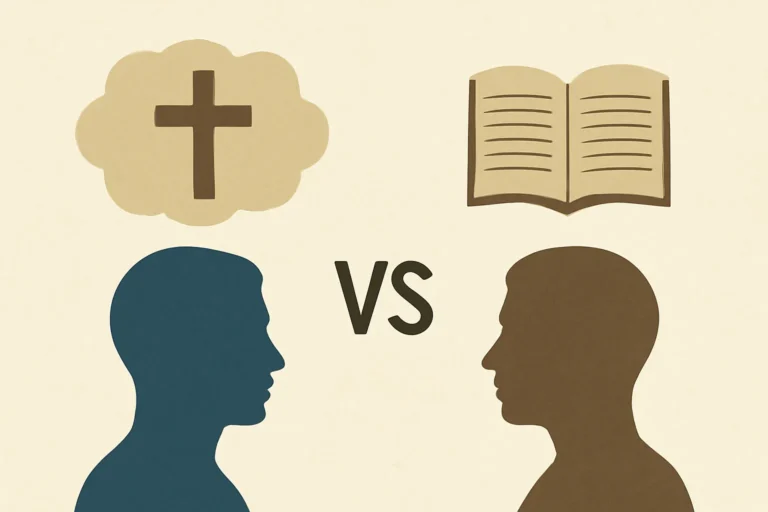
At the heart of the theology and philosophy difference lies a fundamental contrast of starting points and governing norms. Theological inquiry typically begins with rooted commitments in a tradition that claims access to divinely revealed truths, authoritative scriptures, or communal doctrinal authority. Philosophy, by contrast, begins with an open-ended commitment to rational justification, conceptual clarity, and argumentative scrutiny that aims to be accessible across communities and traditions.
Key features of the distinction include:
Aims:
Theology aims to interpret, defend, and articulate religious beliefs within a living faith tradition and for the sake of spiritual formation, worship, and communal discernment.
Philosophy aims to examine fundamental concepts, test arguments, and develop theories about knowledge, reality, and value that hold across many contexts.
Authority:
Theology often relies on sacred texts, revelation, religious authorities, and tradition as sources of truth and guidance.
Philosophy relies on reason, evidence, logical coherence, and critical debate as the standards for justification.
Method:
Theology employs exegesis, doctrinal synthesis, theological method, and pastoral or exegetical practice to interpret sacred narratives and theological commitments.
Philosophy emphasizes argument structure, conceptual analysis, thought experiments, and cross-disciplinary critique of concepts.
Audience and scope:
Theology speaks primarily to communities within a religious tradition and to those who share or engage with that tradition’s commitments.
Philosophy speaks to a broader, often secular, audience concerned with universal questions that may be independent of a single faith system.
Despite these contrasts, the theology and philosophy difference is not a wall but a marketplace of ideas. Many thinkers explicitly blend the two, yielding productive syntheses such as philosophical theology or natural theology, where reason is used to illuminate or defend certain theological claims. The next sections explore how this interplay has developed across time and tradition.
Historical development and context
The relationship between theology and philosophy has shifted across history, influenced by cultures, languages, and intellectual climates. In antiquity and the medieval period, philosophy and theology were often inseparable in the sense that most thinkers sought to harmonize reason with religious belief. In the modern era, these fields sometimes diverged into distinct disciplines, yet new forms of dialogue have revived the conversation in contemporary thought.
In the ancient world, philosophy provided conceptual tools that theologians could use to articulate and defend religious ideas. The synthesis became especially prominent as Christian, Jewish, and Islamic thinkers engaged with Aristotelian and Platonic frameworks.
Aquinas and the medieval Christian synthesis used Aristotle to articulate natural theology and systematic doctrines, illustrating a robust theology-into-philosophy program.
Augustine and early Christian thought integrated philosophical concepts with theological commitments, shaping questions about time, memory, and the nature of the will.
Al-Ghazali in the Islamic tradition offered critiques and reconciliations between rational inquiry and religious faith, employing philosophical methods to explore mystical and doctrinal concerns.
Ibn Sina (Avicenna) and Maimonides contributed to a cross-cultural conversation that sought to harmonize reason with revealed truth within their respective religious contexts.
Modern era and diversification
With the emergence of modern science, political liberalism, and the rise of secular philosophy, philosophy began to articulate questions about religion in a way that could be separated from particular doctrinal confessions. The field of philosophy of religion matured to analyze arguments about the existence of God, divine attributes, religious language, and the rationality of faith. Simultaneously, contemporary theology has diversified into numerous traditions—liberal, orthodox, reformist, feminist, liberationist—each re-engaging with philosophical tools to articulate doctrinal claims in a contemporary key.
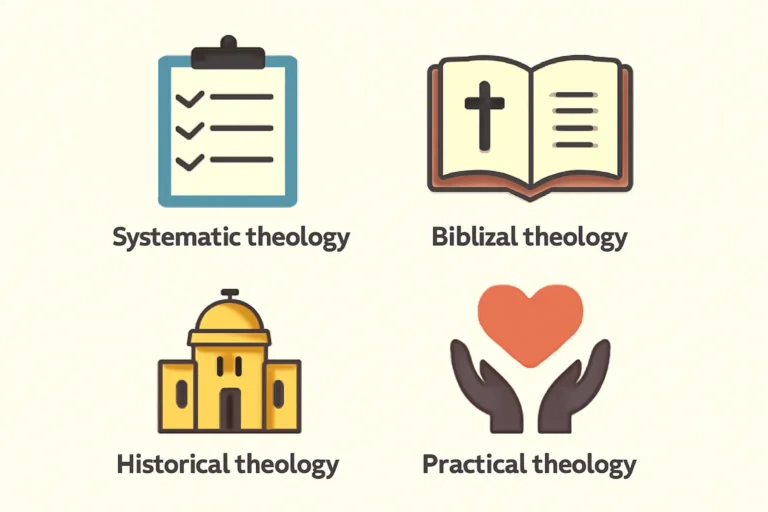
Today, the relationship between theology and philosophy often takes the form of specialized subfields such as analytic theology, systematic theology, and philosophy of religion, which explicitly study religious ideas with rigorous philosophical methods. This historical arc shows both the continuities and the shifts in how thinkers have navigated the theology and philosophy difference.
Aims, methods, and criteria of success
Understanding how theology and philosophy evaluate success helps clarify the distinction between them. In theology, success is often evaluated by fidelity to doctrinal commitments, consistency with tradition, and usefulness for worship, pastoral care, and moral formation. In philosophy, success is judged by logical coherence, conceptual clarity, breadth of applicability, and the strength of argumentation across contexts.
Theological methods and aims
Theological work typically involves
Exegesis of sacred texts to recover intended meanings and religious significance.
Systematic formulation of beliefs in light of revelation and tradition.
Doctrinal development that remains consonant with the living community’s faith commitments.
Pastoral relevance: care for spiritual formation, moral guidance, and liturgical life.
Philosophical methods and aims
Philosophical work typically involves
Conceptual analysis to reduce ambiguity and sharpen meaning.
Formal argumentation, including deductive proofs or rigorous refutations.
Evaluation of theories by coherence, explanatory power, and evidential support.
Cross-disciplinary relevance: applying insights to ethics, science, politics, and cognitive science.
Criteria of justification
Different communities adopt different norms for justification. In theology, justification may hinge on fidelity to revelation, consistency with sacred texts, and the authority of communal interpretation. In philosophy, justification rests on argumentative soundness, logical coherence, and empirical or a priori support where appropriate. This divergence in standards helps explain why some claims may be persuasive within a religious community yet contested in secular philosophical circles, and vice versa.
Sources of authority and epistemology
The epistemic foundations of theology and philosophy reflect their distinctive aims. Theology claims access to truth through divine disclosure and the long memory of tradition, whereas philosophy asserts that truth emerges from disciplined reasoning and evidence that stands up to critical scrutiny.
Theology: revelation, sacred scriptures, doctrinal authorities, religious experience, and communal discernment.
Philosophy: rational argument, logical analysis, empirical data where relevant, and critical debate among peers.
But the boundaries are not rigid. Theology often employs philosophical reasoning to interpret revelation or to defend beliefs in a contemporary setting. Philosophy occasionally defers to religious insights for explanations of meaning, value, and life’s ultimate questions. This interdependence demonstrates that the theology and philosophy difference can be approached as a dialogue rather than a strict dichotomy.
Language, concepts, and argumentation
How each discipline uses language reveals much about its character. Theological discourse tends to be shaped by creed, doctrine, liturgy, and the tradition’s canonical languages. Philosophy emphasizes precise terminology, formal logic, and cross-cultural terminology designed to travel across contexts.
Terminology in theology is deeply colored by doctrinal vocabulary and religious symbolism, whereas philosophy prioritizes universality of terms like ontology, epistemology, axiology, metaphysics, and philosophy of language.
Theology tends to frame concepts within a narrative about God, salvation, and cosmic purpose; philosophy tends to analyze concepts independently of any single narrative.
In theology, arguments often aim to show coherence with tradition, defend doctrinal claims, and illuminate religious practice.
In philosophy, arguments seek rigorous justification, critical scrutiny, and broad applicability, sometimes through thought experiments or formal logic.
Contemporary discussions in the philosophy of religion explicitly study how religious language performs, what counts as evidence for religious claims, and how belief interacts with rational justification. The result is a field that explicitly maps the energetic space between theology and philosophy.
Intersections: dialogue, convergence, and conflict
Far from being mutually exclusive, theology and philosophy often collaborate in constructive ways. The theology and philosophy difference can become a bridge to explore deep questions with multiple perspectives. The productive intersections include:
Metaphysical inquiry where theological claims about God’s nature or creation may be examined with philosophical ontology and metaphysics.
Ethics and moral philosophy where religious moral frameworks interact with secular ethical theories to address dilemmas in medicine, technology, and public life.
Epistemology where debates about belief, evidence, faith, and reason illuminate how different communities justify their claims.
Philosophy of religion as a field that explicitly studies religious claims with philosophical tools, while theology returns to doctrinal commitments with critical and reflective methods.
Points of friction
Authority vs. autonomy: sacred authority can clash with the demands of independent critical scrutiny.
Miracles and empirical evaluation: how to assess extraordinary claims within different epistemic standards.
Standards of justification: different communities may demand different kinds of evidence for truth-claims about ultimate reality.
Productive gatherings
Conferences in philosophy of religion and theology that bring together scholars from diverse backgrounds.
Joint seminars that use hermeneutics to interpret sacred texts within critical frameworks.
Interfaith dialogues that consider theological commitments while applying philosophical methods to questions of justice, meaning, and human flourishing.
Practical implications for education and public life
The distinction between theology and philosophy has real-world consequences for how universities structure curricula, how public discourse handles religious questions, and how individuals cultivate moral judgment. Recognizing the difference helps students and citizens avoid conflating doctrinal acceptance with logical justification.
Curriculum design: universities often separate religious studies, theology, and philosophy, but they increasingly offer cross-listed courses that examine religious ideas through philosophical lenses and vice versa.
Critical thinking skills: philosophy trains students to analyze arguments, while theology trains students to articulate commitments with intellectual rigor within a tradition.
Public discourse and pluralism: secular societies benefit from engaging with religious voices, yet the ability to distinguish faith commitments from philosophical reasoning supports fairness and clarity in debates on public policy, bioethics, and education.
In practical terms, the interplay between theology and philosophy informs debates on human rights, governance, science, and ethics. When approached with mutual respect and methodological clarity, theologians and philosophers can contribute to a more thoughtful public square, offering frameworks for reflection that respect both intellectual rigor and lived faith.
Across the centuries, many thinkers have contributed to the bridge between theology and philosophy, while others remain anchored primarily in one domain. The following brief sketches are representative rather than exhaustive, intended to illustrate the range of interplay between doctrine and reason:
Augustine and Aquinas in medieval Christian thought, blending doctrinal theology with Aristotelian philosophy to address questions of God, time, and moral law.
Thomas Aquinas—a central figure who pursued a comprehensive synthesis of faith and reason; his Summa Theologiae remains a touchstone for systematic theology and natural theology.
Immanuel Kant and the transformation of modern philosophy of religion, critically assessing faith, reason, and the boundaries of knowledge.
David Hume and his critiques of miracles and causal reasoning, shaping subsequent debates in the philosophy of religion.
William James and the pragmatic approach to religious experience, highlighting the experiential side of belief within a philosophical framework.
Leibniz and early attempts to reconcile theodicy with rational theism, contributing to debates about necessity, contingency, and divine perfection.
Al-Ghazali and Ibn Sina in the Islamic tradition, offering philosophical reflections within, and sometimes against, theological frameworks.
Maimonides and Jewish philosophy, articulating a rational reading of scripture and a confident engagement with science and logic.
Plato and Aristotle as foundational figures who shaped metaphysical and ethical dialogues that crossed cultural lines and inspired centuries of theological and philosophical discussion.
Paul Tillich and the 20th-century attempt to articulate theology in dialogue with existential and continental philosophy.
Hans-Georg Gadamer and hermeneutics, influencing how religious texts are interpreted philosophically and the role of tradition in understanding.
Alasdair MacIntyre in virtue ethics with Christian influences that interact with theological understandings of the good life.
William Lane Craig and contemporary analytic arguments for theistic rational justification and apologetics.
These figures show not only historical development but also the variety of ways thinkers have navigated the line between belief and inquiry, doctrine and analysis. The broader point is that the theology and philosophy difference has generated rich intellectual traditions in which ideas about God, knowledge, and moral life are examined from multiple vantage points.
Common misconceptions about theology and philosophy
Theology is merely belief without reason; in truth, many theologians rely on rigorous argumentation, textual analysis, and historical-critical methods.
Philosophy is entirely secular or amoral; many philosophers engage with religious ideas, spirituality, and moral questions informed by religious traditions.
All religious claims are inherently irrational; many religious thinkers defend their claims with normative, experiential, and sometimes empirical reasoning.
Philosophy always undermines faith; in many contexts, philosophy deepens or clarifies religious commitments and helps articulate them with precision.
How to study theology and philosophy together
A practical approach to understanding the theology and philosophy difference involves intentional cross-training, reading, and dialogue. The aim is to cultivate the ability to articulate claims clearly, critique arguments fairly, and appreciate the distinct aims of each discipline.
Read foundational texts from both traditions, noting how authors justify beliefs, present arguments, and respond to objections.
Practice logical analysis of religious and philosophical arguments to identify assumptions, infer consequences, and assess coherence.
Engage in hermeneutics to interpret texts within their historical contexts and to understand how tradition shapes meaning and value.
Distinguish standards of justification across disciplines and practice cross-disciplinary dialogue, recognizing when different norms apply.
Participate in discussion groups that connect theologians and philosophers to evaluate issues such as the problem of evil, divine action, free will, and the nature of truth.
Recommended areas of study include natural theology, philosophy of religion, systematic theology, ethics, metaphysics, epistemology, and philosophy of language. The blended study fosters a mature capacity to articulate nuanced positions that respect both intellectual rigor and spiritual depth.
Closing reflections on the interplay between theology and philosophy
Ultimately, the distinction between theology and philosophy is best understood as a dynamic interface rather than a rigid separation. Reason and revelation can illuminate each other when approached with humility, clarity, and a readiness to revise assumptions in light of compelling arguments or fresh experiences. Across traditions, the goal is not simply to choose one method over the other but to cultivate a disciplined, respectful conversation that enhances understanding of existence, meaning, and value.
Whether one leans toward a faith-based framework or a secular, analytic posture, the ongoing conversation between theology and philosophy remains a fertile ground for insights about life in this world and, for some, beyond. The theology and philosophy difference can thus be seen as a shared project: to think carefully about ultimate questions and to live with integrity in light of the best reasons we can offer and the deepest commitments we hold.