What Language Was the Dead Sea Scrolls Written In: A Comprehensive Guide to Their Original Language and Script
The Dead Sea Scrolls, unearthed in the Qumran region and other nearby sites, represent one of the most important linguistic and textual archives from the Second Temple period. A common question—often framed as “what language were the Dead Sea Scrolls written in?”—opens a door to a more complex story about language, religion, and daily life in ancient Judea and its neighbors. The short answer is that the scrolls were created primarily in two living languages of the period, with a smaller body of material displaying a tertiary linguistic presence. In broad terms, the corpus is dominated by Hebrew and Aramaic, with a sprinkling of Greek elements and a few other linguistic traces. Equally important is the script in which these languages appear, which reflects evolving scribal practices and regional variations. This guide surveys the languages and scripts found in the Scrolls, explains how scholars assign a language to each text, and highlights why these linguistic details matter for understanding the cultural and religious landscape of the era.
Where language and script meet in the Dead Sea Scrolls
When people ask how many languages are represented in the Dead Sea Scrolls, the answer is not a single number but a spectrum. The composition of the library shows a strong alignment with the linguistic environment of the Second Temple world, where Hebrew functioned as the canonical language of scripture and liturgy, while Aramaic served as a lingua franca for daily life, administration, and some literary works. A smaller subset of materials reveals Greek elements, underscoring the cultural and intellectual permeability of the period. The following sections outline the main linguistic families and provide representative examples to illustrate how each language appears in the Scrolls.
Hebrew as the backbone of biblical and sectarian literature
Nearly all the bíblical manuscripts that survive from the scrolls are in Hebrew, the language of the Hebrew Bible and of many religious and legal texts composed by Jewish communities of the time. Several features mark Biblical Hebrew in the Scrolls, including vocabulary choices, forms of verb conjugation, and the occasional archaic spelling that preserves older strata of the language. In addition to canonical biblical texts, a substantial portion of the non-biblical scrolls—what scholars call the “sectarian” or “community” literature—also employ Hebrew, often in a carefully structured, law-code or liturgical register. These works demonstrate how Hebrew functioned beyond the temple or synagogue setting, serving as a medium for community rules, eschatological expectations, and interpretive methods of the scriptures.
Key characteristics to notice in Hebrew sections of the Scrolls include:
Textual Hebrew that aligns with the biblical tradition in vocabulary and syntax, but with distinctive spelling and occasional idiosyncrasies tied to scribal culture.
Extensive use of paragogic suffixes and other verb forms that reflect ancient Hebrew grammar.
Non-biblical but Hebrew-language compositions—such as the Pesharim (interpretive commentaries on biblical books)—that reveal a hermeneutic approach grounded in Hebrew exegesis.
What counts as Hebrew in the Scrolls?
Original Biblical manuscripts (books of Torah and Prophets represented among the scrolls) written in Biblical Hebrew.
Non-biblical texts that use a formal Hebrew register, including community regulations and liturgical poetry.
Glosses and marginalia in Hebrew that accompany other textual material, illustrating practices of copying and commentary.
Aramaic as a bridge language in a multicultural landscape
Aramaic stands as the second major linguistic pillar of the Dead Sea Scrolls. It was the everyday lingua franca of much of the Near East from the later Persian period onward, used in administration, commerce, and many literary genres. In the Scrolls, Aramaic is not merely present in isolated phrases; it appears in substantial compositions, including entire texts and longer passages. Some of the most famous Aramaic witness texts are the Genesis Apocryphon (an expansionary narrative on Genesis), and documents that reflect the Levitical or legal-administrative concerns of the sectarian community.
The Aramaic materials show several distinctive features:
Complex Aramaic syntax and a lexicon that often differs from Biblical Hebrew.
Texts that present Aramaic prophecy, law, or expository writings—genres that align with the broader Near Eastern literary culture in which Aramaic played a central role.
Use of Aramaic scripts when the language itself is Aramaic, including letters and characters that align with Aramaic paleography of the period.
Notable Aramaic texts and genres
Genesis Apocryphon, a retelling of Genesis narratives in Aramaic that preserves a distinctive narrative voice and interpretive apparatus.
Aramaic Levi Document and other Aramaic-language legal or genealogical texts that reveal community concerns and ritual boundaries.
Other pesher-like or interpretive writings that incorporate Aramaic phrases or clauses within predominantly Hebrew compositions.
Where Hebrew forms the backbone of the biblical and sectarian library, Aramaic serves as a parallel channel through which the Qumran community expressed myth, law, and communal identity. The presence of Aramaic texts shows that the authors and scribes who produced these works were embedded in a broader linguistic milieu in which Aramaic was a common medium for communication and literature.
Greek in a minority role, with outsized significance
In the Dead Sea Scrolls, Greek is not the dominant language, and it does not appear as a large, sustained corpus. Instead, it appears as a minority presence—mostly in limited fragments, glosses, or terms embedded in otherwise Hebrew or Aramaic texts. Where Greek appears, it often signals contact with Greek-speaking intellectual or religious currents of the Hellenistic and early Roman periods, or it reflects the broader cultural exchange of the eastern Mediterranean world.
What this means for readers is that the Scrolls provide only sparse Greek-language evidence compared with their Hebrew and Aramaic content. When Greek does surface, scholars analyze it for:
Small glosses or translations of unclear Hebrew terms into Greek, which help illuminate the linguistic interface between Hebrew and Greek traditions.
Possibly borrowed terms from Greek that entered Aramaic or Hebrew technical vocabularies (for example, terms related to philosophy, governance, or literary technique).
Occasional titles or introductory phrases in Greek that accompany otherwise Semitic texts, indicating a degree of bilingual editorial practice.
How much Greek evidence is there, really?
Only a small fraction of the surviving material preserves Greek language material in any extended form.
Most Greek-related material is fragmentary, making linguistic assessment challenging.
Scholars generally treat Greek as a secondary layer in the Scrolls’ linguistic ecology, rather than as a primary vehicle for the community’s writings.
The scripts behind the languages: writing systems used in the Scrolls
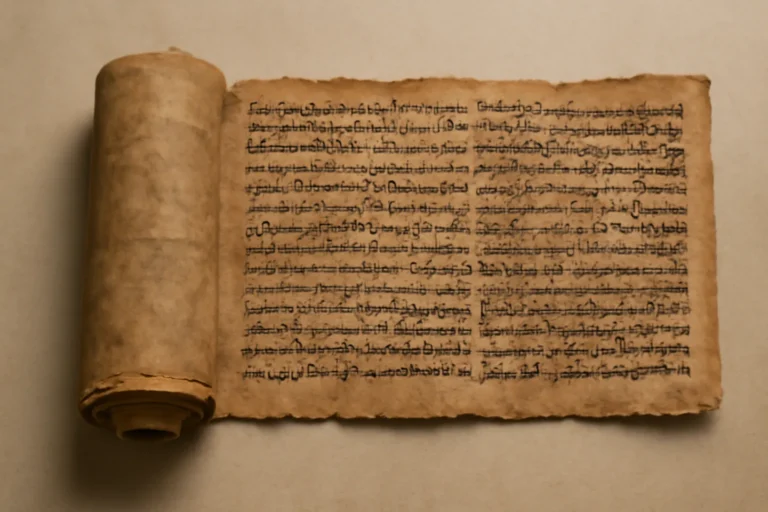
Beyond the question of which language was used, the Scrolls also illuminate the scripts scribes used to render their texts. The writing systems reflect a snapshot of Jewish and Near Eastern paleography in the late Second Temple period. The vast majority of manuscripts were written in Hebrew or Aramaic scripts, though the exact form of the alphabet and its conventions varied over time and between communities.
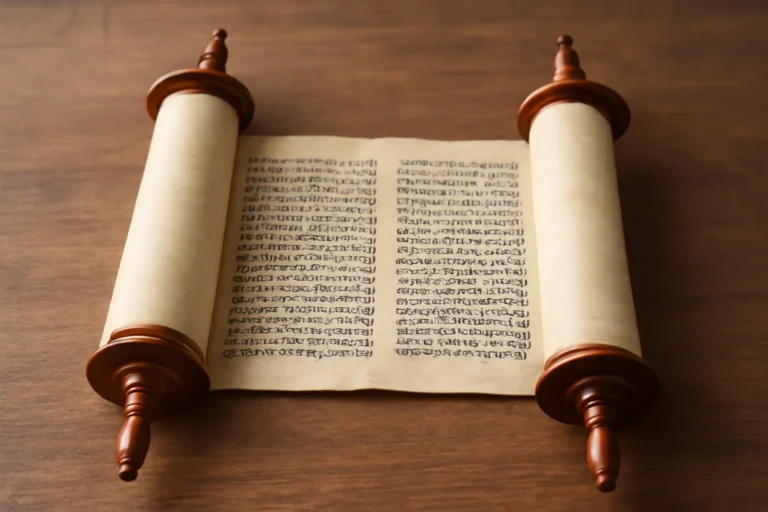
Hebrew script (square script), which became the standard for most Hebrew texts in later centuries, is prevalent across the Scrolls. This script facilitated precise scribal copying, complex commentaries, and liturgical compositions.
Paleo-Hebrew and other historical script forms appear in a minority of items, notably on some inscriptions and on certain artifacts associated with the broader Judean world. These scripts offer a window into older orthographic conventions and regional scribal traditions.
Aramaic script usage accompanies Aramaic texts, mapping onto the broader Aramaic writing tradition of the period.
Scholars study paleography—the science of ancient handwriting—to date fragments, identify scribal schools, and reconstruct how a text might have looked in its original setting. The script not only helps confirm a text’s linguistic identity but also illuminates cultural exchanges, scribal networks, and the practicalities of copying in a desert environment.
How the language of the Scrolls informs our understanding of the Second Temple world
Deciphering what language the Dead Sea Scrolls were written in and recognizing the script systems employed in those texts allows researchers to reconstruct the linguistic ecology of a diverse religious landscape. The interplay of Hebrew, Aramaic, and even Greek is not an academic curiosity; it affects how scholars interpret doctrine, law, ritual practice, and communal identity in the period.
Two broad insights stand out:
Religious and legal life was polyglot. The presence of Hebrew for liturgical and exegetical purposes coexisted with Aramaic for narrative, legal, and administrative material, suggesting a community that navigated multiple linguistic registers to address different audiences and functions.
Textual transmission was contextually mediated. The language and script choices reflect scribal lineages, training, and the iconography of religious authority. This matters for understanding how different scrolls were produced, copied, and circulated within the broader Jewish world of the time.
How scholars determine the language of a scroll or fragment
The assignment of a language to a given scroll fragment rests on several interlocking criteria, including vocabulary, syntax, morphology, and paleographic features. When a fragment or a manuscript is recovered, scholars conduct a multilayered analysis to determine whether the text reads as Hebrew, Aramaic, or Greek, and to identify the dialectal variants that may indicate a particular community or scribal tradition.
Lexical cues. The presence of known Hebrew words, Aramaic vocabulary, or Greek loanwords provides initial language signals.
Grammatical patterns. Verb forms, pronoun usage, and particle systems can align with Hebrew or Aramaic grammar, helping to distinguish between the two.
Paleographic analysis. Studying the handwriting style helps date the text and confirms the likely script family (Hebrew square script, Aramaic script, or rare Paleo-Hebrew variants).
Textual context. The larger corpus—whether a biblical manuscript, a pesher interpretation, or a halakhic/legal document—provides contextual clues to language identity.
What this means for readers and students of the Scrolls
For researchers, language attribution is not a mere categorization exercise but a key to understanding how the Scrolls were produced and used. A text written in Hebrew might serve as a liturgical or exegetical composition, while Aramaic-language texts often engage in narrative expansion, governance, or legal discourse. The occasional Greek presence, though rare, signals the broader intellectual climate of the eastern Mediterranean and its possible influence on religious writers in the region. In practical terms, readers encounter a mosaic where:
Texts crucial to Jewish religious heritage and ritual life are primarily in Hebrew.
Texts addressing community organization, interpretation of the law, and apocalyptic expectations frequently employ Aramaic.
Material illustrating cross-cultural exchange—whether literary, administrative, or scholarly—may show Greek touches in limited form.
Representative examples of language distribution across the Scrolls
While the corpus is too diverse to summarize exhaustively, a few representative categories illustrate the language landscape:
Biblical and paraphrastic texts in Hebrew—the core of the scroll library, including copies or close textual relatives of books such as Genesis, Exodus, and Psalms, as well as commentaries and interpretive documents written in a Hebrew literary idiom.
Non-biblical, Hebrew-language works—community rules, hymns, and exegetical writings encoded in Hebrew that reveal how the community read and debated scripture.
Aramaic narratives and legal documents—longer Aramaic texts and narrative expansions that present alternate storytelling modes or administrative structures.
Greek elements—a minority of fragments and phrases that point to contact with Greek-speaking cultures or to translators and scribes who operated in multilingual environments.
Practical takeaways for students and readers
If you are approaching the Dead Sea Scrolls for the first time, or you are teaching a course on Biblical studies or ancient Near Eastern languages, keep these practical points in mind:
The Scrolls are not monolingual. They reflect a multi-language ecosystem in which Hebrew and Aramaic dominate, with occasional Greek substrata.
The script is a window into scribal practice. The prevalence of Hebrew square script versus Paleo-Hebrew variants in a small subset of items reveals how scribes in different locales maintained textual traditions.
Language matters for interpretation. The language used can influence how a text is read: a Hebrew pesher on a prophetic book may carry nuances different from a parallel Aramaic narrative.
Textual dating and provenance often depend on paleographic and linguistic evidence together. Language identity, date estimates, and scribal affiliations are interwoven in the scholarly narrative.
What language was the Dead Sea Scrolls written in? The primary languages are Hebrew and Aramaic, with limited Greek material.
Are there Greek texts among the Scrolls? Greek appears in a small minority of fragments or phrases, primarily as glosses or contextual borrowings rather than full texts.
Did the Dead Sea Scrolls use Paleo-Hebrew? Some items preserve older orthographic practices and scripts, including Paleo-Hebrew in a minority of cases, but most manuscripts use the later Hebrew square script.
Why does language matter for understanding the community? Language illuminates how the community produced, copied, and circulated texts, and it helps locate the Scrolls within the broader linguistic world of the time.
Glossary: quick definitions to navigate the language landscape
Hebrew: The language of much of the Hebrew Bible and of the majority of the Dead Sea Scrolls’ material, especially the canonical and non-biblical Hebrew literature.
Aramaic: A central lingua franca of the Near East in antiquity; used for some narratives, legal texts, and interpretive writings in the Scrolls.
Greek: A minority presence in the Scrolls, usually in fragments, glosses, or embedded terms rather than large, continuous Greek texts.
Paleography: The study of ancient handwriting, used to date manuscripts and identify scribal cultures within the Scrolls.
Pesharim: A genre of interpretive texts in Hebrew that “peshars”—explains or interprets—the meaning of biblical prophecies or passages.
Square script: The standard form of Hebrew and Aramaic writing used in most Dead Sea Scrolls manuscripts, as opposed to older Paleo-Hebrew forms.
The linguistic distribution of the Dead Sea Scrolls is not an arcane curiosity. It informs broader questions about the history of Judaism, the nature of scriptural interpretation, and the cultural exchanges that shaped religion in the eastern Mediterranean. By examining which texts are written in Hebrew versus Aramaic, scholars can infer:
How communities defined authoritative scripture in a multilingual world.
How scribes and teachers used different languages to address diverse audiences and contexts—clerical settings, households, public assemblies, and scholarly circles.
How language intersects with ritual, law, and eschatology in ways that illuminate the daily life of a sectarian community and its relation to the broader Jewish world.
In teaching or writing about the Scrolls, it helps to emphasize that language is a tool for social and religious distinction as well as a carrier of meaning. The Dead Sea Scrolls reveal a society that navigated multiple linguistic codes, employing Hebrew for liturgy and exegesis, Aramaic for narrative and administrative purposes, and occasional Greek signals that connect them to a wider Greco-Roman milieu. This linguistic mosaic is precisely what makes the Scrolls such a rich resource for scholars of biblical studies, linguistics, religion, and ancient history.
Closing note: a living field of study
The question “in what language were the Dead Sea Scrolls written?” invites ongoing exploration as new fragments are found, as paleographic methods advance, and as linguistic theory sheds new light on ancient Semitic languages. Each text, whether in Hebrew or Aramaic, carries with it a local voice, a scribal lineage, and a window into the religious imagination of a community living in the margins of empire. In the end, understanding the Scrolls’ languages and scripts helps us better grasp how ancient readers understood scripture, law, ritual, and prophecy—and how those ideas traveled across linguistic borders in the ancient world.
Note for readers seeking further study: Many modern editions and scholarly collections provide side-by-side comparisons of Hebrew and Aramaic passages, with notes on grammar and paleography. If you are exploring this topic in depth, consider resources that focus on the linguistic paleography of the Second Temple period, as well as volumes that present the scrolls’ text in their original languages alongside transliterations and English translations. This multi-layered approach helps in appreciating the full spectrum of language use in the Dead Sea Scrolls and the historical contexts from which they emerged.