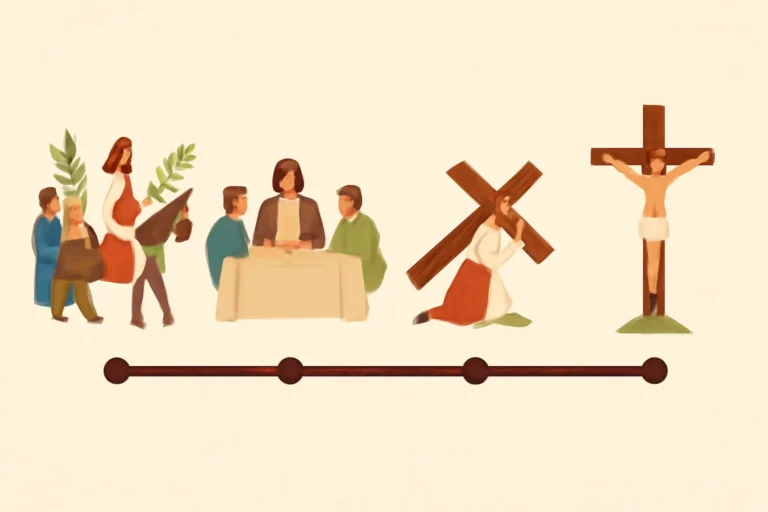
Facts About Jesus’ Resurrection: Evidence, Timeline, and What It Means
The topic of Jesus’ resurrection is one of the most discussed and debated in both religious and scholarly contexts. This article presents a careful overview of the main points commonly considered as a mix of historical data, theological interpretation, and cultural impact. It surveys the evidence put forward by biblical texts, considers historical-critical questions, and reflects on the meaning that many people derive from the belief in a risen Jesus. Throughout, key terms are highlighted to emphasize enduring ideas such as the empty tomb, post-resurrection appearances, and the emergence of early Christian faith.
Foundations in the Gospels and Early Christian Writings
Primary New Testament Accounts
The four canonical Gospels—Matthew, Mark, Luke, and John—offer differing emphases and details about the resurrection event and its surrounding circumstances, yet all acknowledge the core claim that Jesus was raised from the dead.
Each Gospel presents a narrative that includes an encounter with women at the tomb, the discovery of the empty tomb, or encounters with the risen Jesus in various contexts after the crucifixion.
Beyond the Gospels, other New Testament writings reflect early belief in Jesus’ resurrection and its significance for faith, ethics, and eschatology.
Non-Canonical and Early Creeds
Early Christian writings outside the canonical Gospels, including short creedal statements embedded in Paul’s letters, indicate that belief in the resurrected Jesus existed very early in the church’s life.
One of the most influential early creedal formulations appears in 1 Corinthians 15, where Paul summarizes a tradition about Jesus’ death, burial, and resurrection, and the appearances that followed.
Scholars often emphasize that these early creeds served to transmit core convictions in a memorized, portable form, which helped unify diverse Christian groups around common claims.
Key Pieces of Evidence Cited by Historians
Historically notable elements
Multiple independent sources within the New Testament: The Gospels, Paul’s letters, and the Acts of the Apostles offer overlapping attestations about the belief that Jesus was risen and encountered by followers after his death.
Reported empty tomb and tomb-related details: Various gospel narratives note that Jesus’ tomb was found empty, with different explanations offered in the texts themselves, ranging from grave clothes left behind to the absence of a body being a sign of resurrection to the post-resurrection appearances.
Post-resurrection appearances: The surviving witnesses report encounters with Jesus after his crucifixion, including appearances to individual followers, small groups, and well-known leaders, which many readers interpret as a transformative experience tied to belief in a risen Jesus.
Conversion and courage of the original witnesses: The earliest followers reportedly faced opposition, persecution, and even martyrdom, yet continued to proclaim a risen Jesus, which some scholars argue suggests a profound conviction rather than a purely symbolic claim.
Formation of early Christian belief: Over time, faith in the resurrection became a central element of Christian identity, liturgy, and missionary activity, shaping how communities understood salvation, eschatology, and God’s faithfulness to promises.
Critical inquiries and scholarly cautions
Many historians distinguish between eyewitness testimony in early Christian sources and later literary or theological development. Some argue that the belief in resurrection was formed through a combination of experiences, memories, and interpretive frameworks rather than a single, uniform event.
Scholars also weigh the role of creedal formulae and oral tradition in shaping the way the resurrection was presented. The risk, from a critical standpoint, is to separate faith experiences from historical markers too rigidly.
Alternative explanations—such as the swoon theory, grave-tomb misidentifications, or legendary development over time—are considered in academic debates. Proponents of each view try to account for the variety of data in the sources while acknowledging limitations in historical certainty.
Timeline: From Crucifixion to the Emergence of Faith
Understanding a sequence of events helps clarify what the sources claim and how early believers interpreted what they witnessed. The following outline communicates a commonly discussed trajectory in the study of Jesus’ resurrection within historical and theological discourse. It is not a single narrative but a synthesis of several strands found in the sources.
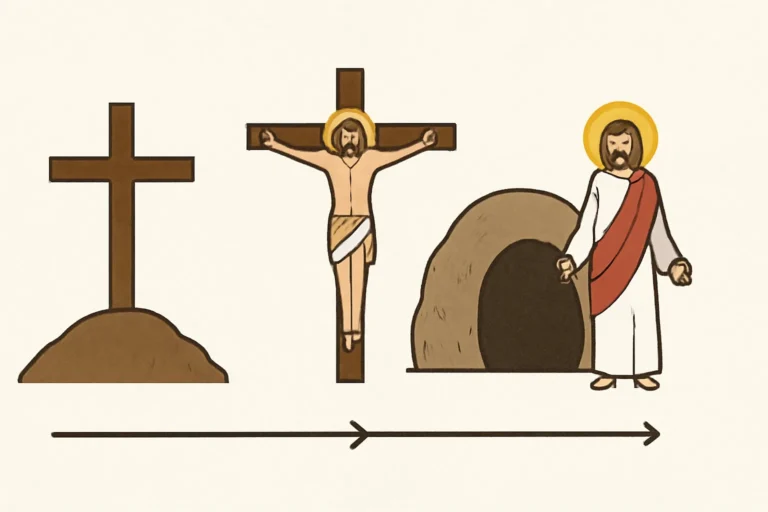
Crucifixion and death of Jesus under Pontius Pilate, a historical event attested by multiple sources in antiquity and widely referenced in the biblical narratives.
Burial by Joseph of Arimathea and the placement of Jesus’ body in a tomb, according to Gospel accounts with varying details regarding the tomb’s location and the people involved.
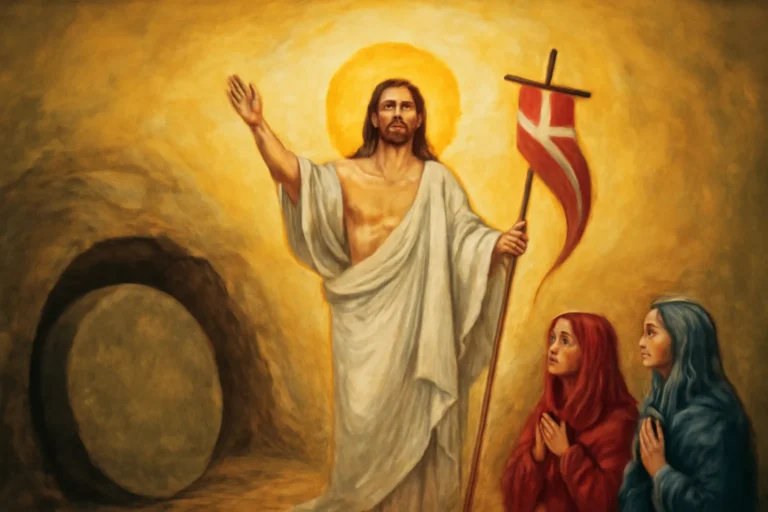
Discovery of the tomb and reports of an empty tomb soon after the burial, which becomes a central point in the narratives and a focal point for subsequent appearances.
Early post-burial appearances of Jesus to individual followers or groups, described in various emphases across the sources. Some accounts emphasize physical encounters; others emphasize experiential encounters or felt presence.
Formation of Christian proclamation: The belief in a risen Jesus becomes a defining feature of the nascent Christian movement and fuels preaching, teaching, and missionary work across communities.
Development of creeds and hymns: Short confessional statements that summarize core beliefs about Jesus’ death, resurrection, and subsequent appearances begin to circulate among early Christians, often embedded in Paul’s letters and other early writings.
Expansion into a broader movement: The resurrection belief catalyzes the growth and spread of Christianity beyond its initial Jewish context, shaping its ethics, worship, and worldview for centuries.
Post-Resurrection Appearances: What the Texts Report
Common features across accounts
Appearances often occur after a decisive moment of perceived loss or distress, followed by a shift toward renewed purpose among the followers.
In many accounts, the risen Jesus is recognized first by individuals who know him well in life, which adds a layer of credibility for readers who understand the relationship.
Some encounters emphasize shifts in mission—where followers are commissioned to spread a message about the resurrection to others.
Representative patterns in the canonical record
Engagements that occur in enclosed spaces or locked rooms, followed by assurances of peace, suggest a transformed reality rather than an ordinary posthumous visitation.
Detailed accounts about bodily realities (e.g., Jesus’ wounds) are presented in some narratives, while others stress a more spiritual or visionary dimension of the risen life.
The appearances often culminate in a mandate or commissioning, linking belief in the resurrection to a concrete mission in the world.”
Theological and Practical Implications
The belief in Jesus’ resurrection has numerous implications for faith, ethics, and worldview. It is often described as a foundational event that shapes how individuals interpret suffering, hope, justice, and the destiny of humanity.
Hope and eschatology: The resurrection is frequently understood as validating the Christian hope of life beyond death and as a sign of God’s ultimate victory over evil and mortality.
Cosmic significance: The event is seen by many as signaling the renewal of creation, the inauguration of the kingdom, and the assurance that God acts decisively in history.
Moral transformation: The belief in a risen Jesus is often linked to a call to live in ways that reflect new life, including forgiveness, love for neighbors, and service to the vulnerable.
Communal identity: Early Christian communities organized worship, sacraments, and shared meals around the conviction that Christ is risen, which unified diverse groups under a common symbol and hope.
Reliability and doubt: For some readers, the resurrection raises questions about the intersection of faith and reason. The discussion often focuses on what counts as evidence, the nature of miracle claims, and how personal experience relates to historical inquiry.
Evidence in Early Creedal Statements
What the Creeds Say
Within the early Christian community, concise confessional formulae emerged to preserve core beliefs about Jesus’ death and resurrection. A central example is a passage in 1 Corinthians 15, where Paul emphasizes a tradition that he received and then delivered with urgency. The core claims typically highlighted include:
Christ died for sins according to the Scriptures, indicating a purpose tied to divine plan and prophetic anticipation.
He was buried, signaling his death and the fact of his burial within a concrete historical frame.
He was raised on the third day, a statement that anchors the resurrection in a specific timeframe and counters suggestions that Jesus merely lived on in memory or spirit.
He appeared to Cephas (Peter) and to the twelve, followed by appearances to additional witnesses, which is presented as empirical testimony rather than a purely internal conviction.
The resurrection is presented as an accomplished fact with significance for faith, preaching, and universal proclamation.
Scholars note that the language in this creed is deliberately concise, designed for memorization and sharing across communities. The emphasis is not on proving the resurrection in modern forensic terms but on transmitting a witnessed pattern that would ground communal life and mission.
Common Misconceptions and Clarifications
Not all accounts read the same way: The Gospel narratives differ in details about the tomb, the witnesses, and the nature of the risen experience. This variation is often interpreted as complementary rather than contradictory, reflecting different perspectives in early Christian communities.
Miracle with interpretive layers: Believers often emphasize the miracle of resurrection as a divine act, while critics may explore symbolic or metaphorical readings. Both approaches appear in historical and literary discussions, but they address different kinds of inquiry.
Historical evidence has limits: As with other ancient events, the historical study of the resurrection faces challenges such as limited independent sources, potential biases in surviving texts, and the interpretive lens of later authors.
Faith and evidence intersect: For many readers, the resurrection is both a matter of faith and a topic of historical curiosity. The way these dimensions interact varies among individuals, communities, and scholarly frameworks.
How Late Antiquity and Early Christianity Shaped the Narrative
Historical context matters for understanding how the resurrection story developed and why it mattered so deeply for early Christians. Several factors contributed to its prominence:
Persecution and endurance: The willingness of early Christians to endure opposition is often cited as supporting the sincerity of their beliefs about the risen Jesus.
Community formation: Fellowship, shared meals, and preaching networks helped spread a common message that centered on the resurrection as transformative experience.
Liturgical and devotional life: The resurrection informed hymns, prayers, and rituals that reinforced the social memory of Jesus’ victory over death.
Cross-cultural engagement: As Christianity interacted with Greco-Roman thought, questions about the meaning of life, death, and fate were reframed through the lens of resurrection hope.
Impact on History: The Resurrection and the Growth of Early Christianity
Explaining why a small movement grew into a global tradition is a major concern for historians and theologians. Several factors are widely discussed:
Transformational witness: The change in the disciples—from fear to bold proclamation—appears in the records, and is cited as a key driver in the spread of the message.
Martyrdom and memory: The willingness of early Christians to accept suffering or martyrdom is often presented as evidence of belief in something they genuinely experienced as real and transformative.
Community resilience: The early Christian communities formed strong bonds, shared resources, and organized leadership that helped them endure challenges and persist across generations.
Mission and expansion: The resurrection-centered message was adaptable to various cultural contexts, enabling missionary work beyond a single locale.
Implications for Study and Faith Practice
For readers who approach the topic from different angles—religious, historical, or philosophical—the resurrection of Jesus remains a multi-layered subject. Here are some practical implications researchers and believers often explore:
Historical-method questions: What counts as reliable testimony? How do we weigh disparate accounts? What kinds of corroborating material would help clarify certain claims?
Faith formation: How does belief in the resurrection shape personal ethics, worship, and community life?
Interfaith dialogue: The resurrection is a point of contact and tension in conversations with other religious traditions; understanding its standing in Christian conviction can facilitate respectful dialogue.
Literary and rhetorical analysis: The resurrection narratives can be read as literary works with particular aims (confession, exhortation, memory creation) that serve theological purposes within early Christian communities.
What It Means Today: Living with the Resurrection Message
Today, many readers encounter the resurrection as a source of hope, challenge, and inspiration. Some interpret it as a statement about the nature of life after death, while others view it as a call to reimagine power, justice, and love in the present world. The following reflections highlight ways in which this ancient event continues to resonate:
Hope under suffering: The resurrection is frequently cited as offering a framework for enduring hardship with the confidence that life is not exhausted by death or pain.
Ethical imagination: The narrative invites followers to pursue reconciliation, mercy, and solidarity with those who suffer, as an expression of renewed life in action.
Community and ritual: Worship practices, sacraments, and shared meals center around the belief that the risen Jesus is present with his people, shaping communal identity across generations.
Interpreting miracles: In contemporary discourse, readers may weigh miracles against natural explanations, personal experiences, and the broader purpose ascribed to divine action in history.
Variations in Interpretation Across Traditions
Across Christian traditions, the resurrection is interpreted through different theological lenses. Each tradition emphasizes certain aspects while maintaining the core conviction that Jesus is risen. Some common lines of emphasis include:
Catholic perspective: Emphasizes the resurrection as the culmination of Christ’s saving work, the reality of the Incarnation, and the ongoing significance of the Eucharist and liturgical calendar in commemorating the resurrection.
Lutheran and Reformed perspectives: Often highlight justification, new life, and the transformative effect of faith in the risen Christ, with attention to how righteousness is received by faith and expressed in daily life.
Orthodox emphasis: Tends to stress the victory over death as part of the broader mystery of salvation and the cosmic renewal of creation, with a strong theopoetic dimension in liturgy and iconography.
Evangelical and Pentecostal approaches: Often foreground personal experience of the risen Christ, the authority of Scripture, and the call to evangelism and mission as practical outworkings of belief in resurrection.
Questions That Often Arise
What does it mean to say that Jesus was resurrected? Is this primarily a physical event, a spiritual experience, or a combination of both in the biblical texts?
How do historians distinguish between belief in the resurrection and other post-crucifixion experiences among early Christians?
Can non-Christian sources corroborate or challenge the resurrection narratives? What role do non-biblical references play in the conversation?
How does the resurrection relate to the broader claims about Jesus’ identity, such as his messianic role and divine status?
What are the implications for modern faith communities in engaging with ancient claims about life, death, and meaning?
A Balanced View: Integrating Faith, History, and Reflection
Readers may find it helpful to approach the resurrection as a topic that invites both historical inquiry and personal reflection. A careful study often involves:
Engaging primary sources: Reading the Gospel narratives and Paul’s letters in their literary and historical contexts helps illuminate how early communities understood the event.
Comparative analysis: Looking at how resurrection language appears across different texts, including non-canonical writings, can reveal shared motifs and distinctive emphases.
Historical humility: Recognizing the limits of what can be proven about a miracle event encourages thoughtful, respectful dialogue among people with diverse viewpoints.
Pastoral and ethical considerations: For many, the resurrection has practical implications for how they live, relate to others, and respond to suffering in the present world.
Those who want to explore more deeply may encounter a range of scholarship, devotional literature, and teaching resources. Some suggested avenues include:
Introductory surveys of the historical Jesus and the early Christian movement.
Scholarly commentaries that compare the Gospel narratives and discuss the historical methods used in evaluating resurrection claims.
Church histories and systematic theology that examine how different traditions interpret the resurrection in light of broader doctrinal frameworks.
Textual studies on key passages, especially those that contain creedal material or explicit references to post-resurrection appearances.